
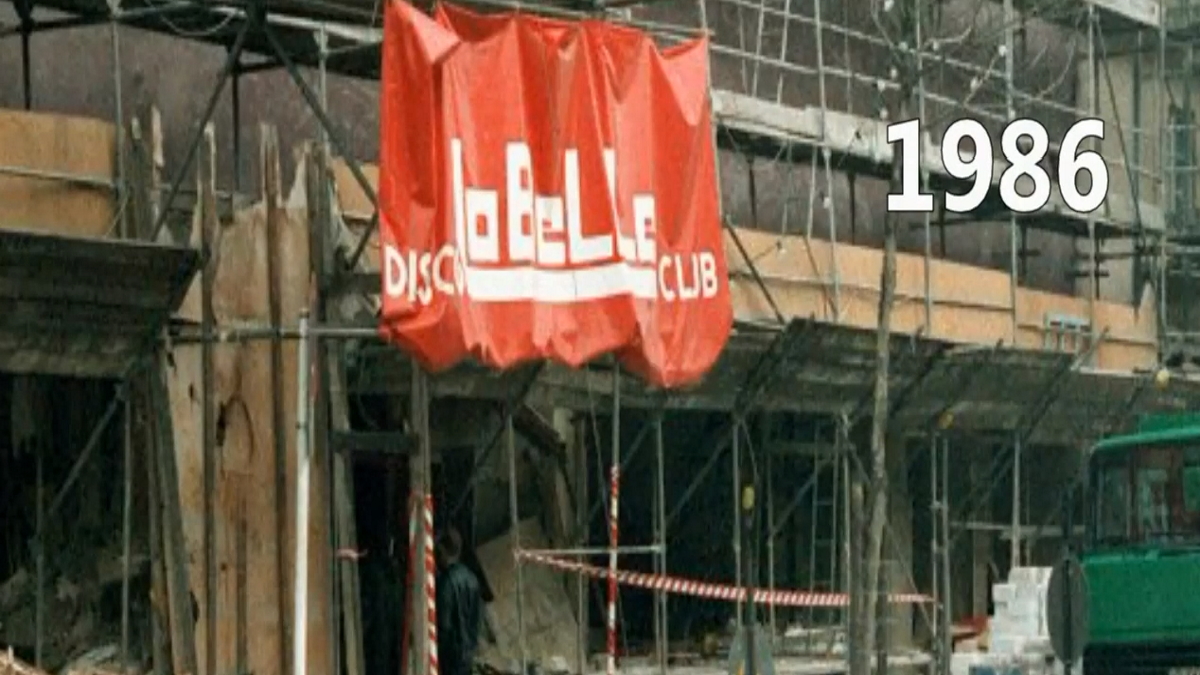
On this day, 34 years ago, the world remembers the West Berlin discotheque bombing, also called La Belle discotheque bombing, attack was carried out on April 5, 1986, in West Berlin, in which Libyan agents detonated a bomb at the La Belle discotheque, a nightclub frequented by U.S. soldiers stationed in Germany during the Cold War.
The bomb, packed with plastic explosives and shrapnel, killed two U.S. soldiers and a Turkish woman and injured 229 others, some of whom lost limbs and were disabled for the rest of their lives.
It tore a wide hole in the floor and caused the ceiling to collapse and the walls to buckle. A small fire was put out by firefighters.
Those of us, who served in Europe, like me, remembered that fateful day and have never forgotten.
The entertainment venue was commonly frequented by United States soldiers, and two of the dead and 79 of the injured were Americans. The club is on a broad street in the largely middle-class Friedenau neighborhood, not far from United States Army housing.
A bomb placed under a table near the disc jockey’s booth exploded at 01:45 CET, instantly killing Nermin Hannay, a Turkish woman, and US Army sergeant Kenneth T. Ford. A second US Army sergeant, James E. Goins, died from his injuries two months later.
Libya was accused by the US government of sponsoring the bombing, and US President Ronald Reagan ordered retaliatory strikes on Tripoli and Benghazi in Libya ten days later.
The operation was widely seen as an attempt to kill Colonel Muammar Gaddafi.
President Ronald Reagan retaliated by ordering airstrikes against the Libyan capital of Tripoli and city of Benghazi. At least 30 soldiers and 15 civilians were killed.
The Pentagon said the American warplanes struck at five separate assigned targets, three in the Tripoli area and two in the Benghazi region.
The targets near Tripoli were two suspected terrorist command posts – including a headquarters used by Khadafy — and military facilities at the nearby airport. The targets near Benghazi were suspected terrorist bases.
Secretary of State, George Shultz, in an NBC-TV interview on April 15, 1986, denied the air strikes were designed to ”go after Khadafy” although, ”We feel he is a ruler better out of his country.”
A 2001 trial in the US found that the bombing had been planned by the Libyan secret service and the Libyan Embassy.
The attack occurred less than three days after a bomb exploded on a Trans World Airlines plane on a Rome-to-Athens flight, killing four Americans.
Police and Government officials did not specifically link the two bombings.
UPI.com/Archives; en.wikipedia.org (April 2020) Reagan: Airstrike against Libya victory against terrorism; West Berlin discotheque bombing
 Law Enforcement, Military, and Terrorism News