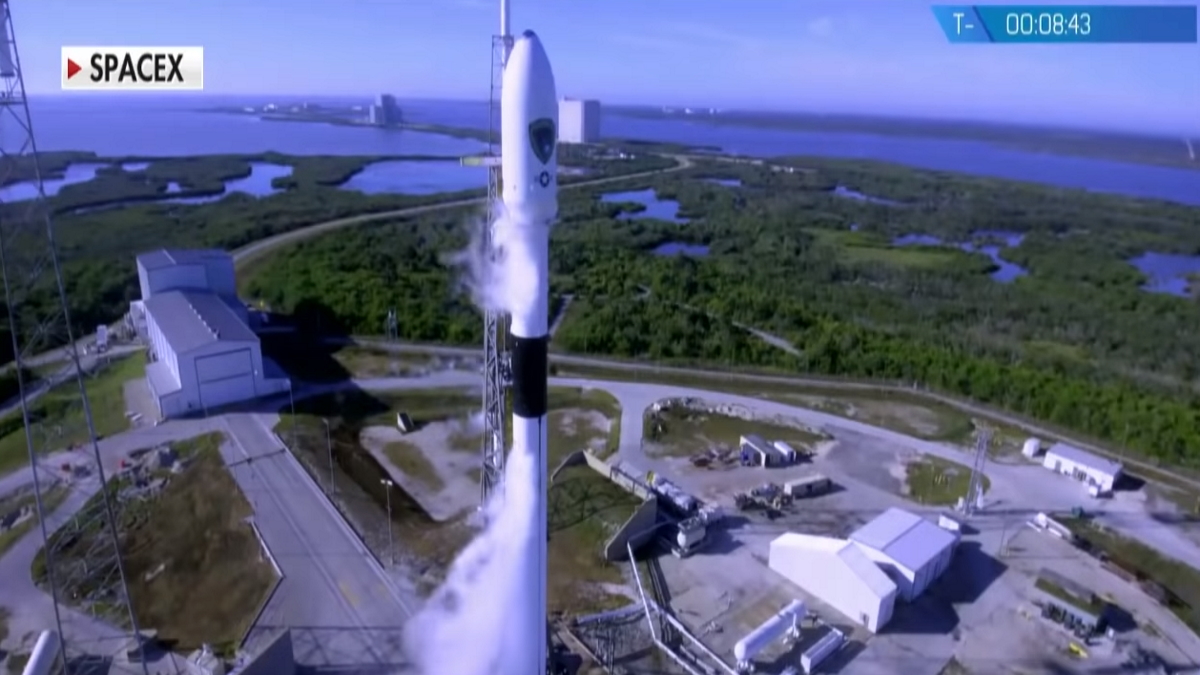
USSF field command structure reduces command layers, focuses on space warfighter needs

The Department of the Air Force and the United States Space Force have finalized the new service’s organizational structure for echelons below the headquarters, reflecting the newest branch of the armed forces’ guiding principles of being a lean, agile and mission-focused organization.


U.S. Space Force organizes, trains, and equips space forces in order to protect and defend U.S. and allied interests in space and to provide space capabilities to the joint force.

The Department of the Air Force and the United States Space Force have finalized the new service’s organizational structure for echelons below the headquarters, reflecting the newest branch of the armed forces’ guiding principles of being a lean, agile and mission-focused organization.
 
The USSF field organization will consist of three echelons of command, where the Air Force currently is organized into five echelons. USSF’s organizational structure will initially consolidate and align all organize, train and equip mission execution from former Air Force space-related units.

“This is the most significant restructuring of space units undertaken by the United States since the establishment of Air Force Space Command in 1982,” said Secretary of the Air Force Barbara Barrett. “Innovation and efficiency are driving our mission as we position the Space Force to respond with agility to protect our nation’s space capabilities and the American way of life.”

In order of hierarchy, the USSF field echelons are named field commands, deltas and squadrons. There will be three field commands aligned with specific mission focuses: Space Operations Command, Space Systems Command, and Space Training and Readiness Command. SpOC and SSC will be led by three-star general officers, and STARCOM will be led by a two-star general.

Deltas will be O-6 led and will be organized around a specific function – operations, installation support, training, etc.

Within the deltas will be squadrons focused on specific tactics. When the field command structure is fully implemented, it will eliminate one general officer echelon and one O-6 echelon of command. Functions formerly performed at the eliminated echelons will be realigned where appropriate within the USSF. 

“This is an historic opportunity to launch the Space Force on the right trajectory to deliver the capabilities needed to ensure freedom of movement and deter aggression in, from and to space,” said Gen. Jay Raymond, USSF chief of space operations. “How we organize the Space Force will have a lasting impact on our ability to respond with speed and agility to emerging threats in support of the National Defense Strategy and Space Strategy.”

SpOC will be the primary force provider of space forces and capabilities for combatant commanders, coalition partners, the joint force and the nation. 

The staff and operations elements of USSF at Peterson Air Force Base, Colorado, which is also the former AFSPC, will become the headquarters SpOC.

There is an existing unit at Vandenberg AFB, California, named Space Operations Command, which will be renamed upon activation of the field command SpOC.

SSC will be responsible for developing, acquiring, and fielding lethal and resilient space capabilities for war-fighters.

Additionally, SSC will be responsible for launch, developmental testing, on-orbit checkout, and sustainment and maintenance of USSF space systems, as well as oversight of USSF science and technology activities. 

Acquisition and development organizations to include the Space and Missile Systems Center, the Commercial Satellite Communications Office, and program offices of space systems transferring to USSF from other DoD organizations will form the building blocks of the new command, which will be built out in the months to come.

STARCOM will train and educate space professionals, and develop combat-ready space forces to address the challenges of the war-fighting domain of space.  Complete stand up of STARCOM is scheduled for 2021. 

In the interim, a provisional Space Training and Readiness Delta, led by an O-6, will be established in July at Peterson AFB.  This unit will serve as the parent organization for a number of education, training, and operational test and evaluation units transferring to the Space Force in summer 2020.

The next activities to stand up USSF field organizations include activation of SpOC, SSC and deltas beginning later in summer. 

Blogs to Follow:

Spaceforce.mil (July 2020) USSF field command structure reduces command layers, focuses on space warfighter needs
Near-Peer Threats at Highest Point Since Cold War, DOD Official Says

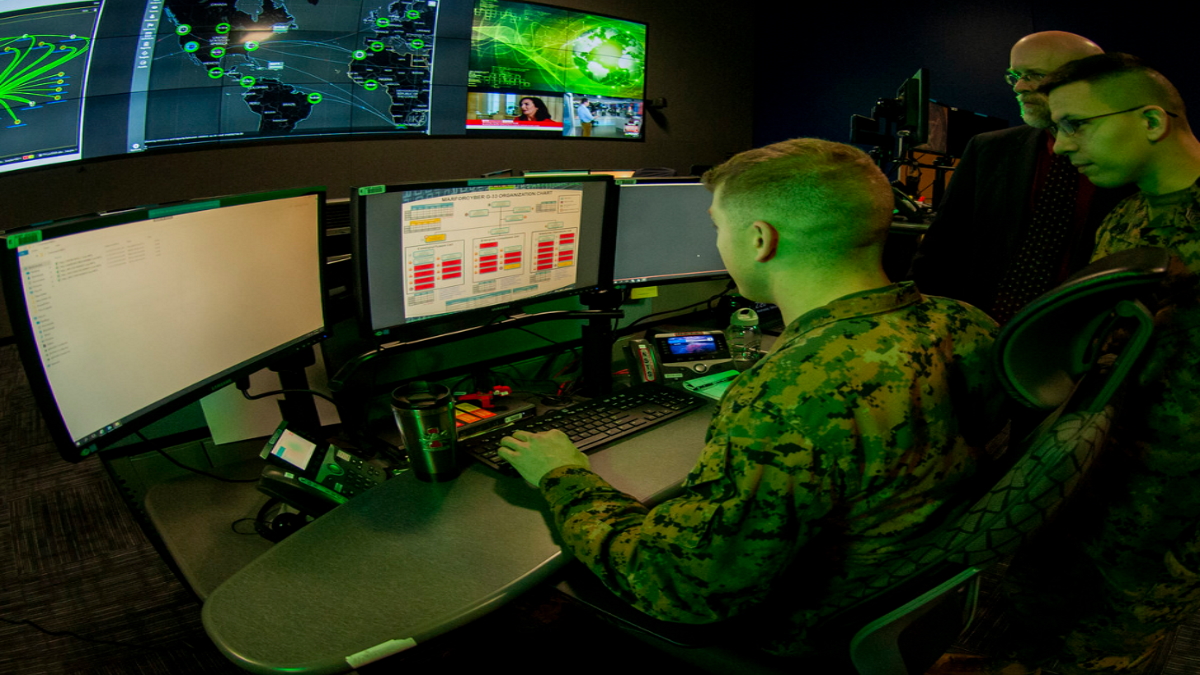
Matthew P. Donovan, who is performing the duties of the undersecretary of defense for personnel and readiness, said the character of warfare has evolved at the same time, with grave threats now appearing in previously unknown or uncontested domains, such as cyber and space.


The United States faces an array of threats from near-peer competitors China and Russia that have not been seen since before the fall of the Berlin Wall, a DOD official said today.

Matthew P. Donovan, who is performing the duties of the undersecretary of defense for personnel and readiness, said the character of warfare has evolved at the same time, with grave threats now appearing in previously unknown or uncontested domains, such as cyber and space.

He testified before the Senate Armed Services Committee, which is considering his nomination for undersecretary of defense for personnel and readiness.

Donovan said the Defense Department must also evolve to successfully meet these threats. “We must attract and retain people with the right skills to prevail in this environment, properly manage them and meet their expectations using 21st century talent management practices, and ensure all are always treated with dignity and respect.”

The department must also provide its warriors with the cutting-edge tools of the trade that they need to be successful, state-of-the-art training technologies, and techniques to best hone their skills, he added.

Soldiers, Sailors, Airmen, Marines and DOD civilians deserve the best leadership, the best policies, the best equipment, the best education and training, and our service members and their families deserve the best health care, best support systems, and best quality of life we can possibly provide, for the sacrifices we ask them to endure, Donovan added.

One senator mentioned that a study showed only 29% of American youth are eligible to serve.

Donovan replied that he’s seen those studies. “I think it’s a problem that extends well beyond the Department of Defense. It’s a national issue.”

Part of the problem, he said, is the lack of sports and physical fitness activities among the nation’s youth.

“Kids are not getting the physical activity that they need to help prepare them for the rigors of military duty,” he said.

Shop Amazon Gift Cards. Any Occasion. No Expiration.

That said, Donovan noted that DOD isn’t yet having a problem filling its ranks with qualified and quality service members.

“But as we look toward the future, toward the imperatives of the National Defense Strategy, then we’re seeing that we’re going to need to attract those skills that are in so much demand on the outside as well,” he said, adding that a good example is cyber.

One step the department is taking is partnering with universities and industry to see if there’s some way to share the load on this, he said.

Also testifying today were: William Jordan Gillis, nominated for assistant secretary of defense for sustainment, and Victorino G. Mercado, nominated for assistant secretary of defense for strategy, plans and capabilities.

Help a veteran in need by donating here.

Defense.gov (March, 2020) Near-Peer Threats at Highest Point Since Cold War, DOD Official Says

U.S. Will Not Let China, Russia Deny Its Space Superiority, DOD Officials Say

Space systems underpin virtually every weapon system in the Defense Department’s arsenal, a senior DOD official told Congress.


Space systems underpin virtually every weapon system in the Defense Department’s arsenal, a senior DOD official told Congress.

But many systems were designed for an era when there were few threats in space, Dr. James H. Anderson, performing the duties of deputy undersecretary of defense for policy, said today at a hearing of the House Armed Services Committee’s strategic forces subcommittee. This is not the case today, he added, as China and Russia both seek to be able to deny the United States and its allies the advantages of space.

China and Russia are developing sophisticated on-orbit capabilities and an array of counter-space weapons capable of targeting nearly every class of U.S. space asset, Anderson told the House panel. They are expanding their space capabilities, he said, and have created military space forces that they are training and equipping to prevail in future crises and conflicts.

The United States is responding by “transforming its space enterprise, fielding resilient architectures, developing space warfighting expertise and working closely with allies in combined operations,” he said.

Soffe Men’s 3 Pack-USA Poly Cotton Military Tee

The fiscal year 2021 defense budget request provides $18 billion for space programs, including $111 million to support stand-up of the U.S. Space Force, Anderson said. It also provides funding for the new space combatant command — U.S. Space Command — and the Space Development Agency, which will accelerate the development and fielding of military space capabilities necessary to ensure U.S. and allied technological and military advantages.

In his written testimony, Anderson said the United States is actively pursuing opportunities with allies and partners to build combined space operations and interoperable, or even integrated, architecture. The flagship of this integration is the Combined Space Operations Center at Vandenberg Air Force Base, California, with embedded British, Canadian and Australian exchange personnel working side by side with U.S. personnel.

“We have recently added Germany and France to the Combined Space Operations initiative,” he noted.

Space Force Gen. John W. “Jay” Raymond, chief of space operations, also testified.

“We can no longer assume that our space superiority is a given,” he said. “If deterrence fails, we must be ready to fight for space superiority.”

U.S. Space Command, along with the Space Force will deter aggression from conflict and do so from a position of strength, the general said. “Accordingly,” he added, “we will remain ready to defend U.S. and allied freedom of action in space. We will deliver space combat power for the joint and coalition force and we’re going to develop joint warfighters to serve in, to and from the space domain.”

Defense.gov (February, 2020) U.S. Will Not Let China, Russia Deny Its Space Superiority, DOD Officials Say

Help a veteran in need by donating here.