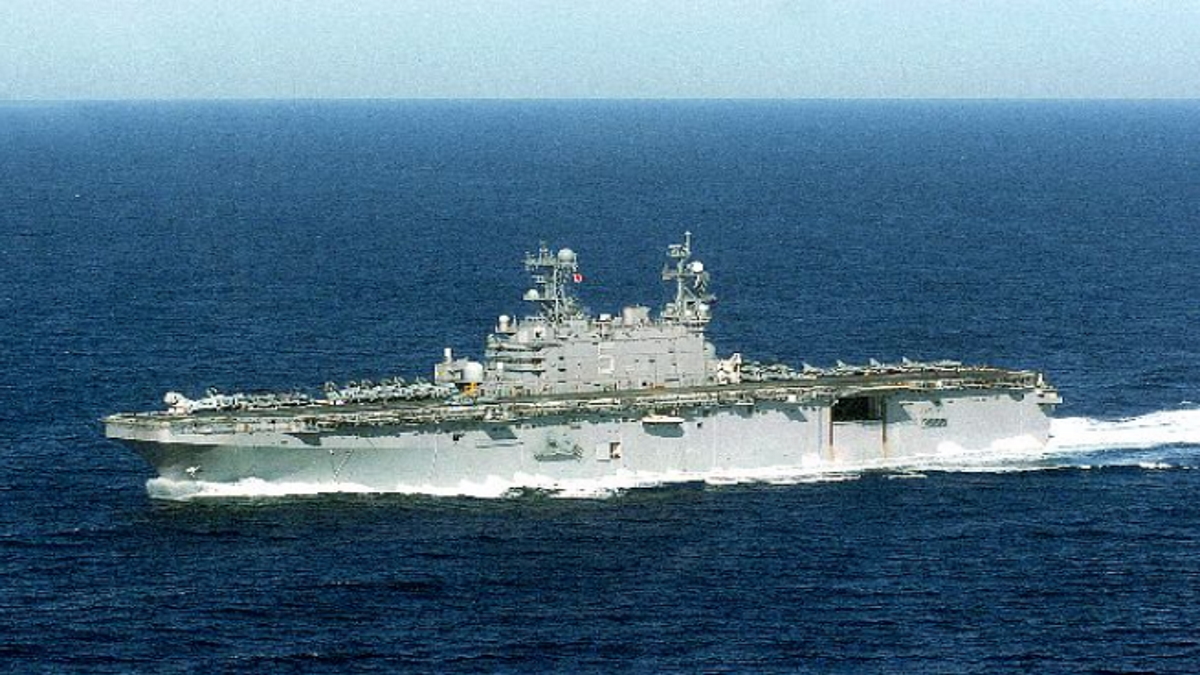
U.S. Navy Amphibious Assault Ship USS Tripoli Joins the Fleet

Although the Navy canceled the traditional public commissioning ceremony due to public health and safety restrictions on large public gatherings, the Navy commissioned the USS Tripoli administratively and the ship transitioned to normal operations.


Although the Navy canceled the traditional public commissioning ceremony due to public health and safety restrictions on large public gatherings, the Navy commissioned the USS Tripoli administratively and the ship transitioned to normal operations.

Meanwhile, the Navy is looking at a future opportunity to commemorate the special event with the USS Tripoli’s sponsor, crew and commissioning committee.

“USS Tripoli is proof of what the teamwork of all of our people – civilian, contractor and military – can accomplish together,” said Secretary of the Navy Kenneth J. Braithwaite. “This ship will extend the maneuverability and lethality of our fleet to confront the many challenges of a complex world, from maintaining the sea lanes to countering instability to maintaining our edge in this era of renewed great power competition.”

Rear Adm. Philip E. Sobeck, commander, Expeditionary Strike Group THREE, welcomes the Navy’s newest amphibious assault ship, and crew, to the amphibious force.

“Tripoli is an example of the continued investment in our Navy, to increase and maintain our edge on the battlefield,” said Sobeck. “Congratulations to Tripoli’s crew for all of your hard work, amidst these challenging times, to reach this milestone. We welcome you to the amphibious force, of combat ready ships and battle-minded crews to go to sea and support sustained combat operations.”

LHA 7 incorporates key components to provide the fleet with a more aviation-centric platform. Tripoli’s design features an enlarged hangar deck, realignment and expansion of the aviation maintenance facilities, a significant increase in available stowage for parts and support equipment, and increased aviation fuel capacity.

The ship is the first LHA replacement ship to depart the shipyard ready to integrate the entire future air combat element of the Marine Corps, to include the Joint Strike Fighter.

Along with its pioneering aviation element, LHA 7 incorporates gas turbine propulsion plant, zonal electrical distribution, and fuel-efficient electric auxiliary propulsion systems first installed on USS Makin Island (LHD 8). LHA 7 is 844 feet in length, has a displacement of approximately 44,000 long tons, and will be capable of operating at speeds of over 20 knots.

Tripoli’s commanding officer, Capt. Kevin Myers, highlighted Tripoli’s accomplishments over the past several months getting through initial sea trials.

The hard work and dedication of the entire team during the past few years was evident in the successful execution of at-sea testing.

“Being the third ship to bear the Tripoli namesake is a profound honor and this crew stands ready to carry on the legacy of our longstanding Navy and Marine Corps amphibious community,” said Meyers. “These sailors and Marines will pave the way for those still to come. What’s remarkable is seeing the dedication, perseverance and resilience these new plank owners have shown since day one and more recently, through uncertain times as the Navy and nation work through a pandemic. There is no doubt in my mind that this team is ready to answer the nation’s call at any time or place.”

LHA 7 is the third Navy ship to be named Tripoli.

The name honors and commemorates the force of U.S. Marines and approximately 370 soldiers from 11 other nationalities who captured the city of Derna, Libya, during the 1805 Battle of Derna.

The battle resulted in a subsequent peace treaty and the successful conclusion of the combined operations of the First Barbary War, and was later memorialized in the Marines’ Hymn with the line, “to the shores of Tripoli.”

Blogs to Follow:

Defense.gov (July 2020) The U.S. Navy commissioned USS Tripoli (LHA 7), today, July 15, 2020

People’s Republic of China Military Exercises in the South China Sea

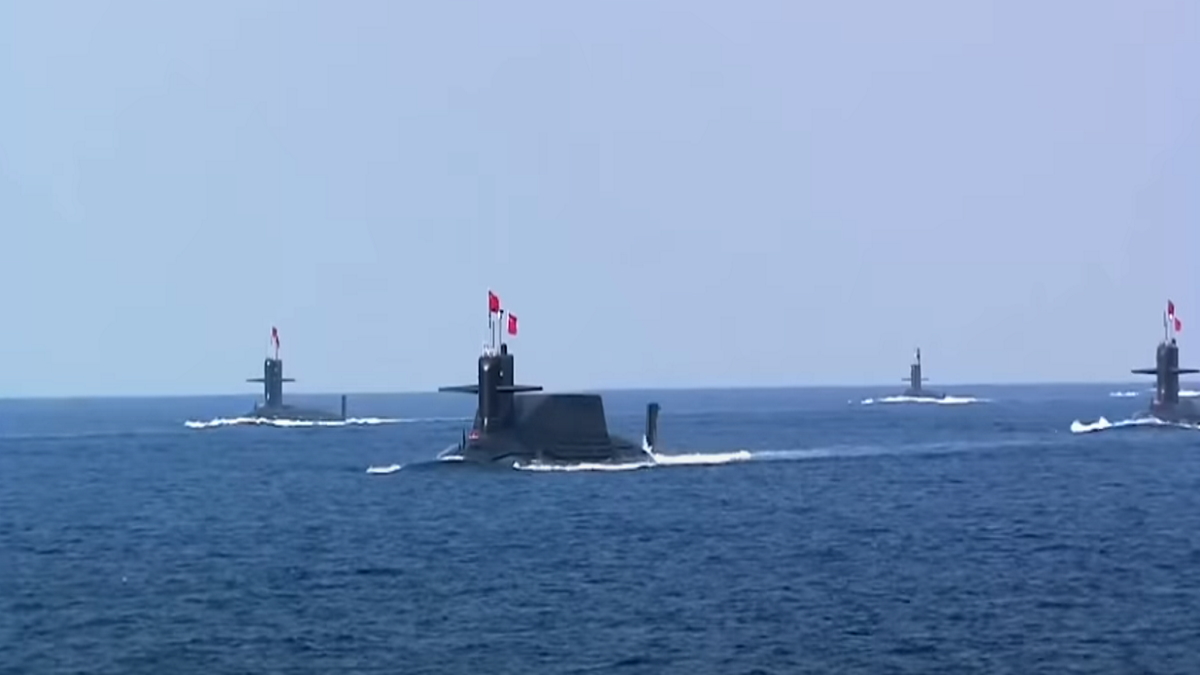
The Department of Defense (DOD) is concerned about the People’s Republic of China (PRC) decision to conduct military exercises around the Paracel Islands in the South China Sea on July 1-5.


The Department of Defense (DOD) is concerned about the People’s Republic of China (PRC) decision to conduct military exercises around the Paracel Islands in the South China Sea on July 1-5. 

The designated areas where the exercises are due to take place encompass contested waters and territory.

Conducting military exercises over disputed territory in the South China Sea is counterproductive to efforts at easing tensions and maintaining stability.

The PRC’s actions will further destabilize the situation in the South China Sea. 

Such exercises also violate PRC commitments under the 2002 Declaration on the Conduct of Parties in the South China Sea to avoid activities that would complicate or escalate disputes and affect peace and stability.

The military exercises are the latest in a long string of PRC actions to assert unlawful maritime claims and disadvantage its Southeast Asian neighbors in the South China Sea. 

The PRC’s actions stand in contrast to its pledge to not militarize the South China Sea and the United States’ vision of a free and open Indo-Pacific region, in which all nations, large and small, are secure in their sovereignty, free from coercion, and able to pursue economic growth consistent with accepted international rules and norms.

The Department of Defense will continue to monitor the situation with the expectation that the PRC will reduce its militarization and coercion of its neighbors in the South China Sea.

We urge all parties to exercise restraint and not undertake military activities that might aggravate disputes in the South China Sea.

Blogs to Follow:

Defense.gov (July 2020) People’s Republic of China Military Exercises in the South China Sea

U.S. Navy Attack Submarine USS Delaware Joins the Fleet


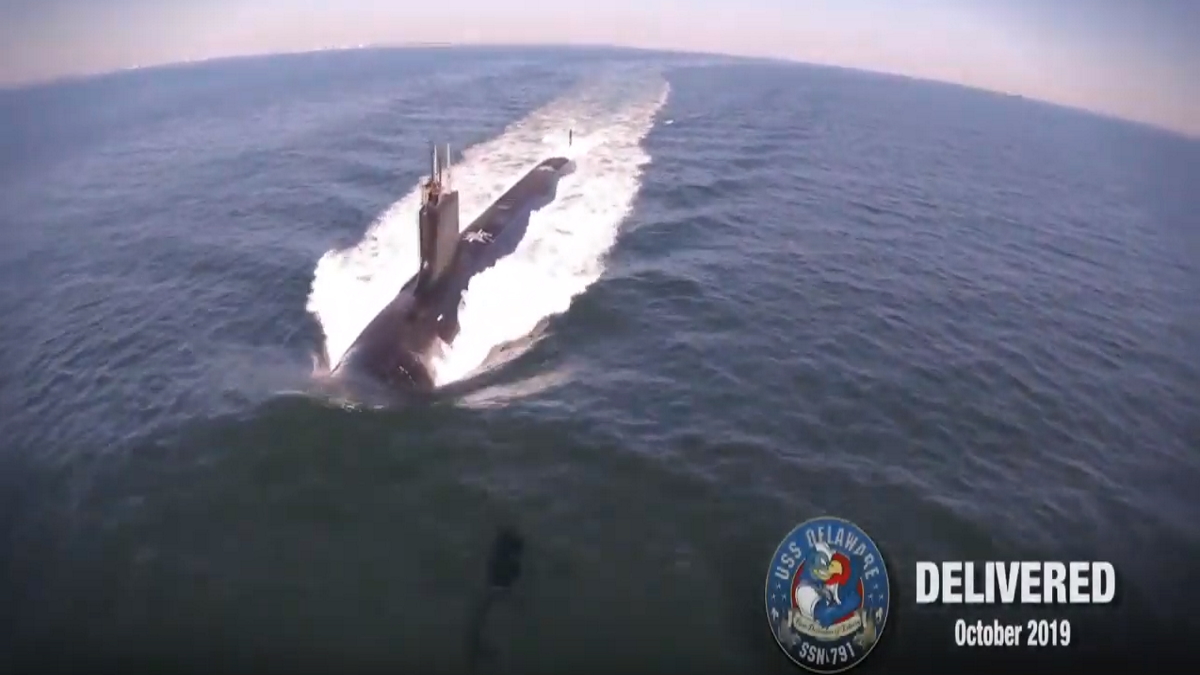
The U.S. Navy commissioned USS Delaware (SSN 791), the 18th Virginia-class attack submarine, today, April 4, 2020.

Although the traditional public commissioning ceremony was cancelled due to public health safety and restrictions of large public gatherings, the Navy commissioned USS Delaware administratively and transitioned the ship to normal operations. Meanwhile, the Navy is looking at a future opportunity to commemorate the special event with the ship’s sponsor, crew and commissioning committee.

“This Virginia-class fast-attack submarine will continue the proud naval legacy of the state of Delaware and the ships that have borne her name,” said Acting Secretary of the Navy Thomas B. Modly. “I am confident that the crew of this cutting edge platform will carry on this tradition, confronting the many challenges of today’s complex world with the professionalism and agility the American people depend on from the warriors of the silent service.”

Vice Adm. Daryl Caudle, commander, Submarine Forces, said he is pleased to welcome the ship to the U.S. submarine fleet and contribute to its unmatched undersea warfighting superiority.

“The U.S. Navy values the support of all those who contributed to today’s momentous milestone and will look for a future opportunity to commemorate this special event,” Caudle said. “The sailors of USS Delaware hail from every corner of the nation and from every walk of life. This crew, and the crews who follow, will rise to every challenge with unmatched bravery and perseverance to ensure the U.S. Submarine Force remains the best in the world.”

The ship’s sponsor, Dr. Jill Biden, offered congratulations to everyone who played a role in delivering USS Delaware to service.

“I know this submarine and her crew of courageous sailors will carry the steadfast strength of my home state wherever they go,” she said. “The sailors who fill this ship are the very best of the Navy, and as you embark on your many journeys, please know that you and those whom you love are in my thoughts.”

Delaware’s commanding officer, Cmdr. Matthew Horton, said today marks the culmination of six years of hard work by the men and women who constructed the submarine and are preparing her to become a warship. He said he is especially thankful to the crew and their families, Dr. Biden, the USS Delaware Commissioning Committee and the Navy League of Hampton Roads for all their hard work and support.

“As we do our part to maintain the nation’s undersea supremacy well into the future, today marks a milestone for the sailors who serve aboard USS Delaware. Whether they have been here for her initial manning three years ago, or have just reported, they all are strong, capable submariners ready to sail the nation’s newest warship into harm’s way,” Horton said. “I am equally proud of the families who have stood by through the long hours of shift work, testing, and sea trials and supported our mission with patriotism and devotion.”

This is the first time in nearly 100 years the name “Delaware” has been used for a U.S. Navy vessel. It is the seventh U.S. Navy ship, and first submarine, to bear the name of the state of Delaware.  Delaware is a flexible, multi-mission platform designed to carry out the seven core competencies of the submarine force: anti-submarine warfare; anti-surface warfare; delivery of special operations forces; strike warfare; irregular warfare; intelligence, surveillance and reconnaissance; and mine warfare.

The submarine is 377 feet long, has a 34-foot beam, and will be able to dive to depths greater than 800 feet and operate at speeds in excess of 25 knots submerged. It will operate for over 30 years without ever refueling. Delaware’s keel was laid April 30, 2016, and was christened during a ceremony Oct. 20, 2018. It is the final Block III Virginia-class submarine, before the next wave of Block IV deliveries.

Defense.gov (April 2020) U.S. Navy Attack Submarine USS Delaware Joins the Fleet

Statement from SECNAV on Relief of CO aboard USS Theodore Roosevelt (CVN 71)


A short time ago, the Acting Secretary of the Navy, Thomas B. Modly, released the following statements regarding the relief of the Commanding Officer of USS Theodore Roosevelt.

Acting Secretary of the Navy, Thomas B. Modly:

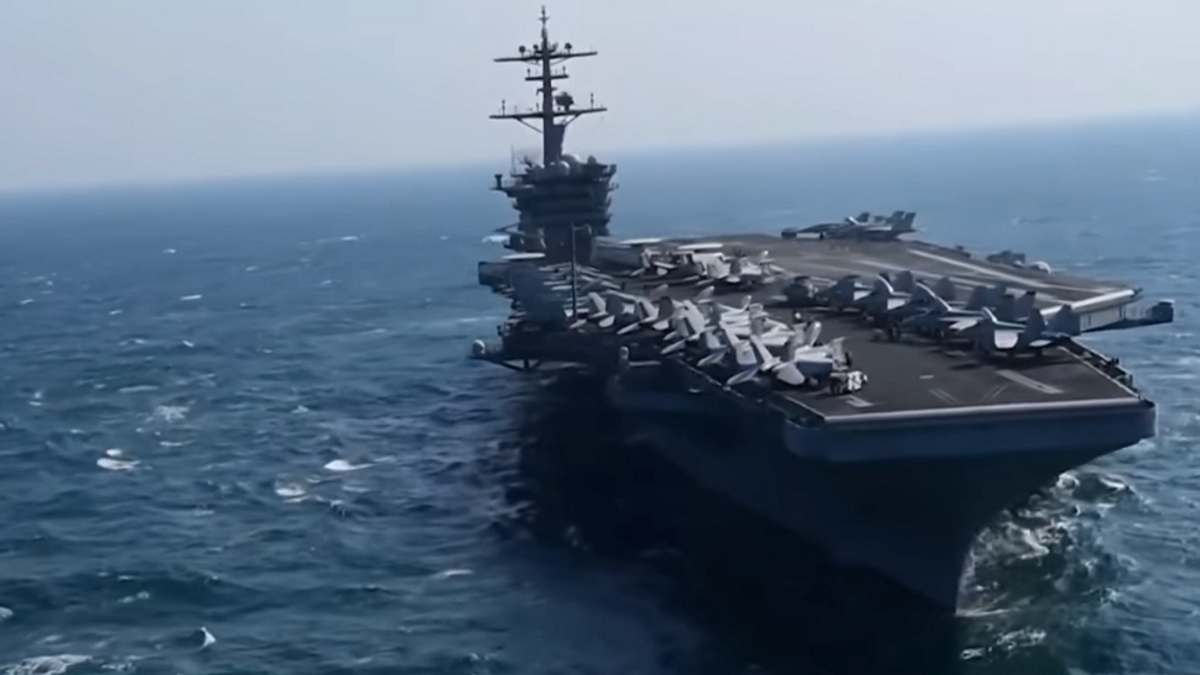
I am here today to inform you that today at my direction, the Commanding Officer of the USS Theodore Roosevelt, Captain Crozier, was relieved of command by the Carrier Strike Group Commander, Rear Admiral Stuart Baker.

The Executive Officer, Captain Dan Keeler, has assumed command temporarily until such time as Rear Admiral Select Carlos Sardiello arrives in Guam to assume command. Rear Admiral Select Sardiello is the former commanding officer of the Theodore Roosevelt so he is extremely well-acquainted with the ship, many members of its crew and the operations and capabilities of the ship itself. He is the best person in the Navy right now to take command under these circumstances.

As Secretary of the Navy, I could not be more proud of our men and women serving as part of the Navy and Marine Corps team. I can assure you that no one cares more than I do about their safety and welfare. I myself have a son in uniform, who is currently serving right now on active duty in Korea—one of the first nations in the world to have a significant spike in Coronavirus cases. I understand, both as a parent and a veteran, how critical our support lines are for the health and well-being of our people, especially now in the midst of a global pandemic.

But there is a larger strategic context, one full of national security imperatives, of which all our commanders must all be aware today. While we may not be at war in a traditional sense, neither are we truly at peace. Authoritarian regimes are on the rise. Many nations are reaching, in many ways, to reduce our capacity to accomplish our national goals. This is actively happening every day. It has been a long time since the Navy and Marine Corps team has faced this broad array of capable global strategic challengers. A more agile and resilient mentality is necessary, up and down the chain of command.

Perhaps more so than in the recent past, we require commanders with the judgment, maturity, and leadership composure under pressure to understand the ramifications of their actions within that larger dynamic strategic context. We all understand and cherish our responsibilities, and frankly our love, for all of our people in uniform, but to allow those emotions to color our judgment when communicating the current operational picture can, at best, create unnecessary confusion, and at worst, provide an incomplete picture of American combat readiness to our adversaries.

When the Commanding Officer of the USS THEODORE ROOSEVELT decided to write his letter of 30 March 2020 that outlined his concerns for his crew in the midst of a COVID-19 outbreak, the Department of the Navy had already mobilized significant resources for days in response to his previous requests. On the same date marked on his letter, my Chief of Staff had called the CO directly, at my request, to ensure he had all the resources necessary for the health and safety of his crew.

The CO told my Chief of Staff that he was receiving those resources, and was fully aware of the Navy’s response, only asking that the he wished the crew could be evacuated faster. My Chief of Staff ensured that the CO knew that he had an open line to me to use at any time. He even called the CO again a day later to follow up. At no time did the CO relay the various levels of alarm that I, along with the rest of the world, learned from his letter when it was published two days later.

Once I read the letter, I immediately called the Chief of Naval Operations, ADM Gilday, and the Commander, U.S. Pacific Fleet, ADM Aquilino. ADM Gilday had just read the letter that morning as well, and ADM Aquilino had it the day before. We had a teleconference within minutes of my reading of that article, including the Commander, SEVENTH Fleet, VADM William Merz, ADM Aquilino, ADM Gilday, the Department of the Navy’s Surgeon General, RADM Bruce Gillingham, and others. That evening, we held another teleconference with the entire chain of command.

The next day, I spoke with the CO of the THEODORE ROOSEVELT myself, and this morning, I have spoken to the TR’s Carrier Strike Group Commander, RDML Stuart Baker. RDML Baker did not know about the letter before it was sent to him via email by the CO. It is important to understand that the Strike Group Commander, the CO’s immediate boss, is embarked on the Theodore Roosevelt, right down the passageway from him. The letter was sent over non- secure, unclassified email even though that ship possesses some of the most sophisticated communications and encryption equipment in the Fleet.

It was sent outside the chain of command, at the same time the rest of the Navy was fully responding. Worse, the Captain’s actions made his Sailors, their families, and many in the public believe that his letter was the only reason help from our larger Navy family was forthcoming, which was hardly the case.

Command is a sacred trust that must be continually earned, both from the Sailors and Marines one leads, and from the institution which grants that special, honored privilege.

As I learned more about the events of the past week on board USS THEODORE ROOSEVELT (CVN-71), including my personal conversations with the Strike Group Commander, Commander, SEVENTH Fleet, Commander, U.S. Pacific Fleet, the Chief of Naval Operations, and CAPT Crozier himself, I could reach no other conclusion than that Captain Crozier had allowed the complexity of his challenge with COVID breakout on the ship to overwhelm his ability to act professionally, when acting professionally was what was needed most. We do, and we should, expect more from the Commanding Officers of our aircraft carriers.

I did not come to this decision lightly. I have no doubt in my mind that Captain Crozier did what he thought was in the best interests of the safety and well-being of his crew. Unfortunately, it did the opposite. It unnecessarily raised alarms with the families of our Sailors and Marines with no plan to address those concerns. It raised concerns about the operational capabilities and operational security of the ship that could have emboldened our adversaries to seek advantage, and it undermined the chain of command who had been moving and adjusting as rapidly as possible to get him the help he needed.

For these reasons, I lost confidence in his ability to lead that warship as it continues to fight through this virus, get the crew healthy, so that it can continue to meet its national security requirements. In my judgement relieving him of command was in the best interests of the United States Navy and the nation in this time when the nation needs the Navy to be strong and confident in the face of adversity. The responsibility for this decision rests with me. I expect no congratulations for it, and it gives me no pleasure in making it. CAPT Crozier is an honorable man, who despite this uncharacteristic lapse of judgment, has dedicated himself throughout a lifetime of incredible service to our nation.

Pursuant to this action, and with my full support, the Chief of Naval Operations Admiral Gilday has directed the Vice Chief of Naval Operations, Admiral Robert Burke, to conduct an investigation into the circumstances and climate of the entire Pacific Fleet to help determine what may have contributed to this breakdown in the chain of command. We must ensure we can count on the right judgment, professionalism, composure, and leadership from our Commanding Officers everywhere on our Navy and Marine Corps team, but especially in the Western Pacific. I have no indication that there is a broader problem in this regard, but we have obligation to calmly and evenly investigate that nonetheless.

To our Commanding Officers, it would be a mistake to view this decision as somehow not supportive of your duty to report problems, request help, protect your crews, and challenge assumptions as you see fit.

This decision is not one of retribution. It is about confidence. It is not an indictment of character, but rather of judgement. While I do take issue with the validity of some of the points in Captain Crozier’s letter, he was absolutely correct in raising them.

It was the way in which he did this, by not working through and with his Strike Group Commander to develop a strategy to resolve the problems he raised, by not sending the letter to and through his chain of command, by not protecting the sensitive nature of the information contained within the letter appropriately, and lastly by not reaching out to me directly to voice is concerns, after that avenue had been provided to him through my team, that was unacceptable.

Let me be clear, you all have a duty to be transparent with your respective chains of command, even if you fear they might disagree with you. This duty requires courage, but it also requires respect for that chain of command, and for the sensitivity of the information you decide to share and the manner you choose to share it.

Finally, and perhaps most importantly, I would like to send a message to the crew of the Theodore Roosevelt and their families back here at home. I am entirely convinced that your Commanding Officer loves you, and that he had you at the center of his heart and mind in every decision that he has made. I also know that you have great affection, and love, for him as well. But it is my responsibility to ensure that his love and concern for you is matched, if not exceeded by, his sober and professional judgement under pressure.

You deserve that throughout all the dangerous activities for which you train so diligently, but most importantly, for those situations which are unpredictable and are hard to plan for. It’s important because you are the TR, you are the Big Stick, and what happens onboard the TR matters far beyond the physical limits of your hull. Your shipmates across the fleet need for you to be strong and ready—and most especially right now they need you to be courageous in the face of adversity.

The nation needs to know that the Big Stick is undaunted, unstoppable —and that you will stay that way as we as a Navy helps you through this COVID-19 challenge. Our adversaries need to know this as well. They respect and fear the Big Stick, and they should. We will not allow anything to diminish that respect and fear as you, and the rest of our nation, fights through this virus. As I stated, we are not at war by traditional measures, but neither are we at peace. The nation you defend is in a fight right now for our economic, personal and political security, and you are on the front lines of this fight in many ways.

You can offer comfort to your fellow citizens who are struggling and fearful here at home by standing the watch, and working your way through this pandemic with courage and optimism and set the example for the nation.

We have an obligation to ensure you have everything you need as fast as we can get it there, and you have my commitment that we will not let you down.

The nation you have sworn to defend is in a fight, and the nations and bad actors around the world who wish us harm should understand that the Big Stick is in the neighborhood and that her crew is standing the watch.

Navy.mil (April 2020) Statement from SECNAV on Relief of CO aboard USS Theodore Roosevelt (CVN 71)

Mother of Navy veteran who committed suicide files $8.2 million claim against the VA

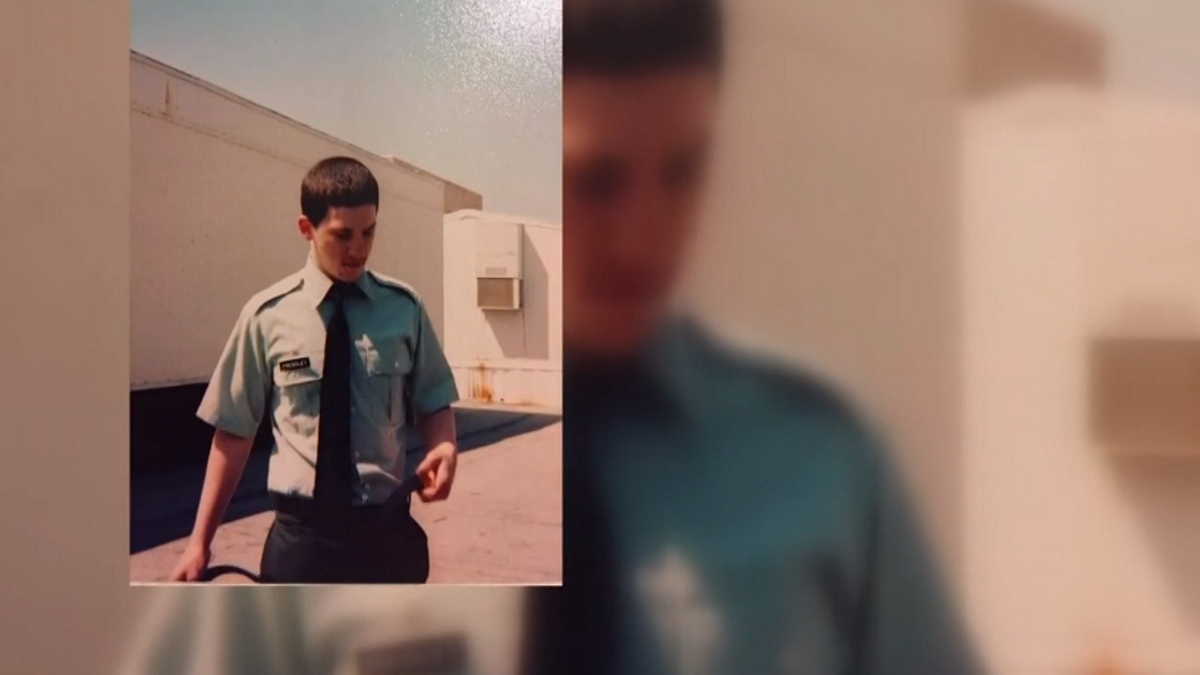
In April of 2019, Navy veteran Gary Pressley shot himself in the chest, which ended his life due to the extreme pain he was in, according to legal documents 13WMAZ obtained. As a result, Pressley’s mother, Rhonda Machelle Wilson, has filed a claim against the VA for more than $8.2 million.


In April of 2019, Navy veteran Gary Pressley shot himself in the chest, which ended his life due to the extreme pain he was in, according to legal documents 13WMAZ obtained. As a result, Pressley’s mother, Rhonda Machelle Wilson, has filed a claim against the VA for more than $8.2 million.

Pressley served in the US Navy and was medically discharged in 2012 after a car accident.

13WMAZ reports:

“I just wish that they would have found him and stopped him, locked him up, did what they had to do,” Wilson said.

Back in 2019, 28-year-old Gary Pressley died by suicide after shooting himself in the chest in the parking lot of the Carl Vinson VA Medical Center, in Dublin, Ga.

Documents 13WMAZ obtained say he left a suicide note saying, “This is what happens by punishing already-suffering people.” The back of the note said, “Thank you for the release.”

“It was just a battle with the medication, the doctors — I mean, I watched him cry,” Wilson said. 

Soffe Men’s 3 Pack-USA Poly Cotton Military Tee

His sister, Lisa Johnson, said she called the Veterans Affairs Department to report that her brother was threatening suicide just moments before he killed himself, 13WMAZ reported.

After watching her son lose his life, Rhonda Wilson filed a wrongful death claim against the Veterans Administration for $8,250,006. One document says the VA referred Pressley to a pain specialist in Stockbridge who got his pain under control, but the doctor stopped treating veterans because the VA owed her hundreds of thousands of dollars.

“Currently, I’m dealing with four of these different cases actively,” Attorney Peter Bertling said. 

Read more at 13WMAZ.com.

13WMAZ.com (February, 2020) Mom of veteran who committed suicide files $8.2 million claim against the VA

Help a veteran in need by donating here.