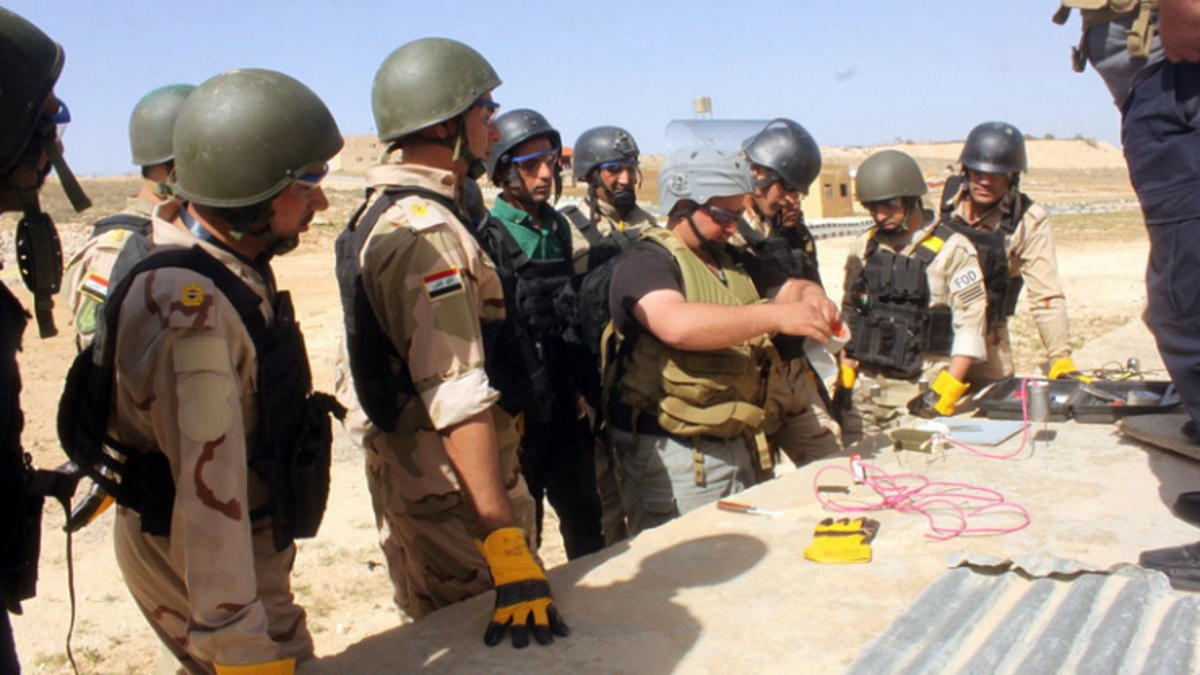
NATO launches Counter-Terrorism Reference Curriculum

NATO on Friday, June 12, launched its first ever Counter-Terrorism Reference Curriculum (CTRC). It supports interested Allies and partner countries in enhancing their capacities to develop national skills and improve counter-terrorism strategies.


NATO on Friday, June 12, launched its first ever Counter-Terrorism Reference Curriculum (CTRC). It supports interested Allies and partner countries in enhancing their capacities to develop national skills and improve counter-terrorism strategies.

The Curriculum will also serve as a reference document to address partner nation defense educational institution requirements and will provide helpful guidelines for relevant existing NATO courses. Drawing on historical examples, the CTRC provides an overview of terrorist ideologies, motivations and methods, as well as contemporary counter-terrorism practices and potential future projections.

Launching the Curriculum, Dr. Antonio Missiroli, NATO’s Assistant Secretary General for Emerging Security Challenges stated: “Security challenges like terrorism are not diminishing because of the global pandemic. Terrorism undermines our safety and the very values that underpin and inspire our societies. The Alliance is committed to address this threat with all available means. Supporting improved awareness, strengthening resilience and building counter-terrorism capacity of both Allies and partners are all part of this effort, and the CTRC perfectly fits these objectives. I would like to thank all those who helped make this Curriculum possible, including the United Nations, the European Union and the Organization for Security and Co-operation in Europe (OSCE).”

Partners can significantly benefit from using the CTRC for the development of their own tailored courses on Counter-Terrorism. This support will be provided and facilitated in the framework of NATO’s Defense Education Enhancement Programme (DEEP). Dr. John Manza, NATO’s Assistant Secretary General for Operations, highlighted: “The Counter-Terrorism Reference Curriculum will be available to all interested partners and Allies. DEEP will work diligently to help partners who request support in implementing tailored versions of the curriculum for their professional military education institutions. In light of the COVID-19 pandemic, and reflecting other longer-term trends, NATO will also work to implement the Counter-Terrorism Reference Curriculum as a distance course, available to all partners who wish to use it in their institutions. Supporting our partners in this way makes us all stronger in the face of a common threat.” 

Dr. Sajjan M. Gohel, the CTRC’s co-editor and academic project lead from the Asia-Pacific Foundation and the London School of Economics (LSE) added: “The CTRC is designed to provide users with a robust, holistic and nuanced comprehension of terrorism as well as improve potential counter-terrorism outcomes for NATO members and partners. The curriculum reflects NATO’s innovative best.”

The NATO Counter-Terrorism Reference Curriculum is the result of close cooperation between the Defense Education Enhancement Programme (DEEP) and NATO`s Counter-Terrorism Section, as well as the Partnership for Peace Consortium. Over 100 experts from nations across five continents, including from Tunisia, Jordan and Mauritania, as well as multiple international organizations contributed to the writing, drafting, and editing of the final product.

NATO.int (June 2020) NATO launches Counter-Terrorism Reference Curriculum
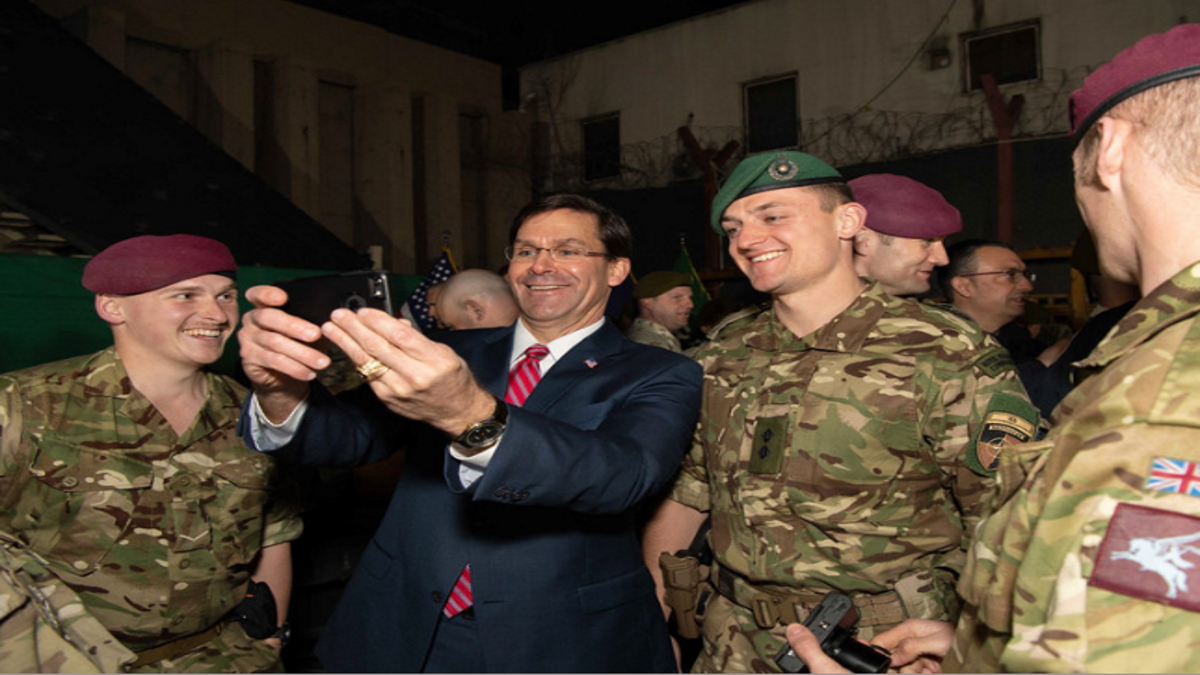
U.S., NATO Leaders Thank Troops for Afghanistan Service

Defense Secretary Dr. Mark T. Esper and NATO Secretary General Jens Stoltenberg thanked U.S. and NATO service members who have served and are serving in Afghanistan on a day of tremendous hope for peace.


Defense Secretary Dr. Mark T. Esper and NATO Secretary General Jens Stoltenberg thanked U.S. and NATO service members who have served and are serving in Afghanistan on a day of tremendous hope for peace.

Introduced in Afghanistan’s capital of Kabul by Army Gen. Austin S. Miller, commander of the Resolute Support mission, the two men talked about the joint declaration signed between the United States and the Taliban today in Doha, Qatar. Both stressed to the service members from 25 countries that the declaration is conditions-based and that coalition nations and the Afghan government will hold the Taliban to the agreement’s conditions.

Esper and Stoltenberg also emphasized that the coalition — including the United States — will continue to support the Afghan government as the process moves ahead.

“All NATO allies and partners, we are ready to continue to provide support for Afghanistan, but also to adjust and reduce our presence there if the conditions are met, because everything we do here will be conditions based,” Stoltenberg said.

Soffe Men’s 3 Pack-USA Poly Cotton Military Tee

Esper assured the service members that an end to the fighting will happen only when Afghans decide for themselves to lay down their arms and come together as one people. “We’re at that moment,” he said. “That is why the best path forward for the future of this country is through a political settlement.”

The agreement, Esper said, respects the integrity of the Afghan people “and preserves the accomplishments that we and our Afghan partners have fought so hard to achieve.”

American service members came to Afghanistan after the attacks of Sept. 11, 2001, that killed 2,977 people in New York, the Pentagon and Pennsylvania. The attacks were planned and directed from Afghanistan by al-Qaida leader Osama bin Laden. Since then, almost 800,000 U.S. troops have served in Afghanistan.

“Over 20,000 of our veterans have been wounded here in combat and forever bear the scars of this conflict,” Esper said. “And nearly 2,000 brave Americans made the ultimate sacrifice on Afghan soil by laying down their lives in defense of freedom.”

Coalition partners made similar commitments and sacrifices.

Army Gen. Mark A. Milley, the chairman of the Joint Chiefs of Staff, also noted the sacrifices. “We owe a debt of gratitude to America’s sons and daughters who paid the ultimate sacrifice in Afghanistan, and to the many thousands who served over the past nearly 19 years,” he said in a written statement. “The only responsible way to end the war in Afghanistan is through a negotiated political settlement. Today is a reflection of the hard work of our nation’s military, the U.S. Department of State, intelligence professionals and our valued partners. The United States is committed to the Afghan people, and to ensuring that Afghanistan never becomes a safe haven for terrorists to threaten our homeland and our allies.”

Esper told the service members in Kabul that there is still a long way to go. “All of our decisions moving forward are conditions-based and require the Taliban to maintain the ongoing reduction in violence,” he said. “If the Taliban fail to uphold their commitments, they will forfeit their chance to engage in negotiations with the Afghan government and will not have a say in the future of this country.”

But if the Taliban live by the agreements, the United States will begin a deliberate phase with redeployment of U.S. troops from Afghanistan, initially reducing the force to 8,600, the secretary said. “As we do this, we will work closely with our allies and partners to reduce their forces as well in a proportional manner,” he added. 

Still, even as the process begins, U.S. and NATO forces will continue their train, advise and assist mission. “We will not hesitate to strike terrorist threats throughout the country as they emerge,” the secretary said. “Central to our agreement with the Taliban are measures to prevent the use of Afghan soil by terrorist groups or other individuals who seek to harm the United States or our allies.

“Should that ever become compromised, we will take all necessary measures to protect our homelands and our people,” Esper said.

Defense.gov (February, 2020) U.S., NATO Leaders Thank Troops for Afghanistan Service

Help a veteran in need by donating here.