ICE removes Honduran man wanted for murder
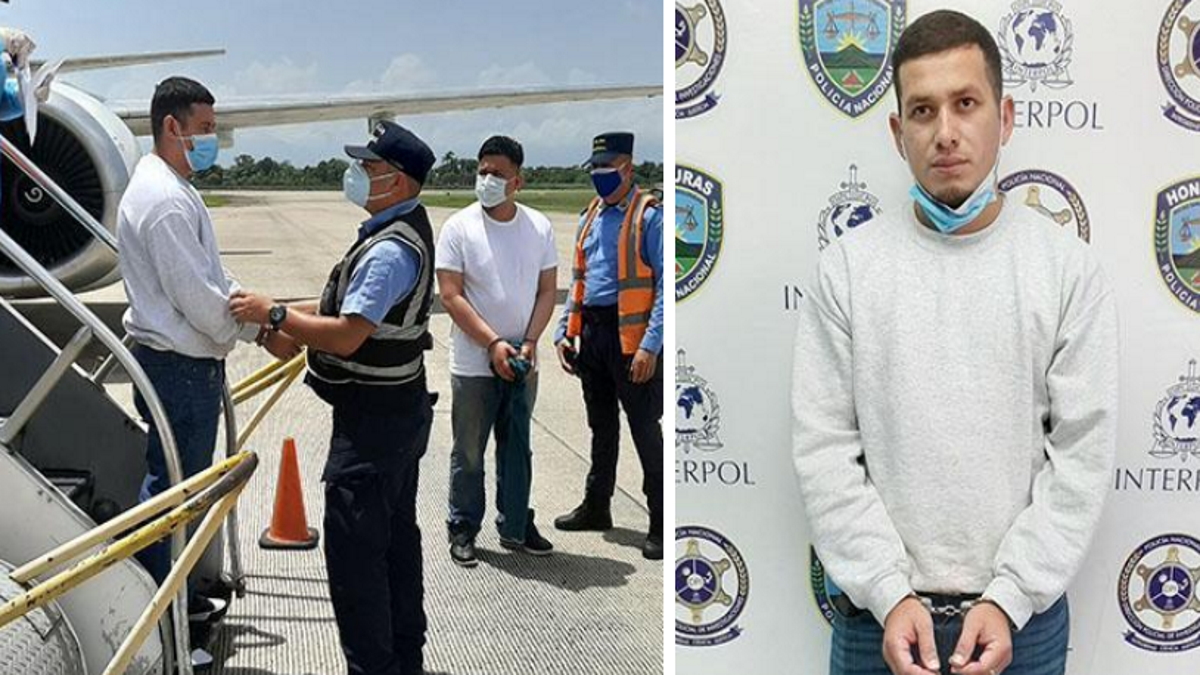
On July 31, U.S. Immigration and Customs Enforcement’s (ICE) Enforcement and Removal Operations (ERO) officers removed an unlawfully present Honduran man wanted by Honduran law enforcement authorities for murder.


On July 31, U.S. Immigration and Customs Enforcement’s (ICE) Enforcement and Removal Operations (ERO) officers removed an unlawfully present Honduran man wanted by Honduran law enforcement authorities for murder.

Saudiel Doblado Carias, 28, was removed to Honduras on an ICE Air charter where he was handed over to Honduran authorities.

Officers from the ERO Washington, D.C. field office arrested Doblado March 10 at his home near Charlottesville, Virginia. Doblado entered the U.S. in 2013 near Mission, Texas, and an immigration judge ordered his removal April 15, 2015, after he did not appear for his immigration hearing.

On Sept. 25, 2015, the Honduran government issued an arrest warrant for Doblado for murder.

ICE has removed hundreds of thousands of criminal aliens, some of whom fall under the category of high-profile removals, since the agency was established in March 2003.

“ICE is committed to removing fugitive aliens charged with crimes in their home countries so they may face justice,” said Acting Washington Field Office Director Lyle Boelens. “We are grateful to our law enforcement partners at home and abroad for their assistance in our shared public safety mission.”

High-profile removals include those who are wanted for a crime in another country, such as murder, rape, sexual abuse of a minor, drug offenses, alien smuggling, fraud or theft. Others include persons who are national security risks, such as suspected terrorists, those involved in counter-proliferation crimes or those on the terrorist watch list and/or the no-fly list, along with human rights or war crimes violators.

ICE removed or returned 267,000 aliens in fiscal year 2019. In FY 2019, 86 percent of ERO’s administrative arrests consisted of aliens with criminal convictions or pending criminal charges.

ICE is focused on removing public safety threats, such as convicted criminal aliens and gang members, as well as individuals who have violated our nation’s immigration laws, including those who illegally reentered the country after being removed and immigration fugitives ordered removed by federal immigration judges.

Members of the public who have information about foreign fugitives are urged to contact ICE by calling the ICE Tip Line at 1 (866) 347-2423 or internationally at 001-1802-872-6199. They can also file a tip online by completing ICE’s online tip form.

Blogs to Follow:

ICE.gov (August 2020) ICE removes Honduran man wanted for murder

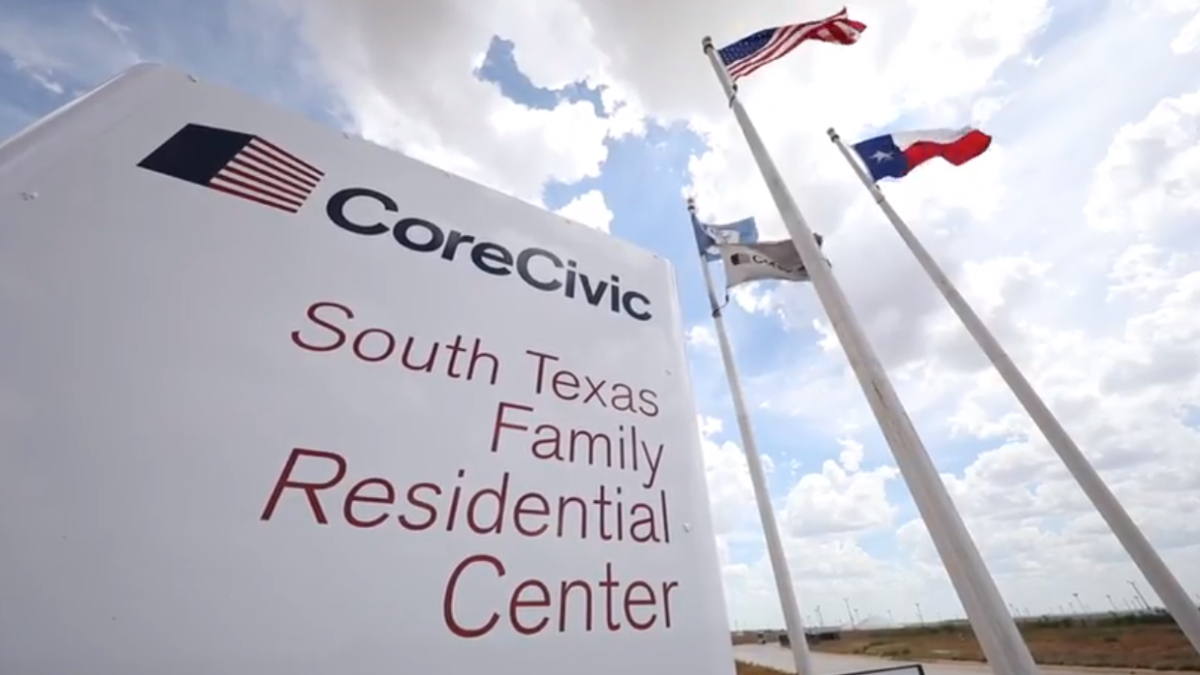
ICE responds to recent media coverage regarding family residential centers


On April 24, U.S. Immigration and Customs Enforcement (ICE) was directed by the U.S. District Court for the Central District of California to make every effort to promptly and safely release juvenile aliens who have suitable custodians and who are not a flight risk or a danger to themselves or others.

The court recognized that parents, not the government, should decide whether the juvenile should be released to a sponsor.

To comply with this order, ICE was required to check with each of the juveniles – and their parents – in custody at family residential centers (FRCs) to make individual parole determinations with respect to those juveniles.

To comply with the court-ordered deadline of May 15, ICE again interviewed nearly 300 individuals at the FRCs using a form developed almost three years ago to comply with another order from the same court.

This form, which has been recently circulating in media outlets, was submitted to the court December 1, 2017, and has since been available as part of the court’s public record.

This process is not new, and ICE has continually complied with the court’s order to conduct parole reviews of minors.

Despite misrepresentations, this form is nothing more than an internal worksheet used to document answers to questions regarding parole. In compliance with the judge’s order last week, some officers asked the individuals to initial or sign at the bottom of each page to verify that these were in fact their responses.

It is not a legally binding document and does not convey any legal implications on the family unit.

ICE continues to explore all options to ensure it acts in compliance with the court’s order which applies only to juvenile aliens, and not to their parents.

Parole can be denied based on flight risk or danger to self or others. Further, the court recognized that ICE need not release juvenile aliens whose parents waive their court-ordered option to be released to a sponsor.

This court-ordered option has been incorrectly reported as a change in policy. This is simply false. ICE has merely been conducting routine parole review consistent with the law, existing practice, and the court’s order.

ICE does not maintain custody of unaccompanied minors but does house family units (minors and their parent or legal guardian) at one of three FRCs.

ICE’s custodial determinations are conducted pursuant to its statutory and regulatory authorities, and in compliance with U.S. Department of Homeland Security and ICE policies and binding decisions from federal courts, including the U.S. District Court for the Central District of California’s most recent decision in Flores v. Barr, No. 85-4544 (C.D. Cal. Apr. 24, 2020).

Family units who come into ICE custody at an FRC and who pass an initial credible fear interview are generally released from custody in fewer than 20 days.

Consistent with President Trump’s executive order dated June 20, 2018, it is the policy of the administration to maintain family unity, including by detaining alien families together where appropriate and consistent with the law and available resources.

ICE adheres to the laws enacted by Congress and to decisions issued by federal courts with respect to the care and custody of minor children and family units.

As of May 19, 348 individuals are housed at FRCs.

ICE.gov (May 2020) ICE responds to recent media coverage regarding family residential centers

Illegal alien sentenced to 25 years in prison for conspiracy to distribute methamphetamine and heroin

Ubaldo Soto-Diaz, an illegal alien from Mexico, but residing in Portersville, California, was sentenced to 25 years in prison for conspiracy to distribute methamphetamine and heroin


Ubaldo Soto-Diaz, an illegal alien from Mexico, but residing in Portersville, California, was sentenced to 25 years in prison for conspiracy to distribute methamphetamine and heroin, Special Agent in Charge (SAC) of U.S. Immigration and Customs Enforcement’s Homeland Security Investigations (HSI) Seattle Debra Parker and U.S. Attorney Bart M. Davis announced.

Chief U.S. District Judge David C. Nye also ordered Soto-Diaz to pay a $2,000 fine and serve five years of supervised release following his prison sentence. Soto-Diaz pleaded guilty to the charge on July 18, 2019.

According to court records, Soto-Diaz admitted that between August 28, 2018, and January 28, 2019, he conspired with six other defendants to distribute methamphetamine and heroin.

Soto-Diaz was found to be the leader and organizer of an extensive criminal organization that was responsible for distributing high potency methamphetamine, manufactured in Mexico and then transported from California to Idaho. During their investigation of Soto-Diaz and his organization, DEA agents seized over thirty pounds of 100% pure methamphetamine and almost two pounds of black tar heroin.

According to court records, Soto-Diaz had previously been convicted of transporting a controlled substance in 2000 and possession of controlled substances for sale in 2009. He was deported to Mexico on May 17, 2010. He was found to be illegally present in the United States on May 26, 2010, and was convicted of illegal entry.

He again illegally returned to the United States and was convicted of possession of controlled substances for sale and unlawful possession of a firearm in 2012. At the time Soto-Diaz conspired to distribute methamphetamine and heroin to Idaho, he was illegally living in Portersville, California.

This case was a result of a joint investigation with Drug Enforcement Administration, Nampa Police Department, Canyon County Narcotics Unit, and Ada County Sheriff’s Office.

This indictment is the result of a joint investigation by the Organized Crime and Drug Enforcement Task Force (OCDETF). The OCDETF program is a federal multi-agency, multijurisdictional task force that supplies supplemental federal funding to federal and state agencies.

The principal mission of the OCDETF program is to identify, disrupt and dismantle the most serious drug trafficking, weapons trafficking and money laundering organizations, and those primarily responsible for the nation’s illegal drug supply. Program participants include HSI; Federal Bureau of Investigation; Drug Enforcement Administration; Bureau of Alcohol, Tobacco, Firearms and Explosives; Internal Revenue Service-Criminal Investigation; and U.S. Marshals Service.

As the largest investigative agency within the U.S. Department of Homeland Security (DHS), HSI investigates and enforces more than 400 federal criminal statutes – more than any other U.S. law enforcement agency. HSI special agents use this authority to investigate cross-border criminal activity – including drug trafficking – and work in close coordination with local state and federal law enforcement agencies to target transnational criminal organizations (TCOs) that are bringing dangerous substances, such as illicit fentanyl, into the community.

ICE.gov (Feb., 2020)  Illegal alien sentenced to 25 years in prison for conspiracy to distribute methamphetamine and heroin

Help me maintain this news reporting blog by donating here.