CBP’s Autonomous Surveillance Towers Declared a Program of Record along the Southwest Border

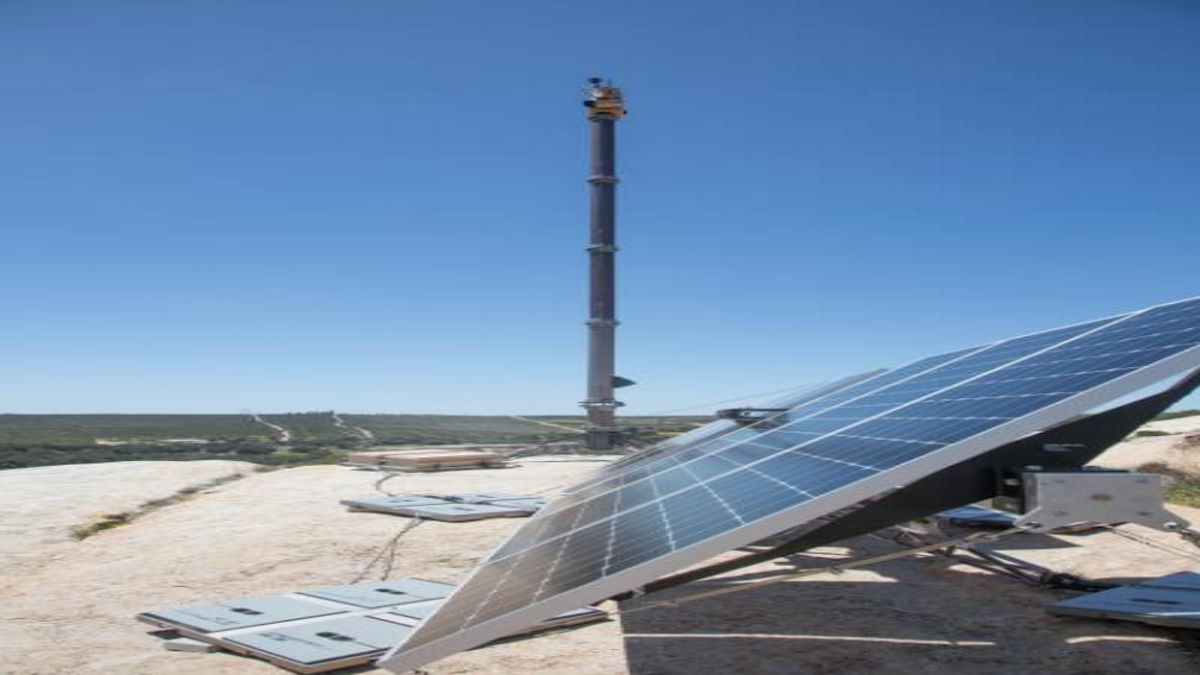
U.S. Customs and Border Protection (CBP) on Thursday announced that the Autonomous Surveillance Towers (AST) system has become a Program of Record for U.S. Border Patrol (USBP). Autonomous surveillance towers, known formerly as Innovative Towers, operate off-grid with 100 percent renewable energy and provide autonomous surveillance operations 24 hours per day, 365 days per year.


U.S. Customs and Border Protection (CBP) on Thursday announced that the Autonomous Surveillance Towers (AST) system has become a Program of Record for U.S. Border Patrol (USBP). Autonomous surveillance towers, known formerly as Innovative Towers, operate off-grid with 100 percent renewable energy and provide autonomous surveillance operations 24 hours per day, 365 days per year.

Perfectly suited for remote and rural locations, the AST scans the environment with radar to detect movement, orients a camera to the location of the movement detected by the radar, and analyzes the imagery using algorithms to autonomously identify items of interest, such as people or vehicles. 

Border Patrol agents are then alerted to this event and have the opportunity to make the final determination on what the item is and if it poses a threat.

These innovative towers operate completely off grid using 100 percent renewable energy, have a small geographic footprint, and minimize the impact to land owners and public lands to the maximum extent.

CBP personnel are able to re-locate a tower within two hours, providing front-line agents with a highly flexible, autonomous system that enhances situational awareness, agent effectiveness, and safety.

“These towers give agents in the field a significant leg up against the criminal networks that facilitate illegal cross-border activity,” said Border Patrol Chief Rodney Scott. “The more our agents know about what they encounter in the field, the more safely and effectively they can respond.”

CBP first piloted the towers in early 2018 with four towers in the San Diego Border Patrol Sector, and has since procured 56 additional towers. CBP is on a path to procure and deploy 140 additional towers in Fiscal Years 2021 and 2022, to reach a total of 200 towers.

Autonomous technology is a true force multiplier for CBP, enabling Border Patrol agents to remain focused on their interdiction mission rather than operating surveillance systems. 

Investments in autonomous operation, artificial intelligence, and other advanced technologies native to the Autonomous Surveillance Towers are absolutely essential to border security and compliment other capabilities such as the Border Wall System, Remote Video Surveillance System, Integrated Fixed Towers, Mobile Surveillance and small drones.

Blogs to Follow:

CBP.gov (July 2020) CBP’s Autonomous Surveillance Towers Declared a Program of Record along the Southwest Border
Traffic Stop Leads to Stash House, Drugs, Gang Member

U.S. Border Patrol agents arrested 24 people and seized nearly 2 pounds of fentanyl in a disrupted smuggling operation in Nogales, Arizona, Friday morning.


U.S. Border Patrol agents arrested 24 people and seized nearly 2 pounds of fentanyl in a disrupted smuggling operation in Nogales, Arizona, Friday morning.   

Tucson Sector agents responded to a request for assistance from the Nogales Police Department Friday morning, to identify undocumented passengers involved in a traffic stop.

Agents determined the lawfully admitted permanent resident driver of a Honda sedan was smuggling two Mexican nationals, both illegally present in the country.

All three individuals were arrested.

After agents secured the scene, they learned human smugglers were holding other undocumented people in a nearby house associated with the Honda.

U.S. Immigration and Customs Enforcement’s Homeland Security Investigations special agents, together with Border Patrol agents, visited the residence.

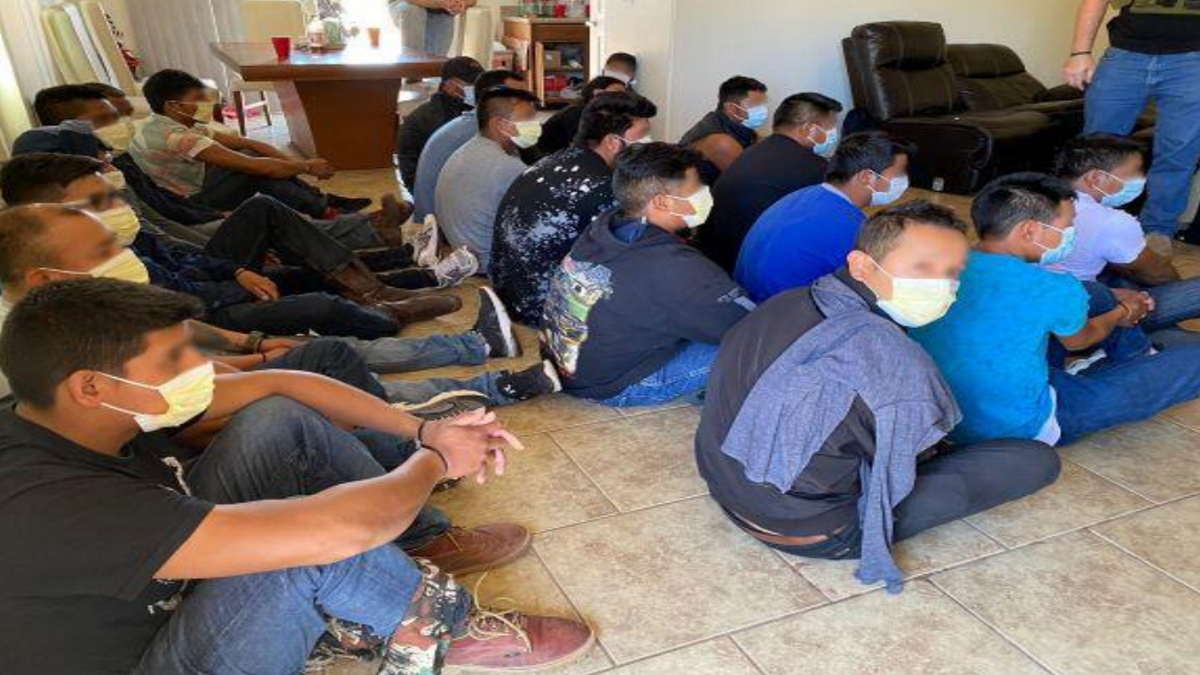
They discovered 21 Mexican nationals inside, all illegally present in the United States. Agents seized nearly 2 pounds of fentanyl also found within the home.

While conducting records checks, agents learned one man in the group had been identified as a “Surenos” street gang member during a previous arrest with immigration officials.

The driver of the Honda was charged with human smuggling, while the gang member will be prosecuted for felony immigration violations.

All others arrested will be processed for immigration violations and expelled from the country under Title 42 authority.   

CBP.gov (June 2020) Traffic Stop Leads to Stash House, Drugs, Gang Member

CBP Assists US Law Enforcement Partners and British Royal Navy in $46.2 million in cocaine seizure in the Caribbean Sea

The US Customs and Border Protection (CBP) has reported that the British Royal Navy and U.S. law enforcement partners seized 1,400 kilograms (3,086) pounds of cocaine and detained nine suspected smugglers


The US Customs and Border Protection (CBP) has reported that the British Royal Navy and U.S. law enforcement partners seized 1,400 kilograms (3,086) pounds of cocaine and detained nine suspected smugglers following the interdiction of two separate drug smuggling events in the Caribbean Sea Jan. 24 and Jan. 30, 2020.

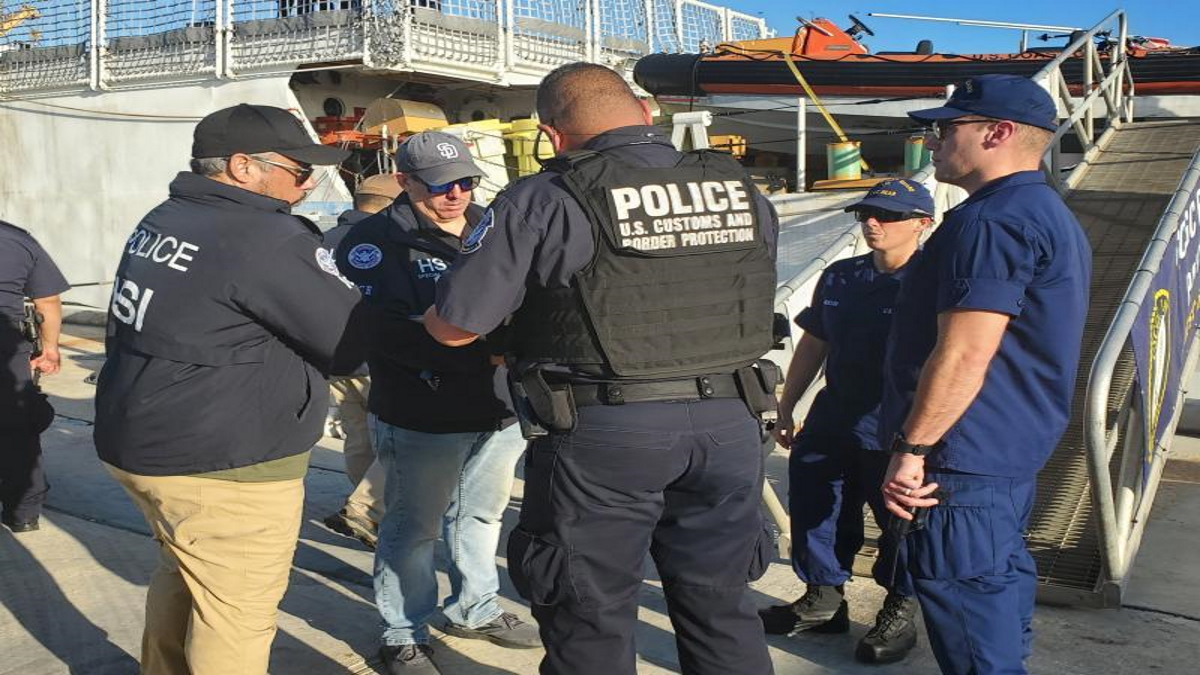
The US Coast Guard cutter Bear delivered the seized contraband and detainees from both cases to US Customs and Border Protection (CBP) officers, Immigration and Customs Enforcement (ICE)-Homeland Security Investigations, and Drug Enforcement Administration special agents in San Juan, Puerto Rico, Tuesday.

The interdiction was a result of an international, multi-agency law enforcement effort in support of Operation Unified Resolve, Operation Caribbean Guard, Campaign Martillo (a joint, inter-agency, 20-nation collaborative counter narcotic effort), and the Caribbean Corridor Strike Force (CCSF) and will be prosecuted by the U.S. Federal District Court for the District of Puerto Rico.

In the first interdiction, the United Kingdom’s Royal Navy RFA Mounts Bay, while on patrol with a U.S. Coast Guard Law Enforcement Detachment (LEDET) and a Coast Guard Helicopter Interdiction Tactical Squadron (HITRON) armed helicopter onboard, detected two suspicious go-fast vessels, approximately 74 nautical miles south of St. Croix, U.S. Virgin Islands.

The RFA Mounts Bay launched the Coast Guard HITRON helicopter and the ship’s pursuit vessel with the Coast Guard LEDET to interdict both suspect vessels. 

The Coast Guard LEDET boarding team, with the assistance of RFA Mounts Bay crew members, boarded the suspected vessels, apprehending the seven men and seizing 42 bales of suspected contraband. 

In the second interdiction, a marine patrol aircraft detected a northbound target of interest, southeast of Isla Beata, Dominican Republic. The cutter Bear along with a helicopter responded to interdict the go-fast.  Cutter Bear’s Over the Horizon cutter boat and embarked helicopter arrived on scene and stopped the go-fast.  Cutter Bear’s boarding team detained the two men aboard the go-fast, after discovering 13 bales of suspected contraband.

CBP is part of the Caribbean Border Strike Force (CCSF); an initiative of the U.S. Attorney’s Office created to disrupt and dismantle major drug trafficking organizations operating in the Caribbean. CCSF is part of the Organized Crime Drug Enforcement Task Force (OCDETF), which investigates South American-based drug trafficking organizations responsible for the movement of multi-kilogram quantities of narcotics using the Caribbean as a transshipment point for further distribution to the United States.

CBP.gov (February, 2020) CBP Assists US Law Enforcement Partners and British Royal Navy in $46.2 million in cocaine seizure in the Caribbean Sea

Help me maintain this news reporting blog by donating here.