AFIMSC engineer honored with Bronze Star Medal

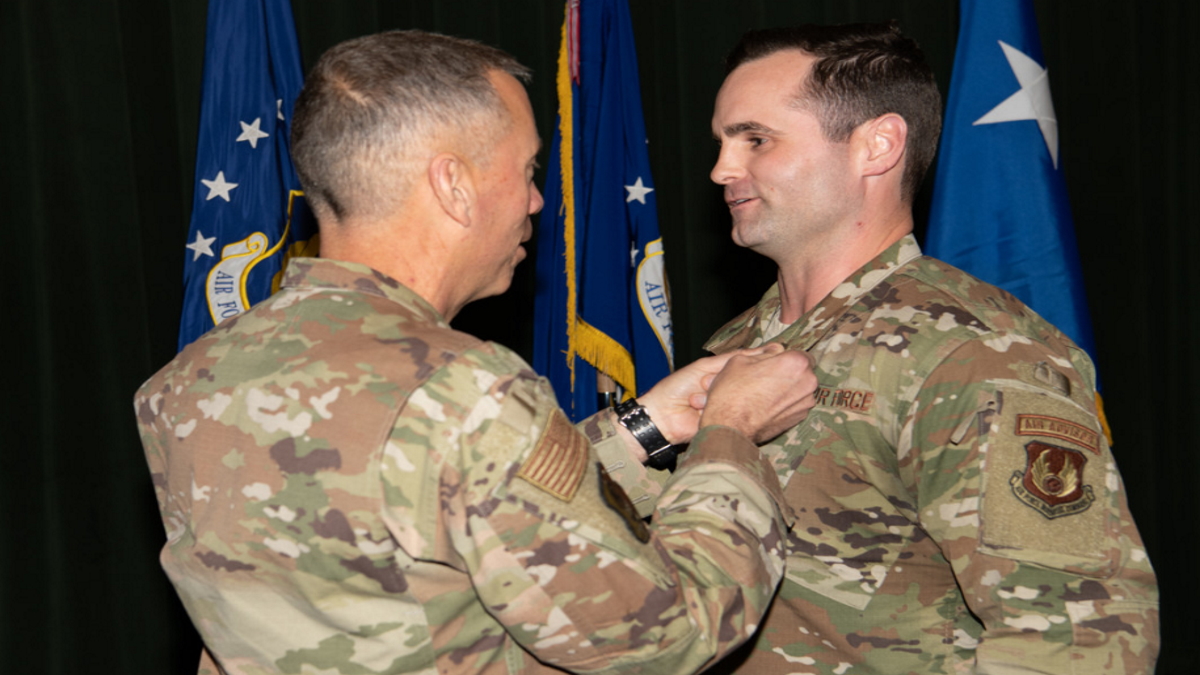
On February 13, 2020, Maj. Gen. Tom Wilcox, Air Force Installation and Mission Support Center commander, awarded the Bronze Star Medal to Capt. Shane Lockridge.


On February 13, 2020, Maj. Gen. Tom Wilcox, Air Force Installation and Mission Support Center commander awarded the Bronze Star Medal to Capt. Shane Lockridge.

Capt. Shane Lockridge is the chief of military construction requirements for the Air Force Civil Engineer Center, a subordinate unit of AFIMSC. He received the award for his performance as the director of operations and engineer adviser for Operation Freedom’s Sentinel in Kandahar, Afghanistan, from March 2018 to February 2019.

The Bronze Star is awarded to those who demonstrate heroic or meritorious achievement for service in a combat zone in connection with military operations against an armed enemy.

“It’s important for everybody in this center to know that this is what our folks do when they deploy each and every day … going out there, taking the fight to the enemy and taking care of our folks while doing it,” Wilcox said. “Capt. Lockridge, it is an honor to be standing with you.”

What makes the captain’s accomplishments even more impressive is he volunteered for the tour, which was also his first deployment. He gives credit and appreciation to the team he led.

“I had the honor of leading a team of 126 personnel tasked to bolster the capabilities of the Afghan Air Force’s engineering, security forces, logistics and communications squadrons,” Lockridge said. “Without their support and mentorship, I would have never been able to accomplish anything worth this honor.”

He and his team were assigned to the 738th Air Expeditionary Advisory Group, composed of more than 85 coalition members, including partners from the U.S., Lithuania, Latvia, Ukraine and Belgium. The group assists, trains, and advises the Kandahar Air Wing in order to provide support to coalition counterinsurgency operations. Advisers mentor their Afghan counterparts across a range of functions including flight operations, aircraft maintenance, intelligence, logistics, personnel management, communications and base defense.

His squadron commander during his deployment, Maj. Kristina Sawtelle of the 443rd Air Expeditionary Advisory Squadron, recalled the environment they were in and the work Lockridge performed.

“Our base was a significant target for attacks as it was a strategic base for the U.S. military, NATO and the Afghan National Army and Air Force,” Sawtelle said. “There were countless nights that were spent in bunkers with incoming sirens going off. Capt. Lockridge was asked to serve in two major roles during his deployment as lead engineering air advisor with one of the largest portfolios in Southern Afghanistan and the director of operations for the largest and most diverse air advisor squadron in the 738th.”

She emphasized that the level of work he performed further signified the level of achievement he demonstrated throughout his deployment.

“While exposed to significant threat streams to include rocket attacks, mortars and insider-threats, and the train, advise, assist mission put Capt. Lockridge shoulder-to-shoulder with our Afghan partners,” Sawtelle said. “His construction portfolio was extremely dynamic; however, one of his major projects was a multimillion-dollar Kandahar airfield renovation. The construction would allow for the successful build of the Afghan Air Force’s light attack, armed aircraft. The operating environment came with significant risk that was mitigated through continuous tactics, training and procedures exercises, live-fire drills and security assessments.”

As the only engineering officer in the 738th AEAG, he was also in charge of project development, funds procurement and construction execution of 12 projects worth $57 million. These projects included construction and renovation to assist in growing the Afghan Air Force mission by standing up the first Afghan UH-60 squadron 18 months ahead of schedule. In addition to bolstering the capabilities of the Afghan Air Force, Lockridge also participated in providing security and force protection to the entire 738th AEAG.

“We endured multiple rocket attacks,” Lockridge said. “We were in constant exposure for possible green-on-blue insider attacks, and we were able to perform 135 outside-the-wire missions, which were done at a time when we were facing opposing forces there at Kandahar Airfield.”

The airfield renovation was a significant accomplishment for Lockridge and his team. Enabling the beddown not only established the first-ever Afghan Air Force Blackhawk squadron ahead of schedule, but increased Afghan Air Force combat capabilities to progress toward operational independence.

“The challenges and adversity our engineers overcame during this project were tremendous and I was truly proud to be a member of the team,” he said. “I was part of something bigger than myself and am honored every day to work with some of the greatest people this world has ever seen.”

Soffe Men’s 3 Pack-USA Poly Cotton Military Tee

AF.mil (February, 2020) AFIMSC engineer honored with Bronze Star Medal

Help a veteran in need by donating here.
Air Force Colonel Sentenced for Receiving Child Pornography

An Air Force Colonel was sentenced today to five years in prison followed by 15 years of supervised release for receiving child pornography.


An Air Force Colonel was sentenced today to five years in prison followed by 15 years of supervised release for receiving child pornography.

Assistant Attorney General Brian A. Benczkowski of the Justice Department’s Criminal Division and U.S. Attorney G. Zachary Terwilliger for the Eastern District of Virginia made the announcement.

“According to admissions made in connection with his plea agreement, between November 2015 and June 2016, Mark Visconi, 48, received and attempted to receive child pornography using the Internet. Visconi used an online bulletin board dedicated to the sharing of child pornography that operated on the anonymous Tor network to download child pornography. A forensic review of his laptop showed that Visconi downloaded and viewed numerous child pornography images and videos.  Visconi previously pleaded guilty on Oct. 4, 2019.”

“Visconi also admitted to using his cell phone to create hundreds of apparently surreptitious pictures that were focused on the clothed buttocks of minor girls, including images that appear to have been taken with a camera angled upward underneath a minor’s skirt or loose shorts so as to depict or attempt to depict the minor’s underwear.”    

The case was investigated by U.S. Immigration and Customs Enforcement’s Homeland Security Investigations. Trial Attorney Gwendelynn Bills of the Criminal Division’s Child Exploitation and Obscenity Section (CEOS) and Assistant U.S. Attorney Whitney Russell of the Eastern District of Virginia are prosecuting the case.

This case was brought as part of Project Safe Childhood, a nationwide initiative launched in May 2006 by the Department of Justice to combat the growing epidemic of child sexual exploitation and abuse.  Led by U.S. Attorneys’ Offices and CEOS, Project Safe Childhood marshals federal, state and local resources to better locate, apprehend and prosecute individuals who exploit children via the Internet, as well as to identify and rescue victims. 

For more information about Project Safe Childhood, please visit www.justice.gov/psc.

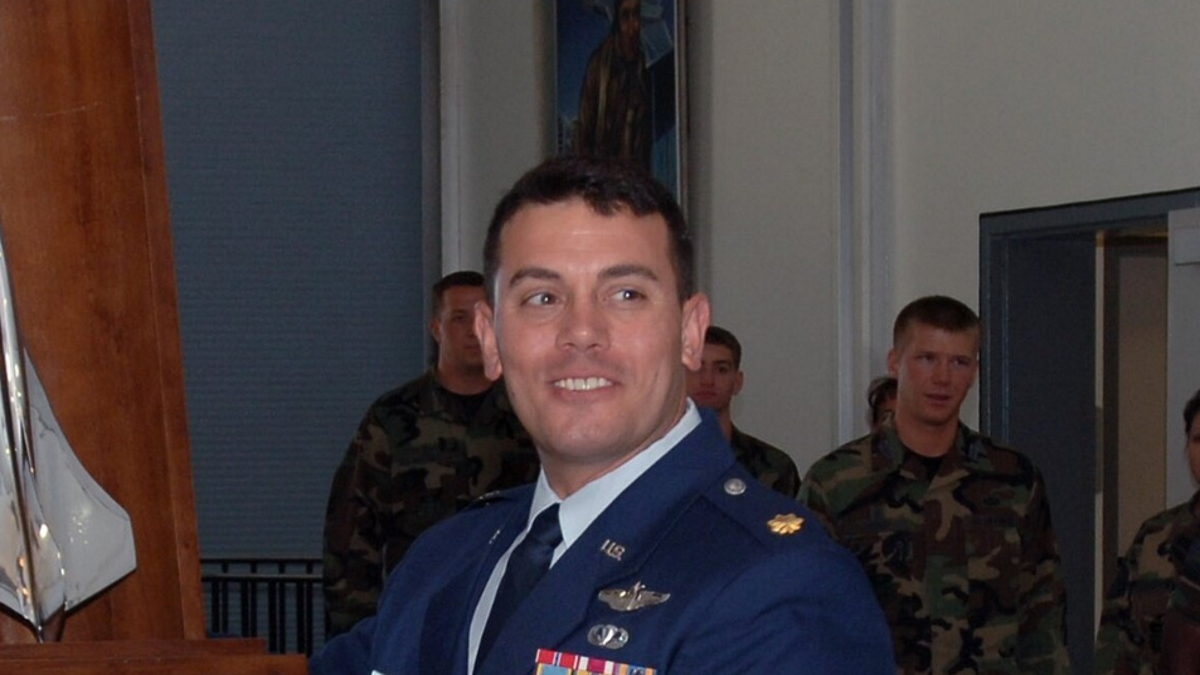
Photo: Col. Mark Visconi, shown in this 2007 photo as a Major, pleaded guilty to child pornography charges and was sentenced to five years in prison. (David Armer/Air Force)

Help me maintain this news reporting blog by donating here.

Raytheon to help US Air Force modernize missile warning architecture

Raytheon Intelligence, Information and Services has developed a completely open framework — which the Air Force calls the Future Operationally Resilient Ground Evolution (FORGE) Mission Data Processing Application Framework (MDPAF) — that will be capable of processing Overhead Persistent Infrared (OPIR) satellite data


New system will fuse dozens of data sources for the military

To help with this mission, Raytheon Intelligence, Information and Services has developed a completely open framework — which the Air Force calls the Future Operationally Resilient Ground Evolution (FORGE) Mission Data Processing Application Framework (MDPAF) — that will be capable of processing Overhead Persistent Infrared (OPIR) satellite data from both the U.S. Air Force’s evolving Space Based Infrared System (SBIRS) constellation and the future Next Gen OPIR constellation, as well as be capable of processing data from other civil and environmental sensors.

“The U.S. government’s global satellite network produces a constant flood of data — petabytes and petabytes of it every day,” said Dave Wajsgras, president of Raytheon IIS. “The Air Force wants to open that network up so they can use as much of that data as possible. That’s a huge transformation not just for the service, but for the whole government.”

This is a significant departure from previous satellite ground control programs. Typically, companies would develop a system that collects and exploits data from specific types of satellites or sensors. FORGE changes this model as it’s able to collect data from nearly any type of satellite or sensor, and then helps operators make sense of that data quickly.

“Essentially, this is a smartphone model,” said Wajsgras. “We’ve built an operating system that everyone can build applications for – from Raytheon to the Air Force to universities to small companies. These applications allow the system to process specific types of data.”

One of the key benefits of incorporating new applications is that the system can be used beyond its intended mission. For example, an application could be built that would allow civil agencies to use the same satellite data to help detect forest fires, volcanic activity, agricultural changes, even surges in electric power consumption.

Further departing from the traditional ground control development model, Raytheon built the prototype system in less than a year and it’s capable of processing real data today. The company leveraged development work on several past programs, especially its Advanced Weather Integrated Processing System, to design the framework. Raytheon also incorporated its deep experience developing applications using DevSecOps and Agile software development processes to dramatically speed development.

Raytheon will work with the Air Force over the upcoming years to further evolve and prove the framework’s capabilities.

Help me maintain this news reporting blog by donating here.