DEA Reports Significant Increase in Counterfeit Pills in Minnesota
Drug Enforcement Administration (DEA) agents from the Minneapolis/St. Paul District Office are reporting a significant increase in counterfeit pills entering Minnesota from drug trafficking organizations (DTOs) in California, Arizona and Mexico.


Drug Enforcement Administration (DEA) agents from the Minneapolis/St. Paul District Office are reporting a significant increase in counterfeit pills entering Minnesota from drug trafficking organizations (DTOs) in California, Arizona and Mexico.

In Minnesota, agents have recovered approximately 46,000 counterfeit pills during the first seven months of 2020, nearly four times the amount seized in all of 2019.  Agents note that the counterfeit pill trend took off in Minnesota in 2018, with pill numbers increasing each year.

Counterfeit pain pills and sedatives are flooding the illegal drug market and causing a significant number of fatal overdose deaths. 

These dangerous substances contain fentanyl, a powerful opioid 100 times more potent than morphine. Supplied by Mexican drug cartels, or coming directly from China, these pills look identical to legitimate medications such as hydrocodone, Xanax or other medications often prescribed for pain or anxiety.

Based on a sampling of tablets seized nationwide in 2019, DEA found that 27 percent contained potentially lethal doses of fentanyl.

“There is no quality control in these counterfeit pills,” Omaha Division Special Agent in Charge Richard Salter Jr., said.  “Drug trafficking organizations do not employ scientists or use professional laboratories to create these deadly pills and therefore they cannot create the safe chemical mixtures that their legitimate pharmaceutical counterparts do.  A lethal dosage of fentanyl is two milligrams, equivalent in size to a few grains of salt, as compared to a lethal dose of heroin at 30 milligrams. Each time someone takes a counterfeit pain pill, they are playing Russian roulette with their life.” 

Minnesota’s counterfeit pills are primarily sourced from Mexico, with traffickers bringing loads across the Southwest Border into Arizona and California before making their way to Minneapolis. Counterfeit pills have been hidden among coffee beans and candy in an attempt to camouflage the product in transport and have been smuggled underneath cars in strong magnetic boxes.

Additionally, agents are seeing more counterfeit pills being shipped through mail services, with Minneapolis investigators recently seizing a 4,000 count pill load with assistance from the United States Postal Inspection Service.

“If a doctor didn’t prescribe it, or if the pill isn’t coming from a pharmacy, it’s very likely counterfeit,” Salter said. “Mexican cartels are purchasing fentanyl and its analogs and setting up huge operations to manufacture these dangerous products.”

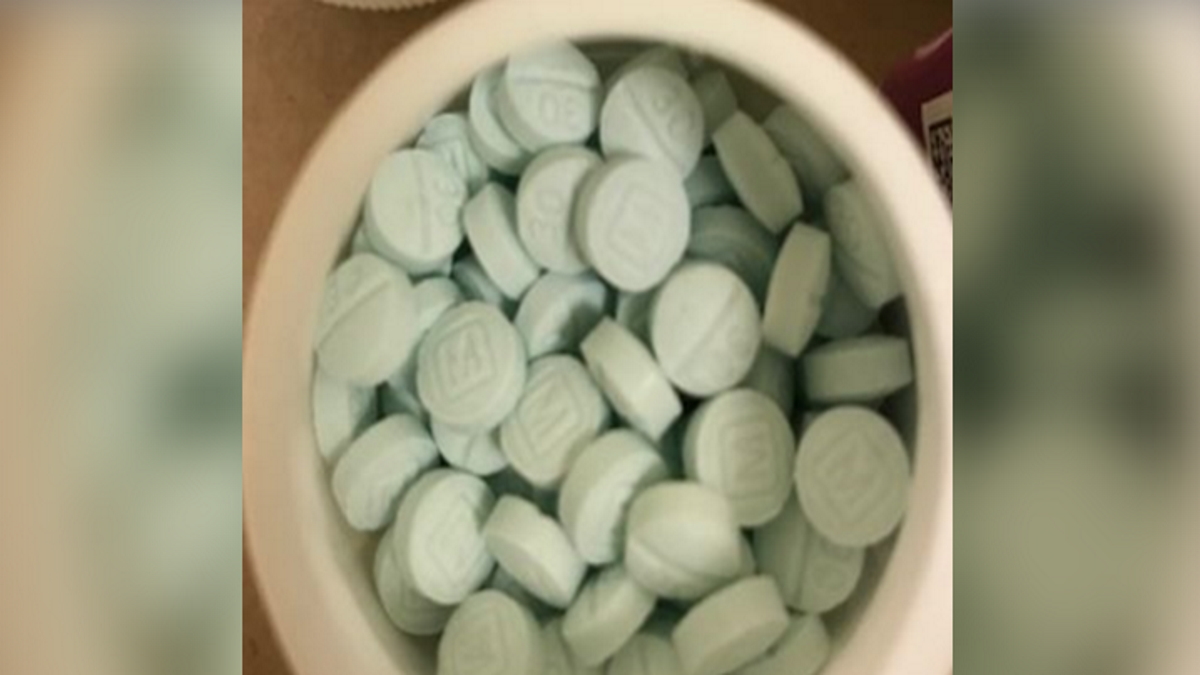
The most common counterfeit pill found in Minnesota is an illicit substitute for oxycodone, known as M30’s for its markings. It is important to note that there is no concern of counterfeit pills entering the legitimate prescription supply chain. 

Counterfeit pills are sold on the black market, either on the street by drug dealers or on the dark web.

As with other illicit drugs, agents have tied counterfeit pills back to gangs and violent crimes.

“We have documented events where opposing gangs are fighting for drug distribution territory,” Salter said. “As a result, gang members have been either shot or killed. The drug business and violence go hand-in-hand.”

The prices of counterfeit pills vary, with distributors in Arizona and California, selling a single pill for $4.  In Minnesota, the same pill can sell for upwards of $30, or $1 per milligram.  Agents have reported seeing prices as high as $100 a pill on Native Reservations.

“Please educate your high school and college-age kids on the extreme dangers of counterfeit medications,” Salter said. “Too often, the overdose victims are young and are not prior drug abusers.  They went to a party and someone offered them a pill to relax them – then they died.  Too many American parents have had to bury their children as a result of drug overdose.”

Minnesota is one of five states in the DEA Omaha Division including Iowa, Nebraska, North Dakota and South Dakota. 

Blogs to Follow:

DEA.gov (August 2020) DEA Reports Significant Increase in Counterfeit Pills in Minnesota
ICC: Beirut Explosion Sends Shockwaves Through Iraq

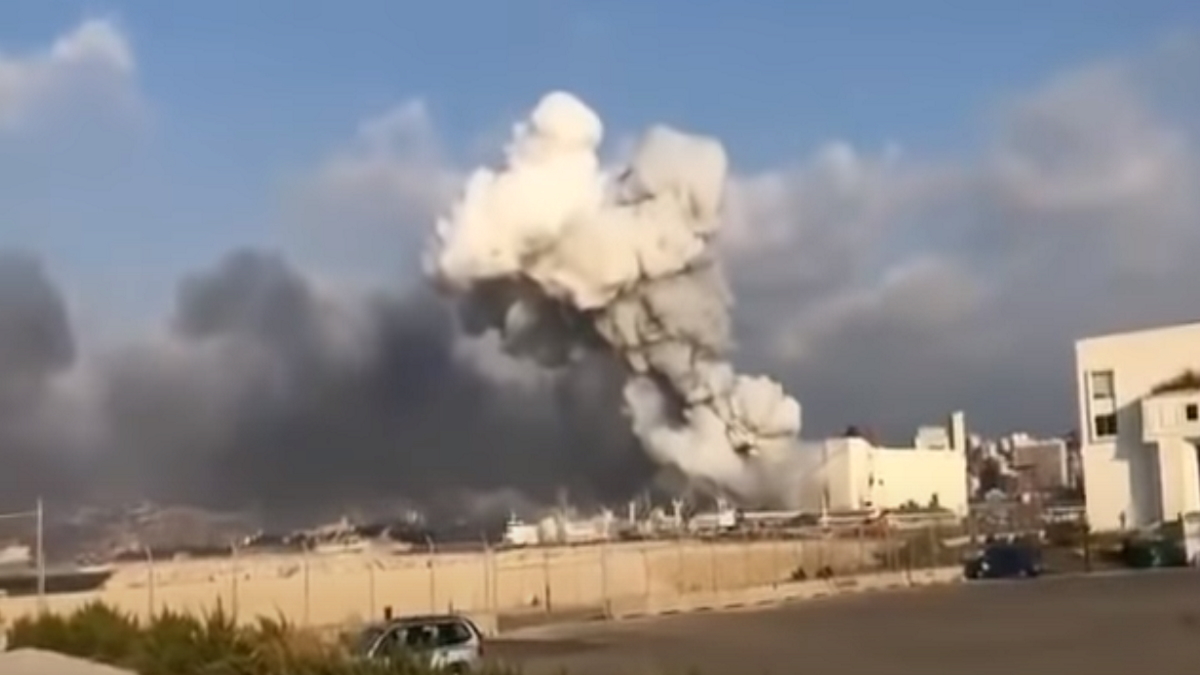
Last week’s catastrophe in Lebanon’s capital city of Beirut is one the most forceful and damaging non-nuclear explosions in world history. Over 2,700 tons of poorly stored ammonium nitrate ignited in an explosion that was reportedly felt in both Cyprus and Damascus. Most corners of Beirut have significant damage, and it is estimated that tens of thousands are now homeless.


(International Christian Concern (ICC)) – Last week’s catastrophe in Lebanon’s capital city of Beirut is one the most forceful and damaging non-nuclear explosions in world history.

Over 2,700 tons of poorly stored ammonium nitrate ignited in an explosion that was reportedly felt in both Cyprus and Damascus. Most corners of Beirut have significant damage, and it is estimated that tens of thousands are now homeless.

The entire global community was shocked by this disaster.

But nearby in Iraq, where militias run rampant, and the storage of explosives in residential areas is common, the shock was underscored by the thought, “This could have happened here.” It is a reality that has helped propel Christian immigration from the country.

One Christian living in Baghdad watched in disbelief at the events unfolding in Lebanon. “I would imagine that this explosion happens in Iraq rather than Beirut! I think Iranians have more influence in Iraq. We are geographically closer to Iran. In Iraq, there are many more military bases that belong to Iran. The Iraqi government should start looking for such materials, like ammonium nitrate, to avoid any similar disaster!”

Indeed, Beirut’s catastrophe did seem to hit home for some Iraqi officials. The head of Iraq’s Border Ports Authority quickly began forming a committee intended to clear out all hazardous inventory from the border ports. They were given 72 hours to complete the task. But in some ways, it was an order that missed the point: hazardous materials are stored everywhere in Iraq, not just the ports. These materials are connected to militias and their respective political parties, many of whom are heavily under Iranian influence.

“Iraq and Lebanon have similarities on so many things,” adds another Baghdad Christian. “Mainly the influence of Iran, which results in a militia existence in both countries. Those militias could be different in approaches, but there is one thing that they 100% share: corruption. Since they are recognized as terrorist groups and they can’t get resources unless it is under the table.”

“Corruption results in risking thousands of lives every day. Stocking explosive materials in Iraq among civilians’ houses is risking lives; bad storage at the border is risking lives. I think we can have examples as much as you can read,” he continues. “These militias one way or another are destroying the Middle East. Wherever there is Iran or its militia, there are disasters, crimes, and abuse of human rights. That results in the leaving of Christians and other people who can’t be a member of a militia for religious or social reasons.”

Such scenarios are already playing out, reminds a Christian business owner in Baghdad. He specifically remembers examples similar to Beirut occurring in the Christian areas of Iraq, thanks to both ISIS and Hashid militias. He says, “I would like to remind everyone of all the explosions that took place in Iraq; there were huge ones that result in damage to hundreds of houses. Go and look at Mosul and the Nineveh Plains!”

“All that results in the immigration of Christians and other minorities,” he adds. “When militias and Hashid come and store explosive materials next to your house, what will you do? You will get killed if you talk, and you will get killed if you stay at the same house. (There are) no options! How many explosions took place in Baghdad, such as because Hashid facilities have been targeted by the international coalition?!! ISIS and other extremist groups since 2003 have impacted Christians’ life so much.”

This reality has frustrated so many Iraqi Christians in the aftermath of the Beirut explosion. For those who had tried immigrating, Lebanon was a common destination during the intermediary stage. At least, unlike other neighboring countries, there was a sizeable Lebanese Christian population to integrate with during the interim. But now with Lebanon destroyed, immigration looks harder. Its destruction serves as a reminder of what so many Iraqi Christians were trying to flee.

A Christian from Qeraqosh explained, “I have experienced so many wars, since 1980 and 1991 and later. The safe place during the war was home, but not anymore. You could die even if you are at your home, just if any militia decided to store their weapons and rockets in your neighborhood.”

Such a reality sits uneasily in the minds of Christians. “Is there still a place to live in this country?” asks one woman. “When you lose someone close to your heart, that is the worst thing that could happen to someone, especially if the cause of death was avoidable. Militias are avoidable. After every explosion and targeting, I see people leaving the country. We ended up strangers. Friends and relatives are leaving one after one, can you tell me when that will have an end?”

The explosion in Lebanon was avoidable. But Iranian regional influence, militias, and their respective political parties, make it a possible scenario in many Middle East countries. For Iraqi Christians, it is an explosion that sends shockwaves throughout the community.

For there is no way to escape such a possibility, except to leave.

Blogs to Follow:

Persecution.org (August 2020) Beirut Explosion Sends Shockwaves Through Iraq

IDF Thwarts Terror Attack from Syria

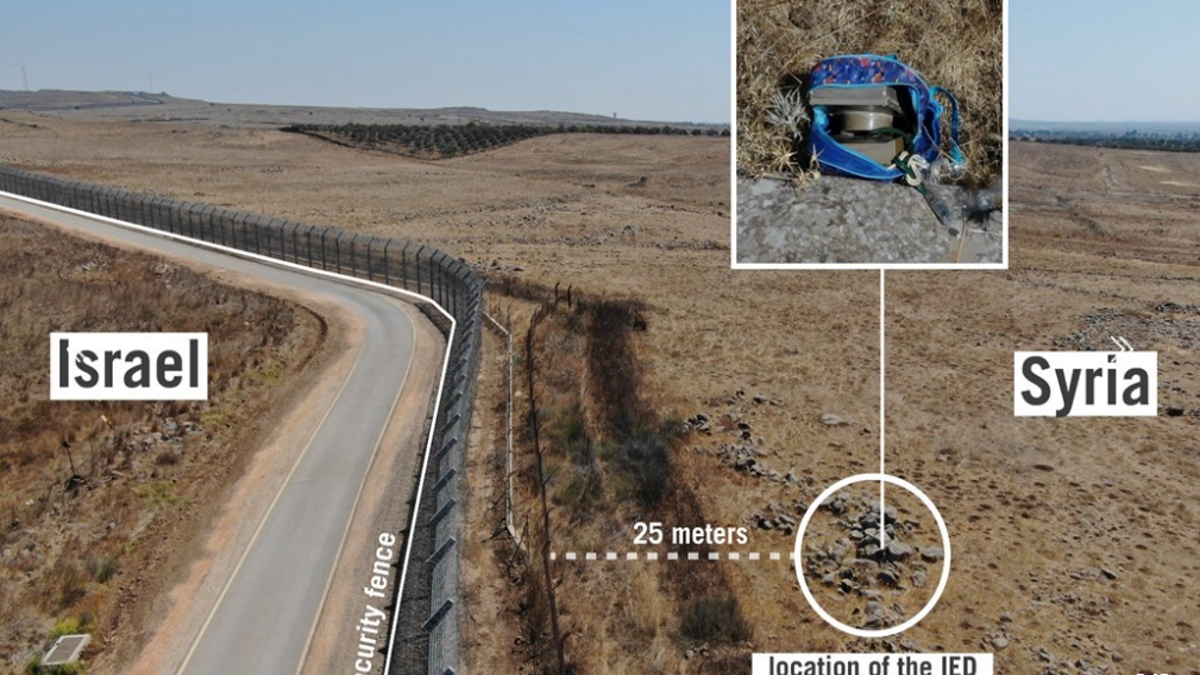
On August 2, 2020, the IDF thwarted an attempt by four terrorists to place an improvised explosive device (IED) by the Israeli security fence. The terrorists crossed the buffer zone between Israel and Syria near the Alpha Line before they were stopped by IDF troops.


On August 2, 2020, the IDF thwarted an attempt by four terrorists to place an improvised explosive device (IED) by the Israeli security fence. The terrorists crossed the buffer zone between Israel and Syria near the Alpha Line before they were stopped by IDF troops.

This attack from Syria follows an attempted infiltration into Israel from Lebanon by a Hezbollah terror squad on July 27, 2020, which you can read about here.

Following the security incident in northern Israel on July 27, 2020, the IDF gave instructions to Israeli civilians living in northern Israel in close proximity to the Blue Line. Civilians were asked to temporarily stay in their homes and avoid any activity in open areas. In addition, the IDF closed roads in the area to minimize movement.

Iran and Hezbollah, an Iranian proxy, are using Syria as a launchpad for terror against Israeli civilians. Since the outbreak of conflict in Syria in 2011, Iran has provided significant military and financial support to the Syrian government led by Bashar al-Assad. Iran has long-sought influence over Syria as control over Syria increases Iran’s ability to threaten Israel with attacks and its overall control in the region.

The Quds Force of the Iranian Islamic Revolutionary Guard Corps and Iranian proxy groups—like Hezbollah—took advantage of the instability in Syria in the aftermath of conflict, and have used this opportunity to entrench themselves in Syria, to establish a permanent base for Iranian operations. In total, since the beginning of 2018, Iran and Hezbollah have launched eight separate attacks on Israel from Syria.

After the attempted terror attack of August 2nd, the IDF conducted a patrol of the area  and discovered weapons and a bag with explosives—ready to be used—left by the terror squad just 25 meters from the Israeli security fence.  

In response to the attempted terror attack on August 2, 2020, IDF aircraft and fighter jets struck Syrian Armed Forces military sites in southern Syria on August 3, 2020. Among the targets included: observation posts, intelligence collection systems, anti-aircraft artillery, and command and control systems. 

The IDF holds the Syrian government responsible for all activities on Syrian soil, and will continue operating with determination against any violation of Israeli sovereignty.

Blogs to Follow:

IDF.IL (August 2020) IDF Thwarts Terror Attack from Syria; IDF Thwarts Hezbollah Infiltration Into Northern Israel

Missile Agency Director Describes Threat, Countermeasures

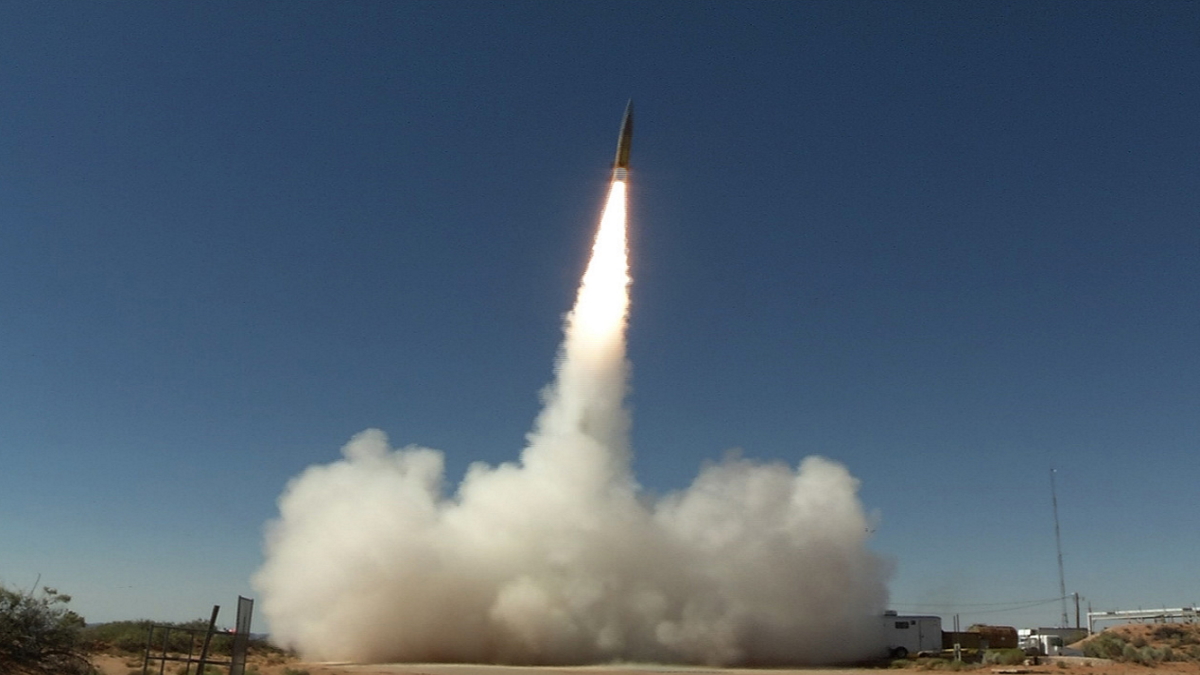
In recent years, threats from new missile systems against the homeland, deployed forces and friends and allies have arisen from Russia, China, North Korea and Iran, the director of the Missile Defense Agency said.


In recent years, threats from new missile systems against the homeland, deployed forces and friends and allies have arisen from Russia, China, North Korea and Iran, the director of the Missile Defense Agency said.

Navy Vice Adm. Jon A. Hill spoke yesterday at the Space and Missile Defense Symposium in Washington.

“At one time, the MDA focused on the ballistic missile threat. However, adversaries have designed extremely fast and maneuverable advanced cruise missiles and hyper-sonic weapons that make for “a very tough environment for defense,” Hill said. “The Missile Defense Review addressed these new threats, laying out a path to follow in developing new offensive and defensive measures, he added.”

Though defense is a key part of deterrence, Hill said, “you can’t shoot what you don’t see.” Providing that sights are sensors and radars aboard ships, on the ground and in space.

Space-based sensors are the ultimate, Hill said, because they can provide global coverage. Space tracking and surveillance systems collect data, intelligence and real-world missile testing, he said, but that capability is nowhere near where it needs to be.

Sensors start the kill chain by sending out a warning, the admiral explained. Then, radars track the missile, and fire control launches a defensive projectile.

This projectile can come from a Patriot system or Terminal High Altitude Area Defense system, all operated by the Army, or the Standard Missile 3 Block IIA or the Aegis Ballistic Missile Defense System, both operated by the Navy. Besides those defenses, ground-based interceptors, operated by the Army, are deployed at Fort Greely, Alaska, and at Vandenberg Air Force Base, California.

The command and control and battle management system, fully protected with cybersecurity measures, ties these systems together with the operators.

Many missile defense components are in the research, science and technology and demonstration phase, Hill said. For example, work is being done on the next-generation interceptor and long-range discrimination radar, as well as space-based sensors.

“Where we live today is we don’t have everything we want deployed in space, nor do we have the terrestrial or mobile sea-based sensors where we want, where we need them at the right time,” the missile agency Director said.

Besides new, cutting-edge systems, Hill noted that current systems such as Aegis and command and control are receiving important upgrades as they become available.

MDA is working with the Army to integrate the THAAD and Patriot systems so operators can communicate with both and shoot with either, depending on the scenario, the admiral said.

Allies and partners are developing their own missile defense systems or buying them from the United States through the foreign military sales system, Hill said. These systems used by friends and partners furthers global security, he pointed out, and the Defense Department is working to better integrate those systems so they’re even more effective.

Though the COVID-19 pandemic has presented challenges, Hill said, that hasn’t affected MDA’s ability to perform its mission: “If you ask me where we took risk during the global pandemic, we never took any risk in supporting the warfighter,” he said. “We continue to deliver capability, we continue to support major movements around the globe.” Delivery of systems caused some delay, he acknowledged, because assembly lines require people in confined and enclosed places.

Hill termed his MDA team and those in the services as stellar, and he said there’s no nobler calling than defending America.

Blogs to Follow:

Defense.gov (August 2020) Missile Agency Director Describes Threat, Countermeasures

ICE removes Honduran man wanted for murder

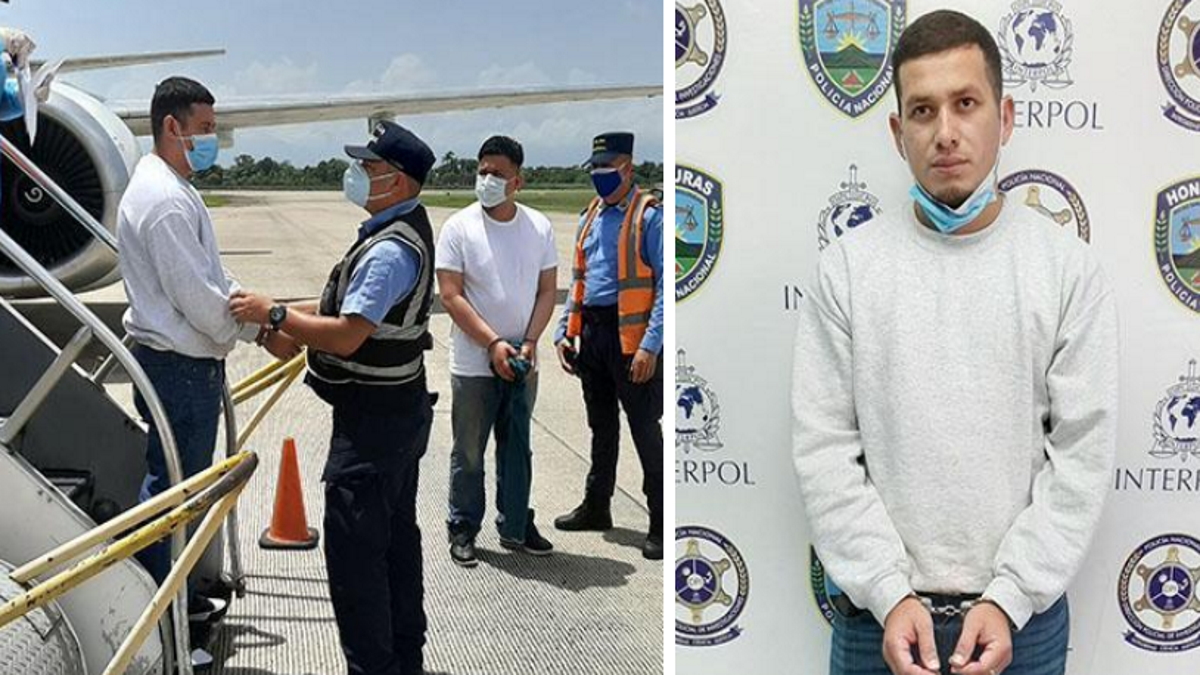
On July 31, U.S. Immigration and Customs Enforcement’s (ICE) Enforcement and Removal Operations (ERO) officers removed an unlawfully present Honduran man wanted by Honduran law enforcement authorities for murder.


On July 31, U.S. Immigration and Customs Enforcement’s (ICE) Enforcement and Removal Operations (ERO) officers removed an unlawfully present Honduran man wanted by Honduran law enforcement authorities for murder.

Saudiel Doblado Carias, 28, was removed to Honduras on an ICE Air charter where he was handed over to Honduran authorities.

Officers from the ERO Washington, D.C. field office arrested Doblado March 10 at his home near Charlottesville, Virginia. Doblado entered the U.S. in 2013 near Mission, Texas, and an immigration judge ordered his removal April 15, 2015, after he did not appear for his immigration hearing.

On Sept. 25, 2015, the Honduran government issued an arrest warrant for Doblado for murder.

ICE has removed hundreds of thousands of criminal aliens, some of whom fall under the category of high-profile removals, since the agency was established in March 2003.

“ICE is committed to removing fugitive aliens charged with crimes in their home countries so they may face justice,” said Acting Washington Field Office Director Lyle Boelens. “We are grateful to our law enforcement partners at home and abroad for their assistance in our shared public safety mission.”

High-profile removals include those who are wanted for a crime in another country, such as murder, rape, sexual abuse of a minor, drug offenses, alien smuggling, fraud or theft. Others include persons who are national security risks, such as suspected terrorists, those involved in counter-proliferation crimes or those on the terrorist watch list and/or the no-fly list, along with human rights or war crimes violators.

ICE removed or returned 267,000 aliens in fiscal year 2019. In FY 2019, 86 percent of ERO’s administrative arrests consisted of aliens with criminal convictions or pending criminal charges.

ICE is focused on removing public safety threats, such as convicted criminal aliens and gang members, as well as individuals who have violated our nation’s immigration laws, including those who illegally reentered the country after being removed and immigration fugitives ordered removed by federal immigration judges.

Members of the public who have information about foreign fugitives are urged to contact ICE by calling the ICE Tip Line at 1 (866) 347-2423 or internationally at 001-1802-872-6199. They can also file a tip online by completing ICE’s online tip form.

Blogs to Follow:

ICE.gov (August 2020) ICE removes Honduran man wanted for murder