DHS Announces Streamlining Measures To Help States In Issuing REAL IDs

After soliciting ideas, solutions and proposals from the public, states, private sector, and relevant associations, DHS Acting Secretary Chad F. Wolf sent letters to state governors informing them of increased flexibility regarding electronic submission of required documents for REAL ID applications.


After soliciting ideas, solutions and proposals from the public, states, private sector, and relevant associations, DHS Acting Secretary Chad F. Wolf sent letters to state governors informing them of increased flexibility regarding electronic submission of required documents for REAL ID applications.

Specifically, the states may now add the pre-submission of identity and lawful status source documents, through a secure electronic process, prior to an applicant’s in-person DMV visit, and physical presentation of those same documents for authentication and verification by DMV personnel. The result will be a faster, more streamlined process for DMVs and the American public.

“Ensuring every state is REAL ID compliant by October is one of the Department’s top priorities. That is why we have solicited ideas, solutions and proposals from the public, private sector, state governments, and relevant associations in an effort to provide greater flexibility to states for faster, streamlined issuance of REAL IDs,” said Acting Secretary Wolf. “While progress has been made, the real work is still ahead because approximately two-thirds of all licenses are presently not compliant with REAL ID. Rest assured, our Department will continue to examine other viable options to improve upon this process and continues doing everything it can to inform Americans on the requirement to obtain a REAL ID before the full enforcement deadline later this year.”

Soffe Men’s 3 Pack-USA Poly Cotton Military Tee

DHS is providing greater flexibility to states to aid in faster and streamlined issuance of REAL IDs:

  • Ensuring every state is REAL ID compliant by October is a top priority.
  • 48 of the 50 states are presently issuing REAL IDs, and all states are on track to be REAL ID compliant in the next few months. Nearly 100,000,000 Americans already have REAL IDs.
  • DHS is focused on ensuring more citizens can acquire them from their state before the enforcement deadline of October 1, 2020 at which a REAL ID or compliant alternative will be required for domestic air travel.

DHS is taking proactive steps to help the states comply with the REAL ID implementation deadline:

  • After soliciting ideas, solutions and proposals from the public, states, private sector, and relevant associations, the DHS letters to 56 state governments (including territories) are informing states of greater flexibility being provided by DHS with regard to electronically receiving of required documents from applicants in advance of physically coming into a DMV with the documentation for the purpose of obtaining a REAL ID.
  • The states may now add the pre-submission of identity and lawful status source documents, through a secure electronic process, prior to an applicant’s in-person DMV visit, and physical presentation of those same documents for authentication and verification by DMV personnel.
  • DHS expects that these measures will result in reduced wait times at DMVs so more individuals can become REAL ID compliant through a streamlined process, without the manual labor of scanning, copying and filing of paper materials typically performed on site.
  • Although DHS is permitting states to undertake these new options, they are not required.

DHS has been listening to the states in an ongoing dialogue between DHS and stakeholders to ensure all air travelers are REAL ID compliant:

  • To encourage the submission of ideas and solutions from across the Nation, DHS issued a Request for Information (RFI) on November 7, 2019, requesting substantive business and technical proposals that could streamline the REAL ID application requirements while still ensuring the security and protection of identity information.
  • The RFI period closed on December 9, 2019 with the Department receiving 69 submissions from the public, states, private sector, and major associations. DHS has expedited its review of the proposals and is working with the White House Office of Management and Budget and Congress, as necessary, to implement viable solutions.
  • While DHS has just concluded the analysis of the RFI, this new action to provide greater latitude to states is one viable option that the Department could act on right immediately via guidance. DHS continues to look at what other actions are possible from a range of perspectives, regulatory and statutory.
  • Since the REAL ID Act was enacted in 2005, DHS has worked extensively with every state to provide time, technical assistance, and make grants available to support compliance with the REAL ID Act security requirements.
  • Importantly, the Department has been increasing its overall education and awareness efforts with national organizations, the travel industry, state governments, federal agencies, and Congress – including the National Governors Association and the American Association of Motor Vehicle Administrators – to emphasize the importance of getting the American public prepared for the REAL ID deadline and to solicit their ideas for making it easier for Americans to obtain a REAL ID.

While progress has been made, the real work is still ahead because approximately two-thirds of all licenses are presently not compliant with REAL ID.

  • DHS urges the states, District of Columbia, and U.S. territory officials to act to ensure that all their eligible residents obtain driver’s licenses or identification cards that meet these enhanced security standards.
  • At the end of January, DHS reported that the states have collectively issued more than 95 million REAL ID-compliant driver’s licenses and ID cards (34%) out of 276 million total cards.
  • While this is a noteworthy improvement over the 67 million REAL ID-compliant cards reported a few months earlier, DHS urges the American public to get a REAL ID immediately and not wait until the deadline.
  • DHS continues doing everything it can to inform Americans on the requirement to obtain a REAL ID or acceptable alternative ID before the full enforcement deadline for domestic air travel.

Read More: DHS Steps Up REAL ID Education and Awareness Efforts

FBI.gov (February, 2020) DHS Announces Streamlining Measures To Help States In Issuing REAL IDs

Help a veteran in need by donating here.
Romanian Hackers Sentenced

Bayrob Group members Bogdan Nicolescu and Radu Miclaus were both convicted on wire fraud, money laundering, and identity theft charges. In December 2019, Nicolescu was sentenced to 20 years and Miclaus to 18 years in prison.


Members of Bayrob Criminal Enterprise Infected Thousands of Computers with Malware, Stole Millions of Dollars

The hackers were like modern-day John Dillingers, brazenly committing their crimes and repeatedly escaping law enforcement’s grasp.

But like Dillinger and most other criminals, they eventually slipped up, and the FBI and its international partners were waiting for them after years of tracking their activities.

Auction Fraud Gets Law Enforcement’s Attention

In 2007, an Ohio woman wired thousands of dollars to an eBay seller thinking she was buying a used car. The car never arrived. When she went to her local police department, the listing did not appear on the officers’ computers.

That’s because the woman was on a fraudulent version of the online auction site that mimicked the real one—a result of having unknowingly downloaded malicious software, known as malware, to her computer.

And to thousands of other victims just like her, the website and transactions looked legitimate. But buyers who thought they were wiring money across town were, in fact, sending money to hackers halfway across the world.

Shop Amazon Gift Cards. Any Occasion. No Expiration.

The hackers, known as the Bayrob Group, laundered the money via money mules, making it difficult to track. (Money mules are criminal accomplices who, often unwittingly, move criminal money through their own bank accounts.) Additionally, if a user on an infected machine went to the “Help” section of the site, they were met with the hackers’—not eBay’s—customer service.

The Bayrob hackers also blocked websites like ic3.gov—the FBI’s Internet Crime Complaint Center—where a user might have gone for help. And before smartphones were so common, the infected computer may have been a victim’s only access to the Internet.

The would-be car buyer, along with many other victims, lost her money because wiring funds lacks the consumer protection of a credit card. Agents estimate each victim lost between $8,000 and $11,000.

“At the time, this was really cutting edge,” said Special Agent Ryan Macfarlane, who worked this case out of the FBI’s Cleveland Field Office. “These guys did a very good job of staying current with the technologies in the cyber-criminal underground.”

Following the Money and the Malware

The Bayrob hackers were frustratingly nimble and good at covering their tracks. They used multiple layers of proxy servers to hide their location. Those proxy servers communicated with the “command and control” servers that talked to the thousands of computers the malware had infected.

But as the hackers gained more victims, more partners joined the investigation. The FBI worked with numerous law enforcement agencies around the world on this case, as well as with companies such as AOL, eBay, and Symantec.

Beginning in 2012, the Bayrob Group began to diversify its criminal business as technology advanced. They continued to spread their malware via spam and social media, but they also got into cryptocurrency mining and selling credit card numbers on the Darknet.

“They had all of these infected systems, and they tried to use as many ways as possible to make money from them,” Macfarlane said.

Mistake Yields a Break in the Case

A break finally came when a Bayrob participant accidentally logged into his personal email instead of his criminal one. AOL, who was investigating his abuse of their network, connected the two accounts. That personal account led to online profiles in Romania and on social media—essentially the first action tying one of the suspects to the crimes.

That small mistake helped set investigators, in partnership with the Romanian National Police, on a path toward discovering the identities of all three hackers. And after much further investigation, including undercover buys from the group on Darknet marketplace Alphabay, the FBI had enough evidence to work with Romanian authorities on the arrests.

By the time the hackers were arrested in 2016, the Bayrob Group had become one of the top senders of malicious email.

“We were essentially taking down this entire infrastructure and arresting the three individuals at one time,” Macfarlane said. “And the Romanian National Police were key partners in this effort. They stuck with us year after year. We couldn’t have done this without them.”

Bayrob Group members Bogdan Nicolescu and Radu Miclaus were both convicted on wire fraud, money laundering, and identity theft charges. In December 2019, Nicolescu was sentenced to 20 years and Miclaus to 18 years in prison.

A third member of the group, Tiberiu Danet, pleaded guilty to similar charges. He was sentenced in January to 10 years in prison.

While it was years in the making, putting a stop to these prolific thieves was worth the time and effort for the investigators—even when the hackers were as elusive as a gangster on the run.

“We stuck with it because these guys weren’t stopping,” Macfarlane said. “They continued to evolve, and they were becoming a bigger and bigger threat.”

Protecting Yourself Online

Although many of the victims had no way of knowing their computers were compromised, there are steps you can take to protect yourself and your devices, such as making sure your antivirus and operating systems are always up to date. Also be careful of what you click on, even if it’s coming from someone you know.

“A lot of people don’t think that someone they know will be compromised,” said FBI Special Agent Stacy Diaz, who also worked on the case. “These hackers know how social networks work, and they use those relationships to grow their network.”

FBI.gov (February, 2020) Romanian Hackers Sentenced

Help a veteran in need by donating here.

AFIMSC engineer honored with Bronze Star Medal

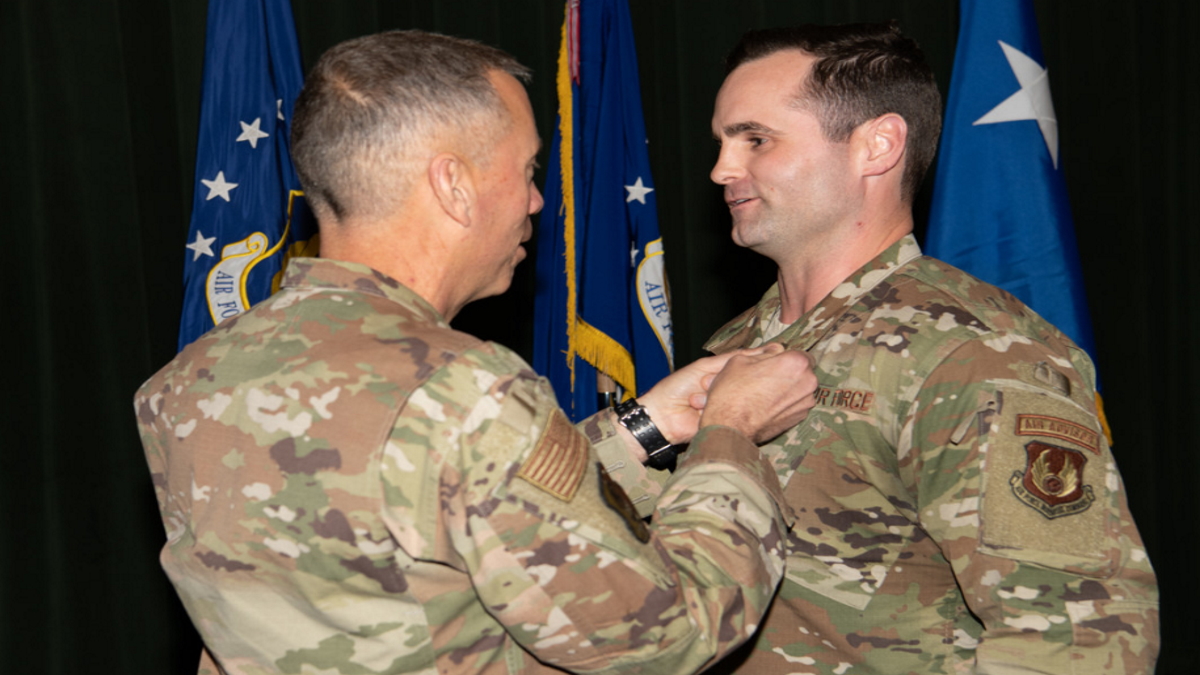
On February 13, 2020, Maj. Gen. Tom Wilcox, Air Force Installation and Mission Support Center commander, awarded the Bronze Star Medal to Capt. Shane Lockridge.


On February 13, 2020, Maj. Gen. Tom Wilcox, Air Force Installation and Mission Support Center commander awarded the Bronze Star Medal to Capt. Shane Lockridge.

Capt. Shane Lockridge is the chief of military construction requirements for the Air Force Civil Engineer Center, a subordinate unit of AFIMSC. He received the award for his performance as the director of operations and engineer adviser for Operation Freedom’s Sentinel in Kandahar, Afghanistan, from March 2018 to February 2019.

The Bronze Star is awarded to those who demonstrate heroic or meritorious achievement for service in a combat zone in connection with military operations against an armed enemy.

“It’s important for everybody in this center to know that this is what our folks do when they deploy each and every day … going out there, taking the fight to the enemy and taking care of our folks while doing it,” Wilcox said. “Capt. Lockridge, it is an honor to be standing with you.”

What makes the captain’s accomplishments even more impressive is he volunteered for the tour, which was also his first deployment. He gives credit and appreciation to the team he led.

“I had the honor of leading a team of 126 personnel tasked to bolster the capabilities of the Afghan Air Force’s engineering, security forces, logistics and communications squadrons,” Lockridge said. “Without their support and mentorship, I would have never been able to accomplish anything worth this honor.”

He and his team were assigned to the 738th Air Expeditionary Advisory Group, composed of more than 85 coalition members, including partners from the U.S., Lithuania, Latvia, Ukraine and Belgium. The group assists, trains, and advises the Kandahar Air Wing in order to provide support to coalition counterinsurgency operations. Advisers mentor their Afghan counterparts across a range of functions including flight operations, aircraft maintenance, intelligence, logistics, personnel management, communications and base defense.

His squadron commander during his deployment, Maj. Kristina Sawtelle of the 443rd Air Expeditionary Advisory Squadron, recalled the environment they were in and the work Lockridge performed.

“Our base was a significant target for attacks as it was a strategic base for the U.S. military, NATO and the Afghan National Army and Air Force,” Sawtelle said. “There were countless nights that were spent in bunkers with incoming sirens going off. Capt. Lockridge was asked to serve in two major roles during his deployment as lead engineering air advisor with one of the largest portfolios in Southern Afghanistan and the director of operations for the largest and most diverse air advisor squadron in the 738th.”

She emphasized that the level of work he performed further signified the level of achievement he demonstrated throughout his deployment.

“While exposed to significant threat streams to include rocket attacks, mortars and insider-threats, and the train, advise, assist mission put Capt. Lockridge shoulder-to-shoulder with our Afghan partners,” Sawtelle said. “His construction portfolio was extremely dynamic; however, one of his major projects was a multimillion-dollar Kandahar airfield renovation. The construction would allow for the successful build of the Afghan Air Force’s light attack, armed aircraft. The operating environment came with significant risk that was mitigated through continuous tactics, training and procedures exercises, live-fire drills and security assessments.”

As the only engineering officer in the 738th AEAG, he was also in charge of project development, funds procurement and construction execution of 12 projects worth $57 million. These projects included construction and renovation to assist in growing the Afghan Air Force mission by standing up the first Afghan UH-60 squadron 18 months ahead of schedule. In addition to bolstering the capabilities of the Afghan Air Force, Lockridge also participated in providing security and force protection to the entire 738th AEAG.

“We endured multiple rocket attacks,” Lockridge said. “We were in constant exposure for possible green-on-blue insider attacks, and we were able to perform 135 outside-the-wire missions, which were done at a time when we were facing opposing forces there at Kandahar Airfield.”

The airfield renovation was a significant accomplishment for Lockridge and his team. Enabling the beddown not only established the first-ever Afghan Air Force Blackhawk squadron ahead of schedule, but increased Afghan Air Force combat capabilities to progress toward operational independence.

“The challenges and adversity our engineers overcame during this project were tremendous and I was truly proud to be a member of the team,” he said. “I was part of something bigger than myself and am honored every day to work with some of the greatest people this world has ever seen.”

Soffe Men’s 3 Pack-USA Poly Cotton Military Tee

AF.mil (February, 2020) AFIMSC engineer honored with Bronze Star Medal

Help a veteran in need by donating here.
Former DIA Employee Pleads Guilty to Leaking Classified National Defense Information to Journalists

An employee of the Defense Intelligence Agency (DIA) pleaded guilty today to charges related to his disclosure of classified national defense information (NDI) to two journalists in 2018 and 2019.


An employee of the Defense Intelligence Agency (DIA) pleaded guilty today to charges related to his disclosure of classified national defense information (NDI) to two journalists in 2018 and 2019.

“Frese violated the trust placed in him by the American people when he disclosed sensitive national security information for personal gain,” said Assistant Attorney General for National Security John C. Demers. “He alerted our country’s adversaries to sensitive national defense information, putting the nation’s security at risk.  The government takes these breaches seriously and will use all the resources at our disposal to apprehend and prosecute those who jeopardize the safety of this country and its citizens.”

“Henry Kyle Frese was entrusted with Top Secret information related to the national defense of our country,” said G. Zachary Terwilliger, U.S. Attorney for the Eastern District of Virginia. “Frese violated that trust, the oath he swore to uphold, and engaged in felonious conduct at the expense of our country. This case should serve as a clear reminder to all of those similarly entrusted with National Defense Information that unilaterally disclosing such information for personal gain, or that of others, is not selfless or heroic, it is criminal.”

Soffe Men’s 3 Pack-USA Poly Cotton Military Tee

“Mr. Frese violated his sworn oath to protect the American people and uphold the Constitution of the United States by using his access to the United States’ most sensitive information and steal state secrets for nothing more than personal gain,” said Robert Wells, Acting Assistant Director of the FBI’s Counterintelligence Division. “The men and women of the FBI who investigated this case swore the same oath but unlike Mr. Frese, they chose to uphold it. I am proud of the work they did to hold Mr. Frese accountable for his actions.”

“By disseminating the same classified information he had pledged to protect, Henry Kyle Frese put the US and our national defense equities in danger,” said Timothy R. Slater, Assistant Director in Charge of the FBI’s Washington Field Office.  “The US Government and the American public depend on trusted government employees to keep such information out of the hands of our adversaries, who could use it to cause us harm.  The FBI’s counterintelligence mission is to protect our country’s information and secrets in order to safeguard our future; and the men and women of the FBI will continue to work hard to preserve that information.”

According to court documents, Henry Kyle Frese, 31, of Alexandria, was employed by DIA as a counterterrorism analyst from February 2018 to October 2019, and held a Top Secret//Sensitive Compartmented Information security clearance. United States government agencies have confirmed that in the spring and summer of 2018, News Outlet 1 published eight articles, all authored by the same journalist (Journalist 1) that contained classified NDI that related to the capabilities of certain foreign countries’ weapons systems.

These articles contained classified intelligence from five intelligence reports (the Compromised Intelligence Reports) made available to appropriately cleared recipients in the first half of 2018. The topic of all of these initial five Compromised Intelligence Reports – foreign countries’ weapons systems – was outside the scope of Frese’s job duties as an analyst covering CT topics. The media articles, and the intelligence reporting from which they were derived, both contained information that is classified up to the TS//SCI level, indicating that its unauthorized disclosure could reasonably be expected to result in exceptionally grave damage to the national security. The intelligence reporting was marked as such.

According to court documents, Frese and Journalist 1 lived together at the same residential address from January 2018 to November 2018. Throughout 2018 and 2019, Frese and Journalist 1 “followed” each other on Twitter, and on at least two occasions Frese re-Tweeted Journalist 1’s Tweets announcing the publications of articles containing NDI classified at the Top Secret level.

In or about April of 2018, Journalist 1 introduced Frese to a second journalist (Journalist 2).  Subsequently, Frese began texting and speaking with Journalist 2 by telephone. Between mid-2018 and late September 2019, Frese orally transmitted NDI classified at the Top Secret level to Journalist 1 on 12 separate occasions, and orally transmitted NDI classified at the Secret level to Journalist 1 on at least four occasions.

Frese knew the information was classified at the Secret and Top Secret levels because the intelligence products from which he had learned the classified information had visible classification markings as to the classification level of the information, and the intelligence products accessed by Frese were stored on secure, classified government information systems.

In relation to one of the 12 times Frese orally transmitted Top Secret NDI to Journalist 1, in or about mid-April to early May 2018, Frese accessed an intelligence report unrelated to his job duties on multiple occasions, which contained NDI classified at the Top Secret//SCI level (Intelligence Report l). A week after Frese accessed Intelligence Report 1 for the second time, Frese received an April 27, 2018 Twitter Direct Message (DM) from Journalist 1 asking whether Frese would be willing to speak with Journalist 2. Frese stated that he was “down” to help Journalist 2 if it helped Journalist 1 “progress.” During the same April 27, 2018, Twitter exchange, Journalist 1 indicated that a certain United States military official told Journalist 2 that the official was not aware of the subject matter discussed in Intelligence Report 1. Frese characterized the official’s denial as “weird” and commented on the source of information contained within Intelligence Report 1.

Several days after the April 27, 2018, Twitter exchange, Frese searched on a classified United States government computer system for terms related to the topics contained in Intelligence Report 1. A few hours after searching for terms related to the topic of Intelligence Report l, Frese spoke by telephone with Journalist 1, and several hours later he spoke by telephone with Journalist 2.  Immediately after the call with Journalist 2, Journalist 1 called Frese. During at least one of the calls with Journalist 1 and Journalist 2, Frese orally passed Top Secret NDI derived from Intelligence Report 1. Approximately 30 minutes after Frese spoke with the two journalists, Journalist 1 published an article (Article 1) which contained Top Secret NDI, orally communicated by Frese and derived from Intelligence Report 1 classified at the Top Secret//SCI level.

On at least 30 separate occasions in 2018, Frese conducted searches on classified government systems for information regarding the classified topics he discussed with Journalists 1 and 2. On multiple occasions in 2018 and 2019, Frese conducted searches on classified government systems because of specific requests for information from Journalists 1 and 2.

Additionally, between early 2018 and October 2019, Frese communicated with an employee of an overseas CT consulting group (Consultant 1) via social media. On at least two occasions, Frese transmitted classified NDI related to CT topics to Consultant 1, using a social media site’s direct messaging feature.

Frese pleaded guilty to the willful transmission of Top Secret national defense information, and faces a maximum penalty of 10 years in prison when sentenced on June 18, 2020, at 9:30 am. Actual sentences for federal crimes are typically less than the maximum penalties. A federal district court judge will determine any sentence after taking into account the U.S. Sentencing Guidelines and other statutory factors.

Assistant U.S. Attorneys Neil Hammerstrom and Danya E. Atiyeh, and Trial Attorney Jennifer Kennedy Gellie of the National Security Division’s Counterintelligence and Export Control Section are prosecuting the case.

Justice.gov (February, 2020) Former DIA Employee Pleads Guilty to Leaking Classified National Defense Information to Journalists

Help a veteran in need by donating here.

AMBER Alert issued for missing East Tennessee Toddler

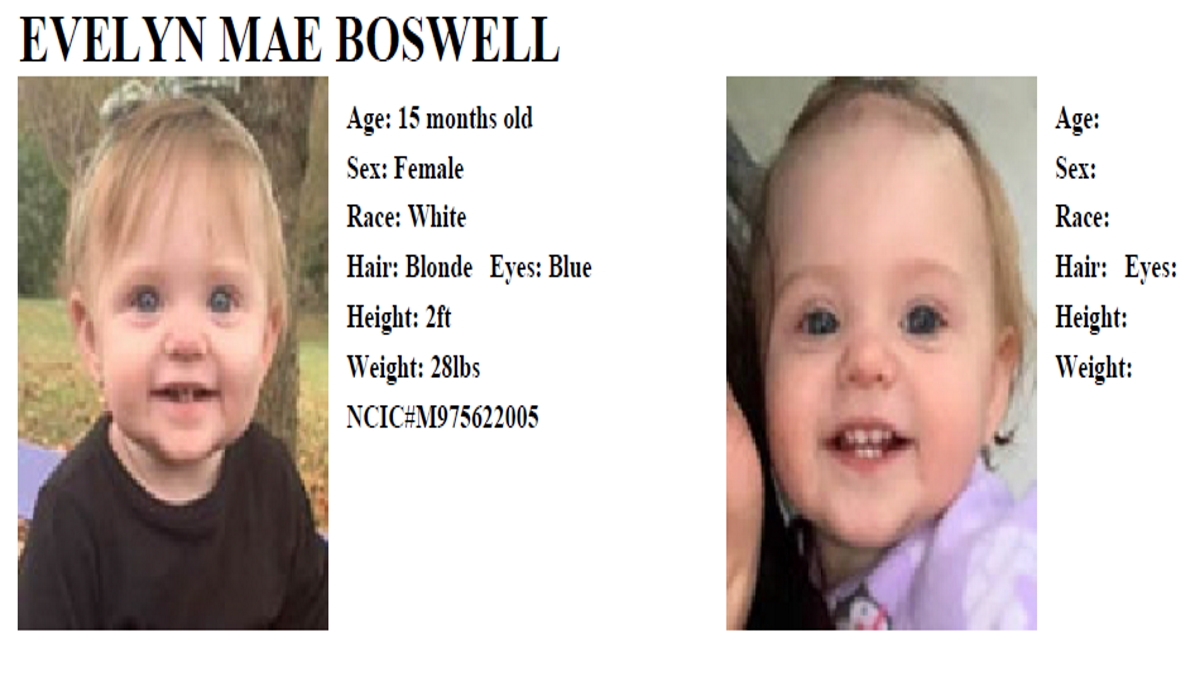
The Tennessee Bureau of Investigation (TBI) has issued an AMBER Alert for 15-month old Evelyn Mae Boswell who is missing from Sullivan County, in East Tennessee.


The Tennessee Bureau of Investigation (TBI) has issued an AMBER Alert for 15-month old Evelyn Mae Boswell who is missing from Sullivan County, in East Tennessee.

TBI stated that the toddler was last seen on December 26, 2019, but for some reason, was not reported missing until February 18, 2020.

The Sullivan County Tennessee Sheriff’s Office started investigating the case after the Department of Children’s Services alerted them to a missing child, ABC affiliate WKRN reports.

Soffe Men’s 3 Pack-USA Poly Cotton Military Tee

“The child’s mother, Megan ‘Maggie’ Boswell, has been involved in the investigation along with the father, Ethan Perry, who is active duty in the military, stationed in Louisiana,” the office said in an emailed statement to Insider.

Neither parent reported Evelyn missing, Capt. Andy Seabolt, a spokesman for the Sullivan County Sheriff’s Office told Insider. It was a different family member who reported that the girl hadn’t been seen in months.

Evelyn is a 15-month old, white female, 2 ft. tall, and weighs 28 lbs., with blonde hair and blue eyes. Evelyn was last seen wearing a pink tracksuit, pink shoes, and a pink bow.

If you have any information regarding the whereabouts of Evelyn, please contact the Sullivan County Sheriff’s Office at 423-279-7330 or the TBI at 1-800-TBIFIND. 

TN.gov/TBI (February, 2020) AMBER Alert issued for missing East Tennessee Toddler

Help a veteran in need by donating here.