Chinese Sichuan Church Members Detained During Easter Service


Detention Came After ERCC Member Announced Lawsuit Against Government

On Monday, the International Christian Concern (ICC) has learned that during an online worship session in China to celebrate Easter on April 12, several key members of the heavily persecuted Early Rain Covenant Church (ERCC) were taken away from their homes.

The Sichuan house church has not been able to gather in person since the government clamped down on the church on December 9, 2018 and arrested their pastor and other leaders.

This Easter, the church was conducting an online worship session, when suddenly six leaders were taken by the Public Security Bureau from their homes.

A member of ERCC told ICC, “At that time I was also in the Zoom call, but there was a long period of time where I did not hear a thing. I thought it’s the network connection issue at first, but I soon heard a quarrel erupt. Our coworker Wang Jun was questioning some people, [saying], ‘Who are you to do this [to us]?’”

She added that, in addition to Wang, other leaders such as Guo Haigang, Wu Wuqing, Jia Xuewei, Zhang Jianqing and Zhang Xudong were also taken away. One member’s home had its electricity cut off, while others received phone calls that “police [were] coming to visit them soon.”

A supporter of ERCC also shared on Twitter, “Since 8:30 a.m, some security officials have entered these Christian families’ homes and pretended to be chatting with them casually. At 9:30 a.m., the worship began, and they were also invited to participate. Once they realized that the sermon was from ERCC’s imprisoned pastor Wang Yi, they immediately shut it down.”

Her account was echoed by Zhang Jiangqing, who was warned by the police at his house, saying, “Don’t participate in already banned [religious] activities anymore! Don’t listen to Pastor [Wang]’s sermons anymore! If you do this again, we will deal with it seriously and take you away!”

The six briefly detained Christians have since been released, and their electricity was restored in the afternoon.

It is not uncommon for the local authorities to take additional measures against ERCC during major Christian celebrations or anniversary events. However, the latest detention also took place after church member Chen Yan decided to file a lawsuit against the authorities for unlawful harassment and surveillance against her and her husband Xiao Luobiao for more than a year. Last week, she detailed her experience with the security officials and her intention to sue in a series of blog posts published online.

Gina Goh, ICC’s Regional Manager for Southeast Asia, said, “It is such a shame that the Chinese government has not once stopped its persecution of ERCC. Ever since the 1209 crackdown in 2018, local authorities have continued to monitor and harass ERCC members, with the hope that the church will disperse itself. In a time when the Chinese people are suffering from the COVID-19 pandemic, the heartless regime chose to inflict more trouble on its citizens. The UN should immediately suspend China’s appointment to the Human Rights Council for its lack of respect for human rights.”

For interviews, please contact Olivia Miller, Communications Coordinator: press@persecution.org.

Persecution.org (April 2020) Sichuan Church Members Detained During Easter Service
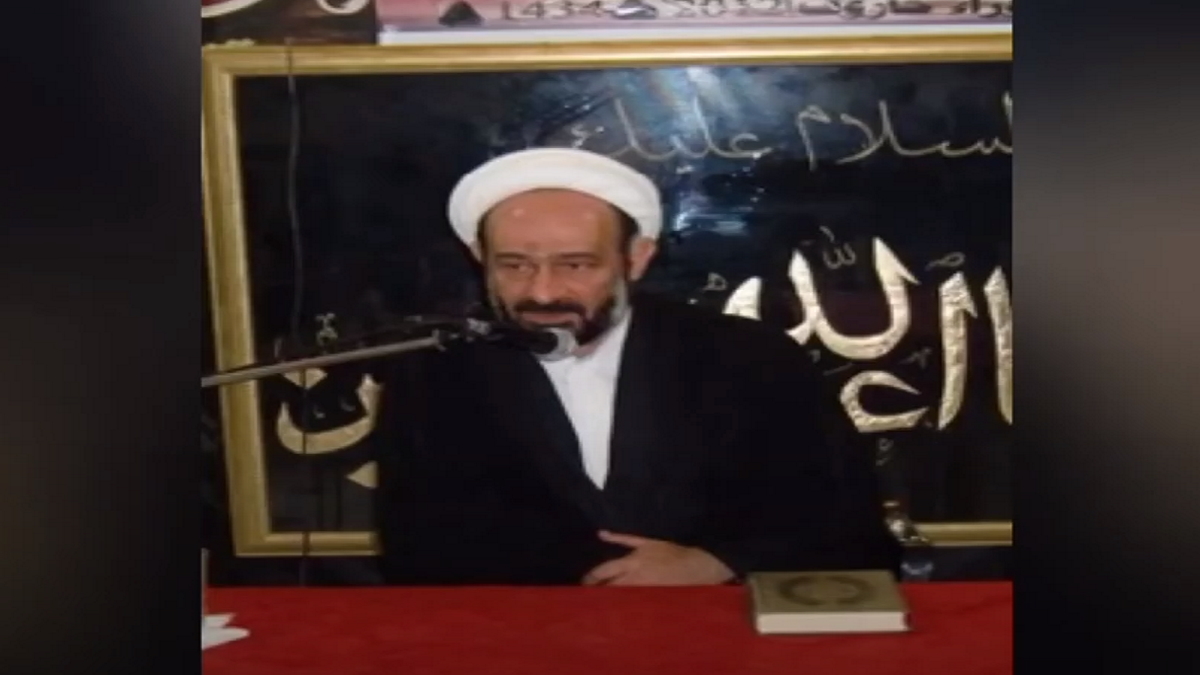
Reward Offer for Information on Hizballah’s Financial Networks Muhammad Kawtharani


The U.S. Department of State’s Rewards for Justice Program is offering a reward of up to $10 million for information on the activities, networks, and associates of Muhammad Kawtharani, a senior Hizballah military commander.

This announcement is part of the Department’s standing reward offer for information leading to the disruption of the financial mechanisms of the terrorist organization Lebanese Hizballah.

Muhammad Kawtharani is a senior leader of Hizballah’s forces in Iraq and has taken over some of the political coordination of Iran-aligned paramilitary groups formerly organized by Qassim Sulemani after Sulemani’s death in January.

In this capacity, he facilitates the actions of groups operating outside the control of the Government of Iraq that have violently suppressed protests, attacked foreign diplomatic missions, and engaged in wide-spread organized criminal activity.

As a member of Hizballah’s Political Council, Kawtharani has worked to promote Hizballah’s interests in Iraq, including Hizballah efforts to provide training, funding, political, and logistical support to Iraqi Shi’a insurgent groups.

The U.S. Department of the Treasury designated Kawtharani as a Specially Designated Global Terrorist in 2013.

In April 2019, Rewards for Justice announced a reward of up to $10 million for information leading to the disruption of the financial mechanisms of the global terrorist organization Lebanese Hizballah.

Rewards can be provided for information leading to the identification and disruption of:

  • Sources of revenue for Hizballah or its key financial facilitation mechanisms;
  • Major Hizballah donors or financial facilitators;
  • Financial institutions or exchange houses facilitating Hizballah transactions;
  • Businesses or investments owned or controlled by Hizballah or its financiers;
  • Front companies engaged in international procurement of dual-use technology on behalf of Hizballah; and
  • Criminal schemes involving Hizballah members and supporters which financially benefit the organization.

Hizballah is a Lebanon-based terrorist organization that receives weapons, training, and funding from Iran, which the Secretary of State designated as a state sponsor of terrorism in 1984.

Hizballah generates about a billion dollars a year from a combination of direct financial support from Iran, international businesses and investments, donor networks, and money laundering activities.

The State Department designated Hizballah as a Foreign Terrorist Organization (FTO) in October 1997 under the Immigration and Nationality Act, and as a Specially Designated Global Terrorist (SDGT) in October 2001 under Executive Order (E.O.) 13224.

More information about these reward offers is located on the Rewards for Justice website at www.rewardsforjustice.net.

We encourage anyone with information on Hizballah financial networks to contact the Rewards for Justice office via the website, e-mail (LH@rewardsforjustice.net), phone (1-800-877-3927 in North America), or mail (Rewards for Justice, Washington, D.C., 20520-0303, USA).

Individuals may also contact the Regional Security Officer at the nearest U.S. embassy or consulate.

All information will be kept strictly confidential.

The Rewards for Justice Program is an effective law enforcement tool and is administered by the U.S. Department of State’s Diplomatic Security Service.

Since its inception in 1984, the program has paid in excess of $150 million to more than 100 people who provided actionable information that helped bring terrorists to justice or prevented acts of international terrorism worldwide. 

State.gov (April 2020) Reward Offer for Information on Hizballah’s Financial Networks Muhammad Kawtharani

Georgia Man Arrested for Attempting to Defraud the Department of Veterans Affairs in a Multimillion-Dollar COVID-19 Scam


Christopher Parris, a 39-year-old Atlanta, Georgia resident, was arrested today and charged in federal court in the District of Columbia (Washington DC) with fraud for attempting to sell millions of nonexistent respirator masks to the Department of Veterans Affairs in exchange for large upfront payments, the Justice Department announced.

The criminal complaint charges Parris with wire fraud.  It alleges that he made and caused to be made a series of fraudulent misrepresentations in an attempt to secure orders from the Department of Veterans Affairs for 125 million face masks and other personal protective equipment (PPE) that would have totaled over $750 million.  

For example, the complaint alleges that Parris promised that he could obtain millions of genuine 3M masks from domestic factories when he knew that fulfilling the orders would not be possible.  Parris also allegedly made similar false representations to other entities in an effort to enter into other fraudulent agreements to sell PPE to state governments.

“We will vigorously pursue fraudsters who exploit the COVID-19 pandemic to make money,” said Attorney General William Barr.  “As this case demonstrates, even beyond the typical costs associated with unlawful behavior, COVID-19 scams divert government time and resources and risk preventing front-line responders and consumers from obtaining the equipment they need to combat this pandemic.  The Department of Justice will not tolerate this conduct, especially when it involves this kind of egregious attempt to target and defraud our nation’s treasures – our veterans.”

After arrest, Parris appeared before Chief United States Magistrate Judge Alan J. Baverman in the United States District Court for the Northern District of Georgia, where he was ordered detained.  Parris will be extradited to the District of Columbia (DC).

“During this time of crisis, fraud or attempted fraud impacting services for veterans, who have selflessly served this country, is unconscionable,” said U.S. Attorney Timothy Shea for the District of Columbia.  “My office will devote whatever resources are necessary to stop scams aimed at exploiting Americans during this unprecedented pandemic.”

“We are committed to protecting the integrity of taxpayer funds and ensuring the delivery of medical supplies necessary to provide quality healthcare to our nation’s veterans, and any attempt to exploit the current global COVID-19 pandemic for personal gain will be dealt with swiftly,” said Inspector General Michael J. Missal for the Department of Veterans Affairs.  “Today’s charges are the direct result of the expeditious and tireless efforts of special agents of the Department of Veterans Affairs, Office of Inspector General, working in tandem with our law enforcement partners at the Department of Justice and Homeland Security Investigations.”

“Homeland Security Investigations special agents have sworn an oath to protect the American public, particularly during this health crisis, from opportunistic individuals who seek to deliberately harm and deceive others for their own profit,” said Special Agent in Charge Jere T. Miles, Homeland Security Investigations – New Orleans.  “Today, our special agents have shown their commitment to that promise.”

A criminal complaint is an accusation by a federal law enforcement agent, and defendants are entitled to the presumption of innocence unless proven guilty.  Upon conviction for the wire fraud charge, the maximum statutory penalty is 20 years’ imprisonment and a $250,000 fine.

The Department of Veterans Affairs, Office of the Inspector General and Homeland Security Investigations investigated the case.  Trial Attorney Patrick Runkle of the Department of Justice’s Consumer Protection Branch and Assistant U.S. Attorneys Peter Lallas and Zia Faruqui of the U.S. Attorney’s Office for the District of Columbia are prosecuting the case.  Assistant U.S. Attorneys Alison Prout and Theodore S. Hertzberg of the U.S. Attorney’s Office for the Northern District of Georgia provided substantial assistance.

Information about the Consumer Protection Branch and its enforcement efforts may be found at http://www.justice.gov/civil/consumer-protection-branch.  For more information about the U.S. Attorney’s Office for the District of Columbia, visit its website at https://www.justice.gov/usao-dc.  

The public is urged to report suspected fraud schemes related to COVID-19 (the Coronavirus) by calling the National Center for Disaster Fraud (NCDF) hotline (1-866-720-5721) or by e-mailing the NCDF at disaster@leo.gov.

Justice.gov (April 2020) Georgia Man Arrested for Attempting to Defraud the Department of Veterans Affairs in a Multimillion-Dollar COVID-19 Scam

USDA Confirms Highly Pathogenic H7N3 Avian Influenza in a Commercial Flock in Chesterfield County, South Carolina


The United States Department of Agriculture’s (USDA) Animal and Plant Health Inspection Service (APHIS) has confirmed the presence of highly pathogenic H7N3 avian influenza (HPAI) in a commercial turkey flock in Chesterfield County, South Carolina.

This is the first confirmed case of HPAI in commercial poultry in the United States since 2017. It appears this HPAI strain mutated from a low pathogenic strain that has been found in poultry in that area recently.

No human cases of this H7N3 avian influenza virus have been detected and there is no immediate public health concern. As a reminder, the proper handling and cooking of poultry and eggs to an internal temperature of 165 ˚F kills bacteria and viruses.

Samples from the affected flock, which experienced increased mortality, were tested at the Clemson Veterinary Diagnostic Center, part of the National Animal Laboratory Network, and confirmed at the APHIS National Veterinary Services Laboratories (NVSL) in Ames, Iowa.  Virus isolation is ongoing.

APHIS is working closely with the South Carolina State Veterinarian’s Office, part of Clemson University, on a joint incident response. State officials quarantined the affected premises, and birds on the property were depopulated to prevent the spread of the disease. Birds from the flock will not enter the food system.

As part of existing avian influenza response plans, Federal and State partners are working jointly on additional surveillance and testing in the nearby area. The United States has the strongest AI surveillance program in the world, and USDA is working with its partners to actively look for the disease in commercial poultry operations, live bird markets and in migratory wild bird populations.

USDA will report this finding to the World Organization for Animal Health (OIE) as well as international trading partners. USDA also continues to communicate with trading partners to encourage adherence to OIE standards and minimize trade impacts. OIE trade guidelines call on countries to base trade restrictions on sound science and, whenever possible, limit restrictions to those animals and animal products within a defined region that pose a risk of spreading disease of concern. 

All bird owners, whether commercial producers or backyard enthusiasts, should continue to practice good biosecurity, prevent contact between their birds and wild birds, and report sick birds or unusual bird deaths to State/Federal officials, either through their state veterinarian or through USDA’s toll-free number at 1-866-536-7593. Additional information on biosecurity for can be found at www.aphis.usda.gov/animalhealth/defendtheflock

Additional background
Avian influenza (AI) is caused by an influenza type A virus which can infect poultry (such as chickens, turkeys, pheasants, quail, domestic ducks, geese and guinea fowl) and is carried by free flying waterfowl such as ducks, geese and shorebirds. AI viruses are classified by a combination of two groups of proteins: hemagglutinin or “H” proteins, of which there are 16 (H1–H16), and neuraminidase or “N” proteins, of which there are 9 (N1–N9). Many different combinations of “H” and “N” proteins are possible. Each combination is considered a different subtype, and can be further broken down into different strains. AI viruses are further classified by their pathogenicity (low or high)— the ability of a particular virus strain to produce disease in domestic poultry.

USDA.gov (April 2020) USDA Confirms Highly Pathogenic H7N3 Avian Influenza in a Commercial Flock in Chesterfield County, South Carolina

FBI Warns of Money Mule Schemes Exploiting the COVID-19 Pandemic


Fraudsters are taking advantage of the uncertainty and fear surrounding the COVID-19 pandemic to steal your money, access your personal and financial information, and use you as a money mule.

When criminals obtain money illegally, they have to find a way to move and hide the illicit funds.

They scam other people, known as money mules, into moving this illicit money for them either through funds transfers, physical movement of cash, or through various other methods. Money mules are often targeted through online job schemes or dating websites and apps.

Save 45.0% on select products from bofeifs with promo code 456BA8GH, through 4/30 while supplies last.

Acting as a money mule—allowing others to use your bank account, or conducting financial transactions on behalf of others—not only jeopardizes your financial security and compromises your personally identifiable information, but is also a crime.

Protect yourself by refusing to send or receive money on behalf of individuals and businesses for which you are not personally and professionally responsible. The FBI advises you to be on the lookout for the following:

Work-from-home schemes

Watch out for online job postings and emails from individuals promising you easy money for little to no effort. Common red flags that you may be acting as a money mule include:

  • The “employer” you communicate with uses web-based services such as Gmail, Yahoo, Hotmail, Outlook, etc.
  • You are asked to receive funds in your personal bank account and then “process” or “transfer” funds via wire transfer, ACH, mail, or money service businesses, such as Western Union or MoneyGram
  • You are asked to open bank accounts in your name for a business
  • You are told to keep a portion of the money you transfer

Individuals claiming to be located overseas asking you to send or receive money on their behalf

Watch out for emails, private messages, and phone calls from individuals you do not know who claim to be located abroad and in need of your financial support. Criminals are trying to gain access to U.S. bank accounts in order to move fraud proceeds from you and other victims to their bank accounts. Common fictitious scenarios include:

  • Individuals claiming to be U.S. service members stationed overseas asking you to send or receive money on behalf of themselves or a loved one battling COVID-19
  • Individuals claiming to be U.S. citizens working abroad asking you to send or receive money on behalf of themselves or a loved one battling COVID-19
  • Individuals claiming to be U.S. citizens quarantined abroad asking you to send or receive money on behalf of themselves or a loved one battling COVID-19
  • Individuals claiming to be in the medical equipment business asking you to send or receive money on their behalf
  • Individuals affiliated with a charitable organization asking you to send or receive money on their behalf

If you are looking for accurate and up-to-date information on COVID-19, the CDC has posted extensive guidance and information that is updated frequently.

The best sources for authoritative information on COVID-19 are http://www.cdc.gov and http://www.coronavirus.gov. You may also consult your primary care physician for guidance.

If you believe you, or someone you know, has been solicited to be a money mule, please contact your local FBI field office. To report suspicious activity, please visit the FBI’s Internet Crime Complaint Center at ic3.gov.

FBI.gov (April 2020) FBI Warns of Money Mule Schemes Exploiting the COVID-19 Pandemic