As Coronavirus Spreads, Authorities Target RFE/RL Journalists In Effort To Control Information


As the coronavirus continues to spread, Radio Free Europe/Radio Liberty (RFE/RL) journalists have increasingly found themselves caught between the needs of citizens for reliable information, and the efforts of authoritarian governments to control the public’s understanding of events.

“People in 22 countries depend on our journalism, which is providing critical information to help them protect themselves and keep their families and communities safe,” said RFE/RL President Jamie Fly. “But at the same time, we are facing restrictions and threats from authorities who see the independent media as an obstacle to their efforts to control information for their own purposes. Despite this growing pressure, our journalists will not be deterred from our mission of providing objective journalism to our audiences at a time when they need it most.”

RFE/RL’s audience numbers surged in March as concerned audiences sought accurate information about the coronavirus pandemic amid government inaction, disinformation, and an information void.

Compared to the previous month, visits to RFE/RL websites and apps increased 48% to 77 million, page views were up by 43% to 128.5 million, and unique visitors increased 50% to 33.5 million.

Spikes were similarly registered on social media platforms, with video views on Facebook rising by 44% to 351 million, and views on YouTube increasing by 18% to 144.5 million. RFE/RL also saw spectacular growth on Instagram — particularly in Persian, Uzbek, and Tajik — with a 46% jump in video views to 67.5 million for the month.

But there has been push back.

On April 5, the Russian State Duma commission on foreign interference announced a review of coronavirus coverage by RFE/RL’s Russian Service and the Current Time network, alleging that the outlets were misreporting the availability of medical equipment, the role of Russian doctors in Italy, and the enforcement of pandemic-related regulations.

A Moscow neurosurgeon who spoke with Current Time about a lack of protective equipment and supplies at his hospital was threatened with dismissal.

Rights monitors have expressed concern that a law passed on April 1 against knowingly misinforming the public about the coronavirus may be used against reporters who publish coverage critical of the government’s response.

The law has already been used to detain a St. Petersburg activist – and to seize her computers and telephone — who had posted concerns on social media about inadequate quarantine measures at medical facilities in a nearby town.

Russian independent newspaper Novaya Gazeta says it has taken down an article about measures introduced to tackle the coronavirus in the North Caucasus region of Chechnya following a request by the country’s media regulator, Roskomnadzor. Chechen leader Ramzan Kadyrov had slammed the article as “absurd” and threatened to harm the author, Yelena Milashina.

Restrictions accompanying Kyrgyzstan’s state of emergency have sidelined RFE/RL journalists by requiring that persons seeking to access central Bishkek – where RFE/RL’s local bureau is located — obtain special passes. Authorities initially claimed that the media would be exempt from the new measures, but journalists with Current Time’s flagship Asia program have received no permissions, while reporters with state media have been allowed to access their downtown offices to work.

Earlier this month, as the magnitude of the pandemic was unfolding among populations around the world, authorities in Tajikistan issued the latest in a string of rulings refusing to accredit RFE/RL journalists and staff.

The Tajik Service’s YouTube page has recorded an explosive 150% increase among subscribers in the past year, to more than 1 million, with much of the growth registered in recent months because of the absence of alternative reporting about the pandemic and any preventive response from the government.

Indeed, the government has avoided public use of the term “coronavirus,” while keeping mosques open and convening public celebrations of national holidays even as its neighbors enforce wholesale lockdowns. When the Service broke the story of the country’s first coronavirus death on April 5, pro-government publishers and trolls retaliated on Facebook, using obscene hashtags to incite violence against its journalists.

Belarus President Alyaksandr Lukashenka’s campaign of denial similarly puts journalists reporting on the pandemic at risk. He has dismissed concerns about the coronavirus as a “psychosis,” and exhorted the public to attend the matches of Europe’s only still-fielded soccer league. Award-winning RFE/RL Minsk-based journalist Alexandra Dynko says that journalists in her country “have been vaccinated against fear,” since “on a daily basis they dare to report on what they see and what they hear.”

These measures all come as audiences in RFE/RL’s markets have been bombarded with conspiracy theories about the virus and Russian, Iranian, and Chinese disinformation about its origins and those countries’ responses to it.

RFE/RL’s Armenian and Russian Services have reported extensively to debunk these myths and theories, while RFE/RL’s Bulgarian Service has sought to counter a growing anti-EU narrative propagated by the government that misrepresents the role of EU assistance and threatens public health.

RFE/RL’s Central Newsroom has produced video reporting for use throughout RFE/RL’s coverage area on efforts by both China and Russia to target global audiences with COVID-19 propaganda.

RFERL.org (April 2020) As Coronavirus Spreads, Authorities Target RFE/RL Journalists In Effort To Control Information
COVID-19 fraud domain seized from seller who attempted to sell it using bitcoin


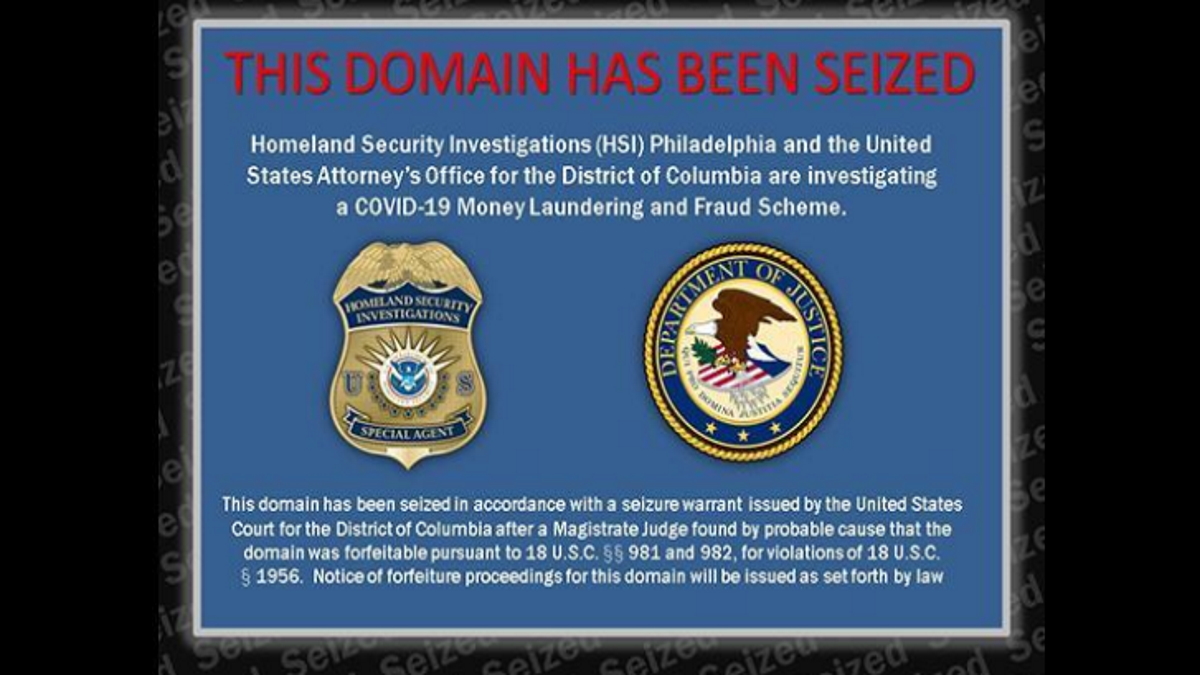
U.S. Immigration Customs and Enforcement’s (ICE) Homeland Security Investigations (HSI) and United States Attorney’s Office for the District of Columbia obtained a warrant Friday authorizing seizure of coronaprevention.org following an HSI Philadelphia investigation in support of Operation Stolen Promise.

HSI recently launched Operation Stolen Promise to protect the homeland and global supply-chain from the increasing and evolving threat posed by COVID-19-related fraud and criminal activity by combining HSI’s expertise in global trade investigations, financial fraud, and cyber investigations with robust private and public partnerships.

“Sadly, criminals are using the current pandemic as an opportunity to generate proceeds while so many Americans are suffering,” said William S. Walker, acting HSI Philadelphia special agent in charge. “Homeland Security Investigations and our partners will continue to aggressively pursue those who attempt to illegally capitalize on this crisis through illicit money-making schemes.”

The seizure warrant alleges that the owner of the domain name, coronaprevention.org, posted it for sale on a hackers forum.

The post appeared the day after the president declared a national emergency due to the COVID-19 pandemic. The seller stated on the forum that this domain would be an effective way to sell “high markup in demand products.”

The seller exponentially marked up the price of the domain. The seller asked for the payment to be made via bitcoin.

The warrant further alleges that the seller engaged in conversations with an undercover agent from HSI about the sale of the domain. The seller stated that it was “genius” to sell “fake testing kits” using this domain.

The seller further stated that the seller “wanted to do that but I couldn’t get enough cash to bulk buy them from Alibaba [a Chinese e-commerce site].” The seller recommended directed the undercover agent on how to set up a new website on the domain using a foreign-based service, so as to prevent U.S. authorities from being able to shut it down in the future.

“We will not tolerate exploitation of this national emergency for personal gain,” said U.S. Attorney Tim Shea. “This office will not allow fraudsters to use anonymous online spaces and cryptocurrency to hide their harmful activities and prey on victims.”

The charges in the warrant are merely allegations, and civil forfeiture proceedings will commence in which any interested party may make a claim to ownership of the seized property.

The enforcement action against the owner of a fraudulent website follows Attorney General William Barr’s recent direction for the department to prioritize the detection, investigation, and prosecution of illegal conduct related to the pandemic.

The case is being handled by Assistant U.S. Attorney Zia M. Faruqui, Paralegal Specialist Brian Rickers, and Legal Assistant Jessica McCormick of the U.S. Attorney’s Office for the District of Columbia.

As part of Operation Stolen Promise, HSI is partnering with U.S. Customs and Border Protection (CBP), the Food and Drug Administration, the U.S. Postal Inspection Service, the U.S. Secret Service, the Internal Revenue Service, the Federal Bureau of Investigation, and the Five Eyes Law Enforcement Working Group. Additionally, efforts span multiple HSI components including the National Intellectual Property Rights Coordination Center, HSI International Operations, the Illicit Finance and Proceeds of Crime Unit, and the Cyber Crimes Center.

As of April 23, 2020, HSI special agents have opened over 232 cases initiated, 376 total seizures, 329 leads sent, 70 disruptions, seized over three million dollars in illicit proceeds; made six arrests; executed 12 search warrants; sinkholed over 11,000 COVID-19 domain names and worked alongside CBP to seize over 225 shipments of mislabeled, fraudulent, unauthorized or prohibited COVID-19 test kits, treatment kits, homeopathic remedies, purported anti-viral products and personal protective equipment.

The launch of the operation is in direct response to a significant increase in criminal activity.

To report suspected illicit criminal activity or fraudulent schemes related to the COVID-19 pandemic, email Covid19Fraud@dhs.gov.

ICE.gov (April 2020)COVID-19 fraud domain seized from seller who attempted to sell it using bitcoin

Microsoft Releases Security Updates for Multiple Products


Microsoft has released security updates to address multiple vulnerabilities in products that use the Autodesk FBX library.

These include Office 2016, Office 2019, Office 365 ProPlus, and Paint 3D. A remote attacker can exploit these vulnerabilities to take control of an affected system.

The Cybersecurity and Infrastructure Security Agency (CISA) encourages users and administrators to review Microsoft Advisory ADV200004 and apply the necessary updates.

Availability of updates for Microsoft software utilizing the Autodesk FBX library

Microsoft is announcing the release of updates to address multiple vulnerabilities found in the Autodesk FBX library which is integrated into certain Microsoft applications.

Details about the vulnerabilities can be found here – https://www.autodesk.com/trust/security-advisories/adsk-sa-2020-0002

Remote code execution vulnerabilities exist in Microsoft products that utilize the FBX library when processing specially crafted 3D content. An attacker who successfully exploited these vulnerabilities could gain the same user rights as the local user. Users whose accounts are configured to have fewer user rights on the system could be less impacted than users who operate with administrative user rights.

To exploit the vulnerabilities, an attacker must send a specially crafted file containing 3D content to a user and convince them to open it.

The security updates address these vulnerabilities by correcting the way 3D content is handled by Microsoft software.

US-cert.gov (April 2020)Microsoft Releases Security Updates for Multiple Products

Defense Officials Express Agreement With President’s Warning to Iran


Defense Department officials are in full agreement with President Donald J. Trump’s warning to the Iranian regime on Twitter, senior Pentagon officials said on Wednesday.

The Iranian regime has a history of harassing U.S. vessels operating in the Persian Gulf. In the past, small, quick Iranian boats have charged at U.S. ships in international waters.

The president tweeted, “I have instructed the United States Navy to shoot down and destroy any and all Iranian gunboats if they harass our ships at sea.”

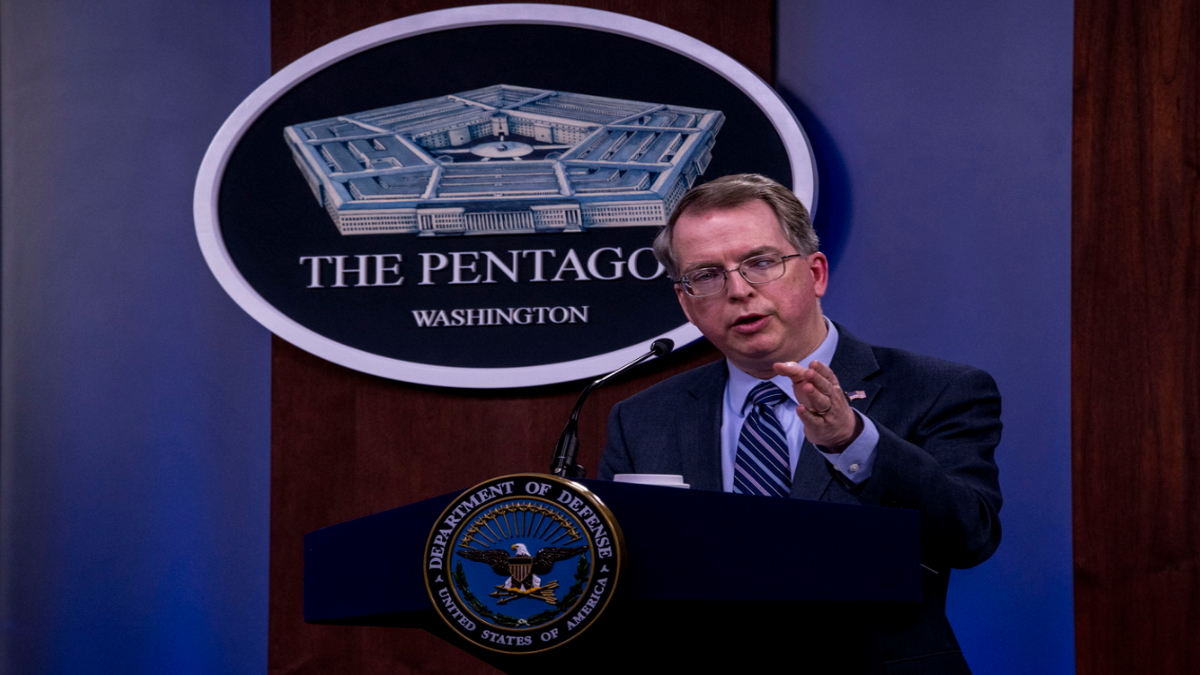
“The president issued an important warning to the Iranians,” Deputy Defense Secretary David L. Norquist said during a Pentagon news conference today. “What he was emphasizing is all of our ships retain the right of self-defense, and people need to be very careful in their interactions to understand the inherent right of self-defense.” 

The president’s tweet does not signal a new policy, the vice chairman of the Joint Chiefs of Staff said, as U.S. forces in any environment retain the right to defend themselves. “Every ship that deploys in harm’s way has the inherent right of self-defense,” Air Force Gen. John E. Hyten told reporters. “What that means is if we see a hostile act, if we see hostile intent, we have the right to respond, up to and including lethal force.”

Hyten warned Iran that, if threatened, U.S. commanders “will respond with overwhelming lethal force.” 

Norquist said Trump was responding to Iran’s poor behavior. “He is emphasizing and warning them about the challenges of what they will create,” the deputy secretary said. “I think it was a very useful thing that he put out, and I think it’s an important thing for other people to understand and take very seriously.”

Hyten emphasized that he thinks it is a good thing that the president warned an adversary. He said that if the Iranians want to go down that path, “we will come, and we will come large.”

Defense.gov (April 2020)Defense Officials Express Agreement With President’s Warning to Iran

Agents Foil Two Drug Smuggling Attempts Over the Weekend


Four men were arrested by U.S. Border Patrol El Paso Sector agents while attempting to smuggle drugs in a remote area of New Mexico over the weekend.

Late Saturday evening, Santa Teresa station Border Patrol agents were alerted to a group of four subjects carrying several large backpacks from Mexico into the U.S. Agents responded to the area and engaged in a foot pursuit. Camera operators assisted the agents in pinpointing the location of the fleeing Mexican nationals and they were taken into custody. Agents also recovered the three backpacks with the suspected contraband at a pickup location nearby.  

Agents contacted the Dona Ana County Sheriff’s Office and prosecution was accepted for the three adult males. The fourth individual is a juvenile that will be expelled back to Mexico.

Earlier in the day, a gray Jeep Wrangler with one male occupant entered the primary inspection area at the Alamogordo Border Patrol Station checkpoint. During their investigation, agents requested and were granted permission to conduct a search of the vehicle.  Another agent inspecting the vehicle notified fellow agents to conduct a more thorough physical search of the vehicle after his canine partner alerted to the possible presence of narcotics.

Border Patrol agents discovered an assortment of drugs and paraphernalia during the search. The driver of the rental vehicle was identified as a 27-year-old U.S. citizen. He was turned over to the Otero County Sheriff’s Department for prosecution.

“Our Border Patrol Agents are tireless in their continued efforts to keep criminals and illegal narcotics out of our community” said Chief Patrol Agent Gloria I. Chavez, El Paso Sector Border Patrol.

The men and women of the U.S. Border Patrol seek to disrupt the drug smuggling operations along the border and at immigration checkpoints within the United States. They aim to keep dangerous drugs out of the neighborhoods and communities where they live and work.   

U.S. Customs and Border Protection welcomes assistance from the community. Citizens are encouraged to report suspicious activity to the U.S. Border Patrol while remaining anonymous by calling 1-800-635-2509.  

CBP.gov (April 2020) Agents Foil Two Drug Smuggling Attempts Over the Weekend