DHS Announces New Task Force to Protect American Monuments, Memorials, and Statues

Acting Secretary of Homeland Security, Chad F. Wolf, announced the establishment of the DHS Protecting American Communities Task Force (PACT), a special task force to coordinate Departmental law enforcement agency assets in protecting our nation’s historic monuments, memorials, statues, and federal facilities.


Today, Acting Secretary of Homeland Security, Chad F. Wolf, announced the establishment of the DHS Protecting American Communities Task Force (PACT), a special task force to coordinate Departmental law enforcement agency assets in protecting our nation’s historic monuments, memorials, statues, and federal facilities.

“DHS is answering the President’s call to use our law enforcement personnel across the country to protect our historic landmarks,” said Acting Secretary Wolf. “We won’t stand idly by while violent anarchists and rioters seek not only to vandalize and destroy the symbols of our nation, but to disrupt law and order and sow chaos in our communities.”

On June 26th, President Trump issued an Executive Order to ensure that our historic monuments and statues will be protected.

The Order, “Protecting American Monuments, Memorials, and Statues and Combating Recent Criminal Activity,” directs DHS, within its statutory authority, to provide personnel to assist with the protection of federal monuments, memorials, statues, or property.

As a result, DHS created the PACT, which will conduct ongoing assessments of potential civil unrest or destruction and allocate resources to protect people and property.

This may involve potential surge activity to ensure the continuing protection of critical locations.

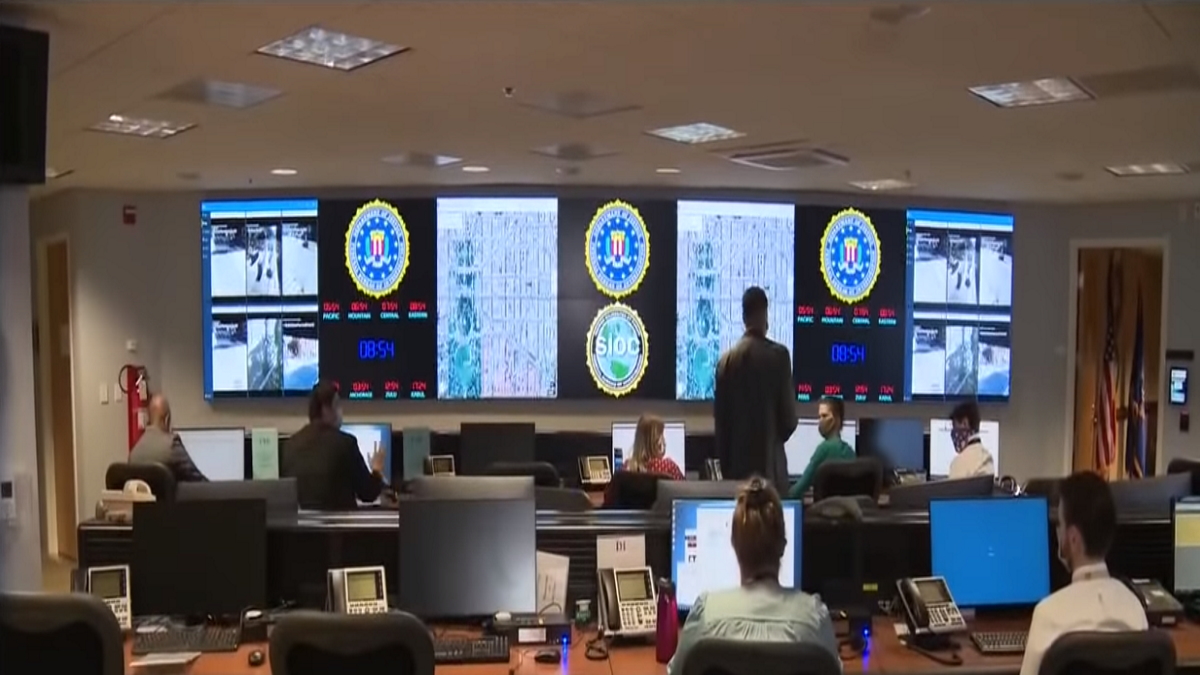
DHS’s Office of Operations Coordination will also partner closely with the Departments of Justice and Interior to establish information and intelligence sharing.

“As we approach the July 4th holiday, I have directed the deployment and pre-positioning of Rapid Deployment Teams (RDT) across the country to respond to potential threats to facilities and property,” said Acting Secretary Wolf. “While the Department respects every American’s right to protest peacefully, violence and civil unrest will not be tolerated.”

Blogs to Follow:

DHS.gov (July 2020) DHS Announces New Task Force to Protect American Monuments, Memorials, and Statues

Pfc. Vanessa Guillen remains found, suspect identified as a fellow soldier, another suspect in custody

“We have made significant progress in this tragic situation and are doing everything possible to get to the truth and bring answers to the family of Pfc. Vanessa Guillen,” said Chris Grey, the spokesman for Army CID.


One military suspect is deceased after taking his own life yesterday in Killeen, Texas, and a civilian suspect has been arrested by the Texas Rangers in connection with the disappearance of Pfc. Vanessa Guillen.

Special Agents from the U.S. Army Criminal Investigation Command, along with the U.S. Marshals, Killeen Police Department, and the Lone Star Fugitive Task Force were attempting to locate the junior Soldier from Fort Hood who fled the post late yesterday.  

While law enforcement agencies, minus Army CID Special Agents, attempted to make contact with the suspect, the suspect reportedly displayed a weapon and took his own life.

The name of the Soldier will not be released at this time pending the notification of next of kin.

The civilian suspect is the estranged wife of a former Fort Hood Soldier and is currently in custody in the Bell County Jail awaiting charges by civilian authorities.

Additionally, the Texas Rangers, with assistance from Army CID and other agencies, are still processing the scene at the Leon River in Bell County, Texas, where partial human remains were discovered yesterday. Coordination has been made with Armed Forces Medical Examiner Services, who will assist with dental x-rays/DNA for identification by the Southwest Institute of Forensic Science, Dallas, Texas.

A positive identification of the remains is pending.

“We have made significant progress in this tragic situation and are doing everything possible to get to the truth and bring answers to the family of Pfc. Vanessa Guillen,” said Chris Grey, the spokesman for Army CID.

The 20-year-old Guillen was last seen on the morning of April 22 in the parking lot of her Regimental Engineer Squadron Headquarters, 3rd Cavalry Regiment on Fort Hood, Texas, and had not been heard from since that date.

The Army Criminal Investigation Command has been working closely with multiple law enforcement agencies throughout this investigation to include the FBI, Belton Police Department, Bell County Sheriff’s Department, the United States Marshals Service, the Texas Rangers and the Texas Department of Public Safety.

According to CID officials, this is still an open and ongoing criminal investigation.

“There is still a lot of investigative work to be done and we ask for the public and media’s patience,” Grey said. “There are obviously pieces of information and evidence that cannot be shared with the public during an active criminal investigation. Doing so can seriously jeopardize the charging and successful prosecution of individuals. When important investigative information is prematurely released, criminals can and will destroy evidence, conspire to change their stories, build false alibis, etc.”

No further information will be released at this time.

Persons with information can contact Army CID Special Agents at 254-287-2722 or the Military Police Desk at 254-288-1170. They can also anonymously submit information at https://www.cid.army.mil/report-a-crime.html 

People wishing to remain anonymous will be honored to the degree allowable under the law and the information will be held in the strictest confidence allowable.

Blogs to Follow:

Army.mil (July 2020) Pfc. Vanessa Guillen investigation update

Missile Defense Chief Looks to Handle Changing Threat

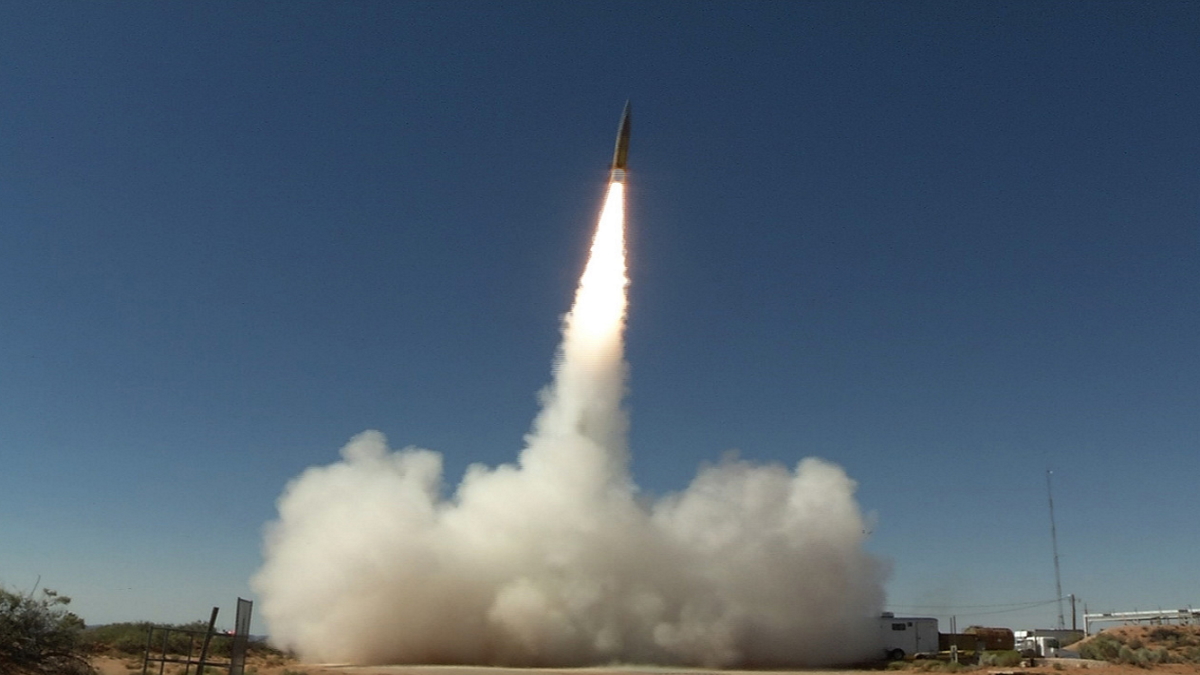
Navy Vice Adm. Jon Hill, the agency’s director, told the Hypersonic Weapons Systems webinar in London the agency is looking to adapt current technologies against the hypersonic threat while looking toward new capabilities.


Missile defense has gone from pie-in-the-sky Star Wars technology in the 1980s to a proven military capability in the 21st century, and the Missile Defense Agency is looking to extend those capabilities against new threats.

Navy Vice Adm. Jon Hill, the agency’s director, told the Hypersonic Weapons Systems webinar in London the agency is looking to adapt current technologies against the hypersonic threat while looking toward new capabilities.

“The sad reality is that many of these threats, regardless of how they’re launched and what their profiles are, really do look like hypersonic threats,” he said.

Ballistic missiles as they approach impact are hypersonic, as are many maneuverable cruise missiles. “So if you’re the sailor on the deck of a ship, they all look the same to you,” Hill said. “If you’re a soldier manning a land-based battery, it’s going to be maneuvering and coming in very quickly at hypersonic speeds. If you’re one of the airmen that’s manning one of the many sensors that are out there, it’s going to look fast, and it’s going to be moving quickly.”

So, the hypersonic threat already exists. The Missile Defense Agency now must adapt as the threat morphs, Hill said. Right now, the hypersonic threat is almost ancillary to the capabilities of ballistic and cruise missiles, he added, but as competitors test and build, that threat will become more sophisticated. 

“We’re defending the United States, our deployed forces, our allies and friends from missile attacks in all phases of flight,” Hill said. It is a simple mission statement, but not so simple to execute.

The key to the program is the sensor array. “We leverage all sensors, and many, many countries are in the business of fusing data so that you have a complete track picture,” the admiral said. “We call it from … birth-to-death tracking and that is absolutely required. You don’t want to lose track of the threats, particularly if [they are] unpredictable and maneuverable.”

The agency will leverage space sensors, which is typically how it sees initial launches. “We will fly through ground-based sensors,” he said. “We have ships with the sensing capability deployed globally. Another great way that we partner with our allies that sensor architecture is critically important, particularly as the threats become more and more maneuverable over time.”

The existing sensing architecture and battle management system and even existing weapons can counter this very formidable threat, but more needs to be done, he said.

So, the bottom line is that just because a weapon is hypersonic doesn’t mean it can’t be intercepted. “Like all good engineering organizations, we’re going to look for where the vulnerabilities are in a hypersonic flight, whether it’s a glide vehicle or cruise missile,” Hill said.

The glide phase looks to be the most promising place, because it is earlier in a missile’s trajectory, Hill said. “We are now investigating what it would take to move into that first part of the glide phase,” he added. 

This means evolving the terminal system, “and then looking at how we can change the propulsion as required — change the front end to get to the glider phase,” Hill said. “It is a tough regime to operate in. But you have to remember that the hypersonic threat is not invincible — in that phase, it’s bleeding off energy, it may be doing a roll, and may be starting its maneuver. But it’s a great place to engage.”

In addition, the admiral said, the agency is looking to build sensing from space.

This is not the 21st century version of pie-in-the-sky. The Missile Defense Agency is working closely with the services and combatant commands and having discussions with international partners on defending against this threat, Hill said.

Blogs to Follow:

Defense.gov (June 2020) Missile Defense Chief Looks to Handle Changing Threat

10,800 Assault Weapons Parts Seized by CBP in Louisville

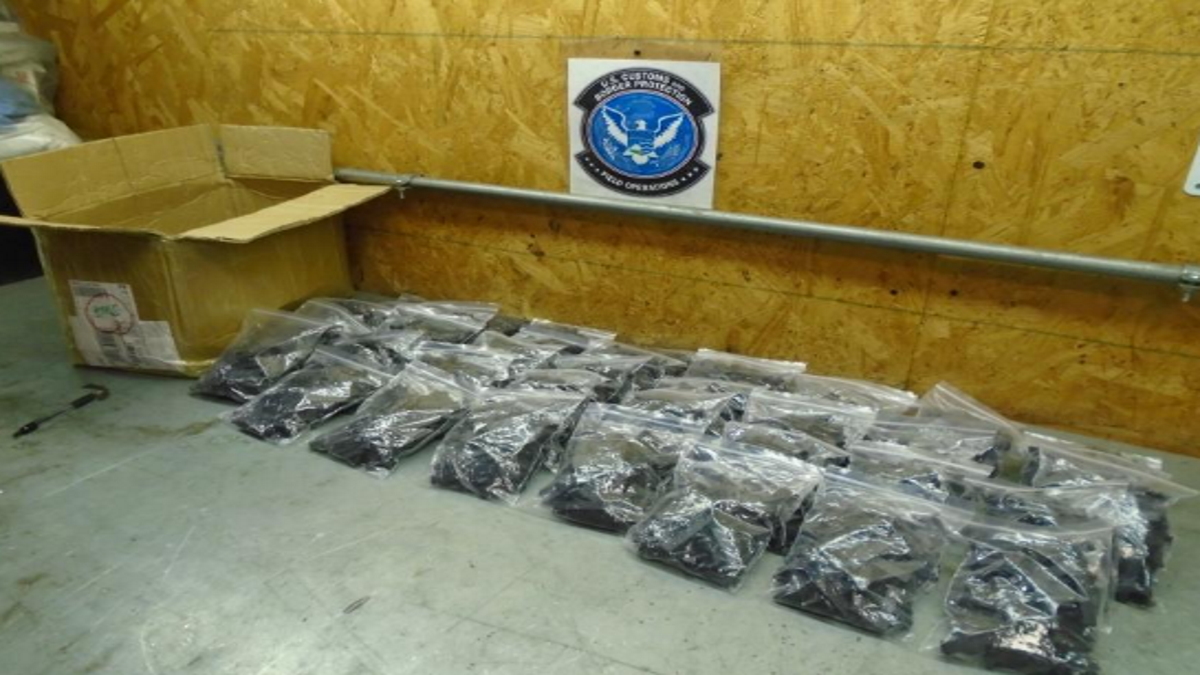
At the Express Consignment Operations hubs in Louisville, Kentucky, U.S. Customs and Border Protection (CBP) officers seized a shipment from China that contained over 10,000 Assault Weapons parts being smuggled into the country.


At the Express Consignment Operations hubs in Louisville, Kentucky, U.S. Customs and Border Protection (CBP) officers seized a shipment from China that contained over 10,000 Assault Weapons parts being smuggled into the country. 

The shipment was seized on May 22. Officers inspected the item, which was arriving from Shenzhen, China, destined for a residence in Melbourne, Florida. The parcel was manifested as containing 100 Steel Pin Samples.

This is a common practice of smugglers manifesting the contraband as a harmless or a legitimate commodity in hopes of eluding further examination.

“The importing of any type of munitions is regulated by the ATF,” said Thomas Mahn, Port Director, Louisville.  “This smuggler was knowingly trying to avoid detection. However, our officers remain vigilant, ensuring our community is safe.”  

The Bureau of Alcohol, Tobacco, Firearms and Explosives (ATF) regulates and restricts firearms and ammunition. Importation of weapons or ammunition must be made by a licensed importer, dealer or manufacturer.

Officers referred the shipment to the CBP Center of Excellence and Expertise, Machinery team who appraised the shipment with a domestic value of $129,600.

CBP’s border security mission is led at ports of entry by CBP officers from the Office of Field Operations. 

CBP officers use a variety of techniques to intercept narcotics, unreported currency, weapons, prohibited agriculture, and other illicit products, and to assure that global tourism remains safe and strong. 

Please visit CBP Ports of Entry to learn more about how CBP’s Office of Field Operations secures our nation’s borders.

Blogs to Follow:

CBP.gov (June 2020) 10,800 Assault Weapons Parts Seized by CBP in Louisville

Radicals in Northern India Threaten to Kill Christian Family

According to Morning Star News, a 12-year-old Christian boy and his brother in Uttar Pradesh received a death threat at late hours of the night on June 18 from a group of radical Hindu nationalists led by his uncle. The threats started after the boys’ family refused to renounce their Christian faith.


According to Morning Star News, a 12-year-old Christian boy and his brother in Uttar Pradesh received a death threat at late hours of the night on June 18 from a group of radical Hindu nationalists led by his uncle. The threats started after the boys’ family refused to renounce their Christian faith.

It was past 11’o clock at night when we heard them banging on the door and shouting,” the Christian boy told Morning Star News. “Five men, along with my uncle, were standing at the door, issuing threats that they would murder my brother and me.

The boys’ father, Anil James, works 116 miles away in Delhi. The COVID-19 lock-down has kept him from returning home, leaving the family vulnerable to attack. The boys’ terrified mother, Molly James, told her two sons to run to the police station while she locked the doors and would catch up with them later.

My brother and sister have portrayed me as a bad woman in this Hindu neighborhood for accepting Christianity,” Molly James told Morning Star News. “They have been trying to expel my family from the area for the past three years.”

After Molly and her sons arrived at the police station, officers made sure they returned to their home safely.

The next day, police went to investigate the issue. Molly’s brother and sister told the police that the death threats were actually a property dispute in an attempt to avoid police involvement. Later that day, Molly’s brother threatened her again, saying he would kill her and her two children.

Prior to the June 18 incident, Molly’s siblings demanded she resume Hindu rituals and stop worshiping Christ to continue living in her home. They also have objected to her oldest son rehearsing Christian worship music on his guitar.

Since the coronavirus pandemic started spreading, he is doing it all the more to scare us,” Molly told Morning Star News of her brother. “He also tells the neighbors and his friends that we belong to the lower class and that Christianity is the religion of lower castes and classes. The neighbors also look down on my children, calling them lower class, so that it affects them mentally. They had been very outspoken about their faith at school and among their friends. I’m afraid that witnessing this amount of violence and aggression, and their fear, would affect them.

Blogs to Follow:

Persecution.org (June 2020) Radicals in Northern India Threaten to Kill Christian Family