Chinese Sichuan Church Members Detained During Easter Service


Detention Came After ERCC Member Announced Lawsuit Against Government

On Monday, the International Christian Concern (ICC) has learned that during an online worship session in China to celebrate Easter on April 12, several key members of the heavily persecuted Early Rain Covenant Church (ERCC) were taken away from their homes.

The Sichuan house church has not been able to gather in person since the government clamped down on the church on December 9, 2018 and arrested their pastor and other leaders.

This Easter, the church was conducting an online worship session, when suddenly six leaders were taken by the Public Security Bureau from their homes.

A member of ERCC told ICC, “At that time I was also in the Zoom call, but there was a long period of time where I did not hear a thing. I thought it’s the network connection issue at first, but I soon heard a quarrel erupt. Our coworker Wang Jun was questioning some people, [saying], ‘Who are you to do this [to us]?’”

She added that, in addition to Wang, other leaders such as Guo Haigang, Wu Wuqing, Jia Xuewei, Zhang Jianqing and Zhang Xudong were also taken away. One member’s home had its electricity cut off, while others received phone calls that “police [were] coming to visit them soon.”

A supporter of ERCC also shared on Twitter, “Since 8:30 a.m, some security officials have entered these Christian families’ homes and pretended to be chatting with them casually. At 9:30 a.m., the worship began, and they were also invited to participate. Once they realized that the sermon was from ERCC’s imprisoned pastor Wang Yi, they immediately shut it down.”

Her account was echoed by Zhang Jiangqing, who was warned by the police at his house, saying, “Don’t participate in already banned [religious] activities anymore! Don’t listen to Pastor [Wang]’s sermons anymore! If you do this again, we will deal with it seriously and take you away!”

The six briefly detained Christians have since been released, and their electricity was restored in the afternoon.

It is not uncommon for the local authorities to take additional measures against ERCC during major Christian celebrations or anniversary events. However, the latest detention also took place after church member Chen Yan decided to file a lawsuit against the authorities for unlawful harassment and surveillance against her and her husband Xiao Luobiao for more than a year. Last week, she detailed her experience with the security officials and her intention to sue in a series of blog posts published online.

Gina Goh, ICC’s Regional Manager for Southeast Asia, said, “It is such a shame that the Chinese government has not once stopped its persecution of ERCC. Ever since the 1209 crackdown in 2018, local authorities have continued to monitor and harass ERCC members, with the hope that the church will disperse itself. In a time when the Chinese people are suffering from the COVID-19 pandemic, the heartless regime chose to inflict more trouble on its citizens. The UN should immediately suspend China’s appointment to the Human Rights Council for its lack of respect for human rights.”

For interviews, please contact Olivia Miller, Communications Coordinator: press@persecution.org.

Persecution.org (April 2020) Sichuan Church Members Detained During Easter Service
Reward Offer for Information on Hizballah’s Financial Networks Muhammad Kawtharani


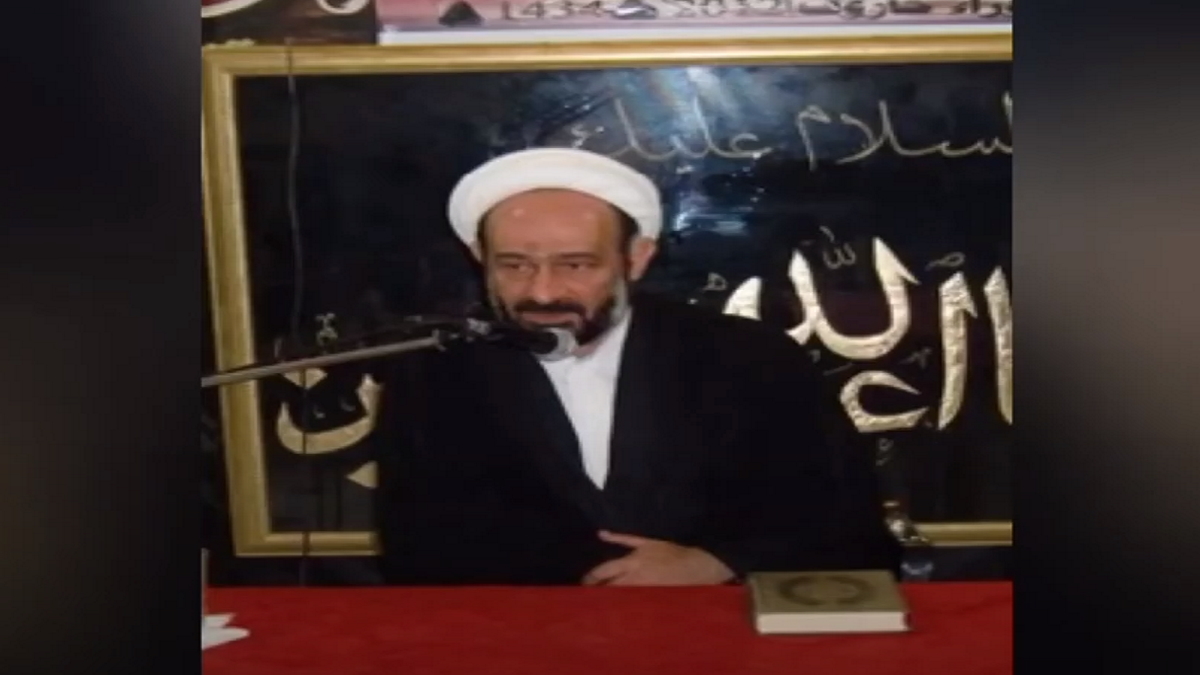
The U.S. Department of State’s Rewards for Justice Program is offering a reward of up to $10 million for information on the activities, networks, and associates of Muhammad Kawtharani, a senior Hizballah military commander.

This announcement is part of the Department’s standing reward offer for information leading to the disruption of the financial mechanisms of the terrorist organization Lebanese Hizballah.

Muhammad Kawtharani is a senior leader of Hizballah’s forces in Iraq and has taken over some of the political coordination of Iran-aligned paramilitary groups formerly organized by Qassim Sulemani after Sulemani’s death in January.

In this capacity, he facilitates the actions of groups operating outside the control of the Government of Iraq that have violently suppressed protests, attacked foreign diplomatic missions, and engaged in wide-spread organized criminal activity.

As a member of Hizballah’s Political Council, Kawtharani has worked to promote Hizballah’s interests in Iraq, including Hizballah efforts to provide training, funding, political, and logistical support to Iraqi Shi’a insurgent groups.

The U.S. Department of the Treasury designated Kawtharani as a Specially Designated Global Terrorist in 2013.

In April 2019, Rewards for Justice announced a reward of up to $10 million for information leading to the disruption of the financial mechanisms of the global terrorist organization Lebanese Hizballah.

Rewards can be provided for information leading to the identification and disruption of:

  • Sources of revenue for Hizballah or its key financial facilitation mechanisms;
  • Major Hizballah donors or financial facilitators;
  • Financial institutions or exchange houses facilitating Hizballah transactions;
  • Businesses or investments owned or controlled by Hizballah or its financiers;
  • Front companies engaged in international procurement of dual-use technology on behalf of Hizballah; and
  • Criminal schemes involving Hizballah members and supporters which financially benefit the organization.

Hizballah is a Lebanon-based terrorist organization that receives weapons, training, and funding from Iran, which the Secretary of State designated as a state sponsor of terrorism in 1984.

Hizballah generates about a billion dollars a year from a combination of direct financial support from Iran, international businesses and investments, donor networks, and money laundering activities.

The State Department designated Hizballah as a Foreign Terrorist Organization (FTO) in October 1997 under the Immigration and Nationality Act, and as a Specially Designated Global Terrorist (SDGT) in October 2001 under Executive Order (E.O.) 13224.

More information about these reward offers is located on the Rewards for Justice website at www.rewardsforjustice.net.

We encourage anyone with information on Hizballah financial networks to contact the Rewards for Justice office via the website, e-mail (LH@rewardsforjustice.net), phone (1-800-877-3927 in North America), or mail (Rewards for Justice, Washington, D.C., 20520-0303, USA).

Individuals may also contact the Regional Security Officer at the nearest U.S. embassy or consulate.

All information will be kept strictly confidential.

The Rewards for Justice Program is an effective law enforcement tool and is administered by the U.S. Department of State’s Diplomatic Security Service.

Since its inception in 1984, the program has paid in excess of $150 million to more than 100 people who provided actionable information that helped bring terrorists to justice or prevented acts of international terrorism worldwide. 

State.gov (April 2020) Reward Offer for Information on Hizballah’s Financial Networks Muhammad Kawtharani

Documentary Exposes Chinese Communist Party COVID-19 Virus Pandemic Origins


Catherine Yang of The Epoch Times stated on Thursday that while The Epoch Times began publishing reports of the CCP (Chinese Communist Party) Coronavirus disease (COVID-19) virus in January 2020, most outlets had yet to pick up on the story because of the CCP’s lockdown on information.

Three months later, over 200 countries and territories have been infected and the CCP virus has caused over 85,000 deaths infecting at least 1.4 million, but information is murkier than ever.

Catherine Yang of The Epoch Times:

“We’ve pretty much heard every rumor under the sun. We’ve heard every theory, every crazy rumor, we’ve heard all these different narratives,” said Joshua Philipp, award-winning investigative reporter and host of the show “Crossroads.”

The rumors aren’t by accident: The CCP has been actively engaging in a disinformation campaign, and media outlets around the world have parroted the propaganda. As a result, entire nations have been operating under false information as they try to battle the pandemic within their borders.

Philipp and his colleagues at The Epoch Times and NTD Television thought it their responsibility to sift through all the information available, verify it, and put it into one place. The result is the just-premiered documentary “Tracking Down the Origin of the Wuhan Coronavirus,” which is available to watch online.

Less than two days after its premiere, the documentary has around 1.6 million views.

The film “really tries to sift through all of the rumors, all of the truths, all of the falsehoods, and show people as accurate a picture as possible of what really happened and where this virus actually came from,” Philipp said.

In it, Philipp pieces together the development of the virus and includes interviews that shed light on the Chinese regime’s actions and intentions.

Join Epoch Times senior investigative reporter Joshua Philipp as he looks into the origins of the novel coronavirus—the CCP virus.


Philipp’s investigation covers the facts from the Huanan Seafood Market to the Wuhan Institute of Virology. As he digs deeper, he finds suspicious activity connected to China’s communist authorities and their military.

Through the investigation, featuring top scientists and national security experts, a more complete understanding of the situation surrounding the rise of this pandemic is unearthed. Official reports and publicly available information soon lead to more questions and surprising findings.

TheEpochTimes.com (April 2020) Who Created the CCP Virus? Documentary Exposes Pandemic Origins

Remembering the Anniversary of the 1986 West Berlin discotheque bombing

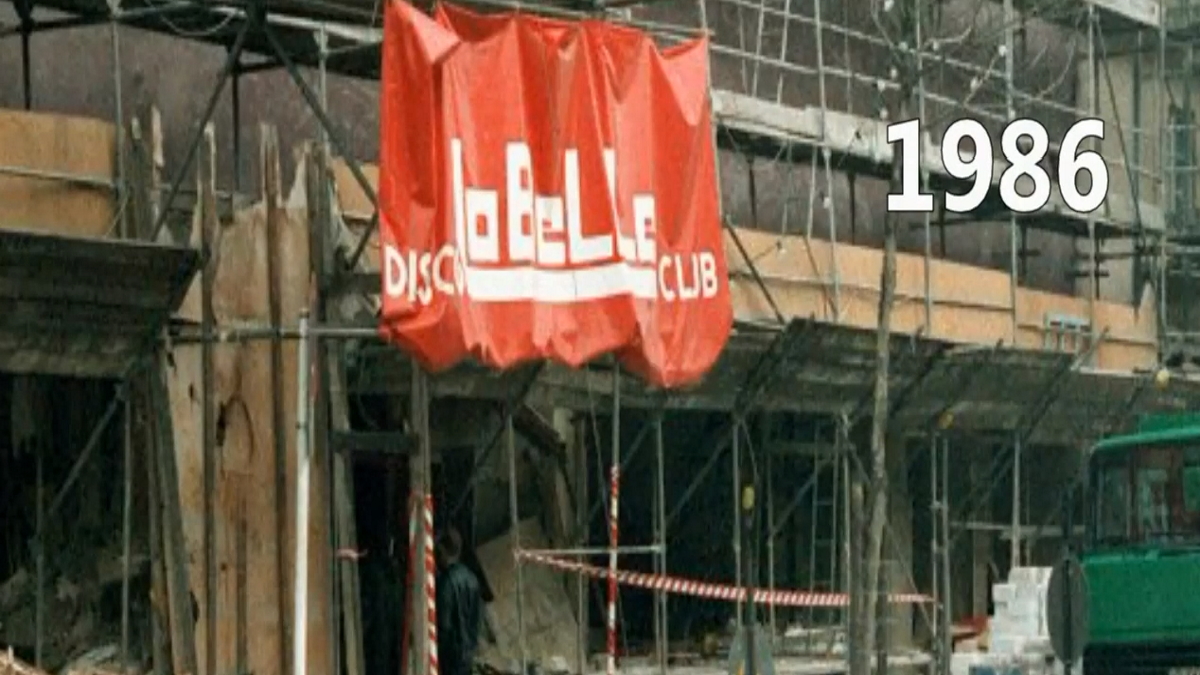
On this day, 34 years ago, the world remembers the West Berlin discotheque bombing, also called La Belle discotheque bombing, attack was carried out on April 5, 1986, in West Berlin.


On this day, 34 years ago, the world remembers the West Berlin discotheque bombing, also called La Belle discotheque bombing, attack was carried out on April 5, 1986, in West Berlin, in which Libyan agents detonated a bomb at the La Belle discotheque, a nightclub frequented by U.S. soldiers stationed in Germany during the Cold War.

The bomb, packed with plastic explosives and shrapnel, killed two U.S. soldiers and a Turkish woman and injured 229 others, some of whom lost limbs and were disabled for the rest of their lives.  

It tore a wide hole in the floor and caused the ceiling to collapse and the walls to buckle. A small fire was put out by firefighters.

Those of us, who served in Europe, like me, remembered that fateful day and have never forgotten.

The entertainment venue was commonly frequented by United States soldiers, and two of the dead and 79 of the injured were Americans. The club is on a broad street in the largely middle-class Friedenau neighborhood, not far from United States Army housing.

A bomb placed under a table near the disc jockey’s booth exploded at 01:45 CET, instantly killing Nermin Hannay, a Turkish woman, and US Army sergeant Kenneth T. Ford. A second US Army sergeant, James E. Goins, died from his injuries two months later.

Libya was accused by the US government of sponsoring the bombing, and US President Ronald Reagan ordered retaliatory strikes on Tripoli and Benghazi in Libya ten days later.

The operation was widely seen as an attempt to kill Colonel Muammar Gaddafi.

President Ronald Reagan retaliated by ordering airstrikes against the Libyan capital of Tripoli and city of Benghazi. At least 30 soldiers and 15 civilians were killed.

The Pentagon said the American warplanes struck at five separate assigned targets, three in the Tripoli area and two in the Benghazi region.

The targets near Tripoli were two suspected terrorist command posts – including a headquarters used by Khadafy — and military facilities at the nearby airport. The targets near Benghazi were suspected terrorist bases.

Secretary of State, George Shultz, in an NBC-TV interview on April 15, 1986, denied the air strikes were designed to ”go after Khadafy” although, ”We feel he is a ruler better out of his country.”

A 2001 trial in the US found that the bombing had been planned by the Libyan secret service and the Libyan Embassy.

The attack occurred less than three days after a bomb exploded on a Trans World Airlines plane on a Rome-to-Athens flight, killing four Americans.

Police and Government officials did not specifically link the two bombings.

UPI.com/Archives; en.wikipedia.org (April 2020) Reagan: Airstrike against Libya victory against terrorism; West Berlin discotheque bombing

Christian Village Suffers Eighth Attack in Three Years

Fulani Militants Kill 10 Christians in Two Villages


Fulani Militants Kill 10 Christians in Two Villages

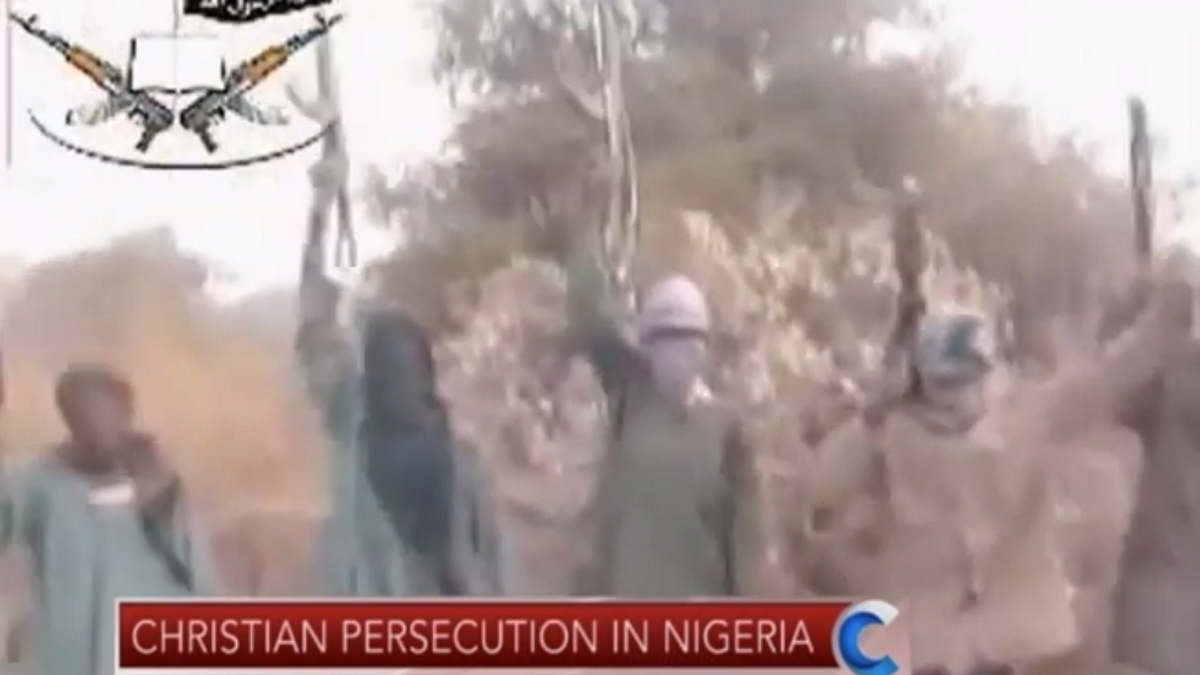
The International Christian Concern (ICC) has announced on Friday that they have learned that on Tuesday evening, March 31, despite serious concerns and restrictive measures to stall the COVID-19 pandemic, Fulani militants continued to move freely and attacked two Christian villages in Miango District, Nigeria. This is the eighth time in the last three years that Ancha village has suffered at the hands of these militants.

Narrating the heartbreaking incident, Ishaya, a member of the village’s Baptist church, said, “They came at about 11:00 p.m. (on March 31), firing gunshots and burning houses! It was so dreadful! They killed three persons and also burnt four cars (in Ancha).”

Ishaya further disclosed that the militants proceeded to launch an attack on Hukke, the neighboring village, on Wednesday, April 1. During this attack, seven people were killed and approximately 30 homes were burned down over a span of two days.

“We are in great distress here,” Ishaya lamented. Those killed in Ancha village were a pregnant member of the Baptist church named Tina Musa (33), another member of the Baptist church, Gado Bhata (57), and a member of the Methodist church, William Rivi (65).

An injured victim of the Ancha village attack, Danlami Gado, who was admitted to Bingham University Teaching Hospital in Jos, recalled, “I was in the house. When we heard gunshots, we came out, not knowing that the attackers were already in the village. They fired shots at me and three bullets hit me on my left leg, shattering the bones.  After they disappeared, I kept yelling out for help. Some persons eventually heard and came. They picked me up on a motorbike, riding through the bush until we got to a hospital in Miango.” Danlami’s injury was complicated, so he was referred to a hospital with the appropriate specialists.

He has been scheduled for immediate surgery.

A local pastor, Yakubu Kpasa of ECWA Church, grieved over the murder of three of his church members, “They came on Wednesday, April 1, at about 8:00 p.m., and returned the next day, April 2, at about 5:00 p.m. They killed three by gunshots and destroyed our church building. They also burnt several houses.” Pastor Yakubu said the gunmen came in large numbers. The entire village has been deserted and he and his family are taking refuge in another village.

In a 2017 attack on Ancha village, the militants killed 20 people, all but one of whom were members of the Baptist church. During an attack on nearby Nkiedonwro village, 28 people ran to hide in a primary school classroom while military personnel engaged the attackers. The villagers were then killed by the militants when the military was overpowered.

Nathan Johnson, ICC’s Regional Manager for Africa said, “I have personally prayed with this village over the mass grave of the 20 killed in 2017. To see attacks continuing almost three years later in the same village is infuriating. The government’s complete incompetency is causing many Christians to lose their lives needlessly. It is time that this administration begins to take the deaths of thousands seriously and stop claiming that there are no issues. They are now responsible for every death that takes place in Ancha village.”

For interviews, please contact Olivia Miller, Communications Coordinator: press@persecution.org

Persecution.org (April 2020) Christian Village Suffers Eighth Attack in Three Years