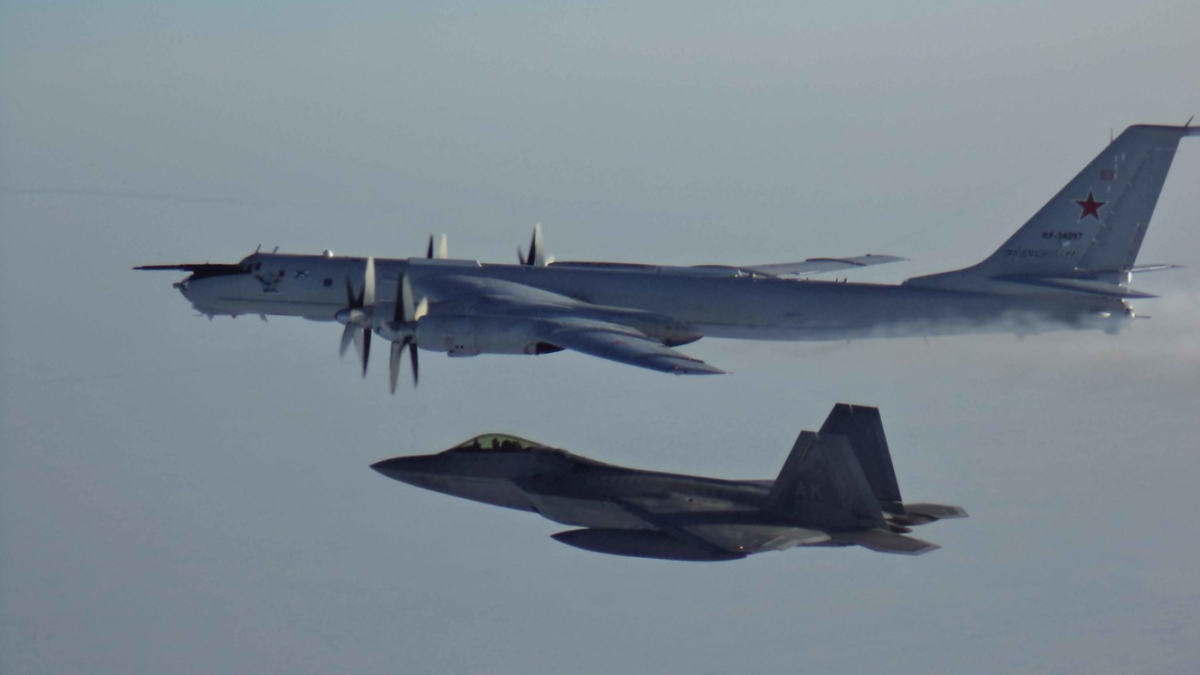
Northcom Commander Calls for 21st Century Tools to Defeat Current Threats


The U.S. Northern Command is responsible for defending the homeland and is morphing to develop 21st century tools to defend against 21st century threats

“Our adversaries have watched, learned and invested to offset our strengths while exploiting our weaknesses,” Air Force Gen. Terrence J. O’Shaughnessy told the House Armed Services Committee today. “They have demonstrated patterns of behavior that indicate their capability, capacity and intent to hold our homeland at risk below the nuclear threshold.”

The security environment is changing. “The Arctic is no longer a fortress wall, and the oceans are no longer protective moats,” the general said.

“They are now avenues of approach to the homeland, which highlights the increase in adversary presence in the Arctic.”

The country needs a capable, persistent defense that can deter adversaries, protect critical infrastructure, enable power projection forward and prevent homeland vulnerabilities, he said. “To deter, detect and defeat threats arrayed against the homeland today, Northcom and NORAD are transforming our commands and our way of thinking,” the general told the House committee. “We cannot defend the nation against 21st century threats with 20th century technology.” 

O’Shaughnessy called for a layered defense infused with the latest technology. The command will continue to partner with the U.S. defense and commercial industries a “to transform rapidly evolving scientific information into leading-edge digital age technology,” he said. 

The command is building a SHIELD — the Strategic Home and Integrated Ecosystem for Layered Defense — to defend the homeland.

“Our layered defense needs to establish awareness in all domains; from below the oceans to the highest levels of space, including the unseen cyber domain, which are all at risk,” he said. 

The general called for a layered sensing grid in all domains which can detect and track threats from their points of origin. “In other words, it requires the ability to identify and eliminate the archers before the arrows are released,” O’Shaughnessy said. “We need an adaptive architecture for joint all-domain command and control, capable of using a myriad of sensors across the globe into accurate decision quality threat information at the speed of relevance for effective command and control.”

Finally, the command needs the ability to deploy “defeat mechanisms capable of neutralizing advanced weapon systems in order to defend our great homeland,” he said. “We have put great effort into these areas such as Ballistic Missile Defense and the need also exists to aggressively defeat additional threats to include the ever growing cyber threat and the cruise missile threat.”

Defense.gov (March, 2020) Northcom Commander Calls for 21st Century Tools to Defeat Current Threats
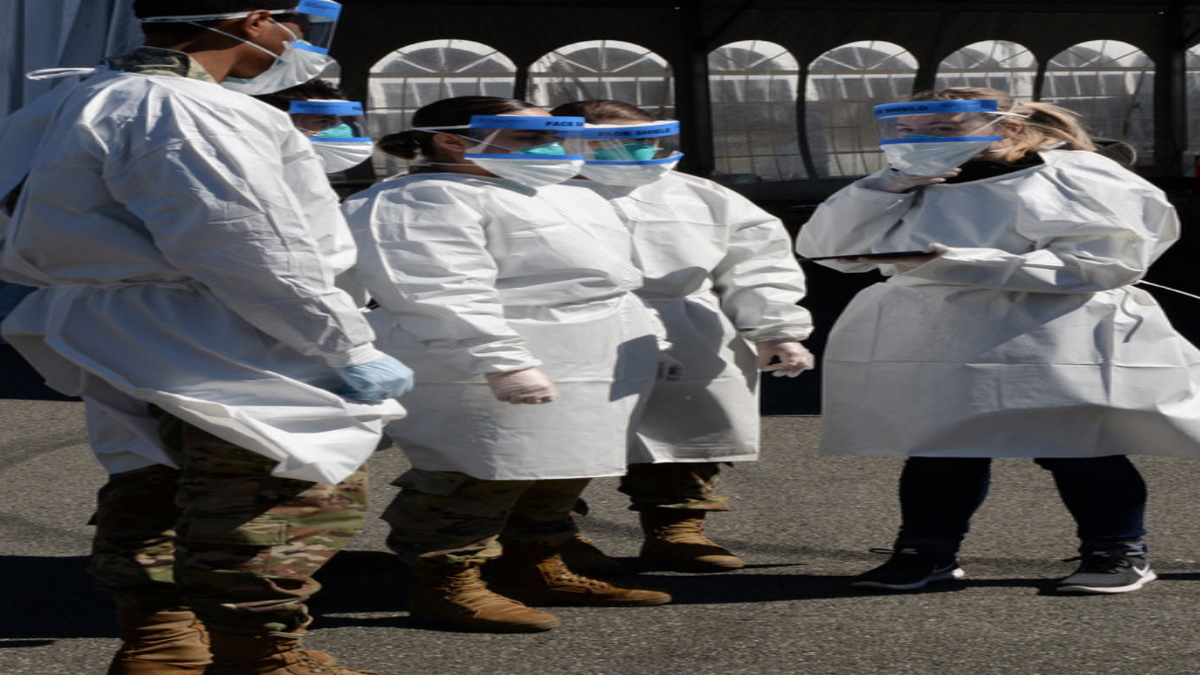
DOD Officials Explain New Coronavirus Domestic Travel Restrictions


Defense officials announced restrictions on domestic travel yesterday for service members, Defense Department employees and family members in response to the new coronavirus, or COVID-19.

Deputy Defense Secretary David L. Norquist signed a memorandum halting all domestic travel, to include permanent changes of station and temporary duty travel. The ban is in effect from March 16 to May 11, 2020.

Officials speaking on background said the new memo said that service members will only be authorized local leave only.

The ban is in addition to restrictions on all DOD military and civilian personnel and their families traveling to, from, or through areas for which the Centers for Disease Control and Prevention have issued a Level 3 Travel Health Notice. That policy also stops PCS and TDY travel through May.

There are exceptions for hardship, mission essential and humanitarian travel, but those exceptions must be approved. Domestic travel for medical treatment is excluded from the ban. 

There are 10 service members who have tested positive for COVID-19. One DOD civilian and two DOD contractors have the virus, as do eight family members, officials said. There are 13 DOD laboratories that can test samples for the virus.

The officials said the new policy is aimed at preventing the spread of coronavirus. Each day tens of thousands of service members and DOD civilians are traveling. This ”strategic pause” is ”the best and safest route” to slowing the spread of the virus, they said.

The Pentagon reservation is also taking actions and raised the health protection condition in the building and associated properties to Bravo. This means all tours of the building are cancelled. Starting March 16, offices in the building will go on minimum manning, with vast numbers of employees teleworking.

Offices in the building will have rotating staffs and ”red and blue” teams. Those employees who require access to classified information to do their mission-essential tasks will work from the building, officials said.

The Pentagon will restrict access to employees with swipe card access, and will restrict international visitors. ”We are also restricting access of Pentagon officials who have been overseas in one of the CDC-defined Level 3 or 2 countries,” officials said on background. 

As of today, the Level 3 countries are: China, Iran, South Korea, Austria, Belgium, the Czech Republic, Denmark, Estonia, Finland, France, Germany, Greece, Hungary, Iceland, Italy, Latvia, Liechtenstein, Lithuania, Luxembourg, Malta, the Netherlands, Norway, Poland, Portugal, Slovakia, Slovenia, Spain, Sweden, Switzerland, Monaco, San Marino and Vatican City.

Personnel who return from these countries will be required to self-isolate for 14 days before being allowed back to work, officials said.

Pentagon officials are also closing employee fitness centers and said they are looking at other measures to lessen the chances of transmission.

Defense.gov (March, 2020) DOD Officials Explain New Coronavirus Domestic Travel Restrictions

Near-Peer Threats at Highest Point Since Cold War, DOD Official Says

Matthew P. Donovan, who is performing the duties of the undersecretary of defense for personnel and readiness, said the character of warfare has evolved at the same time, with grave threats now appearing in previously unknown or uncontested domains, such as cyber and space.


The United States faces an array of threats from near-peer competitors China and Russia that have not been seen since before the fall of the Berlin Wall, a DOD official said today.

Matthew P. Donovan, who is performing the duties of the undersecretary of defense for personnel and readiness, said the character of warfare has evolved at the same time, with grave threats now appearing in previously unknown or uncontested domains, such as cyber and space.

He testified before the Senate Armed Services Committee, which is considering his nomination for undersecretary of defense for personnel and readiness.

Donovan said the Defense Department must also evolve to successfully meet these threats. “We must attract and retain people with the right skills to prevail in this environment, properly manage them and meet their expectations using 21st century talent management practices, and ensure all are always treated with dignity and respect.”

The department must also provide its warriors with the cutting-edge tools of the trade that they need to be successful, state-of-the-art training technologies, and techniques to best hone their skills, he added.

Soldiers, Sailors, Airmen, Marines and DOD civilians deserve the best leadership, the best policies, the best equipment, the best education and training, and our service members and their families deserve the best health care, best support systems, and best quality of life we can possibly provide, for the sacrifices we ask them to endure, Donovan added.

One senator mentioned that a study showed only 29% of American youth are eligible to serve.

Donovan replied that he’s seen those studies. “I think it’s a problem that extends well beyond the Department of Defense. It’s a national issue.”

Part of the problem, he said, is the lack of sports and physical fitness activities among the nation’s youth.

“Kids are not getting the physical activity that they need to help prepare them for the rigors of military duty,” he said.

Shop Amazon Gift Cards. Any Occasion. No Expiration.

That said, Donovan noted that DOD isn’t yet having a problem filling its ranks with qualified and quality service members.

“But as we look toward the future, toward the imperatives of the National Defense Strategy, then we’re seeing that we’re going to need to attract those skills that are in so much demand on the outside as well,” he said, adding that a good example is cyber.

One step the department is taking is partnering with universities and industry to see if there’s some way to share the load on this, he said.

Also testifying today were: William Jordan Gillis, nominated for assistant secretary of defense for sustainment, and Victorino G. Mercado, nominated for assistant secretary of defense for strategy, plans and capabilities.

Help a veteran in need by donating here.

Defense.gov (March, 2020) Near-Peer Threats at Highest Point Since Cold War, DOD Official Says

Department of Defense Statement on People’s Liberation Army Navy Lasing of U.S. Navy P-8A in Unsafe, Unprofessional Manner

Secretary Esper raised concern over an incident on February 17 in which a U.S. Navy P-8A Poseidon maritime patrol aircraft was lased by PRC navy destroyer 161 while flying in airspace above international waters approximately 380 miles west of Guam.


On March 3, 2020, Secretary of Defense Mark T. Esper spoke with the People’s Republic of China (PRC) Minister of National Defense General Wei Fenghe.

During the call, Secretary Esper raised concern over an incident on February 17 in which a U.S. Navy P-8A Poseidon maritime patrol aircraft was lased by PRC navy destroyer 161 while flying in airspace above international waters approximately 380 miles west of Guam.

Secretary Esper called on the People’s Liberation Army to conduct itself safely and professionally in accordance with bilateral agreements and international standards of safety at sea.

The incident underscores the need for the two militaries to enhance bilateral crisis communication mechanisms to ensure incidents like this do not escalate or lead to miscalculation.

The P-8A was operating in international airspace in accordance with international rules and regulations. The PRC navy destroyer’s actions were unsafe and unprofessional.

Additionally, these acts violate the Code for Unplanned Encounters at Sea (CUES), a multilateral agreement reached at the 2014 Western Pacific Naval Symposium to reduce the chance of an incident at sea. CUES specifically addresses the use of lasers that could cause harm to personnel or damage to equipment. The destroyer’s actions were also inconsistent with a Memorandum of Understanding (MOU) between U.S. Department of Defense and the Ministry of National Defense of the PRC regarding rules of behavior for safety of air and maritime encounters.

The laser, which was not visible to the naked eye, was captured by a sensor onboard the P-8A. Weapons-grade lasers could potentially cause serious harm to aircrew and mariners, as well as ship and aircraft systems.

The P-8A is assigned to VP-45, based out of Jacksonville, Florida, and is forward-deployed to Kadena Air Force Base in Okinawa, Japan. The squadron conducts routine operations, maritime patrol and reconnaissance in the U.S. 7th Fleet area of operations.

U.S Navy aircraft routinely fly in the Philippine Sea and have done so for many years. U.S. Navy aircraft and ships will continue to fly, sail and operate anywhere international law allows.

U.S. 7th Fleet is the largest numbered fleet in the world, and with the help of 35 other maritime-nation allies and partners, the U.S. Navy has operated in the Indo-Pacific region for more than a century, providing credible, ready forces to help preserve peace and prevent conflict.

Defense.gov (March, 2020) Department of Defense Statement on People’s Liberation Army Navy Lasing of U.S. Navy P-8A in Unsafe, Unprofessional Manner

Help a veteran in need by donating here.

U.S. Will Not Let China, Russia Deny Its Space Superiority, DOD Officials Say

Space systems underpin virtually every weapon system in the Defense Department’s arsenal, a senior DOD official told Congress.


Space systems underpin virtually every weapon system in the Defense Department’s arsenal, a senior DOD official told Congress.

But many systems were designed for an era when there were few threats in space, Dr. James H. Anderson, performing the duties of deputy undersecretary of defense for policy, said today at a hearing of the House Armed Services Committee’s strategic forces subcommittee. This is not the case today, he added, as China and Russia both seek to be able to deny the United States and its allies the advantages of space.

China and Russia are developing sophisticated on-orbit capabilities and an array of counter-space weapons capable of targeting nearly every class of U.S. space asset, Anderson told the House panel. They are expanding their space capabilities, he said, and have created military space forces that they are training and equipping to prevail in future crises and conflicts.

The United States is responding by “transforming its space enterprise, fielding resilient architectures, developing space warfighting expertise and working closely with allies in combined operations,” he said.

Soffe Men’s 3 Pack-USA Poly Cotton Military Tee

The fiscal year 2021 defense budget request provides $18 billion for space programs, including $111 million to support stand-up of the U.S. Space Force, Anderson said. It also provides funding for the new space combatant command — U.S. Space Command — and the Space Development Agency, which will accelerate the development and fielding of military space capabilities necessary to ensure U.S. and allied technological and military advantages.

In his written testimony, Anderson said the United States is actively pursuing opportunities with allies and partners to build combined space operations and interoperable, or even integrated, architecture. The flagship of this integration is the Combined Space Operations Center at Vandenberg Air Force Base, California, with embedded British, Canadian and Australian exchange personnel working side by side with U.S. personnel.

“We have recently added Germany and France to the Combined Space Operations initiative,” he noted.

Space Force Gen. John W. “Jay” Raymond, chief of space operations, also testified.

“We can no longer assume that our space superiority is a given,” he said. “If deterrence fails, we must be ready to fight for space superiority.”

U.S. Space Command, along with the Space Force will deter aggression from conflict and do so from a position of strength, the general said. “Accordingly,” he added, “we will remain ready to defend U.S. and allied freedom of action in space. We will deliver space combat power for the joint and coalition force and we’re going to develop joint warfighters to serve in, to and from the space domain.”

Defense.gov (February, 2020) U.S. Will Not Let China, Russia Deny Its Space Superiority, DOD Officials Say

Help a veteran in need by donating here.