Death & Vehicle Fire Investigation- Harker Heights


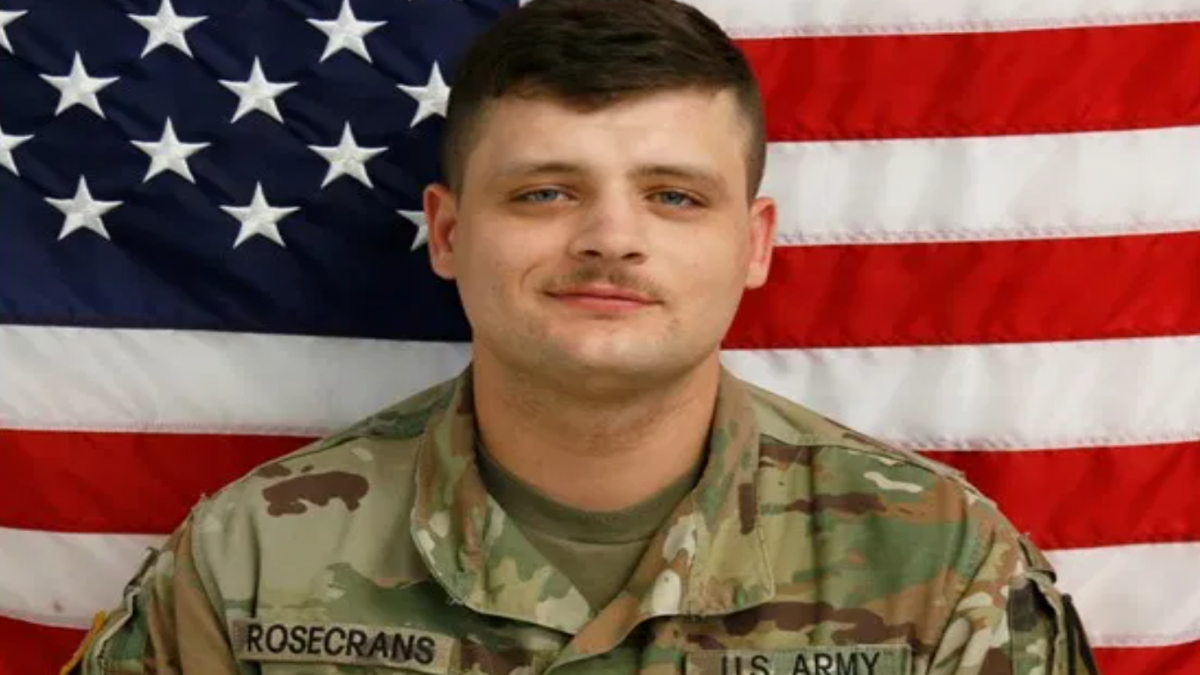
The Harker Heights Police Department has identified the victim of the death investigation as 27-year-old United States Army PFC Brandon Rosecrans, of Fort Hood, Texas.

Preliminary investigation suggests that Mr. Rosecrans died from a gunshot wound and his death is now being investigated as a murder.

“Command Sgt. Maj. Ryan McLane and I would like to express our deepest regrets to the family and loved ones of Pfc. Brandon Rosecrans. The thoughts and prayers of the Soldiers of 215th Brigade Support Battalion and the Greywolf Brigade are with them during this difficult time,” said Col. Kevin Capra, Commander, 3rd Armored Brigade Combat Team.

Private First Class Rosecrans of Kimberling City, Missouri, first enlisted in the United States Army in May 2018. He received Advanced Individual Training as a Quartermaster and Chemical Equipment Repairer (91J) before being assigned to his first duty station in November 2018 at Fort Hood with the 3rd Armored Brigade Combat Team, 1st Cavalry Division. Rosencrans is the recipient of the National Defense Service Medal and Army Service Ribbon.

The vehicle fire reported on May 18, 2020 is confirmed to belong to Mr. Rosecrans. The vehicle was a 2016 Jeep Renegade orange in color. The cause of the fire is still under investigation by the Harker Heights Fire Marshal.

The murder and arson investigation will run concurrently by the Harker Heights Police and Fire Departments.

The Harker Heights Police Criminal Investigation Division is asking anyone with information about this murder to contact them at 254-953-5400.

Individuals may also provide information to Crime Stoppers at 254-526-TIPS (8477) or go online at www.bellcountycrimestoppers.com. 

All information is confidential and anonymous and if your tip leads to the arrest of the person(s) responsible, you could be eligible to receive a reward up to $1,000 in cash.

Harker Heights Police Department (May 2020) UPDATE: Death & Vehicle Fire Investigation- Harker Heights
B-1B Lancers return to Indo-Pacific for bomber task force deployment


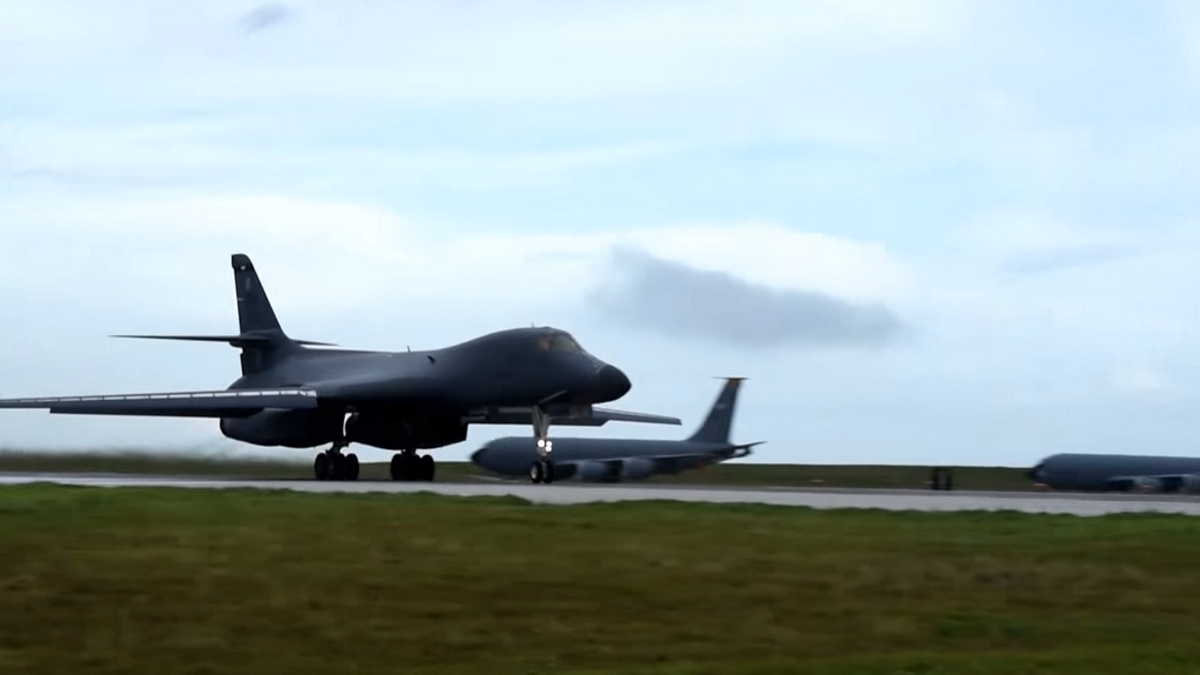
The U.S. Air Force B-1B Lancers have returned to the Indo-Pacific region on May 1 to conduct bomber task force operations out of Andersen Air Base, Guam.

Four bombers and approximately 200 Airmen from the 9th Bomb Squadron, 7th Bomb Wing, Dyess Air Force Base, Texas, deployed to support Pacific Air Forces‘ training efforts with allies, partners and joint forces; and strategic deterrence missions to reinforce the rules-based international order in the Indo-Pacific region.

Three B-1Bs flew to Andersen AFB while one split off and flew down east of Japan to conduct training with U.S. Navy assets operating in the region before heading to Andersen AFB.

“Deployments like this allow our Airmen to enhance the readiness and training necessary to respond to any potential crisis or challenge across the globe,” said Col. Ed. Sumangil, 7th BW commander. “It also provides a valuable opportunity to better integrate with our allies and partners through joint and combined operations and exercises.”

In line with the National Defense Strategy objectives of strategic predictability and operational unpredictability, the Bomber Task Force enables a mix of different types of strategic bombers to operate forward in the Indo-Pacific region from a broader array of overseas and continental U.S. locations with greater operational resilience.

“The B-1 provides all of the training opportunities which the B-52 (Stratofortress) provided, plus the ability to train to advanced standoff, anti-surface warfare with (Long Range Anti-Surface Missiles),” said Lt. Col. Frank Welton, PACAF’s chief of operations force management.

The B-1 can carry the largest conventional payload of both guided and unguided weapons in the U.S. Air Force.

“The B-1 is able to carry a larger payload of Joint Air-to-Surface Standoff Missiles and a larger payload of 2,000-pound class Joint Direct Attack Munitions,” Welton said. “Additionally, the B-1 is able to carry the LRASM, giving it an advanced standoff, counter-ship capability. It also has an advanced self-protection suite and is able to transit at supersonic speeds to enhance offensive and defensive capabilities.”

The last time the B-1s were deployed to the region was in 2017. Bombers from the 9th Expeditionary Bomb Squadron supported missions from Andersen AFB, conducting multiple sequenced bilateral missions with the South Korean air force and the Japan Air Self-Defense Force.

“Our wing has conducted, and participated in, a variety of exercises over the last year to ensure we are primed for large-scale missions such as this one,” Sumangil said. “We’re excited to be back in Guam and proud to continue to be part of the ready bomber force prepared to defend America and its allies against any threat.”

The last BTF deployed to the Pacific was in January 2019 when three B-2 Spirits and approximately 200 Airmen from the 393rd Bomb Squadron from Whiteman AFB, Missouri, deployed to Hawaii.

The squadron conducted 37 sorties for a total of 171 hours. Eight of the missions were integration operations with F-22 Raptors from the 199th Fighter Squadron, 154th Wing, and Hawaii Air National Guard.

AF.mil (May 2020) B-1B Lancers return to Indo-Pacific for bomber task force deployment

COVID-19 Changes Daily Life of Marines


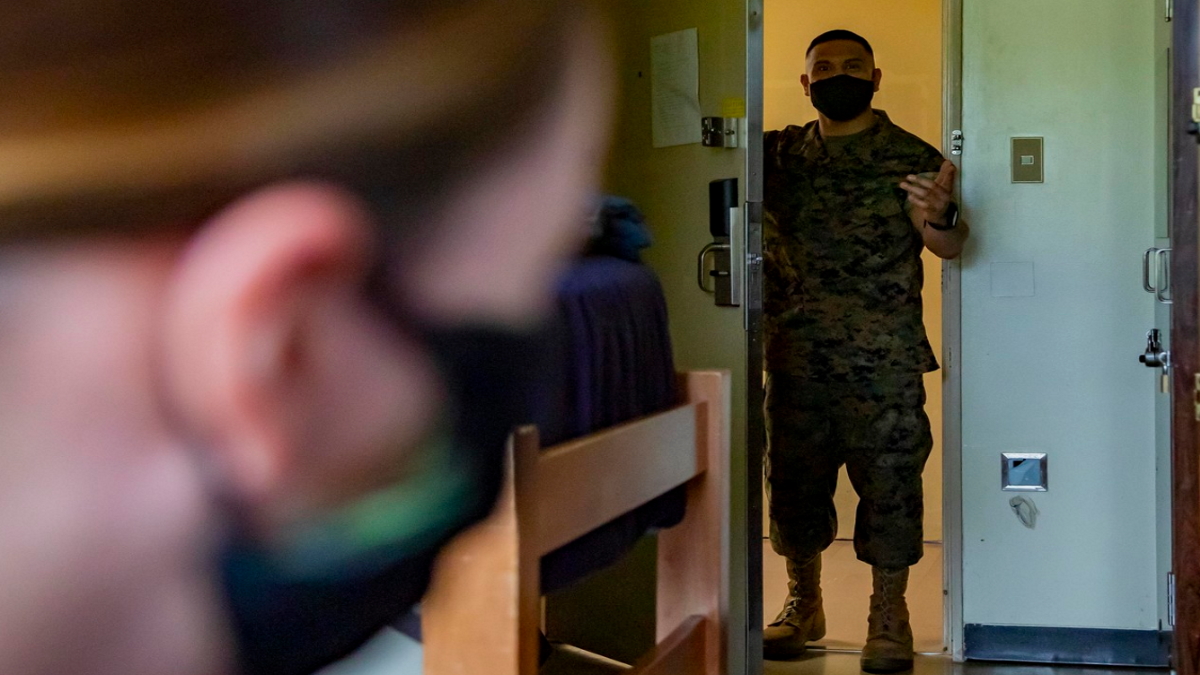
The work, social and home lives of Marines living in the barracks deviates from life before the pandemic. Marines assigned to the distribution management office, DMO, on Camp Foster, Okinawa, have a unique and difficult task to perform during this time.

DMO Marines are tasked with booking flights for temporary assignments and permanent-change-of-station orders, as well as moving all of a Marine’s personal property to the new location. With the Defense Department’s travel ban, DMO Marines are teleworking to help successfully move Marines and sailors to and from the island.

Communication is the most challenging aspect of teleworking during the outbreak, said Marine Corps Lance Cpl. Amanda Martinez, a personal property clerk at Marine Corps Base Camp Butler on Okinawa.

“We are used to face-to-face interactions, but we are having to call and email members, and they’re teleworking as well,” Martinez said. “It has been taking a little bit longer as far as documents being signed and information being sent back and forth.”

The daily lives of U.S. Marines have drastically changed since the outbreak of COVID-19. Marines stationed at Marine Corps Base Camp Smedley D. Butler, Okinawa, Japan, have implemented teleworking as a way to practice social distancing and combat the spread of the virus.

While teleworking is an effective way to combat the spread of the virus, it hinders the DMO to operate at its full potential.

“Half of our staff is in office, and half of the staff is teleworking at the barracks. So, we’re trying out a bunch of things to figure out the best way to communicate with our members and our team to make mission,” said Marine Corps Cpl. Ricardo Casarez, the noncommissioned officer in charge of the passenger travel office at Camp Butler. “Regardless, we continue to work as a team in order to adapt and overcome COVID-19.”

Not only have their jobs been affected, but so have their daily duties as Marines and the uniforms they wear.

“We are now required to wear masks. It’s become a part of our everyday carries for us, and we are required to maintain social distancing, which are both not part of our daily routines, but it has become a norm for Marines,” Casarez said.

Even the Marines’ physical training schedule has been altered, but it does not stop them from working out however they can.

“We used to PT every day, now it’s all on yourself to maintain your physical fitness,” Martinez said. “It is kind of hard because of the gyms being closed, but a lot of us are just running every day, and do what we can with what we have. We are just adapting and overcoming to still be ready to fight if we have a calling.”

The 3rd Marine Expeditionary Force announced Health Protection Condition Charlie Plus, which prohibits off-base liberty. However, the Marines still see a bright side during these difficult times.

“Due to COVID-19, Marines [are not] able to execute liberty off-base and enjoy the island,” Casarez said. “I think it’s brought camaraderie within units. It has definitely brought that feeling of being close for us. I believe it has made us more united than we have ever been.”

(Marine Corps Lance Cpl. Brennan Beauton is assigned to Marine Corps Installations Pacific.)

Defense.gov (April 2020) COVID-19 Changes Daily Life of Marines

Defense Officials Express Agreement With President’s Warning to Iran


Defense Department officials are in full agreement with President Donald J. Trump’s warning to the Iranian regime on Twitter, senior Pentagon officials said on Wednesday.

The Iranian regime has a history of harassing U.S. vessels operating in the Persian Gulf. In the past, small, quick Iranian boats have charged at U.S. ships in international waters.

The president tweeted, “I have instructed the United States Navy to shoot down and destroy any and all Iranian gunboats if they harass our ships at sea.”

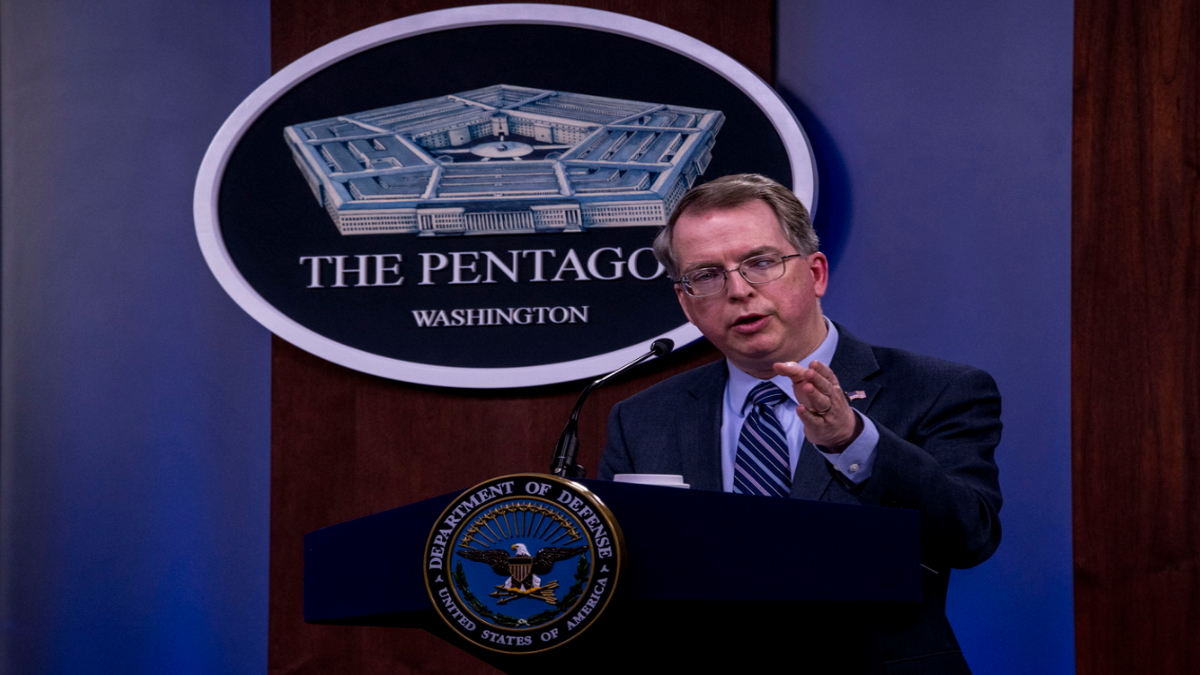
“The president issued an important warning to the Iranians,” Deputy Defense Secretary David L. Norquist said during a Pentagon news conference today. “What he was emphasizing is all of our ships retain the right of self-defense, and people need to be very careful in their interactions to understand the inherent right of self-defense.” 

The president’s tweet does not signal a new policy, the vice chairman of the Joint Chiefs of Staff said, as U.S. forces in any environment retain the right to defend themselves. “Every ship that deploys in harm’s way has the inherent right of self-defense,” Air Force Gen. John E. Hyten told reporters. “What that means is if we see a hostile act, if we see hostile intent, we have the right to respond, up to and including lethal force.”

Hyten warned Iran that, if threatened, U.S. commanders “will respond with overwhelming lethal force.” 

Norquist said Trump was responding to Iran’s poor behavior. “He is emphasizing and warning them about the challenges of what they will create,” the deputy secretary said. “I think it was a very useful thing that he put out, and I think it’s an important thing for other people to understand and take very seriously.”

Hyten emphasized that he thinks it is a good thing that the president warned an adversary. He said that if the Iranians want to go down that path, “we will come, and we will come large.”

Defense.gov (April 2020)Defense Officials Express Agreement With President’s Warning to Iran

Army Orders Pause in Shipment of Trainees to Initial Military Training


On Monday, the Army will temporarily halt the movement of soldiers to basic combat training because of the COVID-19 pandemic, the commander of Army Training and Doctrine Command said.

“This conditions-based pause allows leaders to further focus on setting conditions to restart movement in a safer manner,” Army Gen. Paul E. Funk II said.

This is not a pause in training for the 54,000 soldiers who are currently at Army training centers, he added.

In addition to Funk, Army Maj. Gen. Frank M. Muth, commander of the Army Recruiting Command; Army Maj. Gen. Lonnie G. Hibbard, commander of the Center for Initial Military Training; and Army Command Sgt. Maj. Edward W. Mitchell, also with the Center for Initial Military Training, spoke at a Pentagon news conference today regarding the impact of COVID-19 on recruiting and accessions.

Regarding soldiers who are now training, drill sergeants have been strictly enforcing social distance-enabled training, Funk said. Also, trainees are regularly screened for COVID-19 as they continue to train.

During the pause, commanders will ensure they are following the correct and most current procedures and capabilities to screen and test recruits, he said.

For each new basic combat training cycle, there will be a two-week monitoring period before trainees start their normal, eight-week period of instruction, Funk said.

The command has applied lessons learned from U.S. forces in Italy and Korea, as well as guidance from the Centers for Disease Control and Prevention, he mentioned.

“We are still training every day to fight and win our nation’s wars as our nation expects us to do,” Funk said.

Leaders also talked about the precautions being taken before trainees go to training bases.

Muth noted that all recruiters are now doing virtual recruiting over social media instead of having face-to-face contact.

Hibbard said the prospective trainees are screened for COVID-19 at all military entrance processing stations as well as when they arrive at the training base reception battalion. From there, they are moved into the two-week controlled monitoring. 

Monitoring, he added, means asking the soldiers questions about their health and taking their temperatures.

After the 14 days, collective training starts but will be with social distancing.

Defense.gov (April 2020) Army Orders Pause in Shipment of Trainees to Initial Military Training