Reward Increased: Missing Fort Hood Soldier

The U.S. Army Criminal Investigation Command is offering a reward of up to $25,000 for credible information leading to the whereabouts of missing Fort Hood Soldier, Pfc. Vanessa Guillen.


The U.S. Army Criminal Investigation Command is offering a reward of up to $25,000 for credible information leading to the whereabouts of missing Fort Hood Soldier, Pfc. Vanessa Guillen.

The 20-year-old Vanessa Guillen was last seen April 22 between 11:30 a.m. and 12:30 p.m. in the parking lot of her Regimental Engineer Squadron Headquarters, 3rd Cavalry Regiment on Fort Hood, Texas and has not been heard from since that date.

Her car keys, barracks room key, identification card and wallet were later found in the armory room where she was working earlier in the day. She was last seen in the parking lot wearing a black t-shirt and purple fitness-type pants.

Originally from Houston, Texas, Pfc. Guillen maintained close ties with her family and the city of her birth, visiting there frequently while stationed at Fort Hood.

Guillen is of Hispanic descent, five feet, two inches tall, 126 pounds, with black hair and brown eyes. Her Military Occupational Specialty is a 91F, Small Arms/Artillery Repairer. She is an avid runner.

At this point, investigators have no credible information or report that Vanessa Guillen was sexually assaulted or that this case is in any way connected to the investigation into the disappearance of PV2 Gregory Wedel-Morales, who was last seen on the night of Aug. 19, 2019 while driving his car in Killeen, Texas.  

Both of these allegations have been widely circulated via the media and on social media.

“We are completely committed to finding Vanessa and aggressively going after every single piece of credible information and every lead in this investigation,” said Chris Grey, spokesman for Army CID. “We will not stop until we find Vanessa.”

More than 150 people have been interviewed and “We are working very closely with multiple law enforcement agencies to include the FBI, Belton Police Department and the Texas Department of Public Safety, as well as others,” Grey said. “We have also partnered with Texas EquuSearch and the National Center for Missing and Exploited Children to tap into their resources as well. We have participated in ground and air searches on Fort Hood and throughout the Central Texas region.”

Army CID and Fort Hood continue to seek the public’s help for information.

“We know somebody out there has some very critical information pertaining to this investigation and we strongly encourage you to do the right thing and come forward,” Grey said.  “Do it for Vanessa and do it for her family, friends and fellow Soldiers.”

Persons with information can contact Army CID Special Agents at 254-287-2722 or the Military Police Desk at 254-288-1170. 

They can also anonymously submit information at https://www.cid.army.mil/report-a-crime.html 

People wishing to remain anonymous will be honored to the degree allowable under the law and the information will be held in the strictest confidence allowable.

For more information about CID or to report a crime, visit www.cid.army.mil.

Fort Hood Press Center (June 2020) Reward Increased: Missing Fort Hood Soldier

48th Fighter Wing downed aircraft, pilot found deceased

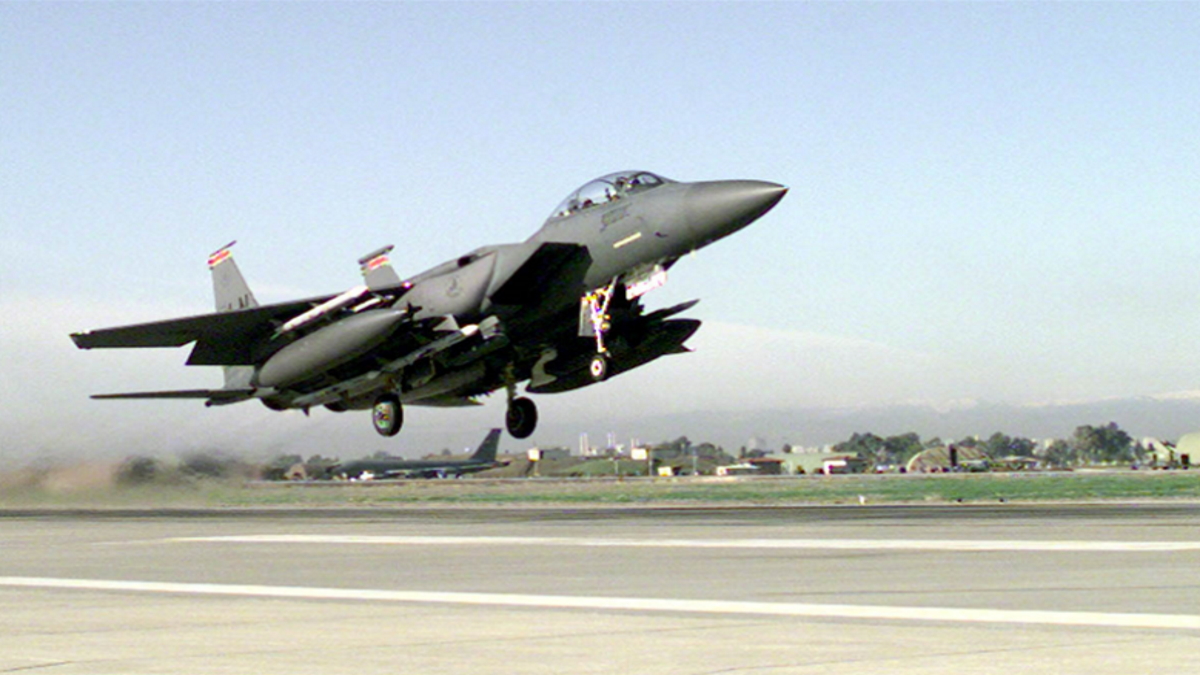
The aircraft, from the 48th Fighter Wing, RAF Lakenheath, United Kingdom, was on a routine training mission with one pilot on board at the time of the crash. U.K. search and rescue were called to support.


One pilot was killed when their U.S. Air Force F-15C Eagle crashed at approximately 9:40 a.m (BST) June 15, in the North Sea.

The name of the deceased pilot is being withheld until 24 hours after the next of kin have been notified.

The aircraft, from the 48th Fighter Wing, RAF Lakenheath, United Kingdom, was on a routine training mission with one pilot on board at the time of the crash. U.K. search and rescue were called to support.

Earlier, rescuers found the wreckage of the jet that was on a routine training mission from RAF Lakenheath when it crashed at 9:40 a.m. The cause of the crash wasn’t immediately clear. 

Britain’s coast guard located wreckage from the downed fighter, and recovery efforts were underway, the U.S. Air Force said in a statement.

Coast guard officials said in a statement that they received reports the plane went down 74 nautical miles off Flamborough Head on the Yorkshire coast.

(Update) The pilot of the downed F-15C Eagle from the 48th Fighter Wing has been located and confirmed deceased. The name of the pilot will not be released until all next of kin notifications have been made.

This is a tragic loss for the 48th Fighter Wing community, and our deepest condolences go out to the pilot’s family and the 493rd Fighter Squadron.

The cause of the crash remains under investigation.

AF.mil; Lakenheath.af.mil; 11Alive.com (June 2020) 48th Fighter Wing downed aircraft, pilot found deceased; Pilot of US Air Force jet that crashed in North Sea is dead; UPDATE: 48th Fighter Wing downed pilot located

Iran Poses Greatest Threat to Region, Centcom Commander Says

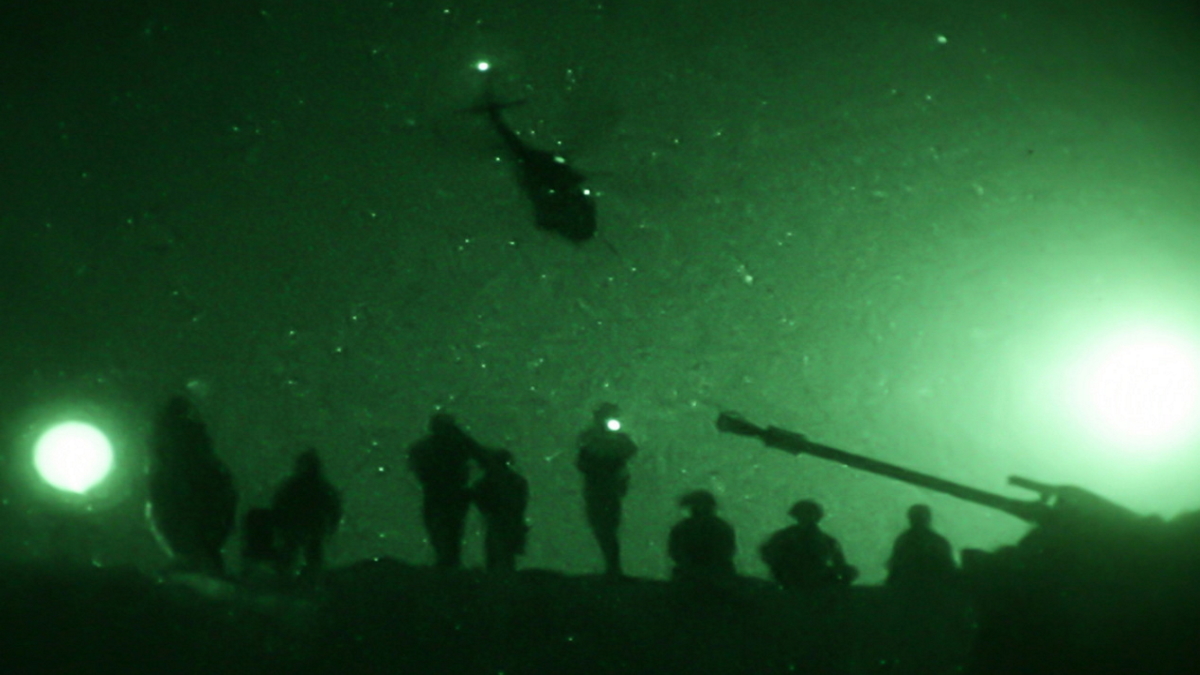
Iran poses the greatest threat to regional security and stability, the commander of U.S. Central Command said.


Iran poses the greatest threat to regional security and stability, the commander of U.S. Central Command said.

Marine Corps Gen. Kenneth F. McKenzie Jr. spoke last week at a Middle East Institute webinar titled, “Centcom and the Shifting Sands of the Middle East.”

McKenzie enumerated various threats from Iran:

  • Funding and arming terrorist organizations;
  • Propping up the “murderous regime” of Syrian President Bashar al-Assad;
  • Providing advanced weapons to the Houthi rebels in Yemen;
  • Direct attack on oil tankers in the Strait of Hormuz;
  • Direct attack on oil refineries in Saudi Arabia; and 
  • Attacking U.S. troops in Iraq. 

“Iran actively stokes instability and is intent on degrading security all over the region,” McKenzie said. “They use proxies and violence to push other nations in the region to their agenda.”

The State Department is leading the effort to pressure Iranian leaders diplomatically and, through sanctions, to make them renounce their nuclear ambitions, cease work on ballistic missiles and cease exporting terrorism against their neighbors, he said, noting that this effort is a whole-of-government approach that includes allies and partners.

The Defense Department’s role regarding Iran is to deter it from taking direct or indirect military actions against the United States and its allies and partners in the region, he said.

McKenzie noted that the Iranians were surprised by the U.S. killing of Iranian Maj. Gen. Qasem Soleimani of Iran’s Islamic Revolutionary Guard Corps in January, and have had to recalculate where their red line is drawn with the United States. “They see we have the will to act,” he said.

Beyond Iran, terrorist organizations such as ISIS and al-Qaida still aspire to attack the United States, its allies and even the U.S. homeland, the general said. Vigorous pressure on them prevents them from doing so, he added.

China and Russia also have become involved in the region, trying to use economic leverage to make their influence felt, the general said. Russia, he added, is propping up Assad, who they see as a valued ally with a warm-water port.

The U.S. response has been to have close relationships with nations in the region, McKenzie said, helping them build up their security forces and encouraging them to purchase U.S. foreign military materiel.

An over-the-horizon threat to coalition and partner forces in the region will most likely come from swarms of small unmanned aerial systems that can carry weapons, McKenzie said, noting that the Army is taking the lead on developing counter-UAS measures.

McKenzie noted that the United States is less dependent on Middle East oil than it ever was, but wants to ensure freedom of navigation for partners and allies. He specifically mentioned the importance of ensuring safe passage through the Red Sea, Strait of Hormuz and the Bab al-Mandab Strait.

NATO.int (June 2020) Iran Poses Greatest Threat to Region, Centcom Commander Says

NATO launches Counter-Terrorism Reference Curriculum

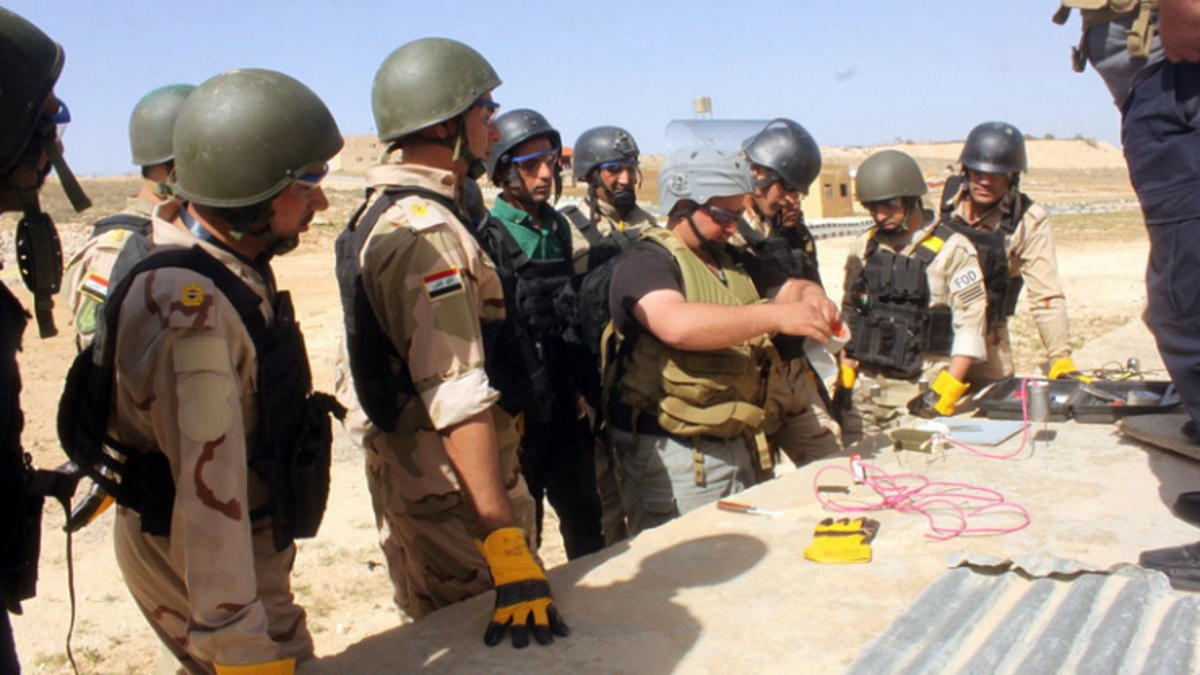
NATO on Friday, June 12, launched its first ever Counter-Terrorism Reference Curriculum (CTRC). It supports interested Allies and partner countries in enhancing their capacities to develop national skills and improve counter-terrorism strategies.


NATO on Friday, June 12, launched its first ever Counter-Terrorism Reference Curriculum (CTRC). It supports interested Allies and partner countries in enhancing their capacities to develop national skills and improve counter-terrorism strategies.

The Curriculum will also serve as a reference document to address partner nation defense educational institution requirements and will provide helpful guidelines for relevant existing NATO courses. Drawing on historical examples, the CTRC provides an overview of terrorist ideologies, motivations and methods, as well as contemporary counter-terrorism practices and potential future projections.

Launching the Curriculum, Dr. Antonio Missiroli, NATO’s Assistant Secretary General for Emerging Security Challenges stated: “Security challenges like terrorism are not diminishing because of the global pandemic. Terrorism undermines our safety and the very values that underpin and inspire our societies. The Alliance is committed to address this threat with all available means. Supporting improved awareness, strengthening resilience and building counter-terrorism capacity of both Allies and partners are all part of this effort, and the CTRC perfectly fits these objectives. I would like to thank all those who helped make this Curriculum possible, including the United Nations, the European Union and the Organization for Security and Co-operation in Europe (OSCE).”

Partners can significantly benefit from using the CTRC for the development of their own tailored courses on Counter-Terrorism. This support will be provided and facilitated in the framework of NATO’s Defense Education Enhancement Programme (DEEP). Dr. John Manza, NATO’s Assistant Secretary General for Operations, highlighted: “The Counter-Terrorism Reference Curriculum will be available to all interested partners and Allies. DEEP will work diligently to help partners who request support in implementing tailored versions of the curriculum for their professional military education institutions. In light of the COVID-19 pandemic, and reflecting other longer-term trends, NATO will also work to implement the Counter-Terrorism Reference Curriculum as a distance course, available to all partners who wish to use it in their institutions. Supporting our partners in this way makes us all stronger in the face of a common threat.” 

Dr. Sajjan M. Gohel, the CTRC’s co-editor and academic project lead from the Asia-Pacific Foundation and the London School of Economics (LSE) added: “The CTRC is designed to provide users with a robust, holistic and nuanced comprehension of terrorism as well as improve potential counter-terrorism outcomes for NATO members and partners. The curriculum reflects NATO’s innovative best.”

The NATO Counter-Terrorism Reference Curriculum is the result of close cooperation between the Defense Education Enhancement Programme (DEEP) and NATO`s Counter-Terrorism Section, as well as the Partnership for Peace Consortium. Over 100 experts from nations across five continents, including from Tunisia, Jordan and Mauritania, as well as multiple international organizations contributed to the writing, drafting, and editing of the final product.

NATO.int (June 2020) NATO launches Counter-Terrorism Reference Curriculum

White House Report Recommends Multi-Pronged Approach to Counter China

The Defense Department has a role to play in countering China, but it is only one part of the effort. The National Defense Strategy highlights the threat.


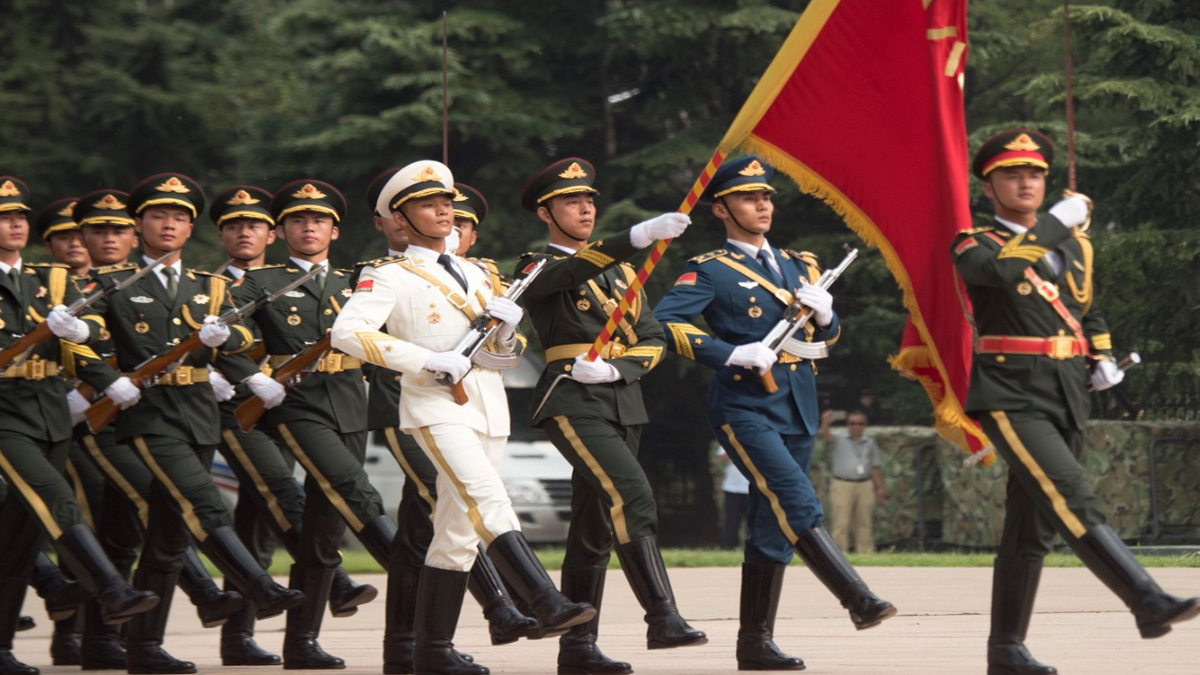
China is using government, military, economic, diplomatic and information levers to change the well-tested and beneficial international order, and the United States must have a similar strategy to combat these efforts, according to a White House report.

The White House addressed the whole-of-government approach to counter China — a great power competitor — in a report published last month titled “The United States Strategic Approach to the People’s Republic of China.” 

The Defense Department has a role to play in countering China, but it is only one part of the effort. The National Defense Strategy highlights the threat. 

“China is leveraging military modernization, influence operations and predatory economics to coerce neighboring countries to reorder the Indo-Pacific region to their advantage,” the unclassified strategy report said. “As China continues its economic and military ascendance, asserting power through an all-of-nation, long-term strategy, it will continue to pursue a military modernization program that seeks Indo-Pacific regional hegemony in the near-term and displacement of the United States to achieve global preeminence in the future.”

According to the report, China is the prime country that has benefited from the existing international order, noting that it has made tremendous progress economically since moving to a market economy. U.S. officials had anticipated that the iron rule of the Chinese Communist Party would loosen as prosperity became more widespread in the nation of more than 1.5 billion people. 

But the party maintained — and even tightened — its grip. “Over the past two decades, reforms have slowed, stalled or reversed,” the White House report says. “The PRC’s rapid economic development and increased engagement with the world did not lead to convergence with the citizen-centric, free and open order as the United States had hoped.”

When the United Kingdom handed over Hong Kong to China, Hong Kong was guaranteed semi-autonomous status at least through 2047. The Chinese are backing out of the “One Nation, Two Systems” agreement. China is also building and militarizing islands in the South China Sea and East China Sea in an attempt to assert sovereignty over international sea lanes of communication.

The United States and partner nations in the region and internationally are sailing and flying through these areas in freedom of navigation operations, the report says.

The Chinese have massed troops and missiles across the Strait of Taiwan and continually threaten military action and have tied their new-found economic power and diplomacy together in their “One Belt One Road” initiative, which the report calls an umbrella term describing initiatives designed “to reshape international norms, standards, and networks to advance Beijing’s global interests and vision, while also serving China’s domestic economic requirements.”

The “One Belt One Road” projects frequently are “characterized by poor quality, corruption, environmental degradation, a lack of public oversight or community involvement, opaque loans, and contracts generating or exacerbating governance and fiscal problems in host nations,” the report says.

Beijing will probably use these projects to exert undue political influence and gain military access, the report says. “Beijing uses a combination of threat and inducement to pressure governments, elites, corporations, think tanks and others — often in an opaque manner — to toe the CCP line and censor free expression,” it states.

The response to this effort is not solely military. Rather, the report says, it has to be a whole-of-government approach that combines diplomacy, economic leverage, information operations and military partnerships. 

China is working to undermine U.S. alliances in the Indo-Pacific region, and “One Belt One Road” is just an arrow in the quiver aimed at subverting American influence in the region, the report says.

Meanwhile, it states, the Chinese Communist Party has no compunction about using economic, political and military power to pressure nations to follow their lead — often to the detriment of their citizens. With no visible opposition, the Chinese Communist Party can be patient, and Chinese leaders look at the competition with capitalist powers as a generational struggle, according to the report.

Capitalist nations have also engaged in generational struggles. The Cold War was a generational struggle against the Soviet Union. U.S. administrations of both political parties agreed to the overall need to confront the old Union of Soviet Socialist Republics, and they followed a long-term strategy against the existential threat the Soviets posed. 

It was also a whole-of-government approach, even if it wasn’t called that at the time. It wasn’t enough for troops to just confront the Soviet Union and Warsaw Pact at the Fulda Gap between West Germany and East Germany. Intelligence agencies had to stay ahead of the Soviets. Diplomats had to negotiate with them. The people of the Soviet Union and Warsaw Pact nations had to see what life was really like in the West.

The result was the dissolution of the Soviet Union in 1991. Now, the formerly captive Warsaw Pact nations are members of NATO.

The National Security Strategy recognizes there has been a return to an era of great power competition, and that China is a competitor. It lays out a U.S. whole-of-government approach that it says must be taken to counter the Chinese Communist Party’s efforts to overturn the international order. 

“The United States is responding to the [Chinese Communist Party’s] direct challenge by acknowledging that we are in a strategic competition and protecting our interests appropriately,” the White House report says. “The principles of the United States’ approach to China are articulated both in the [National Security Strategy] and our vision for the Indo-Pacific region — sovereignty, freedom, openness, rule of law, fairness, and reciprocity.”

While China is the main competitor, U.S.-Chinese relations do not determine America’s strategy in the Indo-Pacific region. U.S.-China relations are just part of the overall strategy in the region, the report says.

“By the same token, our vision of a free and open Indo-Pacific region does not exclude China,” according to the report. “The United States holds the [People’s Republic of China] government to the same standards and principles that apply to all nations.”

Defense.gov (June 2020) White House Report Recommends Multi-Pronged Approach to Counter China