Defense Secretary Dr. Mark T. Esper’s Meetings With Counterparts From Poland, the United Kingdom, Romania and Spain

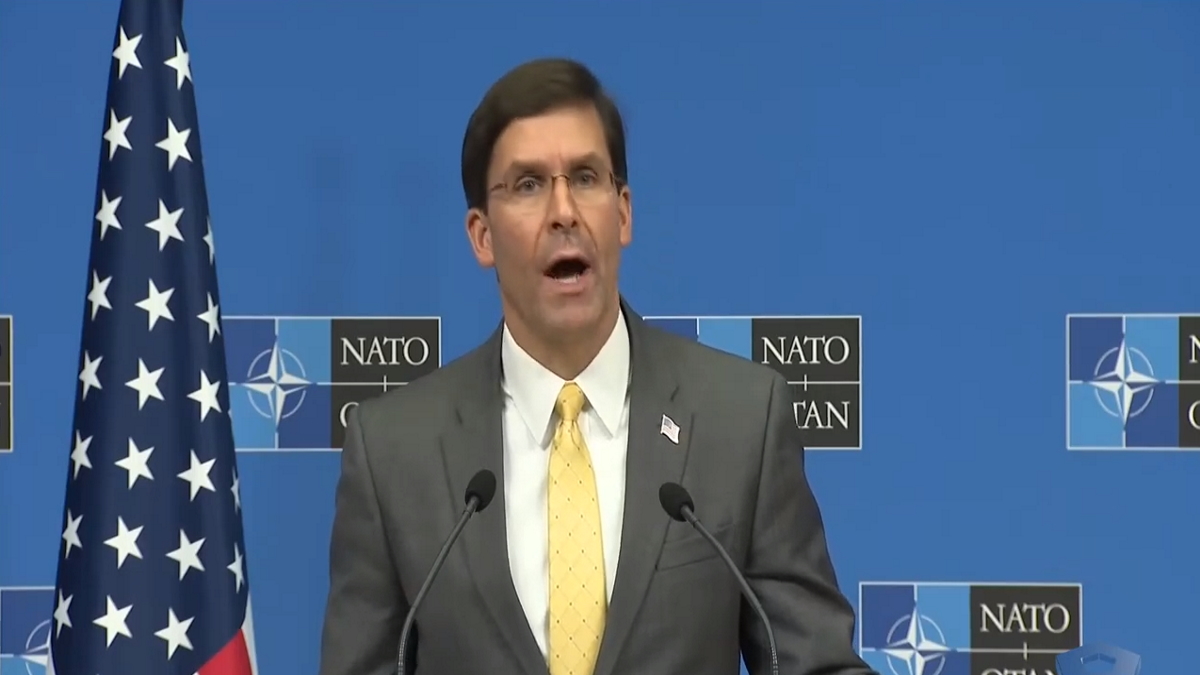
Secretary of Defense Mark T. Esper held bilateral meetings with four of his counterparts from Poland, the United Kingdom, Romania and Spain during the first day of the February 2020 NATO Defense Ministerial.


Secretary of Defense Mark T. Esper held bilateral meetings with four of his counterparts from Poland, the United Kingdom, Romania and Spain during the first day of the February 2020 NATO Defense Ministerial. 

Secretary Esper and Polish Minister of National Defence Marius Błaszczak hailed 2019 as a banner year for U.S.-Polish relations, which included two Presidential Joint Declarations on force posture and cooperative efforts in Afghanistan, Iraq and NATO’s enhanced forward presence in Latvia.

Secretary Esper thanked Poland for their contributions to defense spending and for hosting an historic DEFENDER Europe 2020 exercise later this year.

Esper then met with Minister of National Defense for Romania Nicolae-Ionel Ciucă. The leaders affirmed their commitment to ensuring security in the Black Sea region, deterring Russian aggression, and bolstering interoperability.

Secretary Esper thanked Romanians for hosting SEA SHIELD 2020 next month, which will lead to greater maritime interoperability and deeper cooperation among NATO allies and partners. He also acknowledged Romania’s positive progress on defense spending and international contributions. 

Secretary Esper and Secretary of State for Defense for the United Kingdom Ben Wallace also had an opportunity to meet and discuss their shared mission to defeat ISIS. Esper thanked the U.K. for their strong statements of commitment over the past weeks, and the U.K.’s enduring support which has allowed the coalition to navigate a number of challenges over the past several years.

Shop Amazon Gift Cards. Any Occasion. No Expiration.

Secretary Esper thanked Minister Wallace for being a steadfast and loyal ally as one of our oldest friends and partners. 

Finally, during a bilateral meeting with Minister of Defense for Spain Margarita Robles, Secretary Esper expressed his appreciation for Spain’s strong defense partnership. He urged them to honor their pledge to spend 2% of GDP on defense by 2024 and vowed to continue to partner together in our shared mission to defeat ISIS. The leaders confirmed they look forward to a continued partnership.

Secretary Esper will continue to meet with partners and allies throughout the Defense Ministerial, reaffirming the importance of strengthening the NATO alliance through readiness, ensuring more equitable burden sharing, and addressing regional security issues. 

Defense.gov(February, 2020) Readout of Defense Secretary Dr. Mark T. Esper’s Meetings With Counterparts From Poland, the United Kingdom, Romania and Spain

Guilty Plea: Soldier at Fort Riley Described How to Make Explosive Devices

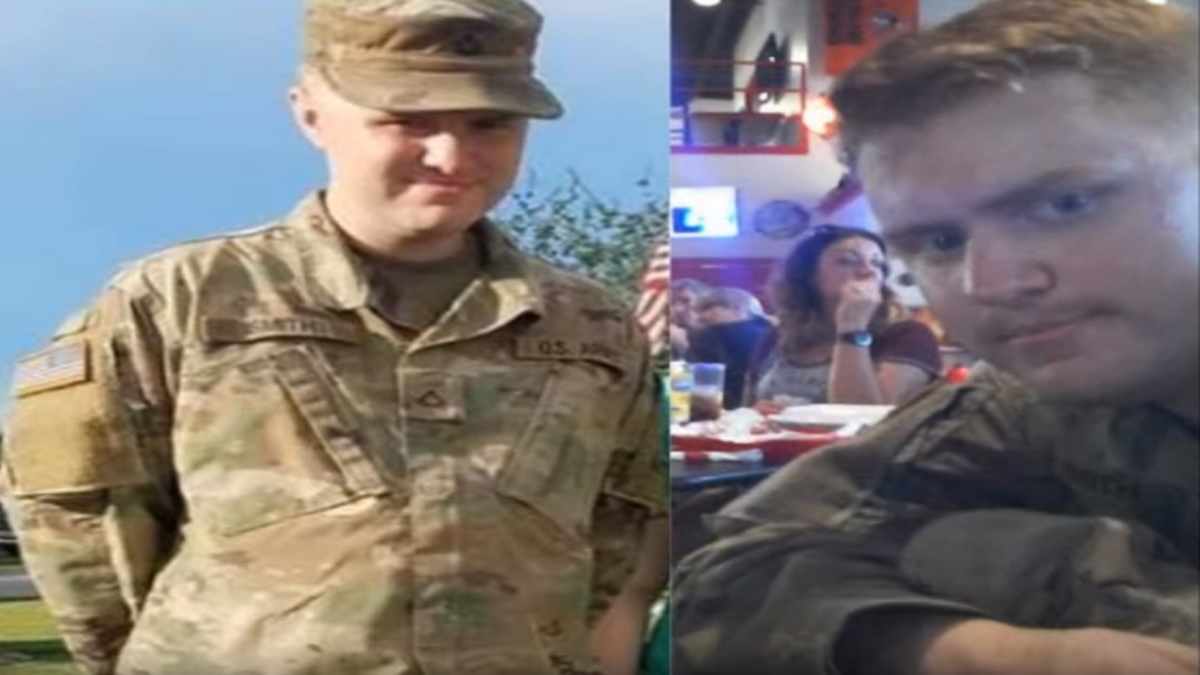
Jarrett William Smith, 24, Ft. Riley, Kan., pleaded guilty today to unlawfully distributing instructions for making explosive devices over social media while he was a member of the U.S. Army, U.S. Attorney Stephen McAllister said.


Jarrett William Smith, 24, Ft. Riley, Kan., pleaded guilty today to unlawfully distributing instructions for making explosive devices over social media while he was a member of the U.S. Army, U.S. Attorney Stephen McAllister said.

Smith, described by prosecutors as a Satanist, pleaded guilty to two counts of distributing information related to explosives, destructive devices and weapons of mass destruction. Smith joined the Army June 12, 2017. He served as an infantry soldier and was trained in combat and tactical operations.

He was transferred to Fort Riley in Kansas July 8, 2019.

Shop Amazon Gift Cards. Any Occasion. No Expiration.

The FBI received information that Smith gave out guidance to others on how to construct improvised explosive devices. He spoke to others on social media about wanting to travel to Ukraine to fight with a violent, far-right military group.

On September 20, 2019, from Fort Riley Smith sent a person working undercover for the FBI specific instructions for making an explosive device. He also provided a recipe for creating improvised napalm.

Smith signed a formal plea agreement with federal prosecutors and then entered his pleas verbally during a half-hour court hearing before U.S. District Judge Daniel Crabtree. He wore an orange prison jumpsuit and black athletic shoes and alternated between “Yes” and “Yes, sir” in answering questions from Crabtree.

“Did you provide this information with the intent that the person would use it?” Crabtree asked him.

Smith replied, “Yes.”

Sentencing is set for May 18. Smith could face up to 20 years in federal prison and a fine up to $250,000 on each count. McAllister commended the FBI and Assistant U.S. Attorney Tony Mattivi for their work on the case.

Justice.gov; Armytimes.com (February, 2020) Guilty Plea: Soldier at Fort Riley Described How to Make Explosive Devices; ‘Satanist’ Fort Riley soldier pleads guilty to bomb plot charges

DOD Has Enduring Role in Election Defense

The Defense Department plays an important role in that whole-of-government partnership, spearheaded by the NSA and Cybercom’s Election Security Group, formed in the wake of the successes of the Russia Small Group during the 2018 midterms.


Voting has begun for the 2020 presidential election primary season — but it’s not the beginning of the U.S. government’s defense against foreign interference and influence in our elections.

At the Reagan National Defense Forum in December 2019, Army Gen. Paul M. Nakasone, U.S. Cyber Command commander and director of the National Security Agency, laid out the Defense Department’s role in election security. “We began the ability for us to defend the presidential elections not today, not six months from now. We began it the day after the midterm elections,” he said, “We have not let up in terms of our ability to understand what our adversaries are doing.”

The Defense Department plays an important role in that whole-of-government partnership, spearheaded by the NSA and Cybercom’s Election Security Group, formed in the wake of the successes of the Russia Small Group during the 2018 midterms.

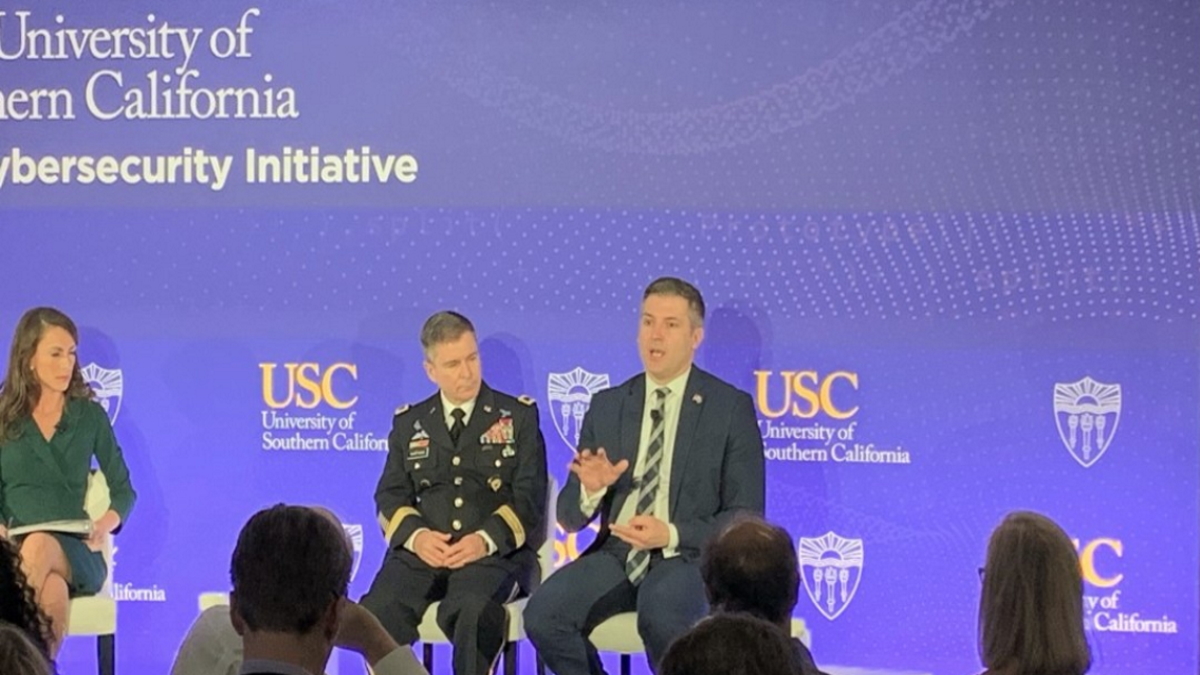
David Imbordino, the NSA election security lead, and Army Brig. Gen. William Hartman, Cybercom’s election security lead and commander of Cyber National Mission Force, co-lead the joint Election Security Group. Its purpose is to align the two organizations’ resources, efforts and actions to disrupt, deter and degrade adversaries’ ability to interfere and influence the U.S. elections.

“The biggest success out of 2018 wasn’t the 2018 midterms,” Hartman said. “The biggest success was we put in place, both organizationally and from a business practice standpoint, a focus on an enduring mission to protect the democratic process.”

The Election Security Group’s primary objectives are to generate insights on foreign adversaries that lead to improved cyber defenses and to impose costs on countries that seek to interfere. It directly supports partners, such as the Department of Homeland Security and the FBI, by collecting, declassifying and sharing vital information to enable agencies’ efforts in election security.

“[The FBI will] engage with social media companies,” Imbordino said. “That information can enable a social media company to then use their platform, where they have very unique insights that we don’t have, to mitigate and potentially unravel [malicious] social media influence campaigns.”

When NSA and Cybercom see a cyberattack happening against a certain victim, they communicate that information to appropriate government offices, which, in turn, work with private-sector partners to provide notification and enable future cyber defense.

“We look at adversary meddling in an election on two different fronts. One is covert influence, and then there’s interference,” Imbordino said. “For interference, what we’re talking about is an adversary trying to go change a vote total, targeting election infrastructure, voter rolls. Influence is more of the social media component of trying to influence public opinion.”

“It’s not enough to just know and understand what our adversaries are doing,” he continued. “The nation expects us to do something about it. Enabling our partners with the right information at the right classification level they need to take action to defend our democracy against these threats is essential and allows all of the tools of the government to be employed in this fight.”

Guiding all of Cybercom’s efforts is their underlying framework for the continuous execution of cyberspace operations, known as persistent engagement — the concept of constant contact with adversaries in cyberspace, engaging beyond DOD networks to “defend forward,” officials said, noting that persistent engagement enables Cybercom to be postured to impose cost against foreign malicious actors before they reach the homeland.

An example of persistent engagement in action is “hunt forward” operations that involve deploying defensive cyber teams around the world at the invitation of allies and partners to look for adversaries’ malicious cyber activity. These teams send insights back from these missions, enabling defense for U.S. and partner networks, and providing real-time situational awareness for Cybercom to better protect the nation from foreign attacks in cyberspace.

“In a hunt forward operation, we are able to work with partner nations and receive an invitation to execute operations in their country,” Hartman said. “These are generally countries that are in the near abroad of adversaries that we’re potentially concerned about.”

Hunt forward operations produce detailed information identifying risks and threats to critical infrastructure, networks and data. These insights will enable the U.S. to detect and defend against potential cyber threats to the upcoming 2020 elections, he explained.

If malware is discovered on hunt forward operations, Cybercom can publicize malicious software through antivirus portals, imposing costs of time, money and access on the adversary.

Another way the combined Cybercom and NSA Election Security Group enables defense is through the National Guard Bureau.

National Guard members supporting their state and local elections have the ability to share information to various organizations within the Election Security Group. The group will then use national-level intelligence to assess whether there is a foreign threat before providing that information to the National Guard, DHS and FBI.

“The primary way that we work with the states is really working by, with and through DHS and FBI, which is absolutely a critical component of how we interact,” Hartman said. “And the National Guard is present in all 50 states, three territories, and District of Columbia, which allows us to potentially look at something that may be occurring in the United States and see if we can track that activity to any foreign actor or to any foreign space.”

As election security continues to be an enduring mission of the DOD, national security officials stress the importance of allowing Americans to exercise their right to vote — a vote cast is a vote counted.

Defense.gov (February, 2020) DOD Has Enduring Role in Election Defense

Perdue, Loeffler Push Fort Benning As Home Of New Army Corps Headquarters

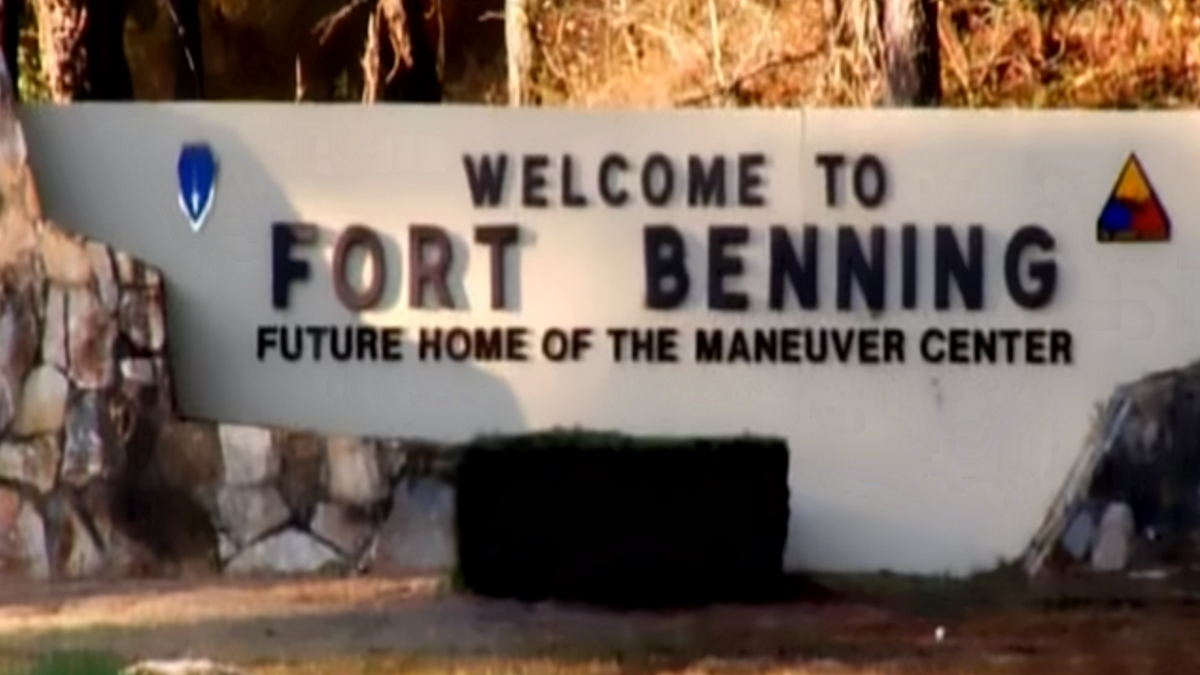
U.S. Senator David Perdue (R-GA), a member of the Senate Armed Services Committee, and U.S. Senator Kelly Loeffler (R-GA) are urging the U.S. Army to select Fort Benning as the Army’s fourth corps headquarters.


“Fort Benning is a crown jewel of the Army uniquely qualified to host the new corps headquarters.”

U.S. Senator David Perdue (R-GA), a member of the Senate Armed Services Committee, and U.S. Senator Kelly Loeffler (R-GA) are urging the U.S. Army to select Fort Benning as the Army’s fourth corps headquarters.

The Army recently announced Fort Benning as one of three finalists to host the new headquarters, which is needed to fulfill requirements of the National Defense Strategy.

In a letter to Secretary of the Army Ryan McCarthy, Perdue and Loeffler highlighted Fort Benning’s unmatched training, support, and command facilities and its ability to quickly activate the new headquarters.  

USA Armed Forces Super Soft Fleece Throw Blanket (United States Army)

“We commend your decision to realign forces under a new corps headquarters in support of the National Defense Strategy and strongly recommend that you consider Fort Benning for its basing. Fort Benning is a crown jewel of the Army uniquely qualified to host the new corps headquarters,” the Senators said.

“Fort Benning stands ready to meet all facility, deployment support infrastructure, and community support requirements needed for activation in October 2020. As the home to the Army’s Maneuver Center of Excellence, Fort Benning provides unmatched training, support, and command facilities. It includes 26 million square feet of facilities and 102,000 acres of maneuver training areas capable of supporting all manner of maneuver operations, tactics, and training,” Perdue and Loeffler said.

Fort Benning Army post straddles the Alabama and Georgia border near Columbus, Georgia and  supports more than 120,000 active-duty military, family members, reserve component soldiers, retirees, and civilian employees on a daily basis.

View the full text of the letter here

Perdue.senate.gov (February, 2020) Perdue, Loeffler Push Fort Benning As Home Of New Army Corps Headquarters

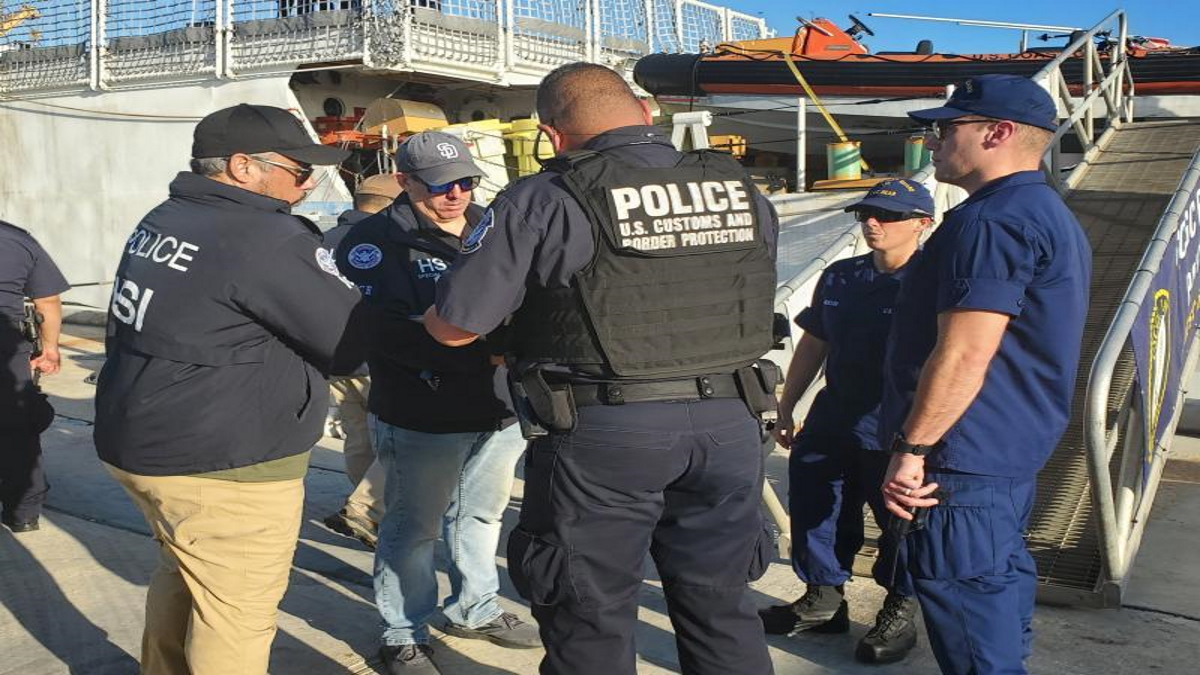
CBP Assists US Law Enforcement Partners and British Royal Navy in $46.2 million in cocaine seizure in the Caribbean Sea

The US Customs and Border Protection (CBP) has reported that the British Royal Navy and U.S. law enforcement partners seized 1,400 kilograms (3,086) pounds of cocaine and detained nine suspected smugglers


The US Customs and Border Protection (CBP) has reported that the British Royal Navy and U.S. law enforcement partners seized 1,400 kilograms (3,086) pounds of cocaine and detained nine suspected smugglers following the interdiction of two separate drug smuggling events in the Caribbean Sea Jan. 24 and Jan. 30, 2020.

The US Coast Guard cutter Bear delivered the seized contraband and detainees from both cases to US Customs and Border Protection (CBP) officers, Immigration and Customs Enforcement (ICE)-Homeland Security Investigations, and Drug Enforcement Administration special agents in San Juan, Puerto Rico, Tuesday.

The interdiction was a result of an international, multi-agency law enforcement effort in support of Operation Unified Resolve, Operation Caribbean Guard, Campaign Martillo (a joint, inter-agency, 20-nation collaborative counter narcotic effort), and the Caribbean Corridor Strike Force (CCSF) and will be prosecuted by the U.S. Federal District Court for the District of Puerto Rico.

In the first interdiction, the United Kingdom’s Royal Navy RFA Mounts Bay, while on patrol with a U.S. Coast Guard Law Enforcement Detachment (LEDET) and a Coast Guard Helicopter Interdiction Tactical Squadron (HITRON) armed helicopter onboard, detected two suspicious go-fast vessels, approximately 74 nautical miles south of St. Croix, U.S. Virgin Islands.

The RFA Mounts Bay launched the Coast Guard HITRON helicopter and the ship’s pursuit vessel with the Coast Guard LEDET to interdict both suspect vessels. 

The Coast Guard LEDET boarding team, with the assistance of RFA Mounts Bay crew members, boarded the suspected vessels, apprehending the seven men and seizing 42 bales of suspected contraband. 

In the second interdiction, a marine patrol aircraft detected a northbound target of interest, southeast of Isla Beata, Dominican Republic. The cutter Bear along with a helicopter responded to interdict the go-fast.  Cutter Bear’s Over the Horizon cutter boat and embarked helicopter arrived on scene and stopped the go-fast.  Cutter Bear’s boarding team detained the two men aboard the go-fast, after discovering 13 bales of suspected contraband.

CBP is part of the Caribbean Border Strike Force (CCSF); an initiative of the U.S. Attorney’s Office created to disrupt and dismantle major drug trafficking organizations operating in the Caribbean. CCSF is part of the Organized Crime Drug Enforcement Task Force (OCDETF), which investigates South American-based drug trafficking organizations responsible for the movement of multi-kilogram quantities of narcotics using the Caribbean as a transshipment point for further distribution to the United States.

CBP.gov (February, 2020) CBP Assists US Law Enforcement Partners and British Royal Navy in $46.2 million in cocaine seizure in the Caribbean Sea

Help me maintain this news reporting blog by donating here.