CBP Helicopter Experiences Dangerous Situation after being Targeted by Laser from Canada

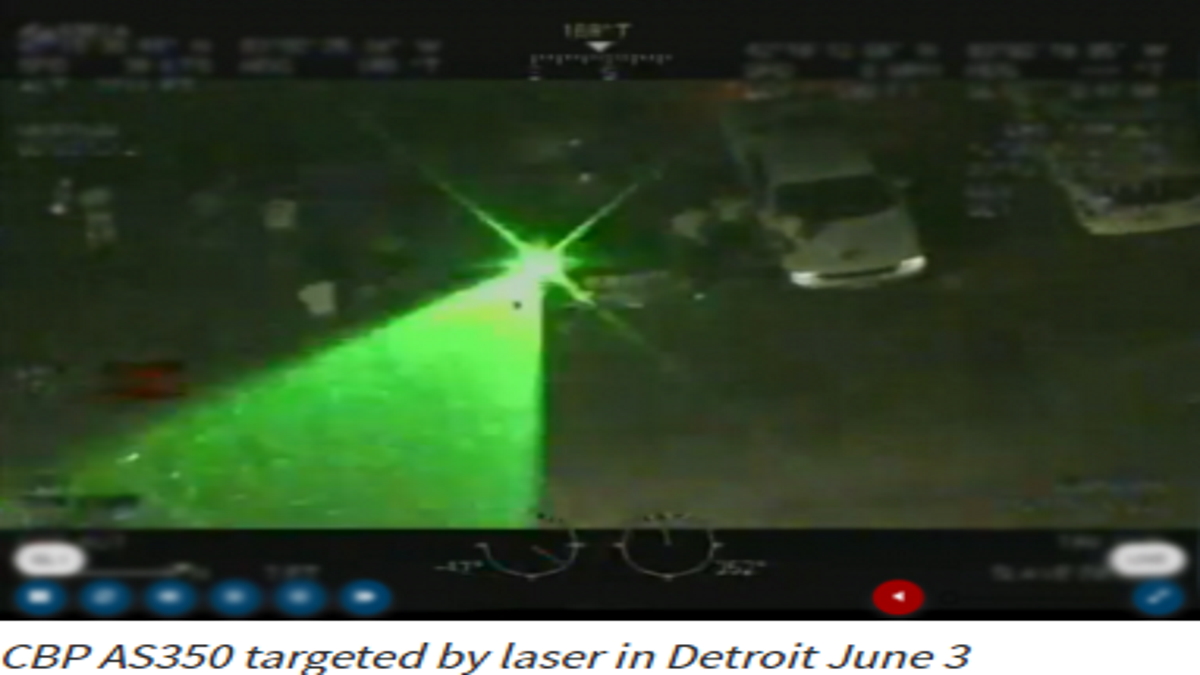
U.S. Customs and Border Protection Air and Marine Operations (AMO) AS-350 helicopter was struck by a laser beam while conducting operations over protests in Detroit.


On June 3, 2020, a U.S. Customs and Border Protection Air and Marine Operations (AMO) AS-350 helicopter was struck by a laser beam while conducting operations over protests in Detroit.

At approximately 10 p.m. on Wednesday evening, a Great Lakes Air and Marine crew operating near the Renaissance Center, detected their aircraft was being targeted by a green laser.

The crew immediately positioned the aircraft camera system on the point of origination, which was being emanated from Windsor, Ontario, and contacted the Windsor Ontario Control Tower to report the incident.

The Air Interdiction Agent in command of the aircraft was able to relay the exact location of the perpetrator, which the Control Tower relayed to Windsor Police.

The crew was then able to maneuver the aircraft along the Detroit River while keeping a constant visual on the subject until Windsor Police arrived and took the subject into custody.

“The Windsor Control Tower acted as a continuous relay to the police as the aircrew vectored them to the subject’s position which was critical to making this apprehension,” said Marc Sledge, Director, Air and Marine Operations, Great Lakes Air and Marine Branch. “I am very thankful that our pilots were not injured in this incident and that our Canadian counterparts were there to assist us at a moment’s notice.”

The public is reminded that lasers present a serious risk to aviator safety and can cause pilots to suffer flash blindness and other sudden vision problems, as well as permanent vision damage. Laser incidents also threaten the safety of innocent people on the ground.

U.S. Customs and Border Protection would also like to remind residents that owning a hand-held laser isn’t illegal, but shining it into a cockpit of an aircraft is a federal crime.

Someone convicted of interference with an aircraft can face 20 years in prison and a $250,000 fine.

CBP.gov (June 2020) CBP Helicopter Experiences Dangerous Situation after being Targeted by Laser from Canada

Tennessee Citizen Faces Federal Charges in Connection to Metro Courthouse Fire During Protest

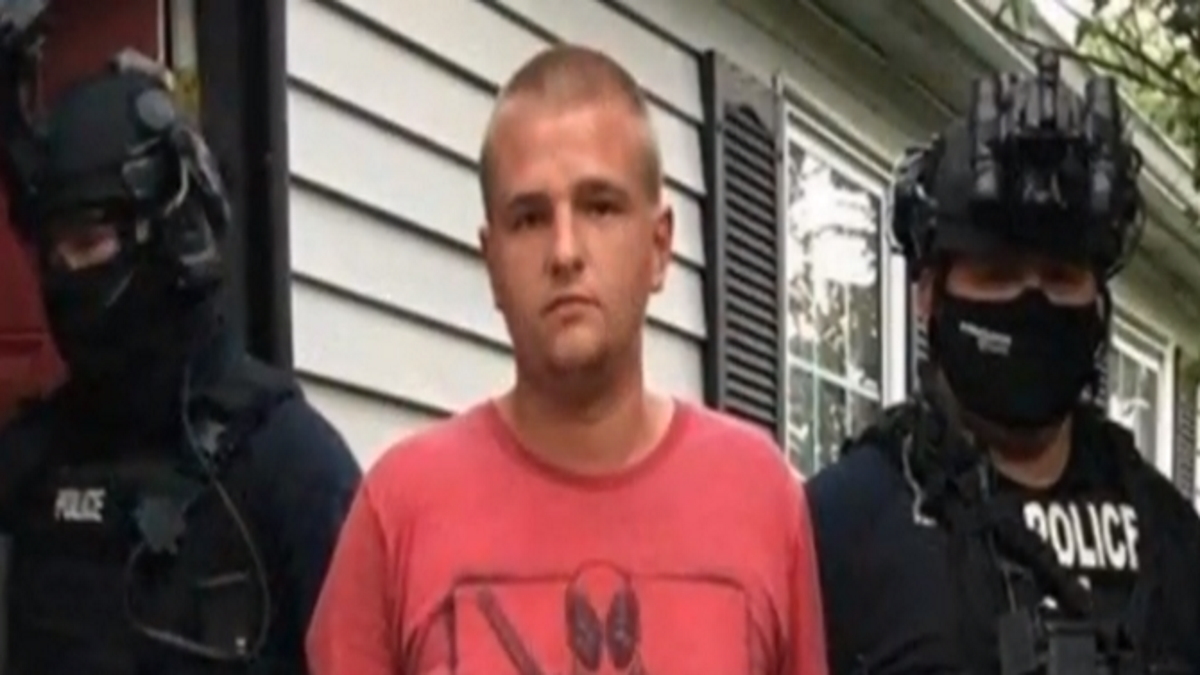
A criminal complaint issued today charged Wesley Somers, 25, of Hendersonville, Tennessee, with arson and with malicious destruction of property using fire or explosives.


A criminal complaint issued today charged Wesley Somers, 25, of Hendersonville, Tennessee, with arson and with malicious destruction of property using fire or explosives.

“The Department of Justice will vindicate the First Amendment rights of all Americans to speak, assemble and seek a redress of grievances from their government,” said Assistant Attorney General for National Security John C. Demers.  “We cannot tolerate, however, those who would take advantage of moments of real anguish to endanger the innocent and destroy their property.”

“We will always vigorously defend the right of every individual to assemble and protest,” said U.S. Attorney Don Cochran for the Middle District of Tennessee.  “This is one of our most sacred liberties guaranteed by the First Amendment of our Constitution.  We will also vigorously pursue those who choose to exploit such assemblies and use violence and intimidation in order to change the dynamics of an otherwise peaceful protest.”

The criminal complaint alleges that on the afternoon of May 30, 2020, protesters gathered in downtown Nashville following the death of George Floyd in Minneapolis, Minnesota. 

Later in the evening, a number of persons gathered in front of Nashville City Hall, also known as the Metro Courthouse, and using various tools, including crowbars and other objects, began smashing the windows of the premises and spraying graffiti on the Courthouse facade.  

One or more fires were also set inside of the Courthouse at this time.

Numerous video clips and photographs of the destruction at the Courthouse were posted on social media websites, on the websites for news outlets, and on other Internet sites.  

Somers is depicted in video clips and photographs from that evening, shirtless and wearing beige cargo shorts.  In those clips and photographs, Somers—whose distinctive chest tattoos portraying the words “WILD CHILD” and “HARD 2 Love,” among others, are occasionally visible — is depicted attempting to smash windows of the Courthouse with a long object. 

One photograph in particular, depicted Somers holding an unknown accelerant, which had been set on fire, and placing the accelerant through the window of the Courthouse.  

Somers is also depicted in a video clip setting fire to an accelerant and placing it inside a window located on the exterior of the Courthouse. 

Somers was identified by the Metropolitan Nashville Police Department – Specialized Investigation Division, after receiving numerous tips from citizens, and was arrested on state arson charges on May 31. 

If convicted, Somers faces a mandatory minimum of five years and up to 20 years in prison.

Assistant Attorney General Demers and U.S. Attorney Cochran commended the actions of concerned citizens and the efforts of the law enforcement agencies and prosecutors who worked to quickly identify and bring these charges, including the Metropolitan Nashville Police Department; the FBI; the Bureau of Alcohol, Tobacco, Firearms & Explosives; Assistant U.S. Attorney Ben Schrader; and Trial Attorney Justin Sher of the Department’s Counterterrorism Section.

A criminal complaint is merely an accusation.  The defendant is presumed innocent until proven guilty in a court of law.     

Justice.gov (June 2020) Tennessee Man Faces Federal Arson Charges in Connection to Metro Courthouse Fire During Protest

FBI remembers Special Agent Robert R. Hardesty

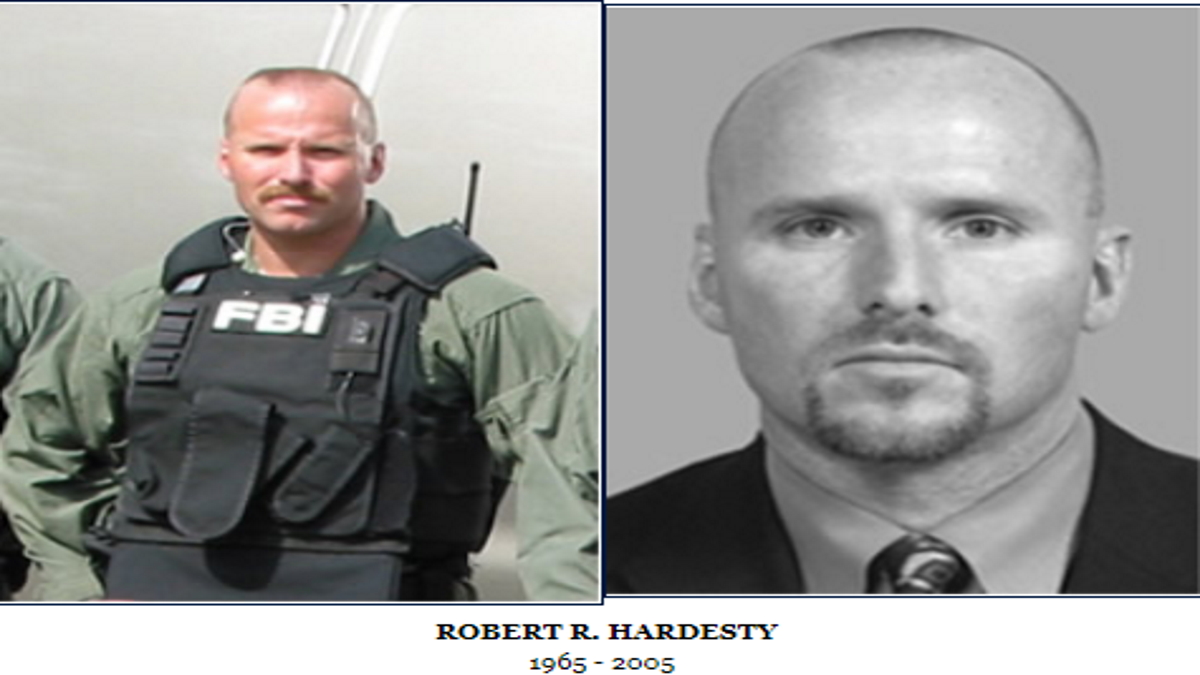
Today, the FBI remembers Special Agent Robert R. Hardesty (1965 – 2005), who died on June 2, 2005, as a result of an accident during SWAT training at the FBI Academy on May 25, 2005 in Quantico, Virginia.


Today, the FBI remembers Special Agent Robert R. Hardesty (1965 – 2005), who died on June 2, 2005, as a result of an accident during SWAT training at the FBI Academy on May 25, 2005 in Quantico, Virginia.

Special Agent Hardesty, 40, was assigned to the Springfield FBI Office at the time of his death and was a member of that office’s SWAT team.

Robert S. Mueller, III, Director Federal Bureau of Investigation, spoke at the funeral service for Robert R. Hardesty, of Portage, Indiana on June 08, 2005.

“We have come together today to honor Rob Hardesty: the Rob Hardesty you have known over many years and whom I have come to know over the past two weeks.

I have come to know Rob Hardesty by learning about his life–for his is a life story of service. Service to his family. Service to the Porter County Sheriff’s Office. Service to the FBI. Service to his country. Service to his Lord.

I also came to know Rob Hardesty personally; but only for a few moments. It was a day or so after the accident. Rob was in bed and unable to move. I told him he had one of the best Marine Corps haircuts I had seen in a while. And his entire face lit up. He smiled. And that smile gave me a glimpse of his vitality, his passion. I learned from that smile what all of you know so well.

I also came to understand Rob through his family, who I have come to know and respect over the last two weeks. You can learn a great deal about a person from knowing his family, and particularly the person he chooses to marry. Hardened, grizzled veterans of the FBI–veterans of HRT, SWAT–stand in awe of Toni–stand in awe of her strength and the strength of Rob’s family.

In a very short time I came to know Rob Hardesty–know him as an FBI agent; know him as a husband and father; and know him as a servant.

We look up to persons such as Rob, whose life work is service. We hold them up as examples. They earn our deepest admiration and respect because of the actions they purposefully take…in the name of service.

They are the ones who say, yes, I am ready without knowing when. Who say, yes, I will go, without knowing where. Who say, yes, I do, without always knowing why.

It is the rare quality of those who go forward without looking back and without asking what price, who show us the true meaning of courage, of devotion, and of sacrifice. It is the legacy Rob leaves us that his was a life lived to the full measure of those ideals.

We thank God for holding Robert Hardesty in His hands and we ask Him to look after Rob with great care, for he was truly the very best of the best. Each of us will carry Rob in our hearts, until that time when we meet again and come to be close to him once more. May God bless you, and may God bless Rob Hardesty.”

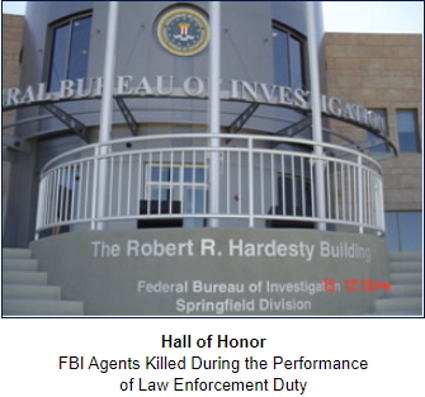
Springfield Office Dedication in Honor of Robert R. Hardesty, Springfield, Illinois, December 15, 2005

Memorial Service Held Honoring Fallen Special Agents

Prior to joining the FBI three-and-a-half years earlier, he served in the Porter County, Indiana Sheriff’s Department. In his honor, the Springfield FBI Office now bears his name.

FBI.gov (June 2020) Special Agent Robert R. Hardesty died on June 2, 2005

Billion-Dollar Secrets Stolen

Tan’s theft of a trade secret—one worth an estimated $1 billion—is an example of what the FBI says is a systematic campaign by the Chinese government to gain economic advantage by stealing the innovative work of U.S. companies and facilities.


Scientist Sentenced for Theft of Trade Secrets

When scientist Hongjin Tan resigned from the Oklahoma petroleum company he’d worked at for 18 months, he told his superiors that he planned to return to China to care for his aging parents.

He also reported that he hadn’t arranged his next job, so the company agreed to let him to stay in his role until his departure date in December 2018.

But Tan told a colleague a different story over dinner.

That conversation prompted Tan’s employer to ask him to leave the firm immediately—and then his employer made a call to the FBI tip line to report a possible crime. The resulting investigation led to Tan’s guilty plea and 24-month prison sentence for stealing proprietary information that belonged to his company.

Tan’s theft of a trade secret—one worth an estimated $1 billion—is an example of what the FBI says is a systematic campaign by the Chinese government to gain economic advantage by stealing the innovative work of U.S. companies and facilities.

Tan had lived in the United States since 2012 and was a legal permanent resident. He earned his Ph.D. at an American university and had worked for a number of firms in California before making his way to the energy company in Oklahoma.

One of that firm’s most innovative products was a battery technology that employees had spent decades researching and developing. The technology also has a secondary, and perhaps even more valuable, use in melting metal.

When Tan revealed to his colleague that he actually did have a job waiting for him in China with Xiamen Tungsten, Tan’s dinner companion reported the conversation to his supervisor—who grew alarmed after researching the company. Xiamen Tungsten is a Chinese firm that smelts, processes, and distributes metal products and also supplies battery materials.

“If you got your hands on this information, you would be decades ahead of where you would have started out on this technology,” said Rebecca Day, Special Agent, FBI Oklahoma City

With this new information, the company immediately dismissed Tan from his responsibilities. Because they were now concerned about his motives, the company also began to look back at the documents and systems he had accessed while employed there.

While this review was going on, Tan called his supervisor to tell them he had a thumb drive with company documents on it. “He said he was hoping to read them to continue his research work,” said FBI Special Agent Jeremy Sykes, who worked on the case out of our Oklahoma City Field Office. “The company told him he needed to return the thumb drive.”

The company had already found Tan had been accessing sensitive documents that dealt with this innovative technology but did not directly relate to Tan’s work for the firm.

FBI agents said he began accessing these sensitive files around the time he applied to China’s Thousand Talents Program.

U.S. intelligence agencies have found that, through this program, China provides financial incentives and other privileges to participants who are willing to send back the research and technology knowledge they can access while working in the United States.

Tan also called up the documents around the times he made trips to China, and he accessed them for a final time on the day before he resigned.

“When he brought back the thumb drive, the firm looked at the slack space on the drive and found several files had been erased,” said Sykes. “The deleted files were the files the company was most concerned about.”

The company worked closely with the FBI to help them investigate the case and identify the company files Tan had stored at his home. Gaining this information allowed agents to get an arrest warrant for Tan.

“If you got your hands on this information, you would be decades ahead of where you would have started out on this technology,” said Special Agent Rebecca Day of FBI Oklahoma City’s Tulsa Resident Agency. “We won’t tolerate people who come into the United States to steal for the betterment of a foreign government or foreign company.”

At a recent conference in Boston, FBI Director Christopher Wray addressed this disquieting threat: “We see Chinese companies stealing American intellectual property to avoid the hard slog of innovation and then using it to compete against the very American companies they victimized—in effect, cheating twice over.”

“The deleted files were the files the company was most concerned about.”-Jeremy Sykes, special agent, FBI Oklahoma City

FBI Oklahoma City Special Agent Quincy Barnett said that there are a number of things companies can do to protect their products, research, and innovations, and that the FBI is eager to develop relationships with firms. “If we reach out,” he said, “it’s not a negative. We may have identified opportunities to engage.”

The Bureau can provide briefings to executives and employees on insider threats, share precautions workers should take when they travel to certain countries, help IT staff assess how to compartmentalize system and file access, and remind firms to put nondisclosure agreements in place to ensure employees agree not to share certain information.

In this case, the firm’s willingness to report the suspected crime so quickly made the difference in being able to hold Tan accountable. “We were on the phone with the company on December 13,” Sykes said. “We knew Tan was flying out of the country on December 29.”

Barnett said the FBI has seen that some companies resist reporting because they fear it will harm their stock price or be seen as a negative among shareholders.

“Companies can bring this information to the FBI, and we can work through those fears and hesitations,” said Barnett. “We are trying to send a message that this won’t be tolerated, but we have to find out about it first.”

The case against Tan not only resulted in two years of prison time but also, with support from Homeland Security Investigations, the loss of his residency status. Tan will be deported when he is released, which is a strong indicator of just how seriously the U.S. is taking these types of criminal violations.

To learn more about how the FBI can partner with you to protect your business or company, visit the Office of Private Sector website.

To provide a tip on any suspected crime, visit tips.fbi.gov.

FBI.gov (May 2020) Billion-Dollar Secrets Stolen

Weekly Update: DHS Response to COVID-19


For months, the Department of Homeland Security (DHS) has taken on the challenges presented by COVID-19.

Thanks to our workforce’s efforts across its components DHS has facilitated a speedy, whole-of-government response to mitigate the spread of COVID-19.

As the nation prepares to reopen the economy the Department and its components continue to ensure a safe, secure, and prosperous Homeland for the American people.

“The Secret Service is steadfastly working with our state, local and federal law enforcement partners to protect the public and the nation’s financial infrastructure, especially the healthcare and medical sector, from criminals exploiting the Global Pandemic to commit cyber enabled financial crimes,” said Secret Service Director James Murray. “The Secret Service strongly encourages caution when considering Coronavirus relief or response solicitations requesting financial information, social security numbers, date of birth, or other personal identification information via the internet, text or SMS messaging.”

Below is a list of some of DHS’s efforts against COVID-19 last week:

United States Secret Service (USSS)

Protecting The American People From Related Scams. On May 21st, Secret Service released a Smishing Public Service Announcement via Secret Service social media platforms in response to an increase in COVID- 19 related scams. Smishing is a form of phishing via text or SMS messaging and has been used to defraud individuals by asking for donations related to Coronavirus.

Countering Weapons of Mass Destruction (CWMD)

Enhanced Screenings at Airports. CWMD contract personnel are continuing to support the Centers for Disease Control and Prevention (CDC) with enhanced screenings for travelers through 13 specially designated airports. As of May 23rd, CWMD has processed more than 304,319 travelers for enhanced screening, including 1,523 who were referred to CDC for further medical evaluation.

Federal Emergency Management Agency (FEMA)

Delivering Life Saving PPE. As of May 22nd, FEMA, HHS, and the private sector combined have coordinated the delivery of or are currently shipping: 84.4 million N95 respirators, 144.2 million surgical masks, 12.0 million face shields, 28.9 million surgical gowns, over 1 billion gloves, 10,708 ventilators and 8,450 federal medical station beds.

Remaining Ready for the Hurricane Season. On May 20th, to address the challenges of managing disaster response and recovery efforts during this year’s hurricane season, FEMA released the “COVID-19 Pandemic Operational Guidance for the 2020 Hurricane Season” to help emergency managers and public health officials best prepare for disasters, while continuing to respond to and recover from coronavirus (COVID-19). The guidance can also be used by private sector and non-governmental organizations to gain an understanding of the government’s posture, planning and readiness efforts.

Coordinating Air Flights to Address Medical Supply Shortages. Since March 29th, through Project Air-Bridge, FEMA continues to expedite the movement of critical, life-saving supplies by utilizing its partnership with the private sector. As of May 22nd, there has been a total of 166 flights with an additional 56 scheduled or in transit for a total of approximately 222 flights.

Office of Operations Coordination (OPS)

Ensuring Situational Awareness. The DHS Crisis Action Team (CAT) continues to work 24/7 solely on Departmental COVID-19 response, managing information, and situational awareness. The CAT supports the Department’s efforts to share information internally and externally during the pandemic. Between May 17th and 23rd, the CAT team produced more than thirty COVID-19-related reports covering Departmental actions and impacts on the DHS workforce.

Science and Technology (S&T)

Driving Evidence-Based Policymaking. On May 21st, S&T updated its Master Question List (MQL), a compilation of available research on operationally-relevant questions to aid decision makers in the COVID-19 response. The MQL is a quick-reference guide covering what is known about the virus, what additional information is needed, and who may be working to address these fundamental questions. New entries include references to work showing polymerase chain reaction (PCR) screening may be ineffective early on in recently exposed individuals, and African green monkeys develop symptoms consistent with severe human disease when exposed to 500,000 plaque-forming units (PFUs) of SARS-CoV-2, the virus that causes COVID-19.

Delivering Actionable Information Through Applied Research. On May 20thS&T’s National Biodefense Analysis and Countermeasures Center (NBACC) published a study in the Journal of Infectious Diseases titled “Simulated Sunlight Rapidly Inactivates SARS-CoV-2 on Surfaces.” SARS-CoV-2 is the coronavirus that causes COVID-19. This research provides the first evidence that sunlight may rapidly inactivate SARS-CoV-2 on surfaces. Findings in this research inform our understanding of the virus and help shape the operational response to COVID-19.

Sharing Decontamination Best Practices. On May 19th, S&Ts COVID-19 Response Team released a Reference Guide for Operating in Environments where SARS-CoV-2 may be Present, which serves as a knowledge repository of actionable information for those operating within environments where there is risk of exposure. This guide features a comprehensive overview of material and example products intended to assist the Department with developing component-specific Concept of Operations (CONOPS) plans tailored to their unique operational considerations. Decontamination is an important aspect of reducing risk, and must be coupled with effective screening and detection, effective PPE use, and adequate testing.

Transportation Security Administration (TSA)

Keeping Americans Safe While Ensuring Continuity of U.S. Travel and Commerce. TSA continues to follow CDC guidance to protect Americans, its workers and the nation’s transportation system, in support of air travel and all other modes of transportation. Between May 17 and May 23, TSA screened more than 1,839,139 passengers, who have all reached their destinations safely.

Ready To Ensure Safety During The Summer Travel Period. On May 21st, TSA issued a press release announcing updated security procedures for summer travelers. The agency begun to implement changes to the security screening process to reduce the potential for cross-contamination at the security checkpoint in an effort to help prevent the spread of COVID-19. As procedure changes begin to rollout in the coming weeks, travelers should expect to see some changes at the airport checkpoint including, the need keep hold of their boarding passes, separating food containers for X-ray screening, and social distancing.

United States Coast Guard (USCG)

Monitoring Vessels that Pose a Risk to Public Health. The Coast Guard continues to monitor the presence of multiple ships anchored in U.S. territorial waters to ensure they observe the 14-day minimum wait time required by President Trump’s EO before docking at a U.S. port to help reduce the spread of foreign-originating COVID-19. As of May 21, the Coast Guard is tracking more than 82 cruise ships anchored, moored, or underway in U.S. waters, carrying approximately 47,900 crew members from various countries.

U.S. Immigration and Customs Enforcement (ICE)

Keeping the public safety from COVID-19-related fraud. ICE’s Operation Stolen Promise (OSP) targets fraudulent activity stemming from the pandemic. The initiative combines HSI’s expertise in global trade investigations, financial fraud, and cyber investigations with robust private and public partnerships to disrupt and dismantle this criminal activity and strengthen global supply-chain security. Through May 22, as part of OSP, the agency has made 18 criminal arrests, analyzed 31,058 COVID-19-related domains, seized more than $3.5 million in illicit proceeds, disrupted 35 instances of illicit activity, sent 733 leads to domestic and international field offices, executed 37 search warrants and made 597 COVID-19-related seizures to include prohibited test kits and pharmaceuticals, counterfeit masks and more.

Cyber Security and Infrastructure Security Agency (CISA)

Keeping Our Critical Infrastructure Safe Criminal Fraud. On May 21st, CISA along with the Department of the Treasury, Internal Revenue Service (IRS), and United States Secret Service (USSS) issued a joint alert warning Americans to be on the lookout for criminal fraud related to economic impact payments—particularly fraud using Coronavirus lures to steal personal and financial information, as well as the economic impact payments themselves—and for adversaries seeking to disrupt payment efforts. The alert contains several resources to help defend, mitigate, and report suspicious cyber activity, especially emails that could be an attempted phishing attack.

Customs and Border Protection (CBP)

Getting American Citizens Home Safe. As of May 22, CBP has assisted State Department in repatriating 93,930 U.S. citizens on 1,001 flights from 138 countries. An additional 69 repatriation flights are scheduled to occur.

DHS.gov (May 2020) Weekly Update: DHS Response to COVID-19