Large scale narcotics pill manufacturing operation dismantled in a residential building in the Bronx

U.S. Drug Enforcement Administration New York Division Special Agent in Charge Ray Donovan, Bridget G. Brennan, New York City’s Special Narcotics Prosecutor, and New York City Police Commissioner Dermot F. Shea announced the arrests of two individuals in connection with an alleged narcotics pill production and distribution operation located in the Highbridge neighborhood of the Bronx.


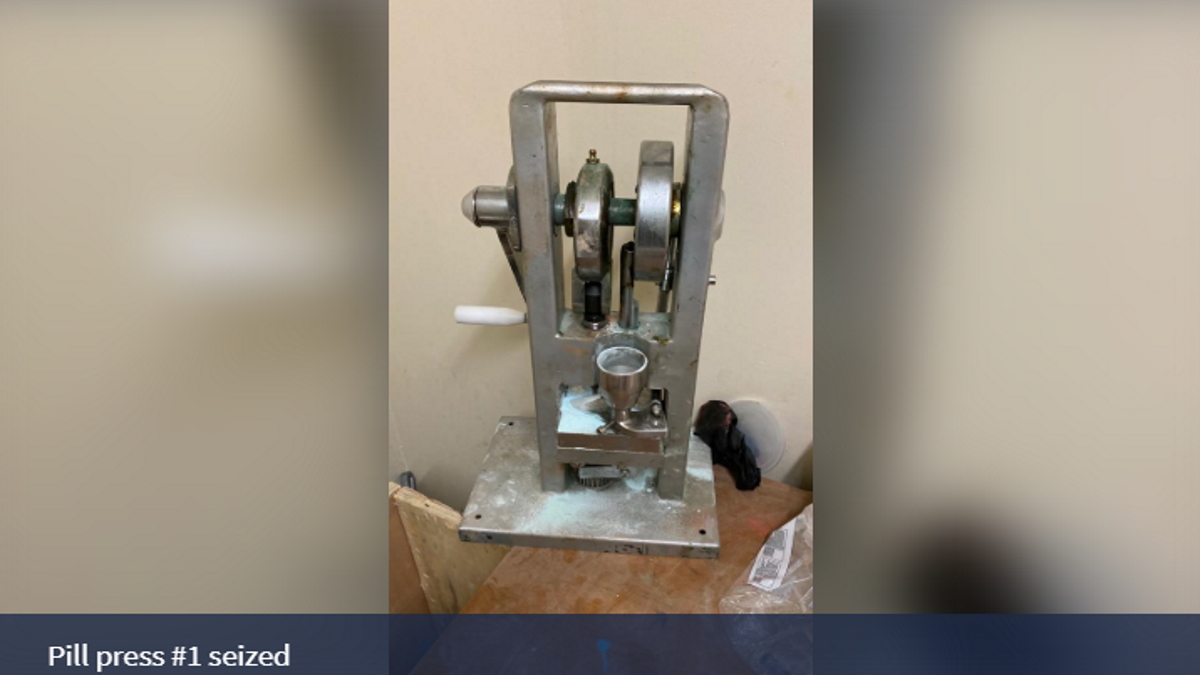
Three pill press machines recovered from basement drug lab that also contained a coop of dozens of rooster and chickens

U.S. Drug Enforcement Administration New York Division Special Agent in Charge Ray Donovan, Bridget G. Brennan, New York City’s Special Narcotics Prosecutor, and New York City Police Commissioner Dermot F. Shea announced the arrests of two individuals in connection with an alleged narcotics pill production and distribution operation located in the Highbridge neighborhood of the Bronx. 

A surveillance operation centered on defendant Jeison Lebron, an alleged drug manufacturer and distributor, led officers, agents and investigators with the New York City Police Department (NYPD) Narcotics Borough Brooklyn South Overdose Squad, DEA Group D-24 and Special Narcotics Prosecutor’s Investigators Unit to uncover a basement pill manufacturing operation at 136 W. 170th Street in Highbridge on the night of June 19, 2020.  

A court authorized search revealed the basement drug laboratory was outfitted with three industrial pill press machines, used to form counterfeit pills from illicit drugs. Also seized during the search were approximately 1.2 kilograms of suspected heroin (over 2 ½ pounds), 34 grams of suspected fentanyl and approximately 2.3 kilograms of methamphetamine (5 pounds), including a pound of crystal meth and approximately 1,600 blue methamphetamine pills.
Agents and officers were surprised to also discover 30 to 50 roosters and chickens of a breed believed to be used in cockfighting. 

A criminal complaint filed by the Office of the Special Narcotics Prosecutor on Saturday, June 20, 2020, charges Lebron and defendant Alfredo Goris with Criminal Possession of a Controlled Substance in the First, Second and Third Degrees, and Criminally Using Drug Paraphernalia in the Second Degree. 

In events leading up to the search, on June 17, 2020 agents learned that three suspicious packages weighing more than 280 pounds, and purported to contain “roll-forming machines,” or pill presses, had originated in China and were addressed to 626 10th Street, Apartment 5, in Union City, N.J.  

On June 17 and June 18, agents and officers observed Lebron accept delivery of these packages at 626 10th Street, Apartment 5, in Union City, and bring the packages into the residence with hand trucks. Lebron subsequently loaded a heavy blue barrel into the back of a grey Acura vehicle.  Surveillance teams followed Lebron as he drove the Acura back to New York City.  

Agents and officers tracked Lebron to 136 W. 170th Street, a five-story brick apartment building. On June 17 and June 18, agents reviewed outdoor video footage of the cellar door at 136 W. 170th Street. 

Surveillance teams observed Lebron and Goris entering with heavy bags and suitcases inside the basement.  On June 19, at approximately 4:20 p.m. video footage showed Lebron and Goris bringing additional plastic bags into the location.   

At approximately 10 p.m. on June 19, Lebron and Goris were detained as they exited 136 West 170th Street. 

The Special Narcotics Prosecutor’s Office assisted in obtaining a court authorized search warrant for the basement of that location. 

Agents and investigators recovered the narcotics, three industrial pill presses, and other drug paraphernalia, including  unused glassine envelopes, Ziploc bags, scales, packaging materials, and dilutants used for mixing narcotic drugs or stimulants.  

Counterfeit pills pressed from illicit drugs have been linked to overdose deaths nationwide. Seizure of illicitly produced pills began to surge in New York City in 2018. The defendants in this case are not charged in connection with overdose deaths. 

Subsequent to the court authorized search, Lebron and Goris were arrested. The two were arraigned over the weekend in Manhattan Criminal Court. Goris was released without bail. Lebron was held in custody to appear for a bail hearing in a prior case at Manhattan Supreme Court.  

Special Narcotics Prosecutor Bridget G. Brennan commended the DEA’s Group D-24, NYPD’s Narcotics Borough Brooklyn South Overdose Squad, and her office’s Trial Division and Investigators Unit for their work on the investigation. 

“Over the weekend, two people were charged for their role in a pill pressing scheme that had the capability to produce mass quantities of synthetic drug-filled capsules,” said DEA Special Agent in Charge Ray Donovan.  “This operation was a ticking time bomb with the capability of highly dangerous controlled substances distributed to unsuspecting users, increasing the risk of overdoses and fatalities. I applaud Group D-24 and our partners at the New York City Police Department and the New York City Office of the Special Narcotics Prosecutor for their diligent investigation.”   

“This is the first time our office has seen an illegal pill production operation of this scale, with three active pill presses,” said Bridget G. Brennan. “The lethal combination of heroin, fentanyl and methamphetamine, disguised as familiar pills, would have put unsuspecting users at grave risk of overdose.”

Charges:

Alfredo Goris, 27, of Bronx, NY; CPCS 1st – 1 count, CPCS 2nd – 1 count, CPCS 3rd – 2 counts, Criminally Using Drug Paraphernalia 2nd – 3 counts

Jeison Lebron, 28, of New York, NY; CPCS 1st – 1 count, CPCS 2nd – 1 count, CPCS 3rd – 2 counts, Criminally Using Drug Paraphernalia 2nd – 3 counts

The charges and allegations are merely accusations and the defendants are presumed innocent until proven guilty.

Blogs to Follow:

DEA.gov (June 2020) Large scale narcotics pill manufacturing operation dismantled in a residential building in the Bronx
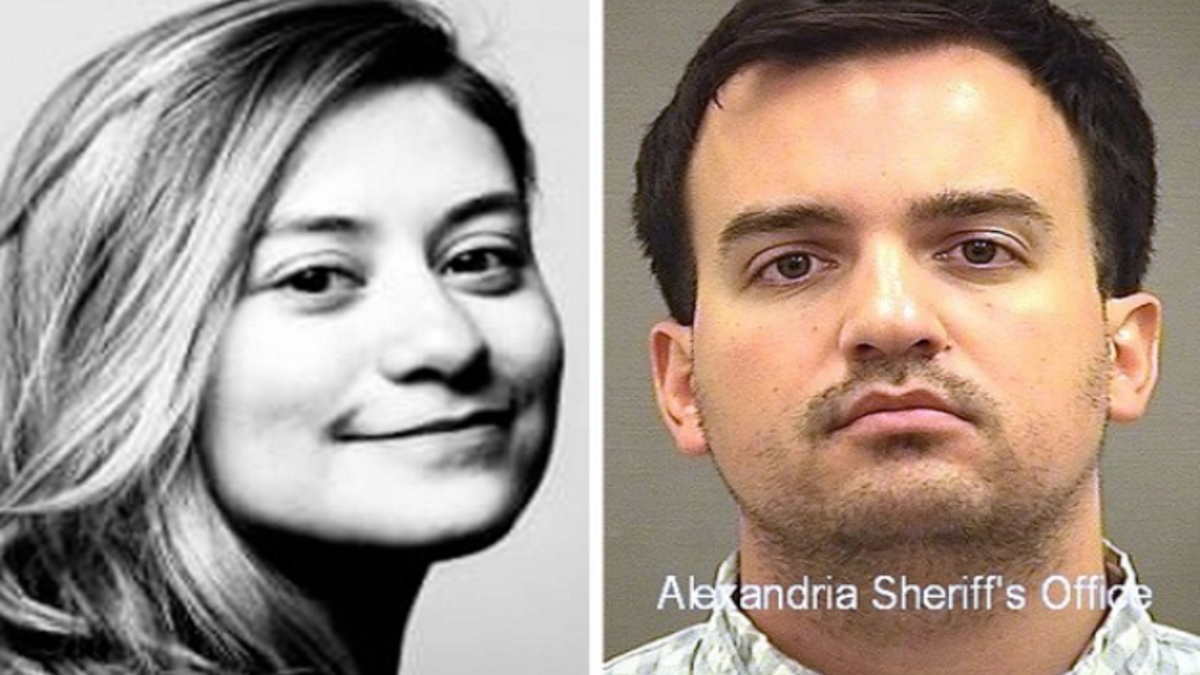

Former DIA Analyst Sentenced for Leaking Classified Information to Journalists

A former employee of the Defense Intelligence Agency (DIA) was sentenced today to 30 months in prison for leaking classified information to two journalists in 2018 and 2019.


A former employee of the Defense Intelligence Agency (DIA) was sentenced today to 30 months in prison for leaking classified information to two journalists in 2018 and 2019.

“When our nation’s secrets are published, in print or online, those secrets are made available to all of our adversaries,” said G. Zachary Terwilliger, U.S. Attorney for the Eastern District of Virginia. “Frese’s choice to betray his oath to his country had real consequences and caused actual harm to the safety of this country and its citizens.”

According to court documents, Henry Kyle Frese, 31, of Alexandria, was employed by DIA as a counter-terrorism analyst from February 2018 to October 2019, and held a Top Secret//Sensitive Compartmented Information security clearance.

United States government agencies have confirmed that in the spring and summer of 2018, News Outlet 1 published eight articles, all authored by the same journalist (Journalist 1) that contained classified NDI that related to the capabilities of certain foreign countries’ weapons systems.

These articles contained classified intelligence from five intelligence reports (the Compromised Intelligence Reports) made available to appropriately cleared recipients in the first half of 2018.

The topic of all of these initial five Compromised Intelligence Reports – foreign countries’ weapons systems – was outside the scope of Frese’s job duties as an analyst covering CT topics.

The media articles, and the intelligence reporting from which they were derived, both contained information that is classified up to the TS//SCI level, indicating that its unauthorized disclosure could reasonably be expected to result in exceptionally grave damage to the national security.

The intelligence reporting was marked as such.

“Frese repeatedly passed classified information to a reporter, sometimes in response to her requests, all for personal gain,” said John C. Demers, Assistant Attorney General for National Security. “When this information was published, it was shared with all of our nation’s adversaries, creating a risk of exceptionally grave harm to the security of this country. His conviction and sentence demonstrate the Department’s commitment to the investigation and prosecution of such betrayals by clearance holders as part of our mandate to protect our citizens and defend the national security of the United States.”

According to court documents, Frese and Journalist 1 lived together at the same residential address from January 2018 to November 2018. Throughout 2018 and 2019, Frese and Journalist 1 “followed” each other on Twitter, and on at least two occasions Frese re-Tweeted Journalist 1’s tweets announcing the publications of articles containing NDI classified at the Top Secret level.

“The American people expect those entrusted with our nation’s most sensitive secrets to keep those secrets safe. Mr. Frese did just the opposite,” said Alan E. Kohler, Jr., Assistant Director of the FBI’s Counterintelligence Division. “The FBI is committed to protecting the national security interests of the United States and will vigorously pursue investigations into current and former clearance holders who leak classified information.”

In or about April of 2018, Journalist 1 introduced Frese to a second journalist (Journalist 2).  Subsequently, Frese began texting and speaking with Journalist 2 by telephone.

Between mid-2018 and late September 2019, Frese orally transmitted NDI classified at the Top Secret level to Journalist 1 on 12 separate occasions, and orally transmitted NDI classified at the Secret level to Journalist 1 on at least four occasions.

Frese knew the information was classified at the Secret and Top Secret levels because the intelligence products from which he had learned the classified information had visible classification markings as to the classification level of the information, and the intelligence products accessed by Frese were stored on secure, classified government information systems.

“When Mr. Frese chose to provide classified information to members of the media, he violated his oath to serve the United States as a trusted government employee,” said Timothy R. Slater, Assistant Director in Charge of the FBI’s Washington Field Office. “Put in the hands of our adversaries, this information causes damage and harm to our country. This investigation and today’s sentencing serve as a reminder that unauthorized disclosures of classified information is a crime, and will not be tolerated.”

In relation to one of the 12 times Frese orally transmitted Top Secret NDI to Journalist 1, in or about mid-April to early May 2018, Frese accessed an intelligence report unrelated to his job duties on multiple occasions, which contained NDI classified at the Top Secret//SCI level (Intelligence Report l).

A week after Frese accessed Intelligence Report 1 for the second time, Frese received an April 27, 2018 Twitter Direct Message (DM) from Journalist 1 asking whether Frese would be willing to speak with Journalist 2.

Frese stated that he was “down” to help Journalist 2 if it helped Journalist 1 “progress.” During the same April 27, 2018, Twitter exchange, Journalist 1 indicated that a certain United States military official told Journalist 2 that the official was not aware of the subject matter discussed in Intelligence Report 1.

Frese characterized the official’s denial as “weird” and commented on the source of information contained within Intelligence Report 1.

Several days after the April 27, 2018, Twitter exchange, Frese searched on a classified United States government computer system for terms related to the topics contained in Intelligence Report 1.

A few hours after searching for terms related to the topic of Intelligence Report l, Frese spoke by telephone with Journalist 1, and several hours later he spoke by telephone with Journalist 2. 

Immediately after the call with Journalist 2, Journalist 1 called Frese. During at least one of the calls with Journalist 1 and Journalist 2, Frese orally passed Top Secret NDI derived from Intelligence Report 1.

Approximately 30 minutes after Frese spoke with the two journalists, Journalist 1 published an article (Article 1) which contained Top Secret NDI, orally communicated by Frese and derived from Intelligence Report 1 classified at the Top Secret//SCI level.

On at least 30 separate occasions in 2018, Frese conducted searches on classified government systems for information regarding the classified topics he discussed with Journalists 1 and 2.

On multiple occasions in 2018 and 2019, Frese conducted searches on classified government systems because of specific requests for information from Journalists 1 and 2.

Additionally, between early 2018 and October 2019, Frese communicated with an employee of an overseas CT consulting group (Consultant 1) via social media.

On at least two occasions, Frese transmitted classified NDI related to CT topics to Consultant 1, using a social media site’s direct messaging feature.

Assistant U.S. Attorneys Neil Hammerstrom and Danya E. Atiyeh, and Trial Attorney Jennifer Kennedy Gellie of the National Security Division’s Counterintelligence and Export Control Section prosecuted the case.

A copy of this press release is located on the website of the U.S. Attorney’s Office for the Eastern District of Virginia. 

Related court documents and information are located on the website of the District Court for the Eastern District of Virginia or on PACER by searching for Case No. 1:19-cr-304.

Related: Former DIA Employee Pleads Guilty to Leaking Classified National Defense Information to Journalists

Justice.gov (June 2020) Former DIA Analyst Sentenced for Leaking Classified Information to Journalists

DHS Announces Imposition of Visa Sanctions on Burundi

Earlier this week, the Department of Homeland Security (DHS), in coordination with the Department of State, announced the imposition of visa sanctions on Burundi due to lack of cooperation in accepting its citizens and nationals ordered removed from the United States.


Burundi Has Failed to Accept Return of Nationals Subject to Removal Orders

Earlier this week, the Department of Homeland Security (DHS), in coordination with the Department of State, announced the imposition of visa sanctions on Burundi due to lack of cooperation in accepting its citizens and nationals ordered removed from the United States.

Pursuant to his authority under Section 243(d) of the Immigration and Nationality Act (INA), Acting Secretary of Homeland Security Chad Wolf notified Secretary of State Michael Pompeo that the Government of Burundi has denied or unreasonably delayed accepting its citizens and nationals ordered removed from the United States.

As a result, Secretary of State Pompeo has ordered consular officers to implement visa restrictions on certain categories of visa applicants. The suspension will remain in place until the Secretary of Homeland Security notifies the Secretary of State that cooperation on removals has improved to an acceptable level.

The decision to sanction a recalcitrant country is not taken lightly.

DHS makes significant efforts, in collaboration with the Department of State, to encourage countries to accept the prompt, lawful return of their citizens or nationals who are subject to removal from the United States. Those efforts include diplomatic communications at the highest levels of government.

The U.S. Government stands ready to renew efforts with the Government of Burundi to facilitate the removal of Burundian nationals subject to final orders of removal.

As a general matter, countries that refuse to issue travel documents frustrate the United States’ removal process as enacted by Congress in the INA, and such countries also fail to meet their international obligations to take back their nationals who have been ordered removed.

“This announcement is about ensuring the safety of the American people and upholding the rule of law. Given that Burundi has failed to cooperate with the United States on these serious matters of immigration and public safety, we have no choice but to impose sanctions. As the leadership changes for Burundi, we’re hopeful for a renewed commitment to cooperation between our nations for the benefit of each country’s citizens. We look forward to future discussions to resolve this ongoing issue,” said Secretary Chad F. Wolf.

Further, based on the U.S. Supreme Court’s decision in Zadvydas v. Davis, with narrow exceptions, aliens with final orders of removal, including aliens determined to pose a threat to the community or considered a flight risk, may not be detained beyond a presumptively reasonable period of six months if there is no “significant likelihood of removal in the reasonably foreseeable future.”

By delaying or refusing to issue travel documents to their citizens and nationals, the most common of which is a passport, countries that refuse to accept their citizens and nationals within that period have forced U.S. Immigration and Customs Enforcement (ICE) to release thousands of dangerous criminals into communities across the United States. Without a travel document issued by an alien’s home country to confirm identity and nationality, ICE cannot complete the removal process, with very limited exceptions.

Due to lack of travel document issuance, ICE continues to be compelled to release Burundian nationals into U.S. communities, some with serious criminal convictions, including violent offenses and drug convictions.

Specific sanctions effective June 12, 2020 are listed below:

As of June 12, 2020, the U.S. Embassy in Bujumbura, Burundi has discontinued issuance of all nonimmigrant visas (NIVs) for Burundian citizens and nationals applying in Burundi except for A1, A2, C2, G1, G2, G3, G4, NATO1, NATO2, NATO3, NATO4, NATO5, and NATO6 visas, and other whose travel is covered by Section 11 of the U.N. Headquarters Agreement, subject to limited exceptions.

DHS.gov (June 2020) DHS Announces Imposition of Visa Sanctions on Burundi

Department of Homeland Security Statement on Supreme Court Decision on DACA

The Department of Homeland Security (DHS) released the following statements regarding the Supreme Court decision on DACA


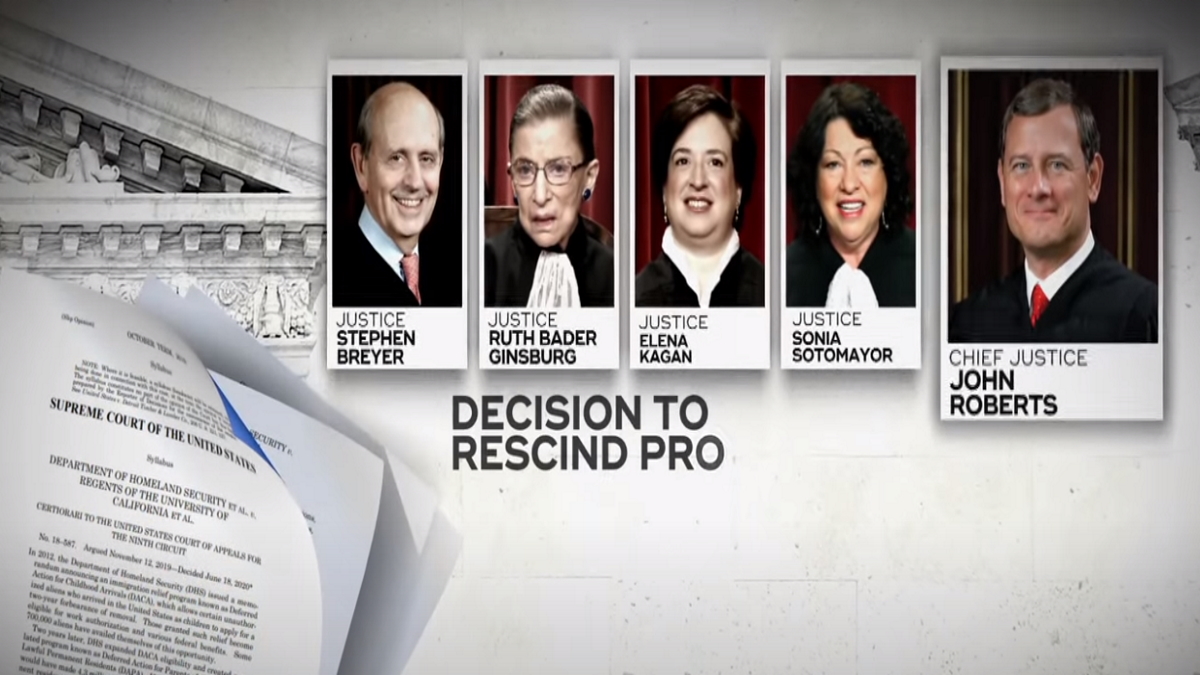
On Thursday, the Supreme Court ruled against the Trump administration’s effort to end the Obama-era program that offers legal protections to young immigrants brought to the country illegally as children.

The court ruled that the administration’s decision to rescind the Deferred Action on Childhood Arrivals (DACA) program violated the Administrative Procedure Act (APA), which sets out rule-making procedures for federal agencies.

As a result, the Department of Homeland Security (DHS) released the following statements regarding the Supreme Court decision on DACA.

Acting Secretary Chad Wolf: “DACA recipients deserve closure and finality surrounding their status here in the U.S. Unfortunately, today’s Supreme Court decision fails to provide that certainty. The DACA program was created out of thin air and implemented illegally. The American people deserve to have the Nation’s laws faithfully executed as written by their representatives in Congress—not based on the arbitrary decisions of a past Administration. This ruling usurps the clear authority of the Executive Branch to end unlawful programs.”

Acting Deputy Secretary Ken Cuccinelli: “The Supreme Court’s decision is an affront to the rule of law and gives Presidents power to extend discretionary policies into future Administrations. No Justice will say that the DACA program is lawful, and that should be enough reason to end it.  Justice Clarence Thomas had it right in dissent: ‘Such timidity [by SCOTUS] forsakes the Court’s duty to apply the law according to neutral principles and the ripple effects of the majority’s error will be felt throughout our system of self-government.’”

The Justice Department had argued the DACA program is not working and is unlawful, and that the president should have the “absolute discretion” to adopt a revised overall immigration strategy. A dozen states led by Texas were among the parties backing the administration.

DHS.gov; Foxnews.com (June 2020) DHS Statement On Supreme Court Decision on DACA; Supreme Court rules against Trump administration bid to end DACA program

3rd Cavalry Regiment commander initiates an investigation into sexual harassment allegations concerning Pfc. Vanessa Guillen

The 3rd Cavalry Regiment commander, Col. Ralph Overland, has appointed an investigating team led by a senior investigating officer (IO) to conduct a commander’s investigation, referred to as an “AR 15-6 Investigation” into allegations that Pfc. Vanessa Guillen was sexually harassed.


The 3rd Cavalry Regiment commander, Col. Ralph Overland, has appointed an investigating team led by a senior investigating officer (IO) to conduct a commander’s investigation, referred to as an “AR 15-6 Investigation” into allegations that Pfc. Vanessa Guillen was sexually harassed.

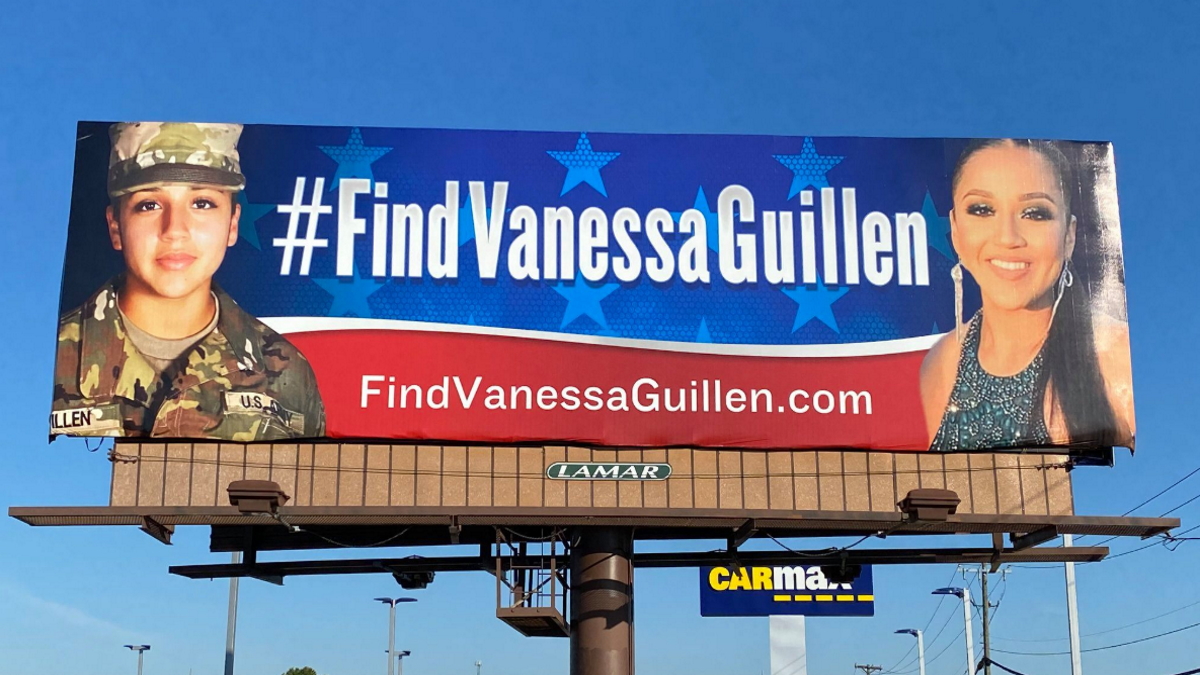
Pfc. Vanessa Guillen is a Fort Hood Soldier assigned to 3rd CR and has been missing from her unit since April 22.

An AR 15-6 Investigation is the Army’s standard method of investigation and is used to collect and analyze facts and make recommendations based on those facts.

The IO will gather the evidence, thoroughly and impartially consider it, and make findings and recommendations. 

Reward Increased: Missing Fort Hood Soldier

Once the investigation is complete, the IO will present the findings and recommendations to Col. Overland for his review.

Chris Grey, a spokesman for the U.S. Army Criminal Investigation Command, said more than 150 people have been interviewed in connection with Guillen’s disappearance. Army CID investigators have partnered with the FBI, the Belton Police Department and the Texas Department of Public Safety.

“I opened an investigation concerning the information provided by the Guillen Family that Pfc. Vanessa Guillen was harassed prior to her disappearance,” said Col. Ralph Overland, Commander of the 3rd Cavalry Regiment.  “I take allegations of sexual harassment very seriously and we are conducting a thorough investigation.”

“The 3rd Cavalry Regiment continues to aggressively search for Pfc. Guillen and will not stop until we find her,” Overland said.

CID is offering a reward of up to $25,000 for credible information leading to the whereabouts of Vanessa Guillen.

Tom Rheinlander, Fort Hood’s Public Affairs Office director, reiterated, “We encourage anyone who may have information, no matter how minor, that could help in the safe return of Vanessa Guillen to please call CID agents at 254-495-7767 and share that information with them.”

CID agents also can be contacted online at https://www.cid.army.mil/report-a-crime.html.

The person providing information can remain anonymous. All credible leads are being investigated.

Fort Hood Press Center (June 2020) 3rd Cavalry Regiment commander initiates an investigation into sexual harassment allegations concerning Pfc. Vanessa Guillen