UPDATE: AMBER Alert: Evelyn Mae Boswell

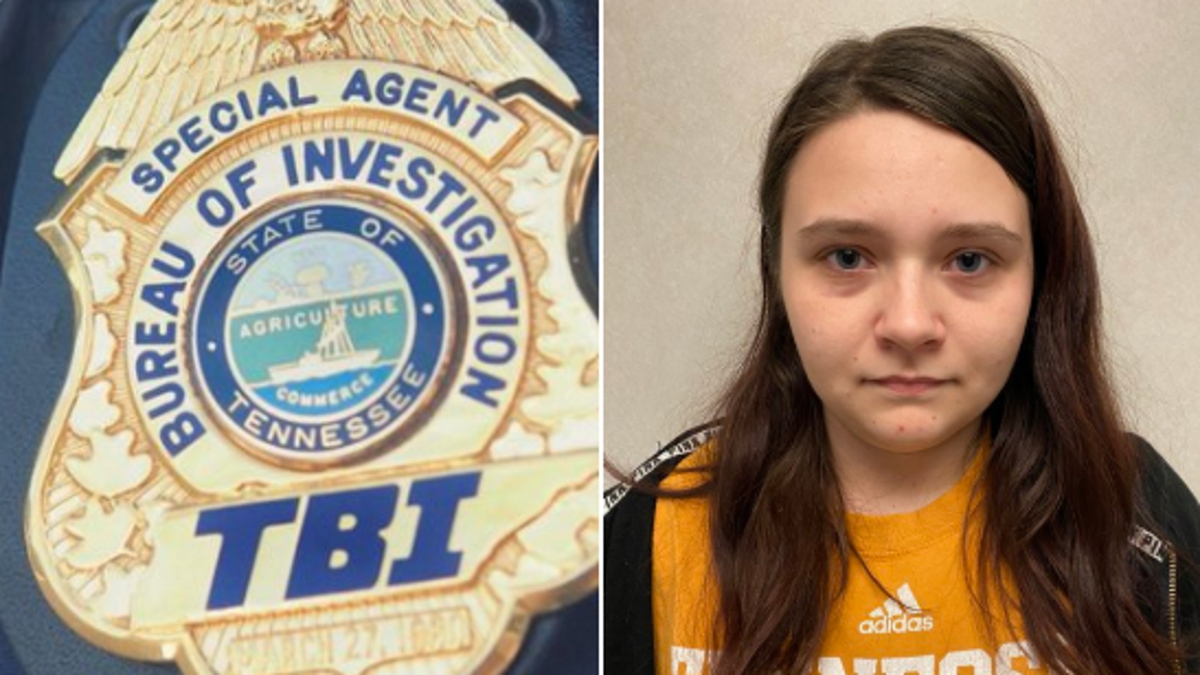
The Sullivan County Sheriff’s Office charged Boswell with one count of False Reporting. She is being held in the Sullivan County Jail on a $25,000 bond.


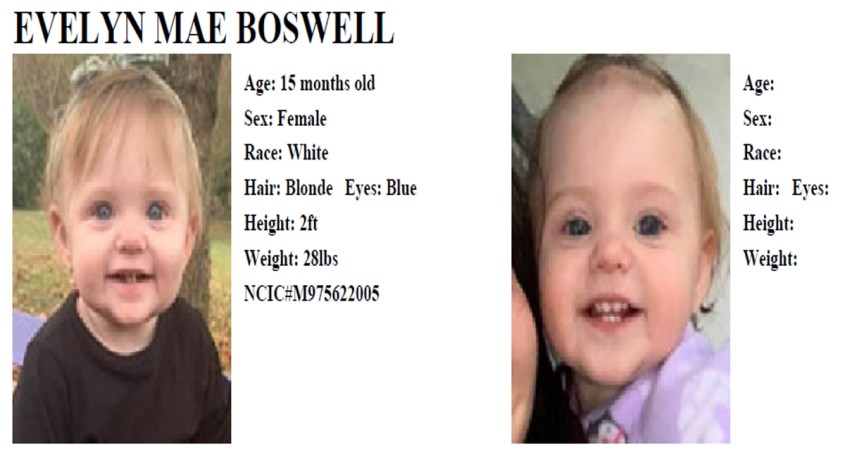
The Tennessee Bureau of Investigation continues to work alongside the Sullivan County Sheriff’s Office and the Federal Bureau of Investigation to locate and recover 15-month-old Evelyn Mae Boswell, who became the subject of a statewide AMBER Alert issued by the TBI on Wednesday, February 19th.

UPDATE: The Bristol Herald Courier reported that Megan Boswell, who has said the toddler’s grandmother took the little girl to Mendota, Virginia, was charged with one count of filing a false police report, according to the Sullivan County Sheriff’s Office. She is being held on $25,000 bond.

On Friday, February 20th, ongoing investigative efforts led authorities to ask for assistance in locating a gray BMW. Two individuals believed to have information regarding Evelyn’s whereabouts were traveling in the car. On Friday afternoon, the vehicle and the individuals were located in Wilkes County, North Carolina. Agents and detectives questioned the couple as part of the ongoing investigation. They are currently being held on charges unrelated to the disappearance of Evelyn Boswell.

Since issuing the AMBER Alert just before 8:00 EST Wednesday, authorities have received more than 500 leads. None, however, has produced any credible sightings regarding the whereabouts of Evelyn Boswell.

Cell Phones and Accessories

During the investigation, authorities have received a number of conflicting statements. That, combined with the fact that Evelyn was not immediately reported missing, makes this a complicated case.

TBI.com (February, 2020) UPDATE: AMBER Alert: Evelyn Mae Boswell

Help a veteran in need by donating here.

Man Arrested for Attempting to Blow Up Vehicle at Pentagon

An Arkansas man will make his initial appearance in federal court at 2 p.m. today on charges relating to his alleged attempt at blowing up a vehicle at the Pentagon yesterday.


An Arkansas man will make his initial appearance in federal court at 2 p.m. today on charges relating to his alleged attempt at blowing up a vehicle at the Pentagon yesterday.

According to court documents, Matthew Dmitri Richardson, 19, of Fayetteville, was discovered in the Pentagon North Parking lot yesterday morning by a Pentagon Police Officer on patrol. The officer allegedly observed Richardson standing next to a vehicle striking a cigarette lighter to a piece of fabric that was inserted into the vehicle’s gas tank.

After the officer approached Richardson, the defendant allegedly told the officer he was going to “blow this vehicle up” and “himself”. When the officer attempted to detain Richardson, Richardson pulled away and ran across the parking lot towards Virginia State Route 110 and onto Virginia State Route 27.

A subsequent review of surveillance camera footage showed that Richardson jumped over a fence into Arlington National Cemetery. Richardson was later found by the Pentagon Force Protection Agency Police Emergency Response Team near Arlington House.

Soffe Men’s 3 Pack-USA Poly Cotton Military Tee

According to court documents, after a search of Richardson, officers allegedly discovered a cigarette lighter, gloves, and court documents related to Richardson’s arrest on or about February 22 for two counts of felony assault on a law enforcement officer in Arlington County.

According to court documents, the owner of the vehicle is an active duty servicemember and does not know Richardson.

Richardson is charged with maliciously attempting to damage and destroy by means of fire, a vehicle used in and affecting interstate and foreign commerce.

If convicted, he faces a mandatory minimum of five years in prison and a maximum penalty of 20 years in prison. Actual sentences for federal crimes are typically less than the maximum penalties. A federal district court judge will determine any sentence after taking into account the U.S. Sentencing Guidelines and other statutory factors.

G. Zachary Terwilliger, U.S. Attorney for the Eastern District of Virginia, and Woodrow G. Kusse, Chief of Pentagon Police, made the announcement. Special Assistant U.S. Attorney Paul Embroski and Assistant U.S. Attorney Marc J. Birnbaum are prosecuting the case.

A copy of this press release is located on the website of the U.S. Attorney’s Office for the Eastern District of Virginia. Related court documents and information are located on the website of the District Court for the Eastern District of Virginia or on PACER by searching for Case No. 1:20-mj-86.

Justice.gov (February, 2020) Man Arrested for Attempting to Blow Up Vehicle at Pentagon

Help a veteran in need by donating here.

Coronavirus Update: FDA steps to ensure quality of foreign products

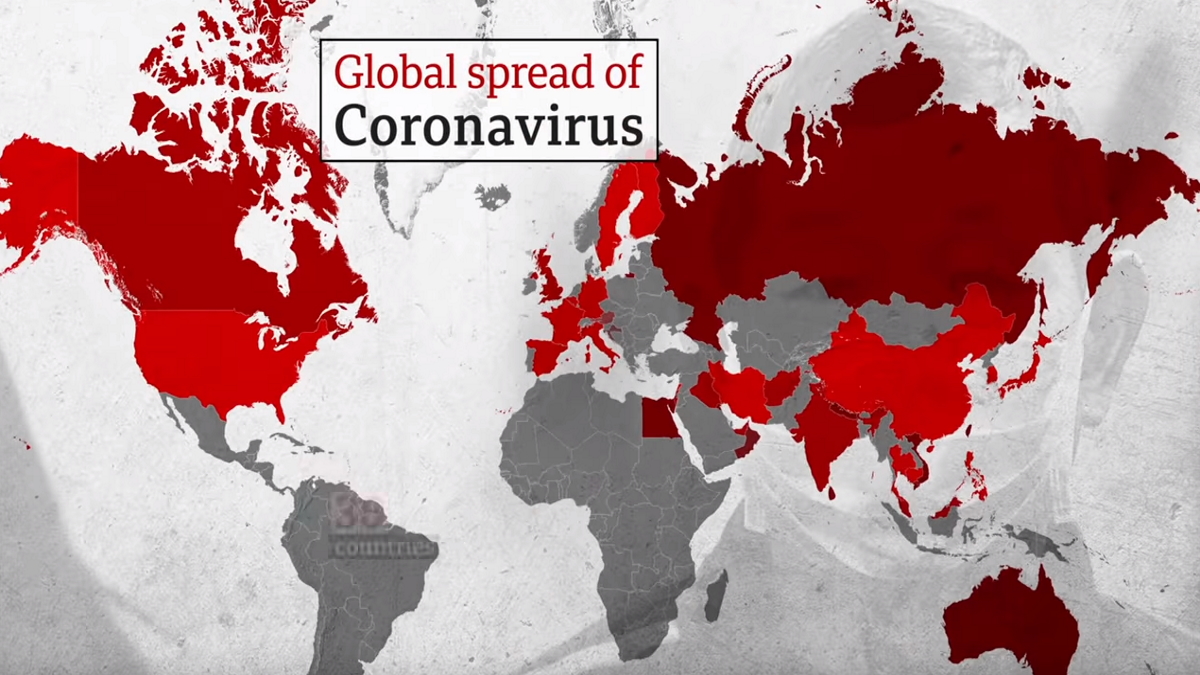
We are providing updated and more detailed information about the status of FDA inspections in China and the agency’s oversight of imported products from China, which have been impacted by this outbreak.


Today, we are providing updated and more detailed information about the status of FDA inspections in China and the agency’s oversight of imported products from China, which have been impacted by this outbreak.

While we are not able to conduct inspections in China right now, this is not hindering our efforts to monitor medical products and food safety. We have additional tools we are utilizing to monitor the safety of products from China, and in the meantime, we continue monitoring the global drug supply chain by  prioritizing risk-based inspections in other parts of the world.

The FDA is not currently conducting inspections in China in response to the U.S. Department of State’s Travel Advisory to not travel to China due to the novel coronavirus outbreak. We will continue to closely monitor the situation in China so that, when the travel advisory is changed, we will be prepared to resume routine inspections as soon as feasible.

Soffe Men’s 3 Pack-USA Poly Cotton Military Tee

We already use other tools to help complement our inspections, including import screening, examinations, sampling, and import alerts, relying on a firm’s previous compliance history, and we use information from foreign governments as part of mutual recognition agreements. Thus, at this time, we can rely on these other tools to give us comprehensive oversight of FDA-regulated products entering this country. This is all part of our agency’s risk-based approach to ensuring quality, as well as compliance with applicable FDA requirements.

It is important to reiterate that inspections are one of many tools that the agency uses to inform our risk strategy for imported FDA-regulated products and to help prevent products that do not meet the FDA’s standards from entering the U.S. market.  A wide variety of FDA-regulated products are imported from China, which makes it important to assure the public of the quality of these products. At this time, over 60% of FDA-regulated products imported from China are medical devices and 20% are housewares (like food packaging).  

In response to the COVID-19 outbreak, the FDA will utilize, where appropriate, our authority to request records from firms “in advance or in lieu of” drug surveillance inspections in China. The Federal Food, Drug, and Cosmetic Act, as amended by the FDA Safety and Innovation Act (FDASIA) of 2012, gives the FDA authority to request records “in advance of or in lieu of” on-site drug inspections.

Congress enacted this provision to improve the effectiveness and efficiency of inspections, given the increasing globalization of drug production.  Along with other FDASIA provisions, this inspection record request authority was viewed as a way to “level the playing field” between foreign and domestic drug inspections by allowing the FDA to review records ahead of time and take a more risk-based approach to conducting both domestic and foreign inspections. These records will help the agency when we resume drug inspections in China.

By applying the use of paper records in our risk-based inspection framework, we can prioritize our early inspections on those deemed most needed, based on the records . By doing so, we hope to rapidly assess what could become a backlog number of on-the-ground surveillance inspections this fiscal year if travel restrictions persist.

In addition to records requests, the FDA will continue working with U.S. Customs and Border Protection to target products intended for importation into the U.S. that violate applicable legal requirements for FDA-regulated products, which may come from a variety of sources, such as first time importers unfamiliar with regulatory requirements or repeat offenders trying to skirt the law. FDA has the ability through our risk-based import screening tool (PREDICT) to focus our examinations and sample collections based on heightened concerns of specific products being entered into U.S. commerce. The PREDICT screening continues to adjust risk scores as necessary throughout the COVID-19 outbreak.  

We are keeping a close eye out for indications of port shopping or cargo diversion and will continue our oversight of shipments through potentially higher-risk venues such as International Mail Facilities. We can refuse admission of products that fail sample testing or may violate other applicable legal requirements.

Fortunately, currently, we are not seeing the impacts of this outbreak resulting in an increased public health risk for American consumers from imported products. There is no evidence to support transmission of COVID-19 associated with imported goods and there have not been any cases of COVID-19 in the United States associated with imported goods. As noted, this remains a dynamic situation and we will continue to assess, and update guidance as needed. 

We also continue to aggressively monitor the market for any firms marketing products with fraudulent COVID-19 prevention and treatment claims. The FDA can and will use every authority at our disposal to protect consumers from bad actors who would take advantage of a crisis to deceive the public, including pursuing warning letters, seizures, or injunctions against products on the market that are not in compliance with the law, or against firms or individuals who violate the law.

We know the public may have questions or concerns for the FDA as a result of this outbreak, including you and your family’s risk of exposure, or whether your critical medical products are safe and will continue to be available in the future.

We assure you that the FDA is working around the clock to monitor and mitigate emerging coronavirus issues through collaborative efforts with U.S. regulators, international partners, and medical product developers and manufacturers to help advance response efforts to combat the COVID-19 outbreak. 

FDA.gov (February, 2020) FDA steps to ensure quality of foreign products

Help a veteran in need by donating here.

DHS Implements Inadmissibility on Public Charge Grounds Final Rule

The U.S. Department of Homeland Security today implemented the Inadmissibility on Public Charge Grounds final rule. Under the final rule, DHS will look at the factors required under the law by Congress, like an alien’s age, health, family status, assets, resources, and financial status, education and skills, among others, in order to determine whether the alien is likely at any time to become a public charge.


The U.S. Department of Homeland Security today implemented the Inadmissibility on Public Charge Grounds final rule. Under the final rule, DHS will look at the factors required under the law by Congress, like an alien’s age, health, family status, assets, resources, and financial status, education and skills, among others, in order to determine whether the alien is likely at any time to become a public charge.

The rule now applies nationwide, including in Illinois. 

Self-sufficiency is a long-standing principle of immigration law. Since the 1800s, inadmissibility based on public charge has been a part of immigration law. Since 1996, federal laws have stated that aliens seeking to come to or remain in the United States, temporarily or permanently, must be self-sufficient and rely on their own capabilities and the resources of family, friends, and private organizations instead of public benefits. 

Cell Phones and Accessories

“President Trump continues to deliver on his promise to the American people to enforce our nation’s immigration laws. After several judicial victories, DHS will finally begin implementing the Inadmissibility on Public Charge Grounds final rule,” said Ken Cuccinelli, the acting deputy secretary of the Department of Homeland Security. “This rule enforces longstanding law requiring aliens to be self-sufficient, reaffirming the American ideals of hard work, perseverance and determination. It also offers clarity and expectations to aliens considering a life in the United States and will help protect our public benefit programs.”

The final rule defines “public charge” as an alien who has received one or more public benefits (as defined in the rule) for more than 12 months, in total, within any 36-month period. 

The final rule defines “public benefits” to include any cash benefits for income maintenance, Supplemental Security Income, Temporary Assistance to Needy Families, Supplemental Nutrition Assistance Program, most forms of Medicaid and certain housing programs.

Applicants for adjustment of status who are subject to the final rule must show that they are not likely at any time to become a public charge by submitting a Form I-944, Declaration of Self-Sufficiency, when they file their Form I-485, Application to Register Permanent Residence or Adjust Status.

To determine whether an alien is inadmissible on the public charge grounds, USCIS will not consider, and applicants and petitioners do not need to report, the application for, certification or approval to receive, or receipt of certain previously excluded non-cash public benefits (such as SNAP, most forms of Medicaid, and public housing) before Feb. 24, 2020. Similarly, USCIS will not consider as a heavily weighted negative factor receipt of previously included public benefits (such as SSI and TANF) before Feb. 24, 2020, in a public charge inadmissibility determination. 

The final rule requires most aliens seeking to extend their nonimmigrant stay or change their nonimmigrant status to show that, since obtaining the nonimmigrant status they seek to extend or change, they have not received public benefits (as defined in the final rule) for more than 12 months, in total, within any 36-month period beginning Oct. 15, 2019. Due to litigation-related delays in the final rule’s implementation, DHS is applying this requirement as though it refers to Feb. 24, 2020 rather than Oct. 15, 2019.

Therefore, with respect to applying the public benefits condition to applications and petitions for extension of nonimmigrant stay and change of nonimmigrant status, DHS will not consider, and applicants and petitioners need not report an alien’s receipt of any public benefits before Feb. 24, 2020.  

Certain classes of aliens are exempt from the public charge ground of inadmissibility (such as refugees, asylees, certain VAWA self-petitioners, U petitioners, and T applicants) and therefore, are not subject to the Final Rule. 

After today, USCIS will reject prior editions of affected forms, including in Illinois where the rule remained enjoined until Feb. 21, 2020, when the U.S. Supreme Court granted a stay of the statewide injunction.

If USCIS receives an application or petition for immigration benefits using prior editions of the forms postmarked on or after Feb. 24, 2020, then USCIS will inform the applicant or petitioner of the need to submit a new application or petition using the correct forms. For applications and petitions that are sent by commercial courier (such as UPS, FedEx and DHL), the postmark date is the date reflected on the courier receipt. 

DHS.gov (February, 2020) DHS Implements Inadmissibility on Public Charge Grounds Final Rule

Help a veteran in need by donating here.

Texas Couple Sentenced to a Combined 140 Years in Prison for Conspiracy to Produce Child Pornography and Other Crimes Against Children

A husband and wife from Big Spring, Texas, were sentenced today to a combined 140 years in prison for crimes against children.


A husband and wife from Big Spring, Texas, were sentenced today to a combined 140 years in prison for crimes against multiple children. 

Assistant Attorney General Brian A. Benczkowski of the Justice Department’s Criminal Division, U.S Attorney Erin Nealy Cox of the Northern District of Texas and Special Agent in Charge Ryan L. Spradlin of U.S. Immigration and Customs Enforcement’s Homeland Security Investigations (HSI) made the announcement.

Christopher James Regan, 38, a former shipping logistics manager, was sentenced to 90 years in prison after pleading guilty in October 2019 to conspiracy to produce child pornography and two counts of producing child pornography.  Tanya Marie Regan, 35, was sentenced to 50 years in prison after her October 2019 guilty plea to conspiracy to produce child pornography and possession of prepubescent child pornography.  The sentences, which were imposed by U.S. District Judge Mark T. Pittman of the Northern District of Texas, also included lifetime terms of supervised release for both defendants.

According to court documents, Christopher and Tanya Regan sexually abused and produced child pornography of multiple children, and they possessed and distributed child pornography to one another as well.  The Regans also engaged in graphic discussions about the sexual abuse of children over several online platforms. 

In plea papers, the pair admitted that at Christopher Regan’s direction, Tanya Regan repeatedly videotaped herself sexually abusing children for Christopher Regan’s sexual gratification.

When law enforcement seized electronics from the home, several graphic videos had been deleted, but were still stored in the recycle bin or on unallotted space on various SD cards. Undeleted videos were stored in a computer folder titled “users\tanya_000\pictures\privatevids\minor.”

HSI’s San Angelo, Texas, office, the Howard County Sheriff’s Office and the High Technology Investigative Unit within the Criminal Division’s Child Exploitation and Obscenity Section (CEOS) investigated the case.  Substantial assistance was provide by the HSI offices in Lubbock and Tyler, Texas, Tom Green County Sheriff’s Office, Texas Department of Public Safety, and the National Center for Mission and Exploited Children.  Trial Attorney Kyle P. Reynolds of CEOS and Assistant U.S. Attorneys Ann Howey and Jeffrey R. Haag prosecuted the case along with former Assistant U.S. Attorney Russell H. Lorfing.

This case was brought as part of Project Safe Childhood, a nationwide initiative launched in May 2006 by the Department of Justice to combat the growing epidemic of child sexual exploitation and abuse.  Led by U.S. Attorneys’ Offices and CEOS, Project Safe Childhood marshals federal, state and local resources to better locate, apprehend and prosecute individuals who exploit children via the Internet, as well as to identify and rescue victims.

For more information about Project Safe Childhood, please visit www.justice.gov/psc.

FBI.gov (February, 2020) Texas Couple Sentenced to a Combined 140 Years in Prison

Help a veteran in need by donating here.