NATO launches Counter-Terrorism Reference Curriculum

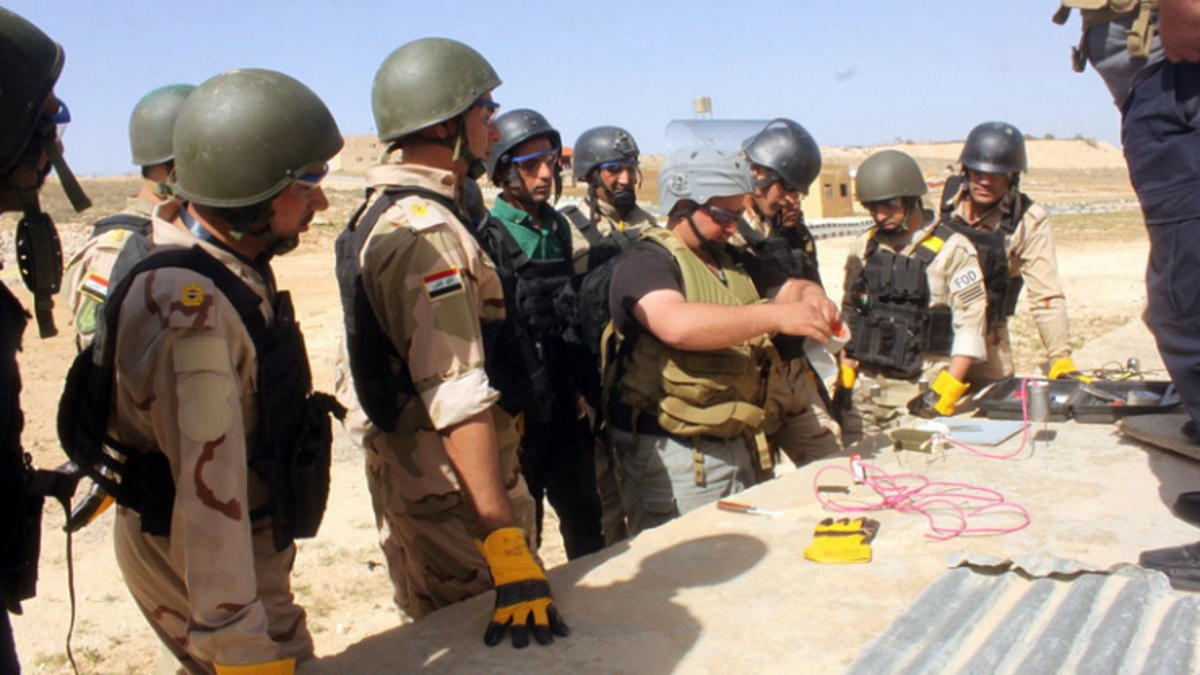
NATO on Friday, June 12, launched its first ever Counter-Terrorism Reference Curriculum (CTRC). It supports interested Allies and partner countries in enhancing their capacities to develop national skills and improve counter-terrorism strategies.


NATO on Friday, June 12, launched its first ever Counter-Terrorism Reference Curriculum (CTRC). It supports interested Allies and partner countries in enhancing their capacities to develop national skills and improve counter-terrorism strategies.

The Curriculum will also serve as a reference document to address partner nation defense educational institution requirements and will provide helpful guidelines for relevant existing NATO courses. Drawing on historical examples, the CTRC provides an overview of terrorist ideologies, motivations and methods, as well as contemporary counter-terrorism practices and potential future projections.

Launching the Curriculum, Dr. Antonio Missiroli, NATO’s Assistant Secretary General for Emerging Security Challenges stated: “Security challenges like terrorism are not diminishing because of the global pandemic. Terrorism undermines our safety and the very values that underpin and inspire our societies. The Alliance is committed to address this threat with all available means. Supporting improved awareness, strengthening resilience and building counter-terrorism capacity of both Allies and partners are all part of this effort, and the CTRC perfectly fits these objectives. I would like to thank all those who helped make this Curriculum possible, including the United Nations, the European Union and the Organization for Security and Co-operation in Europe (OSCE).”

Partners can significantly benefit from using the CTRC for the development of their own tailored courses on Counter-Terrorism. This support will be provided and facilitated in the framework of NATO’s Defense Education Enhancement Programme (DEEP). Dr. John Manza, NATO’s Assistant Secretary General for Operations, highlighted: “The Counter-Terrorism Reference Curriculum will be available to all interested partners and Allies. DEEP will work diligently to help partners who request support in implementing tailored versions of the curriculum for their professional military education institutions. In light of the COVID-19 pandemic, and reflecting other longer-term trends, NATO will also work to implement the Counter-Terrorism Reference Curriculum as a distance course, available to all partners who wish to use it in their institutions. Supporting our partners in this way makes us all stronger in the face of a common threat.” 

Dr. Sajjan M. Gohel, the CTRC’s co-editor and academic project lead from the Asia-Pacific Foundation and the London School of Economics (LSE) added: “The CTRC is designed to provide users with a robust, holistic and nuanced comprehension of terrorism as well as improve potential counter-terrorism outcomes for NATO members and partners. The curriculum reflects NATO’s innovative best.”

The NATO Counter-Terrorism Reference Curriculum is the result of close cooperation between the Defense Education Enhancement Programme (DEEP) and NATO`s Counter-Terrorism Section, as well as the Partnership for Peace Consortium. Over 100 experts from nations across five continents, including from Tunisia, Jordan and Mauritania, as well as multiple international organizations contributed to the writing, drafting, and editing of the final product.

NATO.int (June 2020) NATO launches Counter-Terrorism Reference Curriculum
White House Report Recommends Multi-Pronged Approach to Counter China

The Defense Department has a role to play in countering China, but it is only one part of the effort. The National Defense Strategy highlights the threat.


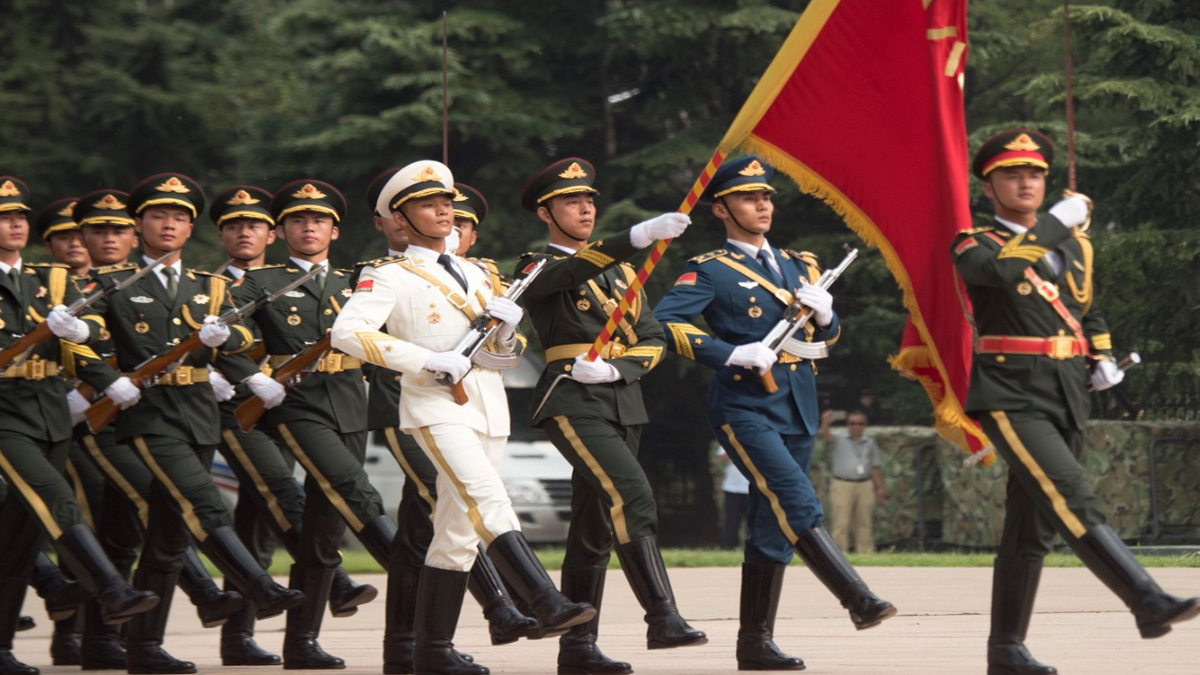
China is using government, military, economic, diplomatic and information levers to change the well-tested and beneficial international order, and the United States must have a similar strategy to combat these efforts, according to a White House report.

The White House addressed the whole-of-government approach to counter China — a great power competitor — in a report published last month titled “The United States Strategic Approach to the People’s Republic of China.” 

The Defense Department has a role to play in countering China, but it is only one part of the effort. The National Defense Strategy highlights the threat. 

“China is leveraging military modernization, influence operations and predatory economics to coerce neighboring countries to reorder the Indo-Pacific region to their advantage,” the unclassified strategy report said. “As China continues its economic and military ascendance, asserting power through an all-of-nation, long-term strategy, it will continue to pursue a military modernization program that seeks Indo-Pacific regional hegemony in the near-term and displacement of the United States to achieve global preeminence in the future.”

According to the report, China is the prime country that has benefited from the existing international order, noting that it has made tremendous progress economically since moving to a market economy. U.S. officials had anticipated that the iron rule of the Chinese Communist Party would loosen as prosperity became more widespread in the nation of more than 1.5 billion people. 

But the party maintained — and even tightened — its grip. “Over the past two decades, reforms have slowed, stalled or reversed,” the White House report says. “The PRC’s rapid economic development and increased engagement with the world did not lead to convergence with the citizen-centric, free and open order as the United States had hoped.”

When the United Kingdom handed over Hong Kong to China, Hong Kong was guaranteed semi-autonomous status at least through 2047. The Chinese are backing out of the “One Nation, Two Systems” agreement. China is also building and militarizing islands in the South China Sea and East China Sea in an attempt to assert sovereignty over international sea lanes of communication.

The United States and partner nations in the region and internationally are sailing and flying through these areas in freedom of navigation operations, the report says.

The Chinese have massed troops and missiles across the Strait of Taiwan and continually threaten military action and have tied their new-found economic power and diplomacy together in their “One Belt One Road” initiative, which the report calls an umbrella term describing initiatives designed “to reshape international norms, standards, and networks to advance Beijing’s global interests and vision, while also serving China’s domestic economic requirements.”

The “One Belt One Road” projects frequently are “characterized by poor quality, corruption, environmental degradation, a lack of public oversight or community involvement, opaque loans, and contracts generating or exacerbating governance and fiscal problems in host nations,” the report says.

Beijing will probably use these projects to exert undue political influence and gain military access, the report says. “Beijing uses a combination of threat and inducement to pressure governments, elites, corporations, think tanks and others — often in an opaque manner — to toe the CCP line and censor free expression,” it states.

The response to this effort is not solely military. Rather, the report says, it has to be a whole-of-government approach that combines diplomacy, economic leverage, information operations and military partnerships. 

China is working to undermine U.S. alliances in the Indo-Pacific region, and “One Belt One Road” is just an arrow in the quiver aimed at subverting American influence in the region, the report says.

Meanwhile, it states, the Chinese Communist Party has no compunction about using economic, political and military power to pressure nations to follow their lead — often to the detriment of their citizens. With no visible opposition, the Chinese Communist Party can be patient, and Chinese leaders look at the competition with capitalist powers as a generational struggle, according to the report.

Capitalist nations have also engaged in generational struggles. The Cold War was a generational struggle against the Soviet Union. U.S. administrations of both political parties agreed to the overall need to confront the old Union of Soviet Socialist Republics, and they followed a long-term strategy against the existential threat the Soviets posed. 

It was also a whole-of-government approach, even if it wasn’t called that at the time. It wasn’t enough for troops to just confront the Soviet Union and Warsaw Pact at the Fulda Gap between West Germany and East Germany. Intelligence agencies had to stay ahead of the Soviets. Diplomats had to negotiate with them. The people of the Soviet Union and Warsaw Pact nations had to see what life was really like in the West.

The result was the dissolution of the Soviet Union in 1991. Now, the formerly captive Warsaw Pact nations are members of NATO.

The National Security Strategy recognizes there has been a return to an era of great power competition, and that China is a competitor. It lays out a U.S. whole-of-government approach that it says must be taken to counter the Chinese Communist Party’s efforts to overturn the international order. 

“The United States is responding to the [Chinese Communist Party’s] direct challenge by acknowledging that we are in a strategic competition and protecting our interests appropriately,” the White House report says. “The principles of the United States’ approach to China are articulated both in the [National Security Strategy] and our vision for the Indo-Pacific region — sovereignty, freedom, openness, rule of law, fairness, and reciprocity.”

While China is the main competitor, U.S.-Chinese relations do not determine America’s strategy in the Indo-Pacific region. U.S.-China relations are just part of the overall strategy in the region, the report says.

“By the same token, our vision of a free and open Indo-Pacific region does not exclude China,” according to the report. “The United States holds the [People’s Republic of China] government to the same standards and principles that apply to all nations.”

Defense.gov (June 2020) White House Report Recommends Multi-Pronged Approach to Counter China

Billion-Dollar Secrets Stolen

Tan’s theft of a trade secret—one worth an estimated $1 billion—is an example of what the FBI says is a systematic campaign by the Chinese government to gain economic advantage by stealing the innovative work of U.S. companies and facilities.


Scientist Sentenced for Theft of Trade Secrets

When scientist Hongjin Tan resigned from the Oklahoma petroleum company he’d worked at for 18 months, he told his superiors that he planned to return to China to care for his aging parents.

He also reported that he hadn’t arranged his next job, so the company agreed to let him to stay in his role until his departure date in December 2018.

But Tan told a colleague a different story over dinner.

That conversation prompted Tan’s employer to ask him to leave the firm immediately—and then his employer made a call to the FBI tip line to report a possible crime. The resulting investigation led to Tan’s guilty plea and 24-month prison sentence for stealing proprietary information that belonged to his company.

Tan’s theft of a trade secret—one worth an estimated $1 billion—is an example of what the FBI says is a systematic campaign by the Chinese government to gain economic advantage by stealing the innovative work of U.S. companies and facilities.

Tan had lived in the United States since 2012 and was a legal permanent resident. He earned his Ph.D. at an American university and had worked for a number of firms in California before making his way to the energy company in Oklahoma.

One of that firm’s most innovative products was a battery technology that employees had spent decades researching and developing. The technology also has a secondary, and perhaps even more valuable, use in melting metal.

When Tan revealed to his colleague that he actually did have a job waiting for him in China with Xiamen Tungsten, Tan’s dinner companion reported the conversation to his supervisor—who grew alarmed after researching the company. Xiamen Tungsten is a Chinese firm that smelts, processes, and distributes metal products and also supplies battery materials.

“If you got your hands on this information, you would be decades ahead of where you would have started out on this technology,” said Rebecca Day, Special Agent, FBI Oklahoma City

With this new information, the company immediately dismissed Tan from his responsibilities. Because they were now concerned about his motives, the company also began to look back at the documents and systems he had accessed while employed there.

While this review was going on, Tan called his supervisor to tell them he had a thumb drive with company documents on it. “He said he was hoping to read them to continue his research work,” said FBI Special Agent Jeremy Sykes, who worked on the case out of our Oklahoma City Field Office. “The company told him he needed to return the thumb drive.”

The company had already found Tan had been accessing sensitive documents that dealt with this innovative technology but did not directly relate to Tan’s work for the firm.

FBI agents said he began accessing these sensitive files around the time he applied to China’s Thousand Talents Program.

U.S. intelligence agencies have found that, through this program, China provides financial incentives and other privileges to participants who are willing to send back the research and technology knowledge they can access while working in the United States.

Tan also called up the documents around the times he made trips to China, and he accessed them for a final time on the day before he resigned.

“When he brought back the thumb drive, the firm looked at the slack space on the drive and found several files had been erased,” said Sykes. “The deleted files were the files the company was most concerned about.”

The company worked closely with the FBI to help them investigate the case and identify the company files Tan had stored at his home. Gaining this information allowed agents to get an arrest warrant for Tan.

“If you got your hands on this information, you would be decades ahead of where you would have started out on this technology,” said Special Agent Rebecca Day of FBI Oklahoma City’s Tulsa Resident Agency. “We won’t tolerate people who come into the United States to steal for the betterment of a foreign government or foreign company.”

At a recent conference in Boston, FBI Director Christopher Wray addressed this disquieting threat: “We see Chinese companies stealing American intellectual property to avoid the hard slog of innovation and then using it to compete against the very American companies they victimized—in effect, cheating twice over.”

“The deleted files were the files the company was most concerned about.”-Jeremy Sykes, special agent, FBI Oklahoma City

FBI Oklahoma City Special Agent Quincy Barnett said that there are a number of things companies can do to protect their products, research, and innovations, and that the FBI is eager to develop relationships with firms. “If we reach out,” he said, “it’s not a negative. We may have identified opportunities to engage.”

The Bureau can provide briefings to executives and employees on insider threats, share precautions workers should take when they travel to certain countries, help IT staff assess how to compartmentalize system and file access, and remind firms to put nondisclosure agreements in place to ensure employees agree not to share certain information.

In this case, the firm’s willingness to report the suspected crime so quickly made the difference in being able to hold Tan accountable. “We were on the phone with the company on December 13,” Sykes said. “We knew Tan was flying out of the country on December 29.”

Barnett said the FBI has seen that some companies resist reporting because they fear it will harm their stock price or be seen as a negative among shareholders.

“Companies can bring this information to the FBI, and we can work through those fears and hesitations,” said Barnett. “We are trying to send a message that this won’t be tolerated, but we have to find out about it first.”

The case against Tan not only resulted in two years of prison time but also, with support from Homeland Security Investigations, the loss of his residency status. Tan will be deported when he is released, which is a strong indicator of just how seriously the U.S. is taking these types of criminal violations.

To learn more about how the FBI can partner with you to protect your business or company, visit the Office of Private Sector website.

To provide a tip on any suspected crime, visit tips.fbi.gov.

FBI.gov (May 2020) Billion-Dollar Secrets Stolen

Operation Lemon Aid Spy Case 43 Years Ago


43 years ago, Operation Lemon Aid Spy Case was one of the FBI’s most important counter-espionage cases of the 1970s.

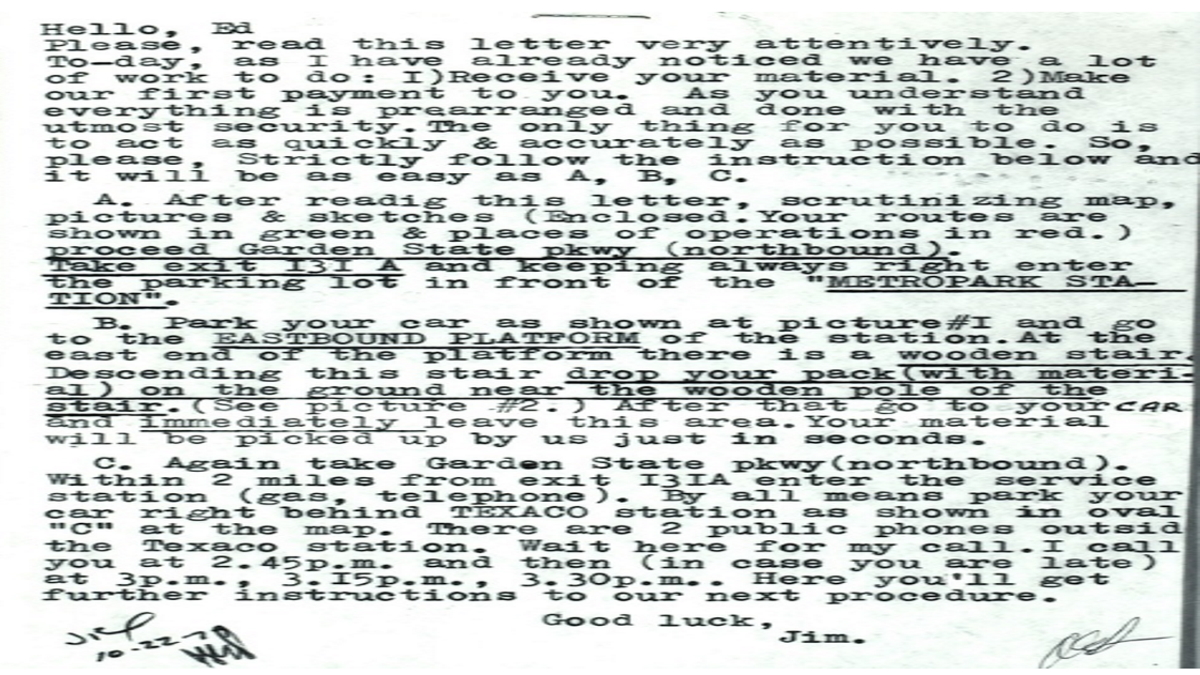
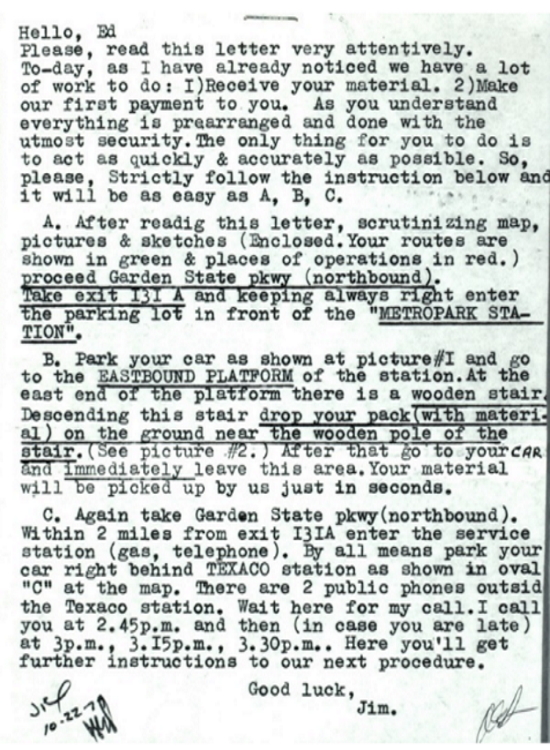
“Hello, Ed,” the note began. “Please, read this letter very attentively. To-day, as I have already noticed we have a lot of work to do: 1) Receive your material. 2) Make our first payment to you.” (see the full letter below). 

“Ed” was actually Art Lindberg—a lieutenant commander in the Navy and a double agent recruited by the Naval Investigative Service and the FBI in the spring of 1977. At the time, we suspected the Soviets were using their U.N. office as a front for espionage—specifically, to spy on U.S. Navy operations in New York and New Jersey.

Lindberg’s modest income, impending retirement, and information access made him a perfect candidate to fool the Soviets into believing he would sell secrets for cash.

It worked.

The letter was one of many communications sent by the Soviets to Lindberg, often in stilted English, after they took the bait in August 1977 until the following spring when we arrested two Soviet officials.

At the outset, FBI Headquarters dubbed the spy case “Operation Lemon-Aid.” The name had no meaning, but as the case developed, it seemed to fit more and more.

Why? Because as we tracked the steady stream of phone calls and letters between Lindberg and the Soviets, we learned quite a bit about Soviet spy craft in the ‘70s.

The Soviets repeatedly passed messages and money to Lindberg in the most ordinary, everyday items: magnetic key holders placed in phone booths, cigarette packs, soda cans, orange juice cartons, even a rubber hose from an appliance.

Most of the pre-arranged “dead drop” sites where the secrets were supposed to be passed (it was actually declassified information) were along the busy New Jersey Turnpike.

We moved in on May 20, 1978 when we felt we had enough information to make the arrests. We decided to set a trap—we gave Lindberg five canisters with actual classified materials so the Soviets would be caught red-handed.

Hiding inside the trunk of Lindberg’s car were two FBI agents, with many other agents waiting at the drop site on a back road. Lindberg approached the site, stopped the car, and picked up a can labeled “Ann Page Bartlett Pears,” as instructed by the Soviets.

He grabbed the can, dropped off the canisters, and drove off. Soon after, we arrested two covert KGB officers—Valdik Enger and Rudolf Chernyayev.

A third Soviet at the scene, Vladimir Zinyakin, had diplomatic immunity and was later expelled from the country.

In the end, it was one of our most important counter-espionage cases of the decade. Enger and Chernyayev were the first Soviet officials to ever stand trial for espionage in the U.S.

Both were convicted and ultimately exchanged for five Soviet dissidents.

The cat-and-mouse game between FBI and KGB agents would continue, but “Operation Lemon-Aid” gave us insights that helped our operations for years to come.

FBI.gov (May 2020) Operation Lemon Aid Spy Case

$1 Million Reward Offered for Information Leading to the Return of Paul Edwin Overby, Jr.


This month marks the sixth anniversary of the disappearance of Paul Edwin Overby, Jr. from Afghanistan. In mid-May 2014, Paul Edwin Overby, Jr., an American writer, disappeared in Khost Province, Afghanistan, where he was conducting research on a self-authored book.

Prior to his disappearance, Overby suggested that he planned to cross the border into Pakistan in furtherance of his research.

In May 2018, the FBI Washington Field Office announced a reward of up to $1 million for information leading directly to the safe location, recovery, and return of Paul Edwin Overby, Jr.

The reward remains unclaimed.

The FBI is dedicated to locating American citizens overseas and returning them home to their families.

“This past Friday, we mark the anniversary of the disappearance of Mr. Overby and renew our public call for information,” said Timothy R. Slater, assistant director in charge of the FBI’s Washington Field Office. “Paul Overby went missing along the border of Afghanistan and Pakistan in 2014 while researching for his book about the Afghan people, and he has not been heard from since. For six years, dedicated FBI special agents and analysts have been working tirelessly to determine Mr. Overby’s whereabouts and return him to his family. Our pursuit of justice will not end until Mr. Overby has returned home to the U.S. and his loved ones. We ask anyone with information to please contact the FBI.”

We encourage anyone with information concerning the kidnapping of Paul Edwin Overby, Jr. to contact the FBI or the nearest American Embassy or Consulate or submit a tip at tips.fbi.gov.

Tips can be kept strictly confidential.

FBI.gov (May 2020) $1 Million Reward Offered for Information Leading to the Return of Paul Edwin Overby, Jr.