CBP Helicopter Experiences Dangerous Situation after being Targeted by Laser from Canada

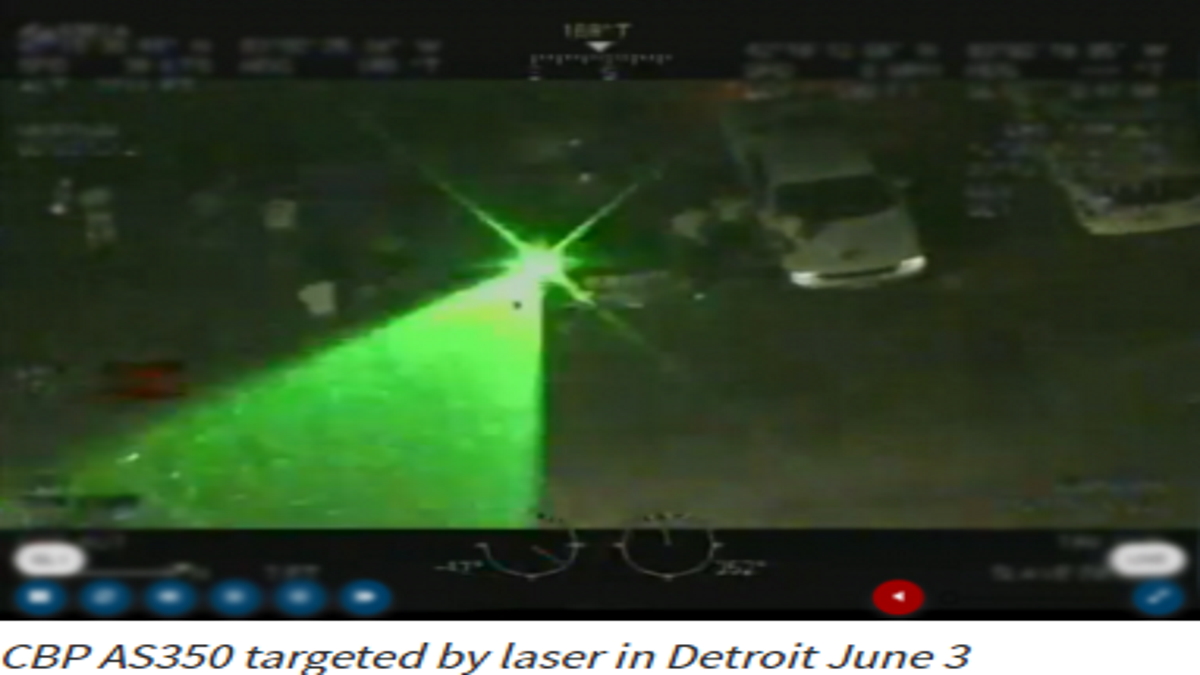
U.S. Customs and Border Protection Air and Marine Operations (AMO) AS-350 helicopter was struck by a laser beam while conducting operations over protests in Detroit.


On June 3, 2020, a U.S. Customs and Border Protection Air and Marine Operations (AMO) AS-350 helicopter was struck by a laser beam while conducting operations over protests in Detroit.

At approximately 10 p.m. on Wednesday evening, a Great Lakes Air and Marine crew operating near the Renaissance Center, detected their aircraft was being targeted by a green laser.

The crew immediately positioned the aircraft camera system on the point of origination, which was being emanated from Windsor, Ontario, and contacted the Windsor Ontario Control Tower to report the incident.

The Air Interdiction Agent in command of the aircraft was able to relay the exact location of the perpetrator, which the Control Tower relayed to Windsor Police.

The crew was then able to maneuver the aircraft along the Detroit River while keeping a constant visual on the subject until Windsor Police arrived and took the subject into custody.

“The Windsor Control Tower acted as a continuous relay to the police as the aircrew vectored them to the subject’s position which was critical to making this apprehension,” said Marc Sledge, Director, Air and Marine Operations, Great Lakes Air and Marine Branch. “I am very thankful that our pilots were not injured in this incident and that our Canadian counterparts were there to assist us at a moment’s notice.”

The public is reminded that lasers present a serious risk to aviator safety and can cause pilots to suffer flash blindness and other sudden vision problems, as well as permanent vision damage. Laser incidents also threaten the safety of innocent people on the ground.

U.S. Customs and Border Protection would also like to remind residents that owning a hand-held laser isn’t illegal, but shining it into a cockpit of an aircraft is a federal crime.

Someone convicted of interference with an aircraft can face 20 years in prison and a $250,000 fine.

CBP.gov (June 2020) CBP Helicopter Experiences Dangerous Situation after being Targeted by Laser from Canada

Tennessee Citizen Faces Federal Charges in Connection to Metro Courthouse Fire During Protest

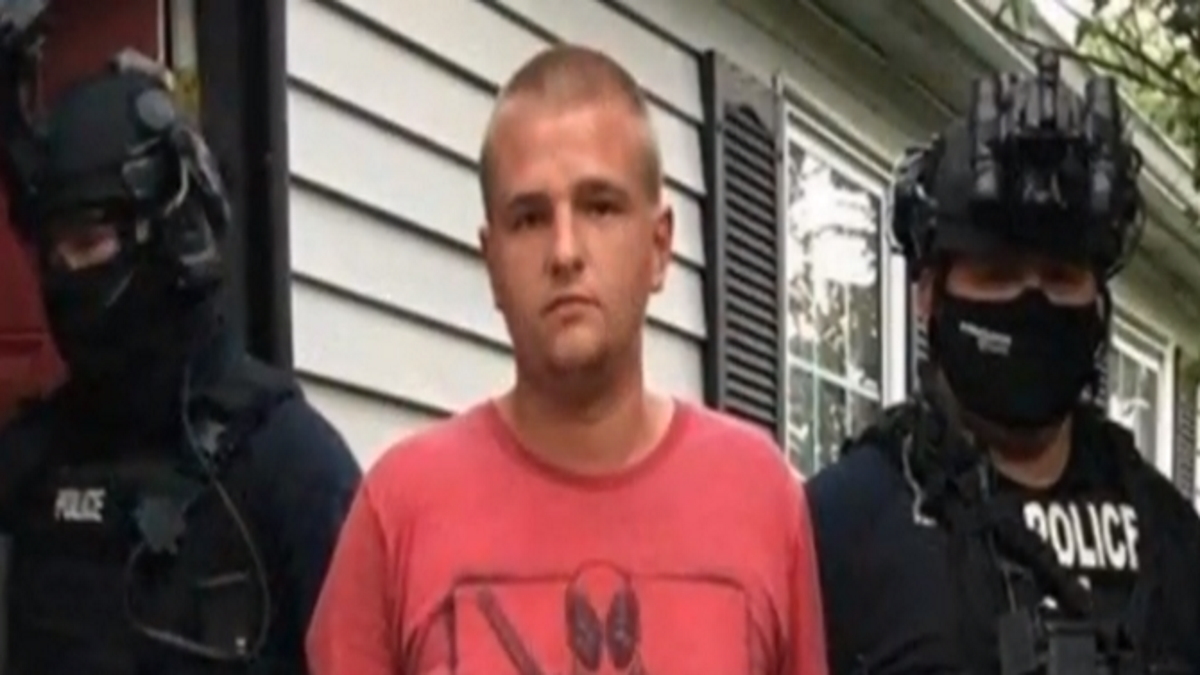
A criminal complaint issued today charged Wesley Somers, 25, of Hendersonville, Tennessee, with arson and with malicious destruction of property using fire or explosives.


A criminal complaint issued today charged Wesley Somers, 25, of Hendersonville, Tennessee, with arson and with malicious destruction of property using fire or explosives.

“The Department of Justice will vindicate the First Amendment rights of all Americans to speak, assemble and seek a redress of grievances from their government,” said Assistant Attorney General for National Security John C. Demers.  “We cannot tolerate, however, those who would take advantage of moments of real anguish to endanger the innocent and destroy their property.”

“We will always vigorously defend the right of every individual to assemble and protest,” said U.S. Attorney Don Cochran for the Middle District of Tennessee.  “This is one of our most sacred liberties guaranteed by the First Amendment of our Constitution.  We will also vigorously pursue those who choose to exploit such assemblies and use violence and intimidation in order to change the dynamics of an otherwise peaceful protest.”

The criminal complaint alleges that on the afternoon of May 30, 2020, protesters gathered in downtown Nashville following the death of George Floyd in Minneapolis, Minnesota. 

Later in the evening, a number of persons gathered in front of Nashville City Hall, also known as the Metro Courthouse, and using various tools, including crowbars and other objects, began smashing the windows of the premises and spraying graffiti on the Courthouse facade.  

One or more fires were also set inside of the Courthouse at this time.

Numerous video clips and photographs of the destruction at the Courthouse were posted on social media websites, on the websites for news outlets, and on other Internet sites.  

Somers is depicted in video clips and photographs from that evening, shirtless and wearing beige cargo shorts.  In those clips and photographs, Somers—whose distinctive chest tattoos portraying the words “WILD CHILD” and “HARD 2 Love,” among others, are occasionally visible — is depicted attempting to smash windows of the Courthouse with a long object. 

One photograph in particular, depicted Somers holding an unknown accelerant, which had been set on fire, and placing the accelerant through the window of the Courthouse.  

Somers is also depicted in a video clip setting fire to an accelerant and placing it inside a window located on the exterior of the Courthouse. 

Somers was identified by the Metropolitan Nashville Police Department – Specialized Investigation Division, after receiving numerous tips from citizens, and was arrested on state arson charges on May 31. 

If convicted, Somers faces a mandatory minimum of five years and up to 20 years in prison.

Assistant Attorney General Demers and U.S. Attorney Cochran commended the actions of concerned citizens and the efforts of the law enforcement agencies and prosecutors who worked to quickly identify and bring these charges, including the Metropolitan Nashville Police Department; the FBI; the Bureau of Alcohol, Tobacco, Firearms & Explosives; Assistant U.S. Attorney Ben Schrader; and Trial Attorney Justin Sher of the Department’s Counterterrorism Section.

A criminal complaint is merely an accusation.  The defendant is presumed innocent until proven guilty in a court of law.     

Justice.gov (June 2020) Tennessee Man Faces Federal Arson Charges in Connection to Metro Courthouse Fire During Protest

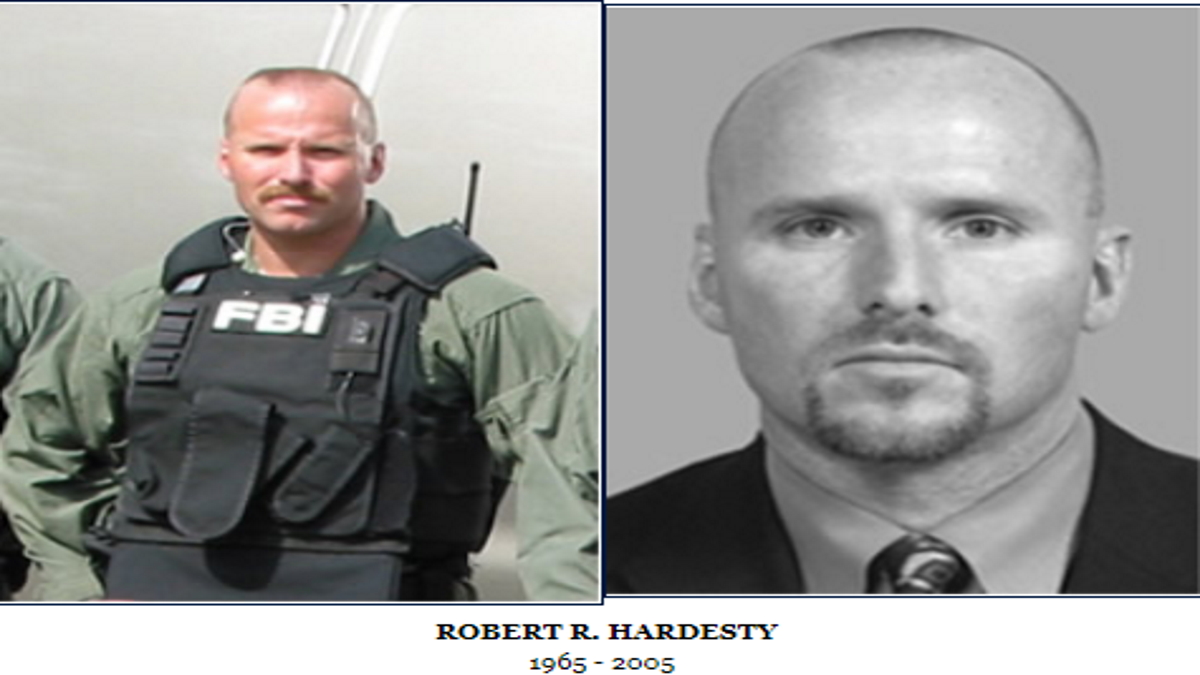
FBI remembers Special Agent Robert R. Hardesty

Today, the FBI remembers Special Agent Robert R. Hardesty (1965 – 2005), who died on June 2, 2005, as a result of an accident during SWAT training at the FBI Academy on May 25, 2005 in Quantico, Virginia.


Today, the FBI remembers Special Agent Robert R. Hardesty (1965 – 2005), who died on June 2, 2005, as a result of an accident during SWAT training at the FBI Academy on May 25, 2005 in Quantico, Virginia.

Special Agent Hardesty, 40, was assigned to the Springfield FBI Office at the time of his death and was a member of that office’s SWAT team.

Robert S. Mueller, III, Director Federal Bureau of Investigation, spoke at the funeral service for Robert R. Hardesty, of Portage, Indiana on June 08, 2005.

“We have come together today to honor Rob Hardesty: the Rob Hardesty you have known over many years and whom I have come to know over the past two weeks.

I have come to know Rob Hardesty by learning about his life–for his is a life story of service. Service to his family. Service to the Porter County Sheriff’s Office. Service to the FBI. Service to his country. Service to his Lord.

I also came to know Rob Hardesty personally; but only for a few moments. It was a day or so after the accident. Rob was in bed and unable to move. I told him he had one of the best Marine Corps haircuts I had seen in a while. And his entire face lit up. He smiled. And that smile gave me a glimpse of his vitality, his passion. I learned from that smile what all of you know so well.

I also came to understand Rob through his family, who I have come to know and respect over the last two weeks. You can learn a great deal about a person from knowing his family, and particularly the person he chooses to marry. Hardened, grizzled veterans of the FBI–veterans of HRT, SWAT–stand in awe of Toni–stand in awe of her strength and the strength of Rob’s family.

In a very short time I came to know Rob Hardesty–know him as an FBI agent; know him as a husband and father; and know him as a servant.

We look up to persons such as Rob, whose life work is service. We hold them up as examples. They earn our deepest admiration and respect because of the actions they purposefully take…in the name of service.

They are the ones who say, yes, I am ready without knowing when. Who say, yes, I will go, without knowing where. Who say, yes, I do, without always knowing why.

It is the rare quality of those who go forward without looking back and without asking what price, who show us the true meaning of courage, of devotion, and of sacrifice. It is the legacy Rob leaves us that his was a life lived to the full measure of those ideals.

We thank God for holding Robert Hardesty in His hands and we ask Him to look after Rob with great care, for he was truly the very best of the best. Each of us will carry Rob in our hearts, until that time when we meet again and come to be close to him once more. May God bless you, and may God bless Rob Hardesty.”

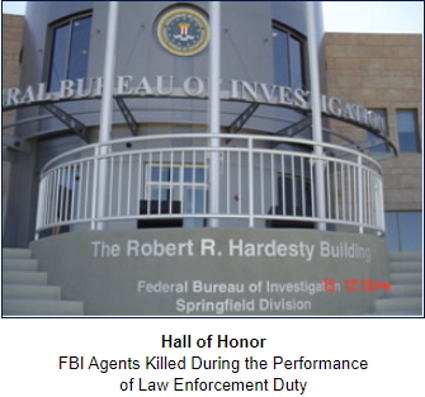
Springfield Office Dedication in Honor of Robert R. Hardesty, Springfield, Illinois, December 15, 2005

Memorial Service Held Honoring Fallen Special Agents

Prior to joining the FBI three-and-a-half years earlier, he served in the Porter County, Indiana Sheriff’s Department. In his honor, the Springfield FBI Office now bears his name.

FBI.gov (June 2020) Special Agent Robert R. Hardesty died on June 2, 2005

Space Force Officials, Spacecom, Discuss Planetary Defense and Astronaut Launch

It’s possible that one day an asteroid may threaten the Earth and the threat would need to be mitigated, possibly by the U.S. military.


It’s possible that one day an asteroid may threaten the Earth and the threat would need to be mitigated, possibly by the U.S. military. It’s a scenario considered in a paper titled “Whither Space Power?” co-authored by two Air Force officers in 2002.

“Should be found on a collision course, whose job should it be to divert the threat, and how?” wrote Air Force Maj. Gen. John Shaw — then a major — and his co-author, Air Force Brig. Gen. Simon Worden. “It is our view that an organization the people have placed their lives in the hands of for the past several centuries — the U.S. military — is best suited to provide protection from either natural or man-made threats.”

Today, Shaw is dual-hatted as commander of the Combined Force Space Component within U.S. Space Command, and also serves as commander of Space Operations Command within the newly created U.S. Space Force.

During a June 1 webinar sponsored by SpaceNews, he explained what “planetary defense” is.

“Planetary defense, as we talk about it in the space community today, refers to defense of the planet against asteroids, natural threats … that could potentially collide with the Earth with calamitous results,” Shaw said.

Shaw said today NASA has an office responsible for cataloging things within the solar system that potentially could threaten the Earth.

While he said that years ago he was on board with the idea that the Defense Department might be primarily responsible for dealing with those kinds of threats to the planet, today he has more of an open mind about how those threats might be mitigated.

“We’re happy to team with NASA in that regard,” he said. “If a small asteroid or meteorite did hit the Earth, there would be some sort of emergency management response on the part of our nation to support wherever that landed, and the Department of Defense would be happy to be a teammate in that regard.”

Shaw also discussed the May 30 launch of NASA astronauts Air Force Col. Robert L. Behnken and retired Marine Corps Col. Douglas G. Hurley into space from Kennedy Space Center in Florida as part of NASA’s Demo-2 mission.

An important part of that launch, he said, involved Defense Department personnel being ready to recover those astronauts if the mission failed and they had to return to Earth. The Defense Department has done the mission before — for the space shuttle, he noted, but it’s been a long time since recovery personnel have had to be ready to retrieve astronauts from a capsule such as the “Crew Dragon” craft that was used in the Demo-2 mission.

“We really [had] to go back to 1975 to remember when we were last supporting capsules for personal recovery operations,” he said. “And that’s a whole different profile in terms of mission planning and contingency scenarios than the shuttle.”

The space shuttle, he said, could maneuver and land at an airfield, if needed. Not so with a capsule.

“A capsule doesn’t have that maneuverability, but it has the possibility of landing just about anywhere, and it can land just about anywhere,” he said. “That means our ability to support that … has to be able to cover that total footprint, and that’s different.”

Air Force Lt. Col. Michael Thompson serves as commander of Detachment 3 of the 45th Space Wing’s 45th Operations Group. His detachment was responsible for being ready if anything went wrong with the Demo-2 mission and astronauts needed to be retrieved.

“The last two years have really been kind of the fourth quarter, getting ready for this,” he said. “We’ve been working with Boeing and SpaceX, especially SpaceX, over the last year as we finalized and put the finishing touches on the tactics, techniques and procedures for this rescue scenario.”

Thompson said his detachment is actually small — about 30 people. And for the last year that small team was preparing for the launch of the Demo-2 mission. When the launch approached, he said, “Task Force 45” stood up, and the team grew to about 150 personnel. That’s still much smaller than what was available in the 1970s for Apollo missions, he said, which included as many as 6,000 personnel, 24 aircraft and seven Navy ships.

“Today we posture, like I said, 150 members,” he said. They also have eight aircraft at their disposal, in three different locations.

“Over the last couple years, we’ve been putting those plans together,” he said. “We went through this last weekend. It went exactly as we had planned, where we were on alert … once the Merlin engines fired up. That’s really when our mission began.”

He said the team is ready for medical evacuation support three hours prior to liftoff, but it’s when the rocket fires up that they are really expected to be ready to go.

“It’s really exciting, you know, to see that the team of professionals here are some of the best,” Thompson said. “When we talk about combat search and rescue professionals worldwide, these are the men and women that we look to. The same pararescuemen that are saving lives in the combat theater in Iraq, have been in Afghanistan, doing global ops, those are the same pararescuemen that are here executing this mission.”

Air Force Brig. Gen. Douglas A. Schiess, commander of 45th Space Wing, said the May 30 launch involved weather issues up until about 30 minutes prior, and that there had also been issues with the Eastern Range that supports both Cape Canaveral and the Kennedy Space Center in Florida. Those issues, he said, had been cleared up by range technicians in time for successful launch, however.

“Once we got about four minutes to go, I knew we were going to be good,” Schiess said. “Then my activity really was focused on Task Force 45, where the men and women of Det. 3 and airmen across the Air Force came together, and across the world.”

Det. 3, he said, had been preparing for its mission for several years.

“This team, they are a bunch of rescue experts and they do an incredible job,” he said. “I can’t just say anymore how proud I am of the men and women of the 45th Space Wing, Det. 3, and the Task Force 45 for the efforts that we did over the last couple weeks, and specifically this weekend, all the way up to docking and then watching our two astronauts, Bob and Doug, go through the hatch into the International Space Station.”

Defense.gov (June 2020) Spacecom, Space Force Officials Discuss Planetary Defense, Astronaut Launch

CISA RELEASES NEW CYBER ESSENTIALS TOOLKIT

As a follow-up to the November 2019 release of Cyber Essentials, the Cybersecurity and Infrastructure Security Agency (CISA) released the first in a series of six Cyber Essentials Toolkits.


As a follow-up to the November 2019 release of Cyber Essentials, the Cybersecurity and Infrastructure Security Agency (CISA) released the first in a series of six Cyber Essentials Toolkits.

This is a starting point for small businesses and government agencies to understand and address cybersecurity risk as they do other risks. CISA’s toolkits will provide greater detail, insight and resources on each of the Cyber Essentials’ six “Essential Elements” of a Culture of Cyber Readiness.

Today’s launch highlights the first “Essential Element: Yourself, The Leader” and will be followed each month by a new toolkit to correspond with each of the six “Essential Elements.” Toolkit 1 focuses on the role of leadership in forging a culture of cyber readiness in their organization with an emphasis on strategy and investment.

“We thank all of our partners in government and the private sector who played an essential role in the development of CISA’s Cyber Essentials Toolkit,” said CISA Director Christopher Krebs. “We hope this toolkit, and the ones we are developing, fills gaps and provides executives the tools they need to raise the cybersecurity baseline of their teams and the organizations they lead.”

Developed in collaboration with small businesses and state and local governments, Cyber Essentials aims to equip smaller organizations that historically have not been a part of the national dialogue on cybersecurity with basic steps and resources to improve their cybersecurity.

Cyber Essentials includes two parts – guiding principles for leaders to develop a culture of security, and specific actions for leaders and their IT professionals to put that culture into action.

Each of the six Cyber Essentials includes a list of actionable items anyone can take to reduce cyber risks. These are: 

  • Drive cybersecurity strategy, investment, and culture; 
  • Develop heightened level of security awareness and vigilance; 
  • Protect critical assets and applications; 
  • Ensure only those who belong on your digital workplace have access; 
  • Make backups and avoid loss of info critical to operations; and 
  • Limit damage and restore normal operations quickly. 

To learn more about the Cyber Essentials Toolkits, visit www.cisa.gov/cyber-essentials.

CISA.gov (June 2020) CISA RELEASES NEW CYBER ESSENTIALS TOOLKIT