Reward Increased: Missing Fort Hood Soldier

The U.S. Army Criminal Investigation Command is offering a reward of up to $25,000 for credible information leading to the whereabouts of missing Fort Hood Soldier, Pfc. Vanessa Guillen.


The U.S. Army Criminal Investigation Command is offering a reward of up to $25,000 for credible information leading to the whereabouts of missing Fort Hood Soldier, Pfc. Vanessa Guillen.

The 20-year-old Vanessa Guillen was last seen April 22 between 11:30 a.m. and 12:30 p.m. in the parking lot of her Regimental Engineer Squadron Headquarters, 3rd Cavalry Regiment on Fort Hood, Texas and has not been heard from since that date.

Her car keys, barracks room key, identification card and wallet were later found in the armory room where she was working earlier in the day. She was last seen in the parking lot wearing a black t-shirt and purple fitness-type pants.

Originally from Houston, Texas, Pfc. Guillen maintained close ties with her family and the city of her birth, visiting there frequently while stationed at Fort Hood.

Guillen is of Hispanic descent, five feet, two inches tall, 126 pounds, with black hair and brown eyes. Her Military Occupational Specialty is a 91F, Small Arms/Artillery Repairer. She is an avid runner.

At this point, investigators have no credible information or report that Vanessa Guillen was sexually assaulted or that this case is in any way connected to the investigation into the disappearance of PV2 Gregory Wedel-Morales, who was last seen on the night of Aug. 19, 2019 while driving his car in Killeen, Texas.  

Both of these allegations have been widely circulated via the media and on social media.

“We are completely committed to finding Vanessa and aggressively going after every single piece of credible information and every lead in this investigation,” said Chris Grey, spokesman for Army CID. “We will not stop until we find Vanessa.”

More than 150 people have been interviewed and “We are working very closely with multiple law enforcement agencies to include the FBI, Belton Police Department and the Texas Department of Public Safety, as well as others,” Grey said. “We have also partnered with Texas EquuSearch and the National Center for Missing and Exploited Children to tap into their resources as well. We have participated in ground and air searches on Fort Hood and throughout the Central Texas region.”

Army CID and Fort Hood continue to seek the public’s help for information.

“We know somebody out there has some very critical information pertaining to this investigation and we strongly encourage you to do the right thing and come forward,” Grey said.  “Do it for Vanessa and do it for her family, friends and fellow Soldiers.”

Persons with information can contact Army CID Special Agents at 254-287-2722 or the Military Police Desk at 254-288-1170. 

They can also anonymously submit information at https://www.cid.army.mil/report-a-crime.html 

People wishing to remain anonymous will be honored to the degree allowable under the law and the information will be held in the strictest confidence allowable.

For more information about CID or to report a crime, visit www.cid.army.mil.

Fort Hood Press Center (June 2020) Reward Increased: Missing Fort Hood Soldier

Stopping Hackers in Their Tracks

Christian Kight used his computer programming skills to hack into various businesses for money while on parole for previous crimes. Kight downloaded scripts from hacker forums and used them to attack company networks.


FBI Arrests Hacker Who Stole Data from Tech Company

A nightmare scenario for many organizations recently became one Atlanta-based tech company’s reality.

But the steps the company took before and after their sensitive data was stolen by a hacker in 2018 helped the FBI identify and arrest the culprit.

Christian Kight used his computer programming skills to hack into various businesses for money while on parole for previous crimes.

Kight downloaded scripts from hacker forums and used them to attack company networks.

In the case of the Atlanta Company, Kight spent a few weeks hacking into the company’s network, using various tactics to hide his identity.

He then downloaded the data to his own computer and deleted it from the company’s systems.

Once he had the data, Kight emailed the company’s CEO to demand payment in exchange for the data—but he insisted that it wasn’t extortion.

“And no, I’m really NOT an extortionist, I would like to see how much you think it’s worth, and if it’s fair, we’ll leave it at that,” Kight wrote, according to court documents.

But whether you call it extortion or not, stealing data and demanding money to have it returned is illegal.

“The data that he took is really valuable,” said Special Agent Tyson Fowler, who investigated this case out of the FBI’s Atlanta Field Office. “He threatened to release this data if they didn’t pay him the ransom.”

The company contacted the FBI and got to work on both restoring their data and assisting in the investigation. Fortunately, the company had a robust backup system, so employees restored the data within days.

Additionally, the company shared critical information from its network’s access logs and other records, which helped the FBI track the IP address of the hacker. After getting a search warrant based on that information, agents found overwhelming evidence against Kight in his San Clemente, California home.

“In the cyber world, it’s very hard to secure a network to the point that it’s never breachable, but you can make it as difficult as possible to break in,” Fowler said.

If someone does break into a network, having strong activity logging on the network in place beforehand can help authorities track the hacker.

The cooperation from the victim company was critical in this case.

Last December, Kight pleaded guilty to extortion, computer fraud, and wire fraud. He was sentenced in March to more than seven years in prison. 

Fowler said it was clear that Kight was perfecting his hacking skills, and there would have been more victims had he not been caught and prosecuted. Imposing consequences on hackers who do harm to companies and individuals is vital. 

“I’ve arrested people all over the world for these types of crimes,” Fowler explained. “The FBI is uniquely positioned to address these crimes almost anywhere they happen.”

FBI.gov (June 2020) Stopping Hackers in Their Tracks

Traffic Stop Leads to Stash House, Drugs, Gang Member

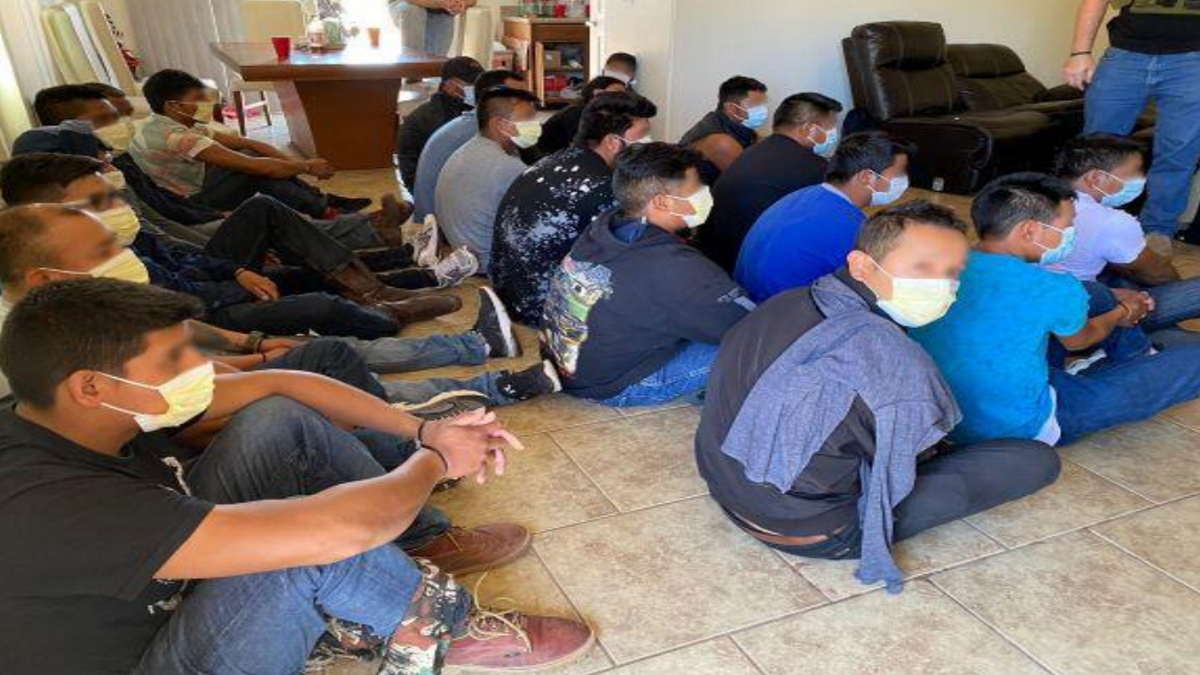
U.S. Border Patrol agents arrested 24 people and seized nearly 2 pounds of fentanyl in a disrupted smuggling operation in Nogales, Arizona, Friday morning.


U.S. Border Patrol agents arrested 24 people and seized nearly 2 pounds of fentanyl in a disrupted smuggling operation in Nogales, Arizona, Friday morning.   

Tucson Sector agents responded to a request for assistance from the Nogales Police Department Friday morning, to identify undocumented passengers involved in a traffic stop.

Agents determined the lawfully admitted permanent resident driver of a Honda sedan was smuggling two Mexican nationals, both illegally present in the country.

All three individuals were arrested.

After agents secured the scene, they learned human smugglers were holding other undocumented people in a nearby house associated with the Honda.

U.S. Immigration and Customs Enforcement’s Homeland Security Investigations special agents, together with Border Patrol agents, visited the residence.

They discovered 21 Mexican nationals inside, all illegally present in the United States. Agents seized nearly 2 pounds of fentanyl also found within the home.

While conducting records checks, agents learned one man in the group had been identified as a “Surenos” street gang member during a previous arrest with immigration officials.

The driver of the Honda was charged with human smuggling, while the gang member will be prosecuted for felony immigration violations.

All others arrested will be processed for immigration violations and expelled from the country under Title 42 authority.   

CBP.gov (June 2020) Traffic Stop Leads to Stash House, Drugs, Gang Member

48th Fighter Wing downed aircraft, pilot found deceased

The aircraft, from the 48th Fighter Wing, RAF Lakenheath, United Kingdom, was on a routine training mission with one pilot on board at the time of the crash. U.K. search and rescue were called to support.


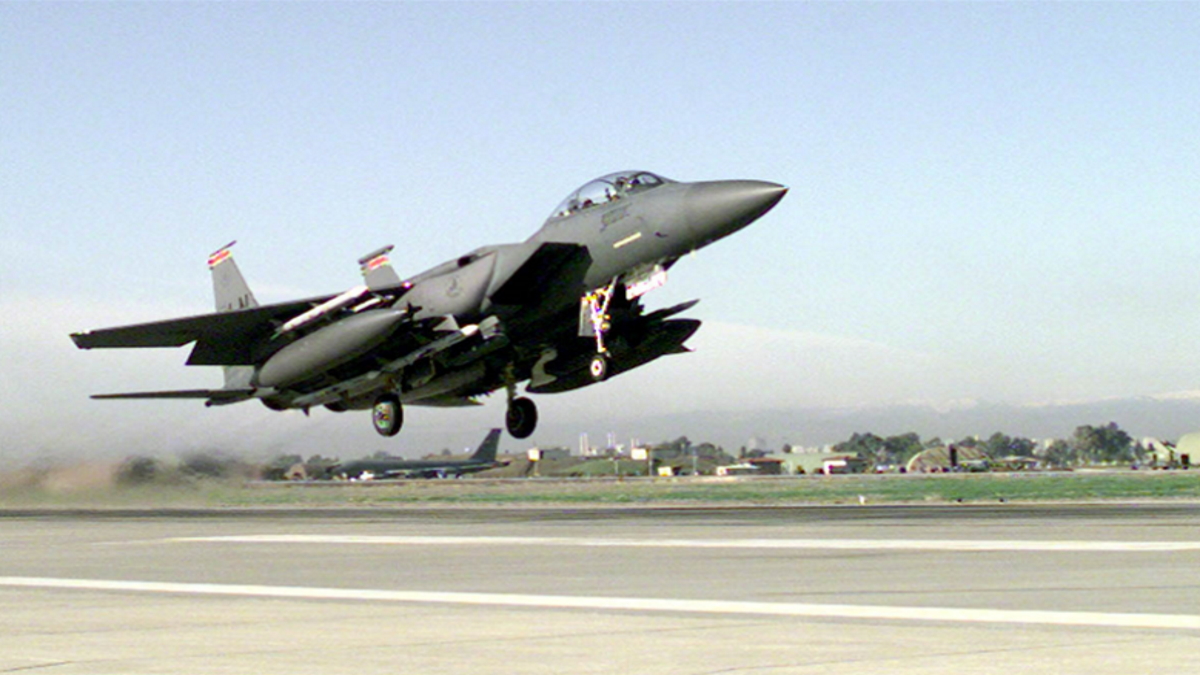
One pilot was killed when their U.S. Air Force F-15C Eagle crashed at approximately 9:40 a.m (BST) June 15, in the North Sea.

The name of the deceased pilot is being withheld until 24 hours after the next of kin have been notified.

The aircraft, from the 48th Fighter Wing, RAF Lakenheath, United Kingdom, was on a routine training mission with one pilot on board at the time of the crash. U.K. search and rescue were called to support.

Earlier, rescuers found the wreckage of the jet that was on a routine training mission from RAF Lakenheath when it crashed at 9:40 a.m. The cause of the crash wasn’t immediately clear. 

Britain’s coast guard located wreckage from the downed fighter, and recovery efforts were underway, the U.S. Air Force said in a statement.

Coast guard officials said in a statement that they received reports the plane went down 74 nautical miles off Flamborough Head on the Yorkshire coast.

(Update) The pilot of the downed F-15C Eagle from the 48th Fighter Wing has been located and confirmed deceased. The name of the pilot will not be released until all next of kin notifications have been made.

This is a tragic loss for the 48th Fighter Wing community, and our deepest condolences go out to the pilot’s family and the 493rd Fighter Squadron.

The cause of the crash remains under investigation.

AF.mil; Lakenheath.af.mil; 11Alive.com (June 2020) 48th Fighter Wing downed aircraft, pilot found deceased; Pilot of US Air Force jet that crashed in North Sea is dead; UPDATE: 48th Fighter Wing downed pilot located

Iran Poses Greatest Threat to Region, Centcom Commander Says

Iran poses the greatest threat to regional security and stability, the commander of U.S. Central Command said.


Iran poses the greatest threat to regional security and stability, the commander of U.S. Central Command said.

Marine Corps Gen. Kenneth F. McKenzie Jr. spoke last week at a Middle East Institute webinar titled, “Centcom and the Shifting Sands of the Middle East.”

McKenzie enumerated various threats from Iran:

  • Funding and arming terrorist organizations;
  • Propping up the “murderous regime” of Syrian President Bashar al-Assad;
  • Providing advanced weapons to the Houthi rebels in Yemen;
  • Direct attack on oil tankers in the Strait of Hormuz;
  • Direct attack on oil refineries in Saudi Arabia; and 
  • Attacking U.S. troops in Iraq. 

“Iran actively stokes instability and is intent on degrading security all over the region,” McKenzie said. “They use proxies and violence to push other nations in the region to their agenda.”

The State Department is leading the effort to pressure Iranian leaders diplomatically and, through sanctions, to make them renounce their nuclear ambitions, cease work on ballistic missiles and cease exporting terrorism against their neighbors, he said, noting that this effort is a whole-of-government approach that includes allies and partners.

The Defense Department’s role regarding Iran is to deter it from taking direct or indirect military actions against the United States and its allies and partners in the region, he said.

McKenzie noted that the Iranians were surprised by the U.S. killing of Iranian Maj. Gen. Qasem Soleimani of Iran’s Islamic Revolutionary Guard Corps in January, and have had to recalculate where their red line is drawn with the United States. “They see we have the will to act,” he said.

Beyond Iran, terrorist organizations such as ISIS and al-Qaida still aspire to attack the United States, its allies and even the U.S. homeland, the general said. Vigorous pressure on them prevents them from doing so, he added.

China and Russia also have become involved in the region, trying to use economic leverage to make their influence felt, the general said. Russia, he added, is propping up Assad, who they see as a valued ally with a warm-water port.

The U.S. response has been to have close relationships with nations in the region, McKenzie said, helping them build up their security forces and encouraging them to purchase U.S. foreign military materiel.

An over-the-horizon threat to coalition and partner forces in the region will most likely come from swarms of small unmanned aerial systems that can carry weapons, McKenzie said, noting that the Army is taking the lead on developing counter-UAS measures.

McKenzie noted that the United States is less dependent on Middle East oil than it ever was, but wants to ensure freedom of navigation for partners and allies. He specifically mentioned the importance of ensuring safe passage through the Red Sea, Strait of Hormuz and the Bab al-Mandab Strait.

NATO.int (June 2020) Iran Poses Greatest Threat to Region, Centcom Commander Says