Trend Micro Research Identifies Critical Industry 4.0 Attack Methods


Trend Micro Incorporated (TYO: 4704; TSE: 4704), a global leader in cybersecurity solutions, today released research describing how advanced hackers could leverage unconventional, new attack vectors to sabotage smart manufacturing environments.

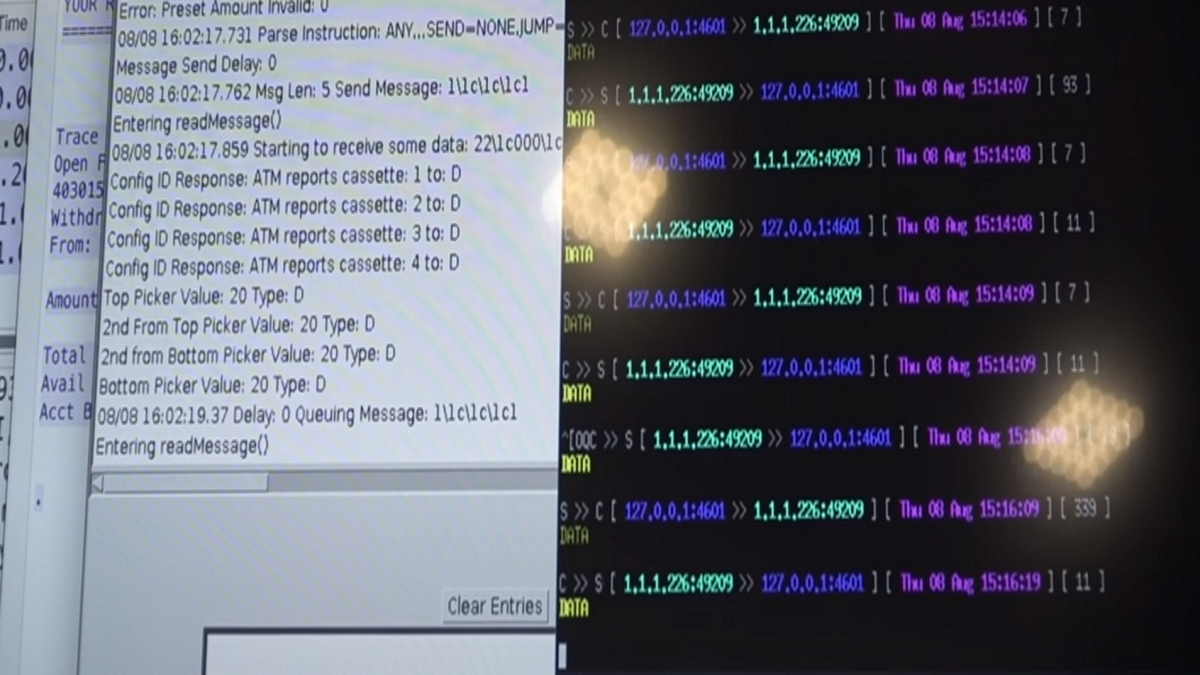
For this report, Trend Micro Research worked with Politecnico di Milano in its Industry 4.0 lab, which houses real manufacturing equipment from industry leaders, to demonstrate how malicious threat actors can exploit existing features and security flaws in Industrial IoT (IIoT) environments for espionage of financial gain.

“Past manufacturing cyber-attacks have used traditional malware that can be stopped by regular network and endpoint protection. However, advanced attackers are likely to develop Operational Technology (OT) specific attacks designed to fly under the radar,” said Bill Malik, vice president of infrastructure strategies for Trend Micro. “As our research shows, there are multiple vectors now exposed to such threats, which could result in major financial and reputational damage for Industry 4.0 businesses. The answer is IIoT-specific security designed to root out sophisticated, targeted threats.”

“Politecnico di Milano is fully committed to supporting Industry 4.0 in addressing crucial aspects related to security and reliability of automated and advanced controls, especially as they gain relevance in all production sectors and increasingly impact business,” said Giacomo Tavola, Contract Professor in Design and Management of Production Systems and Stefano Zanero, Associate professor in Advanced Cybersecurity Topics for Politecnico di Milano.

Critical smart manufacturing equipment relies primarily on proprietary systems, however these machines have the computing power of traditional IT systems. They are capable of much more than the purpose for which they are deployed, and attackers are able to exploit this power. The computers primarily use proprietary languages to communicate, but just like with IT threats, the languages can be used to input malicious code, traverse through the network, or steal confidential information without being detected.

Though smart manufacturing systems are designed and deployed to be isolated, this seclusion is eroding as IT and OT converge. Due to the intended separation, there is a significant amount of trust built into the systems and therefore very few integrity checks to keep malicious activity out.

The systems and machines that could be taken advantage of include the manufacturing execution system (MES), human machine interfaces (HMIs), and customizable IIoT devices. These are potential weak links in the security chain and could be exploited in such a way to damage produced goods, cause malfunctions, or alter workflows to manufacture defective products.

The report offers a detailed set of defense and mitigation measures, including:

  • Deep packet inspection that supports OT protocols to identify anomalous payloads at the network level
  • Integrity checks run regularly on endpoints to identify any altered software components
  • Code-signing on IIoT devices to include dependencies such as third-party libraries
  • Risk analysis to extend beyond physical safety to automation software
  • Full chain of trust for data and software in smart manufacturing environments
  • Detection tools to recognize vulnerable/malicious logic for complex manufacturing machines
  • Sandboxing and privilege separation for software on industrial machines

To find out more and read the full report, please visit: https://www.trendmicro.com/vinfo/us/security/news/internet-of-things/threats-and-consequences-a-security-analysis-of-smart-manufacturing-systems.

Trendmicro.com (May 2020) Trend Micro Research Identifies Critical Industry 4.0 Attack Methods

Georgia AG Requests DOJ to Conduct Investigation into Handling of Ahmaud Arbery Case


On Sunday, Georgia’s Attorney General Chris Carr has formally requested the U.S. Department of Justice, led by U.S. Attorney for the Southern District of Georgia Bobby Christine, to conduct an investigation into the handling of the Ahmaud Arbery case. 

This case involves the deadly shooting Mr. Arbery in Glynn County, Georgia on February 23, 2020 within the Brunswick Judicial Circuit. At the time of Mr. Arbery’s death and up until May 7, 2020, no arrests were made in the case. 

“We are committed to a complete and transparent review of how the Ahmaud Arbery case was handled from the outset,” said Attorney General Chris Carr. “The family, the community and the state of Georgia deserve answers, and we will work with others in law enforcement at the state and federal level to find those answers.”

The request to the U.S. Department of Justice includes, but is not limited to, investigation of the communications and discussions by and between the Office of the District Attorney of the Brunswick Judicial Circuit and the Office of the District Attorney of the Waycross Judicial Circuit related to this case.

On February 27, 2020, the Office of the Attorney General received a request from the Office of the District Attorney of the Brunswick Judicial Circuit to appoint another prosecutor for this case. Pursuant to O.C.G.A. § 15-18-5, this Office appointed the District Attorney for the Waycross Judicial Circuit to prosecute the case on that same date.

At the time of the request by the Brunswick Circuit District Attorney and acceptance by the Waycross Circuit District Attorney, neither revealed to the Office of the Attorney General that the Waycross Circuit District Attorney had already taken a role in the case in reviewing evidence and advising the Glynn County Police Department regarding whether to make arrests in the case.  

On April 7, 2020, the Office of the Attorney General received a request from the Office of the District Attorney for the Waycross Judicial Circuit to appoint another prosecutor for this case.

In that request, the Waycross Circuit District Attorney again did not inform the Office of the Attorney General of his prior involvement in the case before his appointment and specifically described to the Office of the Attorney General the actions that he took “upon taking the case.”

In the request of April 7, 2020, the Waycross Circuit District Attorney indicated that he and the Brunswick Circuit District Attorney learned as of “about 3-4 weeks ago,” that his son who is employed as a prosecutor in the Office of the Brunswick Circuit District Attorney had handled a prior prosecution of Mr. Arbery and that one of the defendants in this case had also served as an investigator on the same prosecution.

The request of April 7, 2020 did not provide any reason for the delay in contacting the Office of the Attorney General to request appointment of a new prosecutor since the discovery of those facts. 

Nor did the request of April 7, 2020, reveal that, on April 2, 2020, the Waycross Circuit District Attorney had provided the Glynn County Police Department with a written opinion that no arrests should be made in the case. In that letter, the Waycross District Attorney also confirmed “an initial opinion the day after the shooting” which would have been February 24, 2020.

At that time, he had not requested, nor was he appointed by the Office of the Attorney General to this case.

On April 13, 2020, the Office of the Attorney General appointed the District Attorney for the Atlantic Judicial Circuit to this case.

On May 5, 2020, the Atlantic Circuit District Attorney requested that the Georgia Bureau of Investigation (GBI) conduct an investigation into the death of Ahmaud Arbery.

The GBI commenced its investigation on May 6, 2020 and made two arrests on May 7, 2020.

The Office of the Attorney General will provide its entire file regarding the appointment process for the prosecutors in this case and provide any assistance requested by the U.S. Department of Justice. 

Law.georgia.gov (May 2020) Carr Requests DOJ to Conduct Investigation into Handling of Ahmaud Arbery Case

Religious Rights Violations in China Worse than Reported


The United States Commission on International Religious Freedom (USCIRF) 2020 report has once again put China as one of the top three countries of “particular concern.”

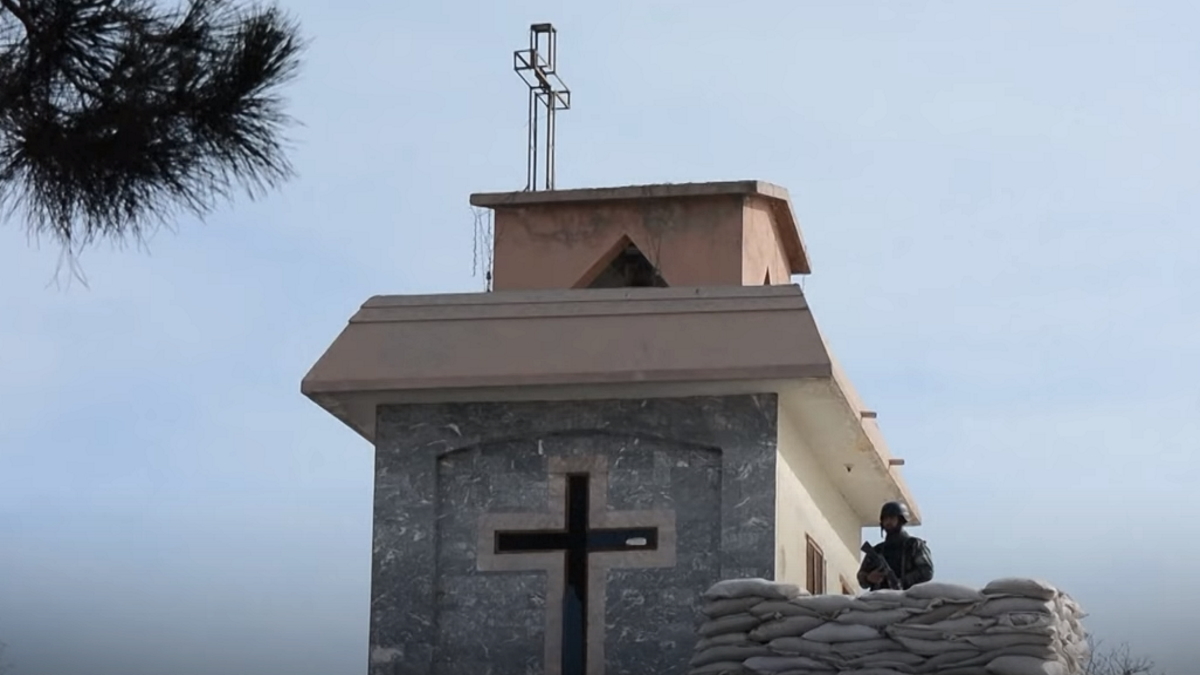
According to UCA News, Chinese Christian leaders echo that the space for religious freedom has severely shrunk in the past two decades, with the communist regime implementing a series of policies aiming to eradicate religion from society.

They also stressed that religious oppression in China is more severe than what is reported.

In provinces all over China, Christian schools, teachers, and business owners are forced to sign documents to reject their religion, or the government will retrieve their pensions. Local authorities had raided or seized hundreds of Christian house churches.

Cross removal continues to take place despite these churches’ official affiliation.

The Chinese Communist Party (CCP) has also charged pastors with subversion of state power, although such sentencing is unconstitutional according to their own laws.

Many Catholic dioceses have been harassed by authorities, clergy are jailed for refusing to join the state-approved Catholic Church. There are also reports that CCP officials are offering cash rewards to incentivize spying and reporting on underground house churches.

While China denies these allegations, Father Thomas Wang told UCA News that China has never responded well to religious persecution accusations, the government either avoids them or evades the question altogether and accuses others of interfering with internal issues.

Maria Li in Guangdong also said China is no longer worried about international pressure and condemnation, as they have bribed small countries and organizations to defend China.

However, she hopes that the international community will not overlook China’s violations on religious freedom and human rights. “If more countries unite and put pressure on China, authorities will desist from blatant oppression, which will help the Church to breathe,” she said.

For interviews, please contact Olivia Miller, Communications at Coordinator: press@persecution.org

Persecution.org (May 2020) Religious Rights Violations in China Worse than Reported

CBP Officers in Cincinnati Seize Disinfecting Wipes Containing 4Lbs of Marijuana


As the Coronavirus continues to affect people’s lives, more and more people are purchasing cleaning supplies online. However, smugglers are using this pandemic to conceal nefarious activities. U.S. Customs and Border Protection (CBP) officers in Cincinnati seized a shipment of disinfecting wipes that contained a little bit more than what you can find on your store shelf.

Cell Phones and Accessories

On May 6, 2020 CBP Officers inspected a shipment arriving from Canada and heading to a doctor in Barbados. Officers held the package for inspection based on their experience, x-ray anomalies and a drug detector canine alerted to the parcel. Inside officers found disinfecting wipe canisters and other cleaning products.

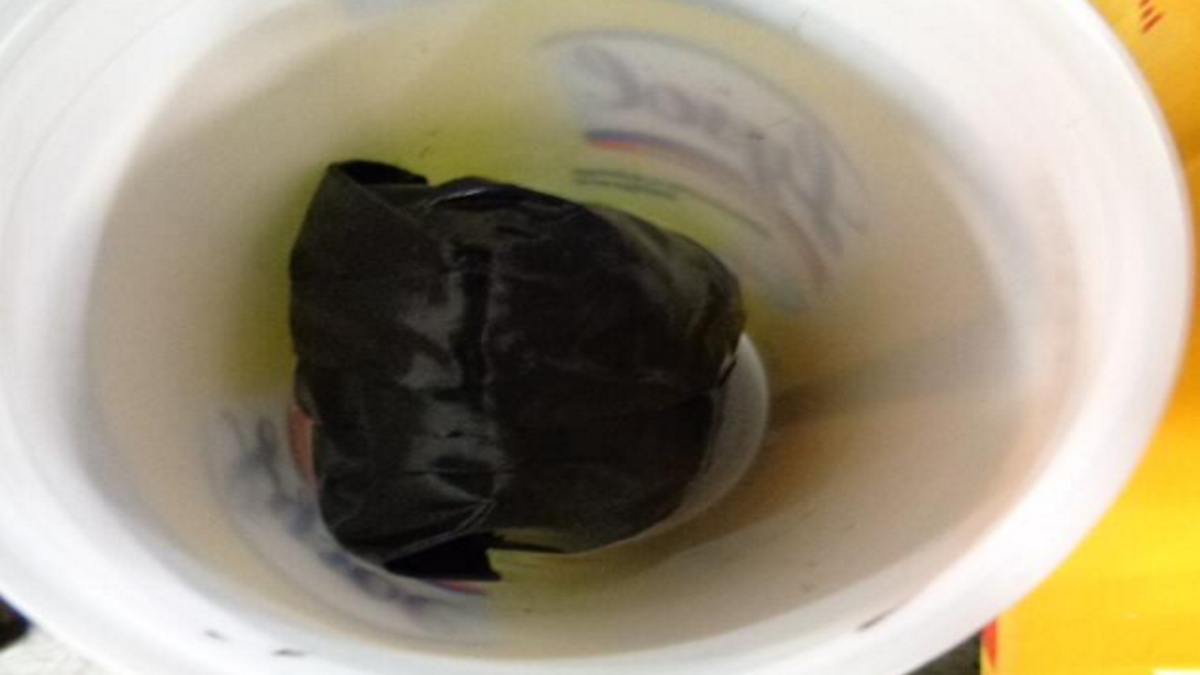
However, inside those canisters and other packages was four pounds of Marijuana.

“The dedication and vigilance of our officers at our express consignment facilities continues to prevent a substantial amount of drugs from reaching their destination,” said Richard Gillespie, Port Director, Cincinnati. “This is another excellent example of what U.S. Customs and Border Protection does each and every day.”

CBP officers screen international travelers and cargo and search for illicit narcotics, unreported currency, weapons, counterfeit consumer goods, prohibited agriculture, and other illicit products that could potentially harm the American public, U.S. businesses, and our nation’s safety and economic vitality. 

CBP seized an average of 3,707 pounds of illicit narcotics every day during 2019 across the United States. Learn about what CBP accomplished during “A Typical Day” in 2019.

CBP.gov (May 2020) CBP Officers in Cincinnati Seize Disinfecting Wipes Containing 4Lbs of Marijuana

CBP officers seize counterfeit televisions at International Falls Port of Entry


U.S. Customs and Border Protection (CBP) Office of Field Operations officers at the International Falls, Minnesota, Port of Entry targeted a rail container destined to arrive in Ranier.  

CBP officers inspected the rail container and discovered televisions in violation of intellectual property rights (IPR) regulations.  CBP seized 440 televisions with an estimated manufacturer’s suggested retail price of $175,560 if the goods had been genuine.  

“CBP is focused on identifying and intercepting counterfeit merchandise and products. The enforcement of trade laws at U.S. ports of entry remains a high priority for us,” said Anthony Jackson, International Falls Port Director. “Counterfeiting adversely affects the ability of lawful copyright holders to profit from their original ideas. Counterfeiting also harms consumers because manufacturers of forged products have little motivation to use safe, high-quality materials in their products.”

Stopping the flow of illicit goods is a priority trade issue for CBP. The importation of counterfeit merchandise can damage the U.S. economy and threaten the health and safety of the American people. For more information on CBP’s IPR priority trade issue visit: CBP Trade and IPR.

With the growth of foreign trade, unscrupulous companies have profited billions of dollars from the sale of counterfeit and pirated goods.

To combat the illicit trade of merchandise violating laws relating to IPR, trademark and copyright holders may register with CBP through an online system. Such registration assists CBP officers and import specialists in identifying merchandise that violates U.S. law.

CBP’s IPR enforcement strategy is multi-layered and includes seizing illegal merchandise at our borders, pushing the border “outward” through audits of suspect importers, cooperating with our international trading partners, and collaborating with industry and governmental agencies to enhance these efforts.

CBP has established an educational initiative at U.S. international airports and online to raise consumer awareness about the consequences and dangers that can be associated with the purchase of counterfeit and pirated goods.

These include the loss of American jobs, support of criminal activity, significant risks to consumer health and safety, and the impacts of unknowingly purchasing counterfeits online.  For more information, see www.cbp.gov/fakegoodsrealdangers.

If you have any information regarding suspected fraud or illegal trade activity, please contact CBP through the e-Allegations Online Trade Violation Reporting System or by calling 1-800-BE-ALERT. 

IPR violations can also be reported to the National Intellectual Property Rights Coordination Center at https://www.iprcenter.gov/referral/ or by telephone at 1-866-IPR-2060.

CBP.gov (May 2020) CBP officers seize counterfeit televisions at International Falls Port of Entry