Christian Village Suffers Eighth Attack in Three Years

Fulani Militants Kill 10 Christians in Two Villages


Fulani Militants Kill 10 Christians in Two Villages

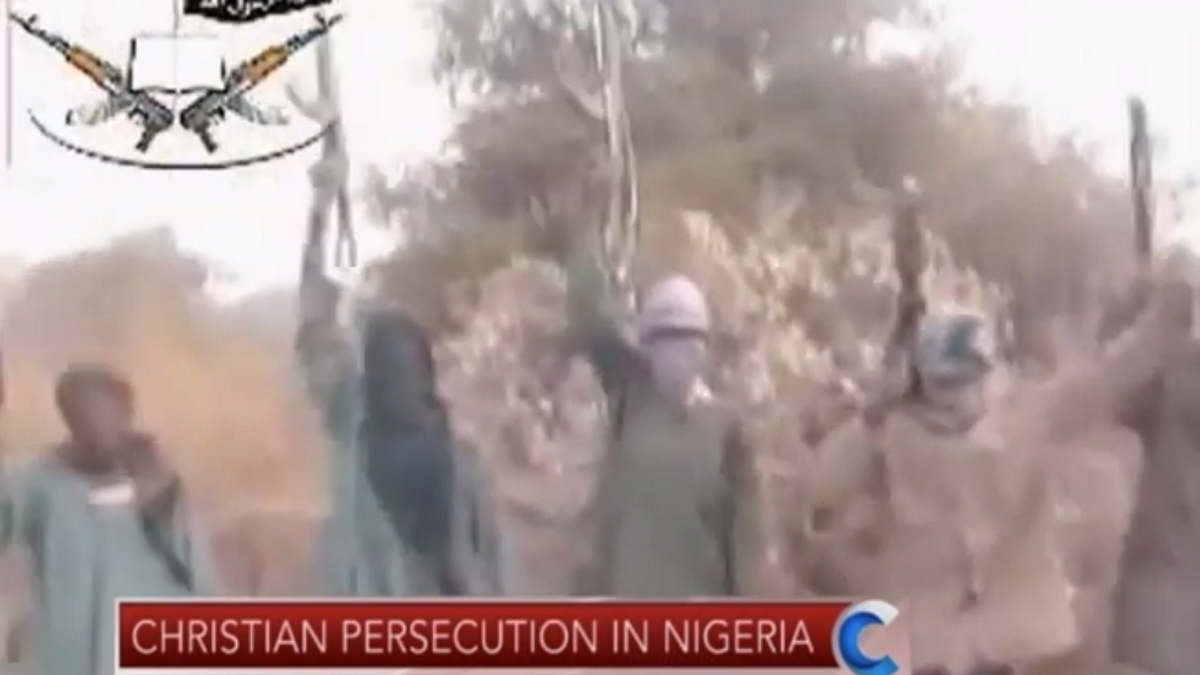
The International Christian Concern (ICC) has announced on Friday that they have learned that on Tuesday evening, March 31, despite serious concerns and restrictive measures to stall the COVID-19 pandemic, Fulani militants continued to move freely and attacked two Christian villages in Miango District, Nigeria. This is the eighth time in the last three years that Ancha village has suffered at the hands of these militants.

Narrating the heartbreaking incident, Ishaya, a member of the village’s Baptist church, said, “They came at about 11:00 p.m. (on March 31), firing gunshots and burning houses! It was so dreadful! They killed three persons and also burnt four cars (in Ancha).”

Ishaya further disclosed that the militants proceeded to launch an attack on Hukke, the neighboring village, on Wednesday, April 1. During this attack, seven people were killed and approximately 30 homes were burned down over a span of two days.

“We are in great distress here,” Ishaya lamented. Those killed in Ancha village were a pregnant member of the Baptist church named Tina Musa (33), another member of the Baptist church, Gado Bhata (57), and a member of the Methodist church, William Rivi (65).

An injured victim of the Ancha village attack, Danlami Gado, who was admitted to Bingham University Teaching Hospital in Jos, recalled, “I was in the house. When we heard gunshots, we came out, not knowing that the attackers were already in the village. They fired shots at me and three bullets hit me on my left leg, shattering the bones.  After they disappeared, I kept yelling out for help. Some persons eventually heard and came. They picked me up on a motorbike, riding through the bush until we got to a hospital in Miango.” Danlami’s injury was complicated, so he was referred to a hospital with the appropriate specialists.

He has been scheduled for immediate surgery.

A local pastor, Yakubu Kpasa of ECWA Church, grieved over the murder of three of his church members, “They came on Wednesday, April 1, at about 8:00 p.m., and returned the next day, April 2, at about 5:00 p.m. They killed three by gunshots and destroyed our church building. They also burnt several houses.” Pastor Yakubu said the gunmen came in large numbers. The entire village has been deserted and he and his family are taking refuge in another village.

In a 2017 attack on Ancha village, the militants killed 20 people, all but one of whom were members of the Baptist church. During an attack on nearby Nkiedonwro village, 28 people ran to hide in a primary school classroom while military personnel engaged the attackers. The villagers were then killed by the militants when the military was overpowered.

Nathan Johnson, ICC’s Regional Manager for Africa said, “I have personally prayed with this village over the mass grave of the 20 killed in 2017. To see attacks continuing almost three years later in the same village is infuriating. The government’s complete incompetency is causing many Christians to lose their lives needlessly. It is time that this administration begins to take the deaths of thousands seriously and stop claiming that there are no issues. They are now responsible for every death that takes place in Ancha village.”

For interviews, please contact Olivia Miller, Communications Coordinator: press@persecution.org

Persecution.org (April 2020) Christian Village Suffers Eighth Attack in Three Years

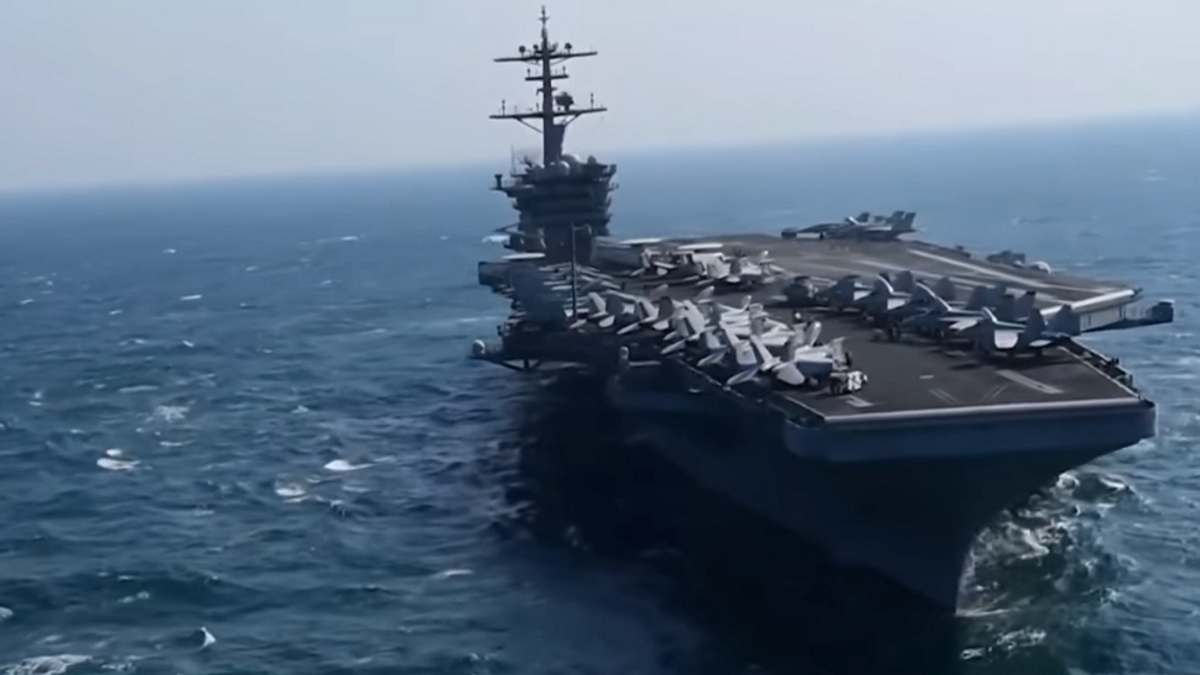
Statement from SECNAV on Relief of CO aboard USS Theodore Roosevelt (CVN 71)


A short time ago, the Acting Secretary of the Navy, Thomas B. Modly, released the following statements regarding the relief of the Commanding Officer of USS Theodore Roosevelt.

Acting Secretary of the Navy, Thomas B. Modly:

I am here today to inform you that today at my direction, the Commanding Officer of the USS Theodore Roosevelt, Captain Crozier, was relieved of command by the Carrier Strike Group Commander, Rear Admiral Stuart Baker.

The Executive Officer, Captain Dan Keeler, has assumed command temporarily until such time as Rear Admiral Select Carlos Sardiello arrives in Guam to assume command. Rear Admiral Select Sardiello is the former commanding officer of the Theodore Roosevelt so he is extremely well-acquainted with the ship, many members of its crew and the operations and capabilities of the ship itself. He is the best person in the Navy right now to take command under these circumstances.

As Secretary of the Navy, I could not be more proud of our men and women serving as part of the Navy and Marine Corps team. I can assure you that no one cares more than I do about their safety and welfare. I myself have a son in uniform, who is currently serving right now on active duty in Korea—one of the first nations in the world to have a significant spike in Coronavirus cases. I understand, both as a parent and a veteran, how critical our support lines are for the health and well-being of our people, especially now in the midst of a global pandemic.

But there is a larger strategic context, one full of national security imperatives, of which all our commanders must all be aware today. While we may not be at war in a traditional sense, neither are we truly at peace. Authoritarian regimes are on the rise. Many nations are reaching, in many ways, to reduce our capacity to accomplish our national goals. This is actively happening every day. It has been a long time since the Navy and Marine Corps team has faced this broad array of capable global strategic challengers. A more agile and resilient mentality is necessary, up and down the chain of command.

Perhaps more so than in the recent past, we require commanders with the judgment, maturity, and leadership composure under pressure to understand the ramifications of their actions within that larger dynamic strategic context. We all understand and cherish our responsibilities, and frankly our love, for all of our people in uniform, but to allow those emotions to color our judgment when communicating the current operational picture can, at best, create unnecessary confusion, and at worst, provide an incomplete picture of American combat readiness to our adversaries.

When the Commanding Officer of the USS THEODORE ROOSEVELT decided to write his letter of 30 March 2020 that outlined his concerns for his crew in the midst of a COVID-19 outbreak, the Department of the Navy had already mobilized significant resources for days in response to his previous requests. On the same date marked on his letter, my Chief of Staff had called the CO directly, at my request, to ensure he had all the resources necessary for the health and safety of his crew.

The CO told my Chief of Staff that he was receiving those resources, and was fully aware of the Navy’s response, only asking that the he wished the crew could be evacuated faster. My Chief of Staff ensured that the CO knew that he had an open line to me to use at any time. He even called the CO again a day later to follow up. At no time did the CO relay the various levels of alarm that I, along with the rest of the world, learned from his letter when it was published two days later.

Once I read the letter, I immediately called the Chief of Naval Operations, ADM Gilday, and the Commander, U.S. Pacific Fleet, ADM Aquilino. ADM Gilday had just read the letter that morning as well, and ADM Aquilino had it the day before. We had a teleconference within minutes of my reading of that article, including the Commander, SEVENTH Fleet, VADM William Merz, ADM Aquilino, ADM Gilday, the Department of the Navy’s Surgeon General, RADM Bruce Gillingham, and others. That evening, we held another teleconference with the entire chain of command.

The next day, I spoke with the CO of the THEODORE ROOSEVELT myself, and this morning, I have spoken to the TR’s Carrier Strike Group Commander, RDML Stuart Baker. RDML Baker did not know about the letter before it was sent to him via email by the CO. It is important to understand that the Strike Group Commander, the CO’s immediate boss, is embarked on the Theodore Roosevelt, right down the passageway from him. The letter was sent over non- secure, unclassified email even though that ship possesses some of the most sophisticated communications and encryption equipment in the Fleet.

It was sent outside the chain of command, at the same time the rest of the Navy was fully responding. Worse, the Captain’s actions made his Sailors, their families, and many in the public believe that his letter was the only reason help from our larger Navy family was forthcoming, which was hardly the case.

Command is a sacred trust that must be continually earned, both from the Sailors and Marines one leads, and from the institution which grants that special, honored privilege.

As I learned more about the events of the past week on board USS THEODORE ROOSEVELT (CVN-71), including my personal conversations with the Strike Group Commander, Commander, SEVENTH Fleet, Commander, U.S. Pacific Fleet, the Chief of Naval Operations, and CAPT Crozier himself, I could reach no other conclusion than that Captain Crozier had allowed the complexity of his challenge with COVID breakout on the ship to overwhelm his ability to act professionally, when acting professionally was what was needed most. We do, and we should, expect more from the Commanding Officers of our aircraft carriers.

I did not come to this decision lightly. I have no doubt in my mind that Captain Crozier did what he thought was in the best interests of the safety and well-being of his crew. Unfortunately, it did the opposite. It unnecessarily raised alarms with the families of our Sailors and Marines with no plan to address those concerns. It raised concerns about the operational capabilities and operational security of the ship that could have emboldened our adversaries to seek advantage, and it undermined the chain of command who had been moving and adjusting as rapidly as possible to get him the help he needed.

For these reasons, I lost confidence in his ability to lead that warship as it continues to fight through this virus, get the crew healthy, so that it can continue to meet its national security requirements. In my judgement relieving him of command was in the best interests of the United States Navy and the nation in this time when the nation needs the Navy to be strong and confident in the face of adversity. The responsibility for this decision rests with me. I expect no congratulations for it, and it gives me no pleasure in making it. CAPT Crozier is an honorable man, who despite this uncharacteristic lapse of judgment, has dedicated himself throughout a lifetime of incredible service to our nation.

Pursuant to this action, and with my full support, the Chief of Naval Operations Admiral Gilday has directed the Vice Chief of Naval Operations, Admiral Robert Burke, to conduct an investigation into the circumstances and climate of the entire Pacific Fleet to help determine what may have contributed to this breakdown in the chain of command. We must ensure we can count on the right judgment, professionalism, composure, and leadership from our Commanding Officers everywhere on our Navy and Marine Corps team, but especially in the Western Pacific. I have no indication that there is a broader problem in this regard, but we have obligation to calmly and evenly investigate that nonetheless.

To our Commanding Officers, it would be a mistake to view this decision as somehow not supportive of your duty to report problems, request help, protect your crews, and challenge assumptions as you see fit.

This decision is not one of retribution. It is about confidence. It is not an indictment of character, but rather of judgement. While I do take issue with the validity of some of the points in Captain Crozier’s letter, he was absolutely correct in raising them.

It was the way in which he did this, by not working through and with his Strike Group Commander to develop a strategy to resolve the problems he raised, by not sending the letter to and through his chain of command, by not protecting the sensitive nature of the information contained within the letter appropriately, and lastly by not reaching out to me directly to voice is concerns, after that avenue had been provided to him through my team, that was unacceptable.

Let me be clear, you all have a duty to be transparent with your respective chains of command, even if you fear they might disagree with you. This duty requires courage, but it also requires respect for that chain of command, and for the sensitivity of the information you decide to share and the manner you choose to share it.

Finally, and perhaps most importantly, I would like to send a message to the crew of the Theodore Roosevelt and their families back here at home. I am entirely convinced that your Commanding Officer loves you, and that he had you at the center of his heart and mind in every decision that he has made. I also know that you have great affection, and love, for him as well. But it is my responsibility to ensure that his love and concern for you is matched, if not exceeded by, his sober and professional judgement under pressure.

You deserve that throughout all the dangerous activities for which you train so diligently, but most importantly, for those situations which are unpredictable and are hard to plan for. It’s important because you are the TR, you are the Big Stick, and what happens onboard the TR matters far beyond the physical limits of your hull. Your shipmates across the fleet need for you to be strong and ready—and most especially right now they need you to be courageous in the face of adversity.

The nation needs to know that the Big Stick is undaunted, unstoppable —and that you will stay that way as we as a Navy helps you through this COVID-19 challenge. Our adversaries need to know this as well. They respect and fear the Big Stick, and they should. We will not allow anything to diminish that respect and fear as you, and the rest of our nation, fights through this virus. As I stated, we are not at war by traditional measures, but neither are we at peace. The nation you defend is in a fight right now for our economic, personal and political security, and you are on the front lines of this fight in many ways.

You can offer comfort to your fellow citizens who are struggling and fearful here at home by standing the watch, and working your way through this pandemic with courage and optimism and set the example for the nation.

We have an obligation to ensure you have everything you need as fast as we can get it there, and you have my commitment that we will not let you down.

The nation you have sworn to defend is in a fight, and the nations and bad actors around the world who wish us harm should understand that the Big Stick is in the neighborhood and that her crew is standing the watch.

Navy.mil (April 2020) Statement from SECNAV on Relief of CO aboard USS Theodore Roosevelt (CVN 71)

Georgia Man Pleads Guilty to Attempting to Attack the White House with Explosives


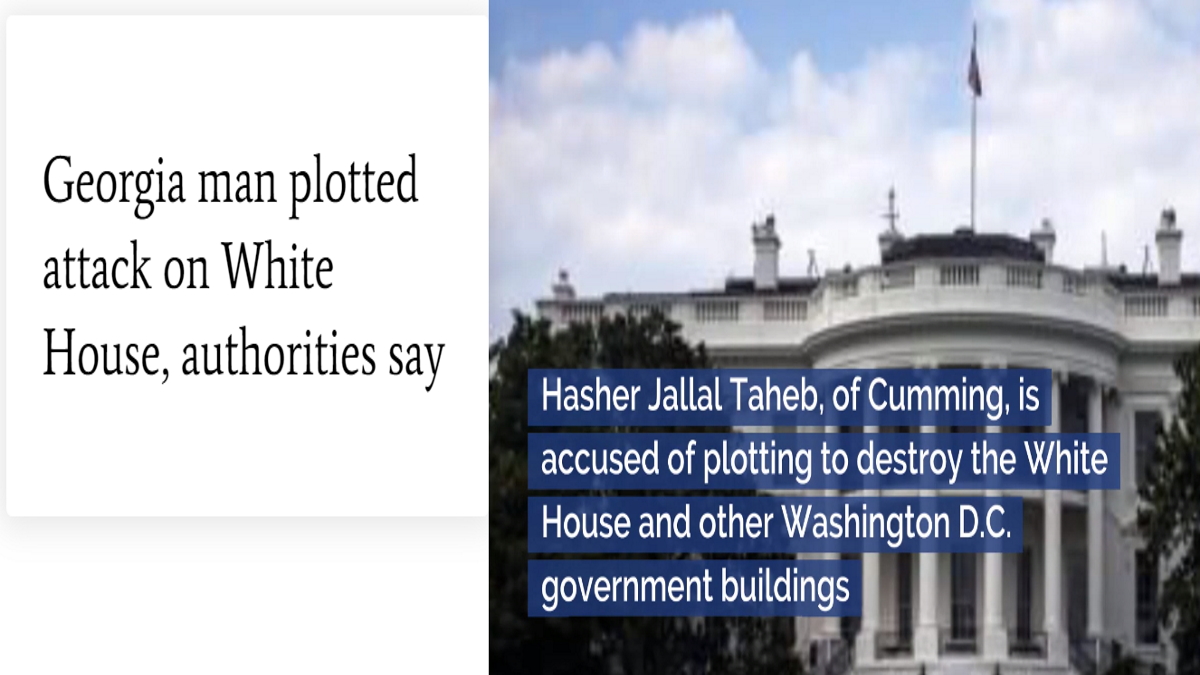
On Wednesday, Hasher Jallal Taheb, 23, of Cumming, Georgia, has plead guilty to a charge of attempting to destroy, by fire or an explosive, a building owned by or leased to the United States. Taleb had planned an attack on the White House using weapons and explosives.  As part of the plea agreement, the defendant and the government agreed that the defendant should receive a 15-year sentence of imprisonment.

“Taheb planned to conduct a terrorist attack on the White House as part of what he claimed was his obligation to engage in jihad,” said Assistant Attorney General for National Security John C. Demers.  “And that was just one of the iconic American landmarks he wanted to target.  Thanks to a tip from a member of the community and the work of the agents, analysts, and prosecutors responsible for this case, the threat posed by the defendant was neutralized and the defendant has admitted his guilt and will now be held accountable for his crime.”

“Taheb hatched a dangerous plan that would have resulted in unimaginable injury,” said Byung J. “BJay” Pak, U.S. Attorney for the Northern District of Georgia.  “We are grateful to community members who noticed his dangerous evolution and alerted law enforcement.  Along with our federal, state and local partners, we will remain vigilant in order to disrupt these types of attacks before they happen.”

“This plea is the result of a more than year-long intensive investigation by FBI Atlanta’s Joint Terrorism Task Force, which was because of a tip from the community,” said Chris Hacker, Special Agent in Charge of FBI Atlanta.  “Our citizens are our most important weapons in fighting terrorism, our eyes and ears in our communities, and why we say to please contact law enforcement if you see or hear something suspicious.”

According to U.S. Attorney Pak, the charges and other information presented in court: In March 2018, a member of the Atlanta community reported concerns about Taheb to a local law enforcement agency, which then contacted the FBI.  The community member specifically alerted law enforcement that Taheb had become radicalized and was making plans to travel abroad.

During an undercover operation conducted by the FBI, federal investigators learned in October 2018 that Taheb planned to travel overseas and that he had applied for a United States passport in July 2018.  The FBI also learned that Taheb had begun planning domestic attacks in the United States as part of his desire to engage in “jihad.”  His targets initially included the White House and the Statue of Liberty.  Later, in December 2018, Taheb broadened his prospective targets in the Washington, D.C. area, to include the Washington Monument, the White House, the Lincoln Memorial, and a synagogue.

During undercover meetings with Taheb in January 2019, he produced sketches of the White House and described the types of weapons and explosives he wished to use in the attack, including semi-automatic weapons, improvised explosive devices, an anti-tank weapon, and hand grenades.  

FBI special agents arrested Taheb on Jan. 16, 2019, after he arrived at a pre-arranged location where he expected to obtain semi-automatic assault rifles, explosive devices, and an anti-tank weapon. 

Sentencing for Taheb is scheduled for June 23, 2020, at 9:30 a.m. before U.S. District Judge Mark H. Cohen.

The Federal Bureau of Investigation’s Joint Terrorism Task Force, which includes the U.S. Secret Service, investigated this case.  The Forsyth County Sheriff Office and Gwinnett County Police Department also provided assistance.

Assistant U.S. Attorneys Ryan K. Buchanan and Matthew Carrico and Trial Attorneys Danielle Rosborough and B. Celeste Corlett of the National Security Division’s Counter-terrorism Section are prosecuting the case.

Justice.gov (April 2020) Georgia Man Pleads Guilty to Attempting to Attack the White House with Explosives

U.S. Attorney David C. Joseph Launches Federal Task Force to Investigate and Prosecute COVID-19 Fraud and Hoarding of Critical Medical Supplies


In response to the evidence that fraud schemes are being developed around the country to exploit the coronavirus epidemic, U.S. Attorney David C. Joseph announced today that he has formed a task force in the Western District of Louisiana to identify, investigate, prosecute, and dismantle fraud schemes designed to unlawfully profit from the COVID-19 pandemic. 

The Western District of Louisiana’s COVID-19 Fraud Task Force (Task Force) brings together multiple federal investigative agencies under the leadership of the U.S. Attorney’s Office to share and receive intelligence related to the scams being perpetrated on-line and in-person by individuals seeking to exploit the evolving public health crisis.

The Task Force will then marshal the collective investigative power of our federal law enforcement agencies by forming joint investigative teams to work with prosecutors from the U.S. Attorney’s Office. 

The Task Force will be led by the U.S. Attorney’s Office COVID-19 Fraud Coordinator, Assistant U.S. Attorney Seth D. Reeg. The Task Force members include representatives from the United States Attorney’s Office, FBI, U.S. Department of Homeland Security – Office of Inspector General,  U.S. Food and Drug Administration – Criminal Investigations, U.S. Department of Homeland Security Investigations/ Immigration and Customs Enforcement, U.S. Department of Veteran’s Administration – Office of Inspector General, United States Secret Service, U.S. Postal Inspection Service, U.S. Department of Health and Human Services – Office of Inspector General, U.S. Customs and Border Protection, Federal Trade Commission, and the Small Business Administration – Office of Inspector General.

“The public should know that my office remains fully operational during the COVID-19 pandemic and will be focusing on those who seek to unlawfully exploit others during this difficult time,” said U.S. Attorney Joseph. “The last thing our community needs as we come together to fight this pandemic are certain individuals among us preying upon the fears of others for financial gain.  Through the formation of this Task Force, federal prosecutors from my office will collaborate on a daily basis with investigators to identify, investigate, and aggressively prosecute those attempting to profit from this emergency.  I want to thank all of the agencies and federal agents that are joining us in this effort – each of which brings considerable expertise to the fight.”

The Task Force will review and investigate all credible leads of fraud associated with the coronavirus pandemic, focusing on those hoarding or price-gouging critical medical supplies and schemes designed to exploit vulnerable populations, including the elderly and those who may be more susceptible to the disease due to pre-existing health conditions. The Task Force will also prioritize schemes that have the potential to endanger public health and safety. AUSA Reeg will meet and confer with agency counterparts on a regular basis to prioritize cases and surge resources where needed.

Some examples of COVID-19 scams include:

  • Unlawful Hoarding and Price-Gouging: The Department of Health and Human Services (HHS) has designated certain health and medical resources necessary to respond to the COVID-19 pandemic as “scarce,” including respirator masks, ventilators, and other medical protective equipment. These designated materials are subject to the hoarding prevention measures that trigger both criminal and civil remedies. Yesterday, U.S. Attorney Joseph sent a letter to area hospitals and medical providers requesting information regarding any known hoarding or price-gouging of critical medical supplies.
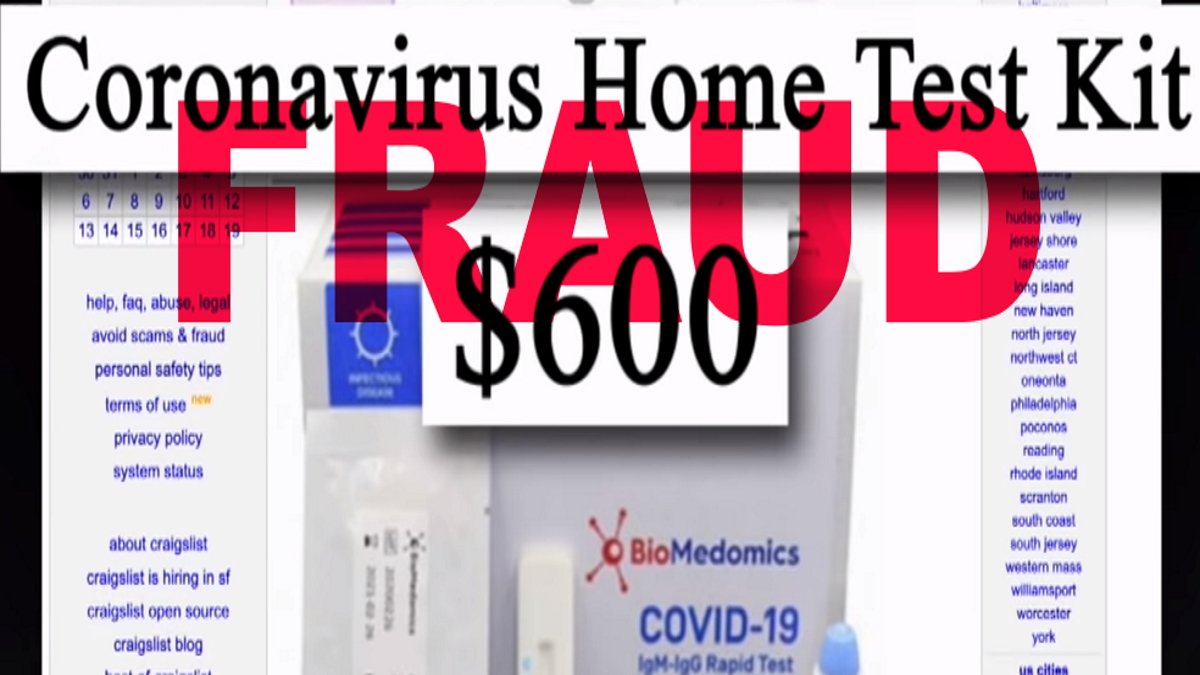
  • Testing Scams: Scammers are selling fake at-home test kits or going door-to-door performing fake tests for money.
  • Treatment Scams: Scammers are offering to sell fake cures, vaccines, and advice on unproven treatments for COVID-19.
  • Supply Scams: Scammers are creating fake shops, websites, social media accounts, and email addresses claiming to sell medical supplies currently in high demand, such as surgical masks. When consumers attempt to purchase supplies through these channels, fraudsters pocket the money and never provide the promised supplies.
  • Provider Scams: Scammers are also contacting people by phone and email, pretending to be doctors and hospitals that have treated a friend or relative for COVID-19, and demanding payment for that treatment.
  • Charity Scams: Scammers are soliciting donations for individuals, groups, and areas affected by COVID-19.
  • Phishing Scams and Cyber Intrusions: Scammers posing as national and global health authorities, including the World Health Organization (WHO) and the Centers for Disease Control and Prevention (CDC), are sending phishing emails designed to trick recipients into clicking on a link or opening an attachment that downloads malware, or providing personal identifying financial information. One form of malware being spread contains an interactive online map of coronavirus-infected areas purportedly produced by Johns Hopkins University. Once someone downloads this interactive map, the malware steals the user’s credentials, such as usernames, credit card numbers, passwords, and other sensitive information usually stored in internet browsers.
  • App Scams: Scammers are also creating and manipulating mobile apps designed to track the spread of COVID-19 to insert malware that will compromise users’ devices and personal information.
  • Investment Scams: Scammers are offering online promotions on various platforms, including social media, claiming that the products or services of publicly traded companies can prevent, detect, or cure COVID-19, and that the stock of these companies will dramatically increase in value as a result. These promotions are often styled as “research reports,” make predictions of a specific “target price,” and relate to microcap stocks, or low-priced stocks issued by the smallest of companies with limited publicly available information.
  • $1,000 Check Scams: Scammers are contacting people over email and are telling them that their $1,000 check, as part of the stimulus package responding to COVID-19, is already waiting for them and that all they need to do is to provide personal information, such as bank account numbers and Social Security Numbers, which are the key pieces of information needed to perpetrate identity theft.
  • Other scams include fraudsters claiming to work for the government or banks/credit cards and offering assistance for student loan relief, foreclosure or eviction relief, unemployment assistance, debt relief, and direct financial assistance, like government checks.

U.S. Attorney Joseph urges everyone, especially those most at risk of serious illness, to avoid these and similar scams by taking the following steps:

  • Independently verify the identity of any company, charity, or individual that contacts you regarding COVID-19.
  • Check the websites and email addresses offering information, products, or services related to COVID-19. Be aware that scammers often employ addresses that differ only slightly from those belonging to the entities they are impersonating. For example, they might use “cdc.com” or “cdc.org” instead of “cdc.gov.”
  • Be wary of unsolicited emails offering information, supplies, or treatment for COVID-19 or requesting your personal information for medical purposes. Legitimate health authorities will not contact the general public this way.
  • Do not click on links or open email attachments from unknown or unverified sources. Doing so could download a virus onto your computer or device.
  • Make sure the anti-malware and anti-virus software on your computer is operating and up to date.
  • Ignore offers for a COVID-19 vaccine, cure, or treatment. Remember, if there is a medical breakthrough, you won’t hear about it for the first time through an email, online ad, or unsolicited sales pitch.
  • Check online reviews of any company offering COVID-19 products or supplies. Avoid companies whose customers have complained about not receiving items.
  • Research any charities or crowdfunding sites soliciting donations in connection with COVID- 19 before giving. Remember, an organization may not be legitimate even if it uses words like “CDC” or “government” in its name or has reputable looking seals or logos on its materials. For online resources on donating wisely, visit the Federal Trade Commission (FTC) website.
  • Be wary of any business, charity, or individual requesting payments or donations in cash, by wire transfer, gift card, or through the mail. Don’t send money through any of these channels.
  • Be cautious of “investment opportunities” tied to COVID-19, especially those based on claims that a small company’s products or services can help stop the virus. If you decide to invest, carefully research the investment beforehand. For information on how to avoid investment fraud, visit the U.S. Securities and Exchange Commission (SEC) website.
  • For the most up-to-date information on COVID-19, visit the Centers for Disease Control and Prevention (CDC) and World Health Organization (WHO) websites.

Leaders from the federal law enforcement agencies participating in the Task Force provided the following comments in support of the mission:

“Even through a worldwide pandemic, the FBI remains steadfast in our mission to protect the American people and uphold the Constitution,” said Special Agent in Charge Bryan A. Vorndran of the FBI New Orleans Field Office. “Special Agents and Analysts of the WDLA COVID-19 Task Force are committed to investigating all forms of COVID-19 fraud committed on Louisiana residents. Any company or individual who attempts to defraud our residents and steal their money during this national crisis will be investigated and brought to justice.”

Soffe Men’s 3 Pack-USA Poly Cotton Military Tee

According to Joseph Cuffari, PhD., Inspector General, Department of Homeland Security, “The theft of FEMA funds resulting from COVID-19 schemes or false claims result in losses not only to the U.S. Taxpayer, but also to the actual victims who needed those funds to recover. Working with the U.S. Attorney’s Office, the Department of Homeland Security’s Office of Inspector General will continue our commitment to identify and aggressively investigate allegations of fraud. Theft of funds from DHS programs intended to help those in need will not be tolerated.”

“The FDA is fully committed to working with our federal partners to protect Americans from fraudulent and potentially dangerous medical products being marketed and distributed to Americans for the treatment or diagnosis of COVID-19. We will continue to take appropriate action to protect consumers from bad actors who take advantage of a crisis and place profits ahead of the public health,” said Judith A. McMeekin, Pharm.D., Associate Commissioner for Regulatory Affairs, U.S. Food and Drug Administration.

“Our HSI agents are deeply committed to the safety of the American public, whether it’s investigating and dismantling human trafficking operations or ensuring our medical communities are receiving legitimate medical equipment and supplies to combat the spread of Covid-19,” said New Orleans Special Agent in Charge Jere T. Miles. “Those who would use this pandemic to defraud their neighbors, friends, and communities for their own financial gain – we will be looking for you and we will find you.”

“The VA Office of Inspector General is dedicated to preserving the integrity of the public funds and medical resources intended to treat all veterans, including those impacted by COVID-19, and is pleased to join the U.S. Attorney’s Office and other federal law enforcement agencies in establishing this partnership.” – James Ross, Special Agent in Charge, VA Office of Inspector General, South Central Field Office.

If you believe you have been a target or victim of a scam or fraud or have knowledge of any hoarding or price-gouging of critical medical supplies, you can report it without leaving your home, to the National Center for Disaster Fraud Hotline at 1-866-720-5721 or via email at www.disaster@leo.gov.

The Western District of Louisiana Coronavirus Fraud Coordinator, AUSA Seth Reeg, can be reached at: (318) 676-3600.

Justice.gov (March 2020) U.S. Attorney David C. Joseph Launches Federal Task Force to Investigate and Prosecute COVID-19 Fraud and Hoarding of Critical Medical Supplies