US Issues an Advisory on North Korean Cyber Threats

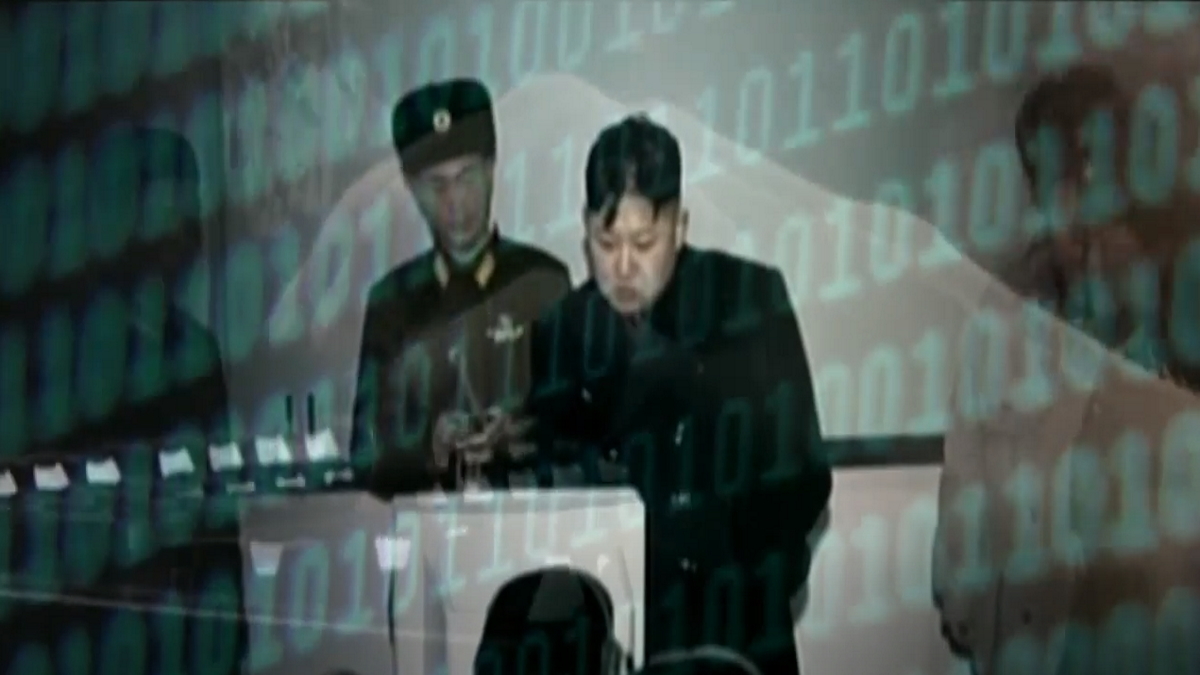
On Wednesday, April 15, the U.S. Departments of State, Homeland Security, and Treasury, and the Federal Bureau of Investigation issued an advisory to raise the awareness of the cyber threat posed by North Korea.


On Wednesday, April 15, the U.S. Departments of State, Homeland Security, and Treasury, and the Federal Bureau of Investigation issued an advisory to raise the awareness of the cyber threat posed by North Korea. 

The advisory highlights North Korea’s malicious cyber activities around the world, identifies U.S. government resources that provide technical and threat information, and includes recommended measures to counter the cyber threat.

North Korea’s malicious cyber activities threaten the United States and countries around the world and, in particular, pose a significant threat to the integrity and stability of the international financial system.  The United States works closely with like-minded countries to focus attention on and condemn disruptive, destructive, or otherwise destabilizing behavior in cyberspace.  

It is vital for foreign governments, network defenders, and the public to stay vigilant and to work together to mitigate the cyber threat posed by North Korea.

The DPRK’s malicious cyber activities threaten the United States and the broader international community and, in particular, pose a significant threat to the integrity and stability of the international financial system. Under the pressure of robust U.S. and UN sanctions, the DPRK has increasingly relied on illicit activities – including cybercrime – to generate revenue for its weapons of mass destruction and ballistic missile programs.

In particular, the United States is deeply concerned about North Korea’s malicious cyber activities, which the U.S. government refers to as HIDDEN COBRA. The DPRK has the capability to conduct disruptive or destructive cyber activities affecting U.S. critical infrastructure. The DPRK also uses cyber capabilities to steal from financial institutions, and has demonstrated a pattern of disruptive and harmful cyber activity that is wholly inconsistent with the growing international consensus on what constitutes responsible State behavior in cyberspace. 

The United States works closely with like-minded countries to focus attention on and condemn the DPRK’s disruptive, destructive, or otherwise destabilizing behavior in cyberspace. For example, in December 2017, Australia, Canada, New Zealand, the United States, and the United Kingdom publicly attributed the WannaCry 2.0 ransomware attack to the DPRK and denounced the DPRK’s harmful and irresponsible cyber activity. Denmark and Japan issued supporting statements for the joint denunciation of the destructive WannaCry 2.0 ransomware attack, which affected hundreds of thousands of computers around the world in May 2017. 

It is vital for the international community, network defenders, and the public to stay vigilant and to work together to mitigate the cyber threat posed by North Korea. 

The North Korean Cyber Threat Advisory can be viewed at: https://www.us-cert.gov/ncas/alerts/aa20-106a.

State.gov (April 2020) The United States Issues an Advisory on North Korean Cyber Threats

BBB Warns About Sharing Your Senior Photo on Facebook, other Social Media


On Monday, the Better Business Bureau (BBB) cautions everyone on social media to be aware of what they are sharing, even if you think it’s just going to your friends, it could also be going somewhere else.

It seems harmless and fun! A bunch of friends on Facebook or other social media are sharing their senior portraits, including the high school name and graduation year, to support the graduating class of 2020 (most of whom are at home because of the coronavirus pandemic). 

Watch out, scammers or hackers who surf through social media sites will see these #ClassOf2020 posts, and will now have the name of your high school and graduation year, which are common online security questions.

All it takes is an internet search to reveal more information about you, such as family members, your real name, and birth date or even where you live.

Other recent viral personal list posts include all the cars you’ve owned (including makes/model years), favorite athletes, and top 10 favorite television shows.

What most people forget is that some of these “favorite things” are commonly used passwords or security questions. If your social media privacy settings aren’t high, you could be giving valuable information away for anyone to use.

BBB has the following tips to keep you safe on social media:

Resist the temptation to play along. While it’s fun to see other’s posts, if you are uncomfortable participating, it is best to not do it.

Review your security settings. Check your security settings on all social media platforms to see what you are sharing and with whom you are sharing.

Change security questions/settings. If you are nervous about something you shared possibly opening you up to fraud, review and change your security settings for banking and other websites. 

For more information about privacy concerns online, see BBB’s scam alert on Facebook quizzes.

For tips for staying safe online, read BBB’s tips on staying cybersecure.

Report scams to BBB Scam Tracker.

BBB.org (April 2020) BBB Tip: Thinking of sharing your senior photo on Facebook? Think twice!

Chinese Pastor Charged with Subversion of State Power


House Church Pastor Arrested for Refusing to Join State-Vetted Church

International Christian Concern (ICC) has learned that a house church pastor in China’s Hunan province was arrested on April 2, after being criminally detained since March 14 for “inciting subversion of state power.”

On April 11, Bethel Church sent out an urgent prayer request for its pastor, Zhao Huaiguo, asking for nationwide prayers for its pastor who was arrested on April 2 on subversion charges.

Automotive Best Sellers

Zhao, the founder of Bethel Church in Cili county, has served at his church for 13 years, cultivating many leaders among the several hundred members. The church refused to join the state-vetted Three-Self church and was banned last year by the government.

According to China Aid, a local Christian shared that the authorities have been hostile toward Pastor Zhao since his church refused to join the state-sanctioned church and rejected government officials’ intervention. “He was accused of proselytizing and distributing Gospel tracts, which were considered illegal acts. After Lunar New Year last year, the religious bureau forced the church to disperse, to which it refused. The official ban arrived last April,” said the local Christian.

On April 10, 2019, nearly 50 people from the local authorities raided Bethel Church, damaging church property and confiscating Bibles, a piano, and hymn books. Pastor Zhao and other members were questioned and warned.

A Bethel Church member told China Aid that from March to December 2019, the public security police have repeatedly harassed the church, taking its preachers in for investigation and forcing them to sign an agreement that they would not preach or hold any more religious activities.

Following Zhao’s arrest, the authorities have been investigating the church’s offering and its sources, in an effort to find proof to accuse Pastor Zhao. Yet, since the church members refused to provide information, the police have made little progress thus far.

Gina Goh, ICC’s Regional Manager for Southeast Asia, said“For the Chinese Communist Party (CCP) to slap the charge of ‘inciting subversion of state power’ on Pastor Zhao, typically used against human rights lawyers and activists, it shows how the regime is fearful of anybody who is disobedient to the CCP. The laws in China now have become tools for the government to silence and weaken its citizens’ influence, even in a religious setting. The lack of rule of law in China should gravely concern the international community.”

Persecution.org (April 2020) Chinese Pastor Charged with Subversion of State Power

Chinese Sichuan Church Members Detained During Easter Service


Detention Came After ERCC Member Announced Lawsuit Against Government

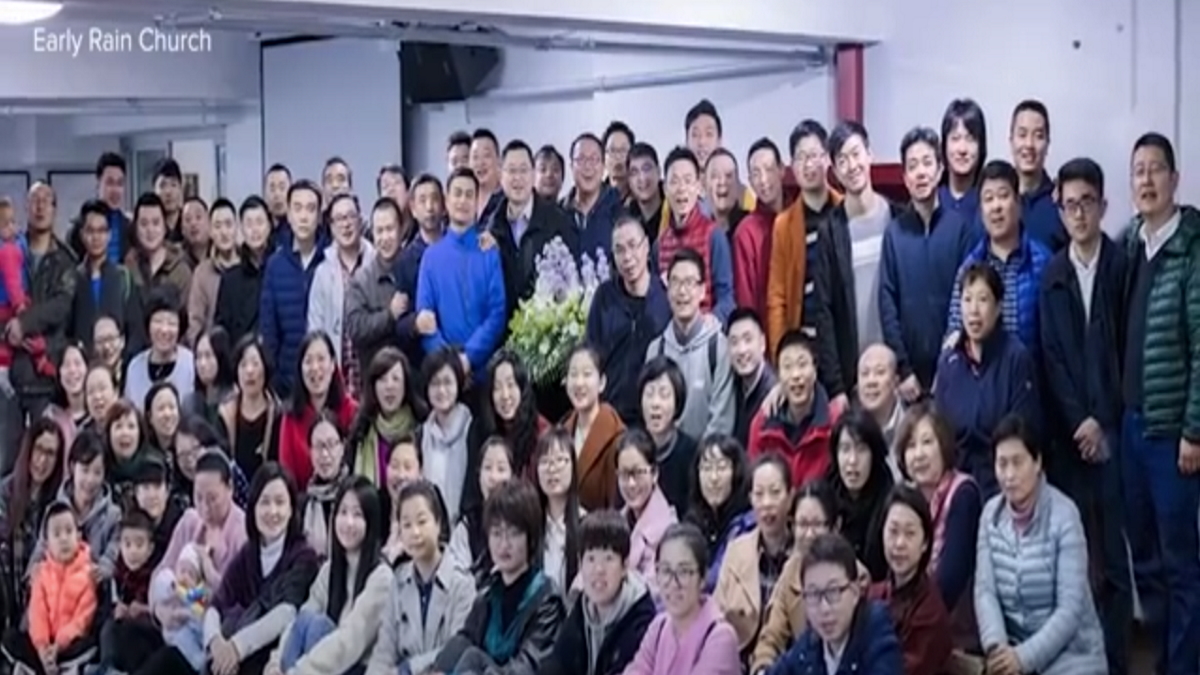
On Monday, the International Christian Concern (ICC) has learned that during an online worship session in China to celebrate Easter on April 12, several key members of the heavily persecuted Early Rain Covenant Church (ERCC) were taken away from their homes.

The Sichuan house church has not been able to gather in person since the government clamped down on the church on December 9, 2018 and arrested their pastor and other leaders.

This Easter, the church was conducting an online worship session, when suddenly six leaders were taken by the Public Security Bureau from their homes.

A member of ERCC told ICC, “At that time I was also in the Zoom call, but there was a long period of time where I did not hear a thing. I thought it’s the network connection issue at first, but I soon heard a quarrel erupt. Our coworker Wang Jun was questioning some people, [saying], ‘Who are you to do this [to us]?’”

She added that, in addition to Wang, other leaders such as Guo Haigang, Wu Wuqing, Jia Xuewei, Zhang Jianqing and Zhang Xudong were also taken away. One member’s home had its electricity cut off, while others received phone calls that “police [were] coming to visit them soon.”

A supporter of ERCC also shared on Twitter, “Since 8:30 a.m, some security officials have entered these Christian families’ homes and pretended to be chatting with them casually. At 9:30 a.m., the worship began, and they were also invited to participate. Once they realized that the sermon was from ERCC’s imprisoned pastor Wang Yi, they immediately shut it down.”

Her account was echoed by Zhang Jiangqing, who was warned by the police at his house, saying, “Don’t participate in already banned [religious] activities anymore! Don’t listen to Pastor [Wang]’s sermons anymore! If you do this again, we will deal with it seriously and take you away!”

The six briefly detained Christians have since been released, and their electricity was restored in the afternoon.

It is not uncommon for the local authorities to take additional measures against ERCC during major Christian celebrations or anniversary events. However, the latest detention also took place after church member Chen Yan decided to file a lawsuit against the authorities for unlawful harassment and surveillance against her and her husband Xiao Luobiao for more than a year. Last week, she detailed her experience with the security officials and her intention to sue in a series of blog posts published online.

Gina Goh, ICC’s Regional Manager for Southeast Asia, said, “It is such a shame that the Chinese government has not once stopped its persecution of ERCC. Ever since the 1209 crackdown in 2018, local authorities have continued to monitor and harass ERCC members, with the hope that the church will disperse itself. In a time when the Chinese people are suffering from the COVID-19 pandemic, the heartless regime chose to inflict more trouble on its citizens. The UN should immediately suspend China’s appointment to the Human Rights Council for its lack of respect for human rights.”

For interviews, please contact Olivia Miller, Communications Coordinator: press@persecution.org.

Persecution.org (April 2020) Sichuan Church Members Detained During Easter Service

Reward Offer for Information on Hizballah’s Financial Networks Muhammad Kawtharani


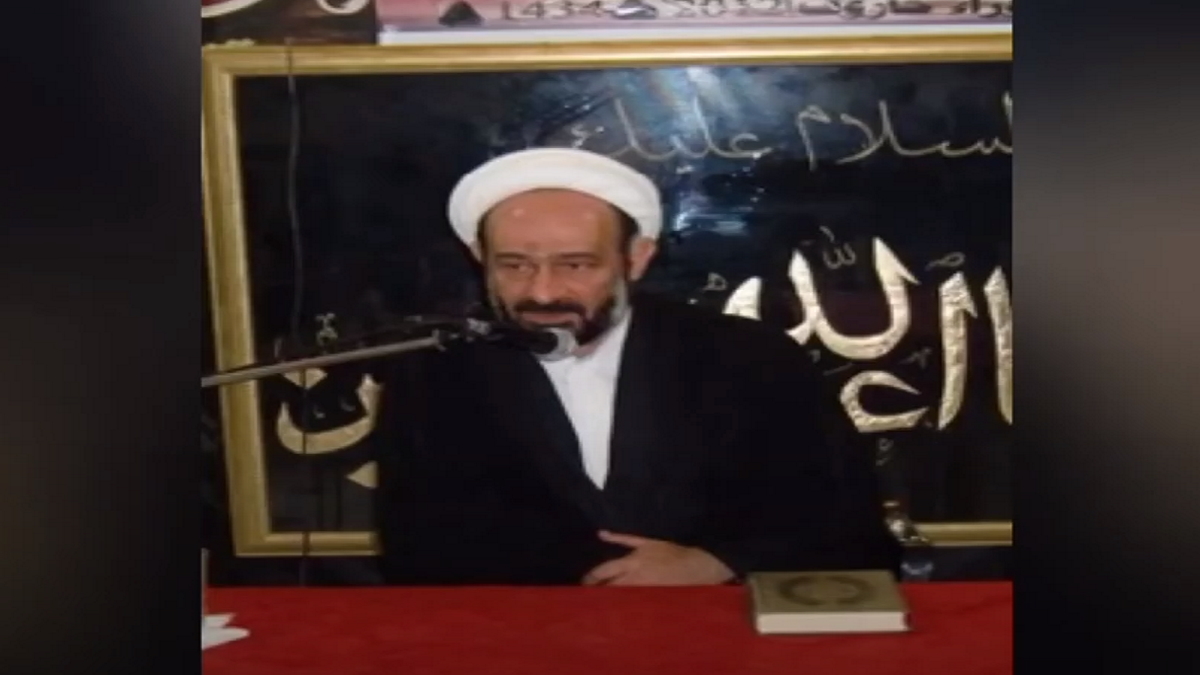
The U.S. Department of State’s Rewards for Justice Program is offering a reward of up to $10 million for information on the activities, networks, and associates of Muhammad Kawtharani, a senior Hizballah military commander.

This announcement is part of the Department’s standing reward offer for information leading to the disruption of the financial mechanisms of the terrorist organization Lebanese Hizballah.

Muhammad Kawtharani is a senior leader of Hizballah’s forces in Iraq and has taken over some of the political coordination of Iran-aligned paramilitary groups formerly organized by Qassim Sulemani after Sulemani’s death in January.

In this capacity, he facilitates the actions of groups operating outside the control of the Government of Iraq that have violently suppressed protests, attacked foreign diplomatic missions, and engaged in wide-spread organized criminal activity.

As a member of Hizballah’s Political Council, Kawtharani has worked to promote Hizballah’s interests in Iraq, including Hizballah efforts to provide training, funding, political, and logistical support to Iraqi Shi’a insurgent groups.

The U.S. Department of the Treasury designated Kawtharani as a Specially Designated Global Terrorist in 2013.

In April 2019, Rewards for Justice announced a reward of up to $10 million for information leading to the disruption of the financial mechanisms of the global terrorist organization Lebanese Hizballah.

Rewards can be provided for information leading to the identification and disruption of:

  • Sources of revenue for Hizballah or its key financial facilitation mechanisms;
  • Major Hizballah donors or financial facilitators;
  • Financial institutions or exchange houses facilitating Hizballah transactions;
  • Businesses or investments owned or controlled by Hizballah or its financiers;
  • Front companies engaged in international procurement of dual-use technology on behalf of Hizballah; and
  • Criminal schemes involving Hizballah members and supporters which financially benefit the organization.

Hizballah is a Lebanon-based terrorist organization that receives weapons, training, and funding from Iran, which the Secretary of State designated as a state sponsor of terrorism in 1984.

Hizballah generates about a billion dollars a year from a combination of direct financial support from Iran, international businesses and investments, donor networks, and money laundering activities.

The State Department designated Hizballah as a Foreign Terrorist Organization (FTO) in October 1997 under the Immigration and Nationality Act, and as a Specially Designated Global Terrorist (SDGT) in October 2001 under Executive Order (E.O.) 13224.

More information about these reward offers is located on the Rewards for Justice website at www.rewardsforjustice.net.

We encourage anyone with information on Hizballah financial networks to contact the Rewards for Justice office via the website, e-mail (LH@rewardsforjustice.net), phone (1-800-877-3927 in North America), or mail (Rewards for Justice, Washington, D.C., 20520-0303, USA).

Individuals may also contact the Regional Security Officer at the nearest U.S. embassy or consulate.

All information will be kept strictly confidential.

The Rewards for Justice Program is an effective law enforcement tool and is administered by the U.S. Department of State’s Diplomatic Security Service.

Since its inception in 1984, the program has paid in excess of $150 million to more than 100 people who provided actionable information that helped bring terrorists to justice or prevented acts of international terrorism worldwide. 

State.gov (April 2020) Reward Offer for Information on Hizballah’s Financial Networks Muhammad Kawtharani