East Longmeadow Man Charged with Attempted Arson at Longmeadow Assisted Living Residential Facility


Incendiary device was placed at entrance of Ruth’s House, a Jewish-sponsored assisted living residential facility

An East Longmeadow man was arrested last week and charged in connection with attempted arson at a Longmeadow assisted living residential facility.

John Michael Rathbun, 36, was charged in a criminal complaint in federal court in Springfield with two counts of attempted arson. Rathbun will make an initial appearance via video-conference before Magistrate Judge Katherine Robertson.

“In times of national crisis, hatred based on religion often blossoms into violence,” said United States Attorney Andrew E. Lelling. “The charges in this case allege that the defendant tried to blow up a Jewish assisted living residence with a five gallon gas canister, at the same time that the facility was being discussed on white supremacist online platforms. We will find, investigate and aggressively prosecute anyone engaged in this kind of mayhem.  I also extend my thanks to the Longmeadow Police Department for its help with this investigation.”

“As alleged, John Rathbun placed a homemade incendiary device near the entrance of a Jewish assisted living facility, located within a short distance of three Jewish temples, a Jewish private school, and a Jewish Community Center,” said Joseph R. Bonavolonta, Special Agent in Charge of the FBI Boston Division. “This case highlights the very real threat posed by racially motivated violent extremists and make no mistake, the FBI will use every investigative tool available, along with the expertise and skills of our partners on our Joint Terrorism Task Forces, to identify, assess and disrupt threats like this one to keep our communities safe.”

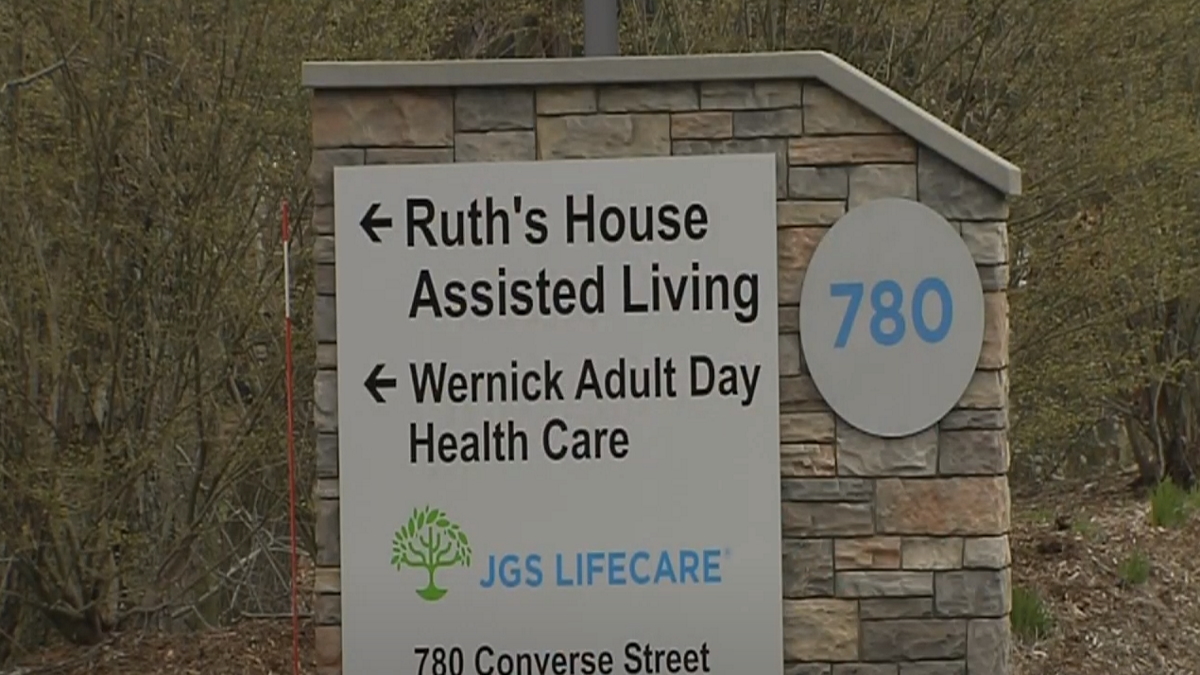
According to the criminal complaint, on April 2, 2020, police discovered a homemade incendiary device at the entrance of Ruth’s House, a Jewish-sponsored assisted living residential facility for seniors of all faiths, located on Converse Street in Longmeadow.

The device was located within feet of a widely used pedestrian walkway and approximately 50 yards from the Ruth’s House facility.

Ruth’s House is located within one square mile of several other Jewish facilities, including three Jewish temples, a Jewish private school and a Jewish Community Center. 

It is alleged that the incendiary device consisted of a five-gallon plastic Scepter gas canister, filled with liquid believed to be flammable gasoline, with burnt paper (later identified as a Christian religious pamphlet) placed in the nozzle of the canister.

A portion of the pamphlet was charred and appeared to have been lit on fire in an attempt to ignite the gas. Law enforcement observed what appeared to be blood stains on the canister handle and on the pamphlet. On or about April 9, 2020, it was determined that samples of the stains on the canister and the pamphlet were linked to Rathbun’s DNA profile.

In March 2020, a white supremacist organization that operated on two social media platforms was identified by law enforcement. On these platforms, users promoted mass killings in the United States and elsewhere directed against religious, racial and ethnic minorities; discussed plans to engage in these crimes themselves; discussed using various explosive and incendiary devices, including improvised devices commonly known as “Molotov cocktails”;  and identified targets, such as mosques and synagogues. 

On or about March 4, 2020, a user on the first social media platform specified two choices for mass killings, including “that jew nursing home in longmeadow massachusetts.” The organization’s form on the second platform included a calendar in which users could create events that listed the dates, times, and locations; invite other users to attend the event; and communicate concerning the event.

The calendar listed the following entries: April 2, 2020 – “hating ni**ers day”; and April 3, 2020 – “jew killing day.” The calendar entry for “jew killing day” listed the event location as “Jew Nursery Home” without a specifying address. It is alleged that the user who identified the Jewish nursing home in Longmeadow, and the user who created the April 3 calendar entry, are likely the same individual.

Anyone with questions or information about this case can contact the U.S. Attorney’s Office at (888) 221-6023.   

The charge of attempting to transport or receive explosive devices in interstate or foreign commerce with the knowledge or intent that the device will be used to kill, injure, or intimidate any individual or unlawfully to damage or destroy any building, vehicle, or other real or personal property provides for a sentence of up to 10 years in prison, three years of supervised release and a fine of $250,000.

The charge of attempting to maliciously damage or destroy, by means of fire or an explosive, any building, vehicle, or other real or personal property used in interstate or foreign commerce provides for a mandatory minimum sentence of five years and a maximum of 10 years in prison, three years of supervised release and a fine of $250,000. Sentences are imposed based upon the U.S. Sentencing Guidelines and other statutory factors.     

U.S. Attorney Lelling and FBI Boston SAC Bonavolonta made the announcement today. The investigation was led by the FBI’s Western Massachusetts Joint Terrorism Task Force with valuable assistance also provided by the Longmeadow and East Longmeadow Police Departments and the Massachusetts State Police.

Assistant U.S. Attorney Steven H. Breslow of Lelling’s Springfield Branch Office is prosecuting the case. 

The details contained in the complaint are allegations. The defendant is presumed innocent unless and until proven guilty beyond a reasonable doubt in a court of law. 

Justice.gov (April 2020) East Longmeadow Man Charged with Attempted Arson at Longmeadow Assisted Living Residential Facility

Remembering The Oklahoma City Bombing 25 Years Later


Retired FBI Agent reflects on tragic day and how it shaped the Bureau

On the morning of April 19, 1995, FBI Special Agent Barry Black was tracking a white-collar fugitive a few miles from downtown Oklahoma City when he heard a loud blast in the distance.

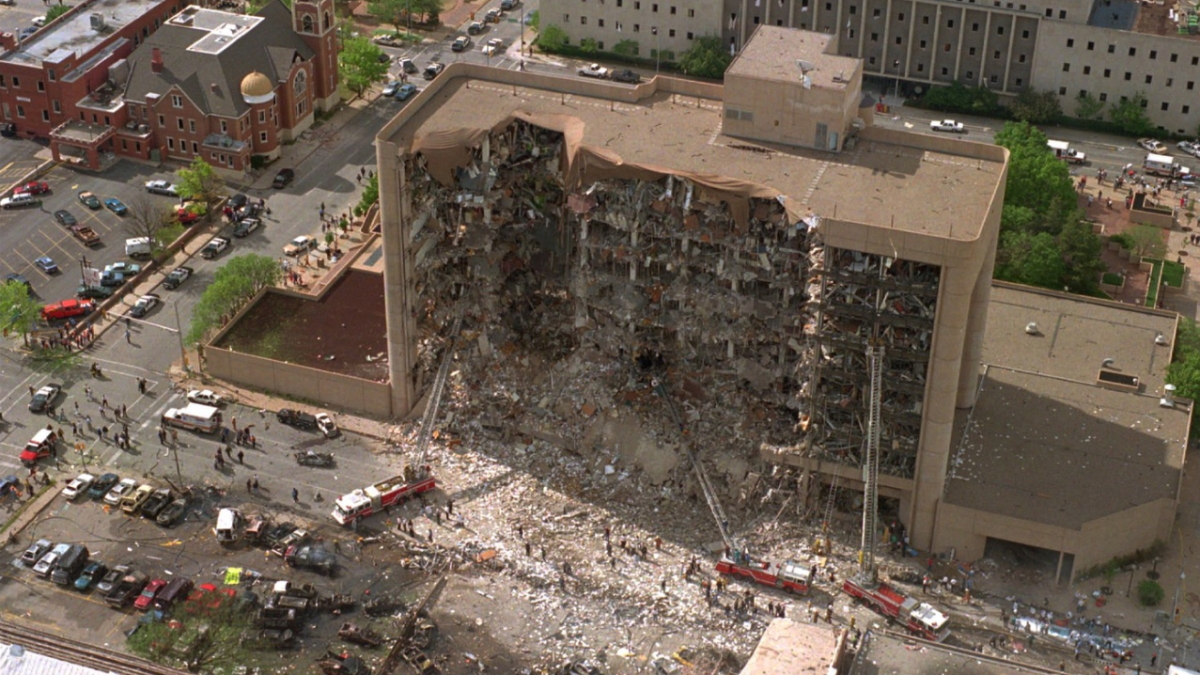
The bombing of the Alfred P. Murrah Federal Building in Oklahoma City on April 19, 1995 was the deadliest act of homegrown terrorism in U.S. history, resulting in the deaths of 168 people. In a matter of seconds, the blast destroyed most of the nine-story building, incinerated nearby vehicles, and damaged or destroyed more than 300 other buildings.

Soon after, Black was pulled from his fugitive case to begin working the massive investigation of the deadly bombing that took the lives of 168 people, including 19 children, at the Alfred P. Murrah Federal Building.

The efforts of Black and scores of federal, state, and local investigators led to the convictions of Timothy McVeigh and his co-conspirators, Terry Nichols and Michael Fortier, in one of the worst homegrown terrorism cases in the nation’s history.

“It was a group effort. I was there doing my part just like everyone else,” said Black, who recently retired from the FBI.

Oklahoma City Bombing Investigation at a Glance

Twenty-five years ago, the Oklahoma City bombing investigators:

  • Conducted more than 28,000 interviews
  • Followed more than 43,000 investigative leads
  • Collected more than 3 tons of evidence
  • Searched more than 13.2 million hotel registration records
  • Reviewed more than 3.1 million truck rental records
  • Searched more than 682,000 airline reservation records.

The event shaped the FBI’s approach to investigating terrorism.

More than 1,400 investigators, including Black, uncovered more than three tons of evidence.

After the bombing, one of Black’s responsibilities was tracking items from the point of collection to the FBI Laboratory, where they were examined and logged. This was 25 years ago, and the technology available at the time played a major factor in how the evidence was collected and managed.

“Managing the sheer volume of information was a real undertaking,” said Black. “Before we had digital photography, this investigation incorporated 238,000 wet film photographs. When you remembered seeing something, you had to be able to find it.”

One of the crucial pieces of evidence that Black found early in the investigation was a badly damaged rear axle. He jotted down the vehicle identification number (VIN), which was used to trace the part to the Ryder rental truck used to detonate the bomb.

Employees at the shop where the truck was rented helped the FBI put together the composite drawing of McVeigh, who had used an alias during that transaction.

“You look at the Boston [Marathon] bombing and how that information was publicized. In that case, we had digital images as people of interest,” said Black. “That technology didn’t exist in 1995. We relied on a sketch that generated thousands of leads and interviews.”

Local hotel employees recognized the man in the composite sketch as one of their guests—and here, McVeigh had checked in using his real name.

Piecing it all together led to the charges that ultimately resulted in McVeigh’s conviction and execution, a life sentence for Nichols, and 12 years in prison for Fortier.

The Oklahoma City bombing introduced a frightening new concept for the United States: homegrown terrorism. Until the 1993 World Trade Center bombing, the country hadn’t witnessed an event of this magnitude, let alone one carried out by American citizens.

After the bombing, the FBI began shifting its priorities.

The number of Joint Terrorism Task Forces nationwide expanded, as did the training programs at the Hazardous Devices School, to increase partnerships between the FBI and other federal, state, and local law enforcement agencies.

Not only did the FBI start providing law enforcement bomb techs with clearances to share equipment and information with them, we also focused on ramping up our investigative technology and getting more specialized equipment for the field.

“We’ve taken the lessons learned from these unfortunate events to ensure that our response is more rapid in the field,” Black said.

Since his retirement from the FBI in 2019, Black has continued to share the story of his involvement with the bombing case and task force. Along with national speaking engagements with military organizations and law enforcement agencies, Black leads tours with the Oklahoma City National Memorial & Museum’s First Person: Stories of Hope program.

Several items collected by FBI investigators during the case are on display at the museum. Black has also donated his own equipment and artifacts, such as the hard hat he wore, his FBI field jacket, and the note with the VIN he wrote down from the truck’s rear axle.  

Built on the former site of the Murrah Building, the museum honors victims, survivors, and first responders affected by the bombing.

“The memorial is a unique place,” said Black. “A lot of the displays, which still belong to the FBI, are available for the public to see. We’ve partnered with this facility to make sure what happened here is remembered.”

FBI.gov (April 2020) The Oklahoma City Bombing 25 Years Later

Justice Department Seeks to End Illegal Online Sale of Industrial Bleach Marketed as “Miracle” Treatment for COVID-19


Court Orders Defendants to Stop Operating Website Selling Unlawful Bleach Product for Coronavirus Treatment

The United States District Court for the Southern District of Florida has entered a temporary injunction halting the sale of an unapproved, unproven, and potentially dangerous coronavirus (COVID-19) treatment product, the Department of Justice announced today.

In a civil complaint and accompanying court papers filed in U.S. District Court for the Southern District of Florida today, the Department of Justice alleges that the defendants, Genesis II Church of Health and Healing (Genesis) and its principals, Mark Grenon, Joseph Grenon, Jordan Grenon, and Jonathan Grenon sell and distribute a product called Miracle Mineral Solution, also referred to as MMS. 

Genesis sells MMS through its websites claiming that it will cure, mitigate, treat, or prevent Coronavirus, which includes COVID-19, as well as other diseases including Alzheimer’s, autism, brain cancer, HIV/AIDS, and multiple sclerosis, among others. 

MMS is a chemical product which, when combined with the included activator, creates a powerful bleach product that the defendants market for oral ingestion. 

The Food and Drug Administration (FDA) has previously issued public warnings to consumers that MMS can cause nausea, vomiting, diarrhea, and symptoms of severe dehydration.  The Justice Department sought preliminary relief from the court.

“The Department of Justice will take swift action to protect consumers from illegal and potentially harmful products being offered to treat COVID-19,” said Assistant Attorney General Jody Hunt.  “We will continue to work closely alongside our partners at the Food and Drug Administration to quickly shut down those selling illegal products during this pandemic.”

“We will zealously pursue perpetrators of fraud schemes seeking to take advantage of the COVID-19 pandemic,” said U.S. Attorney Ariana Fajardo Orshan for the Southern District of Florida.  “Not only are these products potentially harmful, but their distribution and use may prevent those who are sick from receiving the legitimate healthcare they need.”

The complaint alleges that defendants’ disease-related treatment claims are unsupported by any well-controlled clinical studies or other credible scientific substantiation.  Additionally, the complaint asserts that MMS’s labeling is false and misleading and that since defendants make disease-related treatment claims about MMS in the absence of any clinical data, the products are misbranded. 

On April 8, 2020, FDA, jointly with the Federal Trade Commission, issued a Warning Letter to Defendants notifying them that they are violating federal law (both the Federal Food, Drug, and Cosmetic Act as well as the Federal Trade Commission Act) by, among other things, distributing unapproved new drugs and misbranded drugs in interstate commerce. 

Despite this warning, the complaint alleges, the defendants not only continue to sell MMS with claims that it cures, mitigates, treats, or prevents Coronavirus, which includes COVID-19, but they have also expressly stated that they will not take corrective action.

“Americans expect and deserve proven medical treatments and today’s action is a forceful reminder that the U.S. Food and Drug Administration will use its legal authorities to quickly stop those who have proven to continuously threaten the health of the American public.  It is vital that sellers of drug products comply with the FD&C Act and do not sell products with false and misleading claims, especially to treat COVID-19 and other debilitating diseases, such as autism and Alzheimer’s disease,” said FDA Commissioner Stephen M. Hahn, M.D.  

“Despite a previous warning, the Genesis II Church of Healing has continued to actively place consumers at risk by peddling potentially dangerous and unapproved chlorine dioxide products.  We will not stand for this, and the FDA remains fully committed to taking strong enforcement action against any sellers who place unsuspecting American consumers at risk by offering their unproven products to treat serious diseases.”

FDA’s previous warning to consumers about the dangers of MMS can be found here: https://www.fda.gov/consumers/consumer-updates/danger-dont-drink-miracle-mineral-solution-or-similar-products.

The enforcement action filed today is being prosecuted by Senior Litigation Counsel Ross S. Goldstein and David A. Frank of the Department of Justice, Civil Division’s Consumer Protection Branch and Assistant U.S. Attorney Matthew Feeley of the U.S. Attorney’s Office for the Southern District of Florida, with assistance from Associate Chief Counsel for Enforcement Joshua Davenport of the FDA, Office of General Counsel, Department of Health and Human Services.

The claims made in the complaint are allegations that, if the case were to proceed to trial, the government must prove to receive a permanent injunction against the defendants.

Additional information about the Consumer Protection Branch and its enforcement efforts may be found at www.justice.gov/civil/consumer-protection-branch.  

For more information about the U.S. Attorney’s Office for the Southern District of Florida, visit its website at www.justice.gov/usao-sdfl.  

For information about the Department of Justice’s efforts to stop illegal COVID-19-related activity, visit www.justice.gov/coronavirus

For the most up-to-date information on COVID-19, consumers may visit the Centers for Disease Control and Prevention (CDC) and WHO websites.

The public is urged to report suspected fraud schemes related to COVID-19 (the Coronavirus) by calling the National Center for Disaster Fraud (NCDF) hotline (1-866-720-5721) or by e-mailing the NCDF at disaster@leo.gov.

Justice.gov (April 2020) Justice Department Seeks to End Illegal Online Sale of Industrial Bleach Marketed as “Miracle” Treatment for COVID-19

Operator of durable medical equipment company charged in multi-million-dollar telemedicine kickback scheme


Defendant is the 22nd charged in largest fraud scheme ever prosecuted by Southern District of Georgia

A California man who operated a durable medical equipment (DME) company has been charged for his alleged participation in a massive healthcare fraud scheme.

The defendant is the 22nd charged in the Southern District of Georgia as part of an investigation that uncovered more than $410 million in fraudulent claims to Medicare, the largest fraud case in the history of the Southern District of Georgia.

Scott M. Hirsch, the operator of JI Medical, Inc., a California company, is accused of conspiring to pay kickbacks in exchange for obtaining orders for DME that JI Medical, Inc. would then bill to Medicare. Those Medicare beneficiaries were located in the Southern District of Georgia and elsewhere. As part of this scheme, the physicians receiving the kickbacks from JI Medical, Inc. knowingly signed false medical records describing “consultations” of Medicare patients. The operator of JI Medical, Inc. was charged by way of an Information, filed in the U.S. District Court for the Southern District of Georgia.

“Telemedicine is an important tool for legitimate providers – but paying kickbacks is not part of telemedicine and will not be tolerated under any circumstances,” said U.S. Attorney Bobby L. Christine. “While many of our prosecutors and law enforcement partners may be working remotely during the COVID-19 pandemic, this office continues to work day and night to bring bad actors to justice.” 

The healthcare fraud scheme charged is the largest in the history of the Southern District of Georgia. Previous charges in this string of cases include eight physicians, two nurse practitioners, two operators of telemedicine companies, and two brokers of patient data. The Medicare and Medicaid beneficiaries whose identities were used as part of the scheme are located throughout the Southern District of Georgia, including the Augusta, Brunswick, Dublin, Savannah, Statesboro, and Waycross Divisions, as well as elsewhere in the United States.

The $410 million fraud scheme charged in the Southern District of Georgia is part of nationwide operations by the Department of Justice that thus far has halted a multi-billion dollar fraud network involving fraudulent claims for genetic testing, orthotic braces, pain creams, and other items.

“The growing number of medical providers and equipment providers alleged to have been involved in this ongoing scheme is disheartening,” said Chris Hacker, Special Agent in Charge of FBI Atlanta. “The FBI and our federal partners will continue to root out such deceitful practices and protect taxpayers and the citizens who deserve the benefits from programs like Medicare, even as telemedicine becomes more common.” 

 “This investigation is a stellar example of inter-agency cooperation and working together to bring those who defraud the health care system to justice,” said FBI Birmingham Special Agent in Charge Johnnie Sharp Jr. “The public can be assured that the FBI and our partners will continue to seek to identify and pursue investigations against such egregious offenders.”

“In these trying times, it’s more important than ever that we safeguard the Medicare trust fund,” said Derrick L. Jackson, Special Agent in Charge at the U.S. Department of Health and Human Services, Office of Inspector General in Atlanta. “HHS/OIG, along with our partners, will vigorously pursue any provider who puts their own financial gain above that of their patients.”

“Cases of this magnitude can only be tackled using a strategy that recognizes that the most effective way to fight these large criminal networks is by combining the strengths, resources, and expertise of our federal agencies,” said Resident Agent in Charge Glen M. Kessler of the U.S. Secret Service. “Our nation’s healthcare system cannot tolerate kickbacks to physicians and pharmacies while criminals line their pockets with taxpayer funded healthcare dollars.”

“The U.S. Postal Inspection Service aggressively conducts investigations of those who fraudulently use the U.S. Mail to facilitate complex fraud schemes,” said Inspector in Charge Joseph W. Cronin of the U.S. Postal Inspection Service’s Boston Division.  “We will continue to support and work with our federal law enforcement partners to stop those who are engaged in these types of fraudulent activities and defend the U.S. Mail from criminal misuse.”

“The defendant in this case used the U.S. Mail to facilitate his elaborate criminal scheme. Postal Inspectors partnered with other agencies to quickly identify the scheme and worked aggressively with the U.S. Attorney’s Office to dismantle this criminal enterprise. Through cases like these, the Postal Inspection Service upholds its longstanding mission of protecting the public and preventing criminal misuse of the U.S. Mail,” said Antonio J. Gomez, Inspector in Charge of the U.S. Postal Inspection Service – Miami Division.

Indictments or criminal information contain only charges; defendants are presumed innocent unless and until proven guilty.

This investigation is ongoing. As telemedicine becomes an increasing part of our healthcare system, vigilance in ensuring that fraud and kickbacks do not usurp the legitimate practice of medicine by electronic means is more important than ever. If you are aware of any fraud or kickbacks relating to telemedicine, including COVID-19 fraud, please call the FBI hotline at 1-800-CALL-FBI.

This particular prosecution resulted from a joint investigation of multiple agencies and offices.  U.S. Attorney Christine acclaimed the hard work of the investigatory team, led by FBI – Savannah, FBI – Birmingham, the Department of Health and Human Services Office of Inspector General, the United States Secret Service, and the United States Postal Inspection Service.

Assistant U.S. Attorneys J. Thomas Clarkson and Jonathan A. Porter are prosecuting these cases on behalf of the United States.

Justice.gov (April 2020) Operator of durable medical equipment company charged in multi-million-dollar telemedicine kickback scheme

International COVID-19 fraud exposed

A sophisticated fraud scheme using compromised emails, advance-payment fraud and money laundering has been uncovered by financial institutions and authorities across Germany, Ireland and the Netherlands


INTERPOL-coordinated case leads to arrests and sparks investigations around Europe

A sophisticated fraud scheme using compromised emails, advance-payment fraud and money laundering has been uncovered by financial institutions and authorities across Germany, Ireland and the Netherlands, as part of a case coordinated by INTERPOL.

In mid-March, as a number of countries were going into lock-down due to the coronavirus outbreak, German health authorities contracted two sales companies in Zurich and Hamburg to procure EUR 15 million worth of face masks. With a global shortage on medical supplies complicating usual business channels, the buyers followed new leads in the hopes of securing the masks.

It all started with an email address and website which appeared to be linked to a legitimate company in Spain selling face masks. Unbeknownst to the buyers, the site was a fake and their legitimate email addresses had been compromised.

Through email correspondence, the company initially claimed to have 10 million masks, only for the delivery to fall through. As consolation, they then referred the buyers to a ‘trusted’ dealer in Ireland. The Irish middleman promised to put them in touch with a different supplier, this time in the Netherlands.

Claiming to have a strong commercial relationship with the company, the man provided assurances that the alleged Dutch company would be able to supply the 10 million face masks. An agreement for an initial delivery of 1.5 million masks was made, in exchange for an up-front payment of EUR 1.5 million.

The buyers initiated a bank transfer to Ireland and prepared for delivery, which involved 52 lorries and a police escort to transport the masks from a warehouse in the Netherlands to the final destination in Germany.

Just before the delivery date, the buyers were informed that the funds had not been received and that an emergency transfer of EUR 880,000 straight to the Dutch supplier was required to secure the merchandise.

When the buyers realized they had been duped, they immediately contacted their bank in Germany, which in turn contacted INTERPOL’s Financial Crimes unit, setting off a race to intercept the funds and follow the money trail.

Banks, financial intelligence units and judicial authorities, as well as partner organizations Europol and EUROJUST, joined INTERPOL in the chase.

INTERPOL contacted its National Central Bureau in Dublin as well as the Irish bank. Prompt intervention by the Garda National Economic Crime Bureau allowed them to freeze the 1.5 million in the account and identify the Irish company involved.

The Dutch Fiscal Information and Investigation Service quickly tracked down the EUR 880,000 which had been transferred from the German company. Nearly EUR 500,000 of those funds had already been sent to the United Kingdom, all of which was destined for an account in Nigeria.

Europol activated its professional networks to reach key contacts in the banking sector. Thanks to an alert raised by investigators, the UK bank was able to recall the full amount. Those funds have now been returned to the Netherlands and frozen by authorities.

“They adapted their sales pitches to take advantage of strained supply chains and generate huge profits. I can only salute the quick work of both the private and public authorities involved. INTERPOL will continue its work on the case – and the many others like it – in close cooperation with all of our partners,” added the INTERPOL Chief.

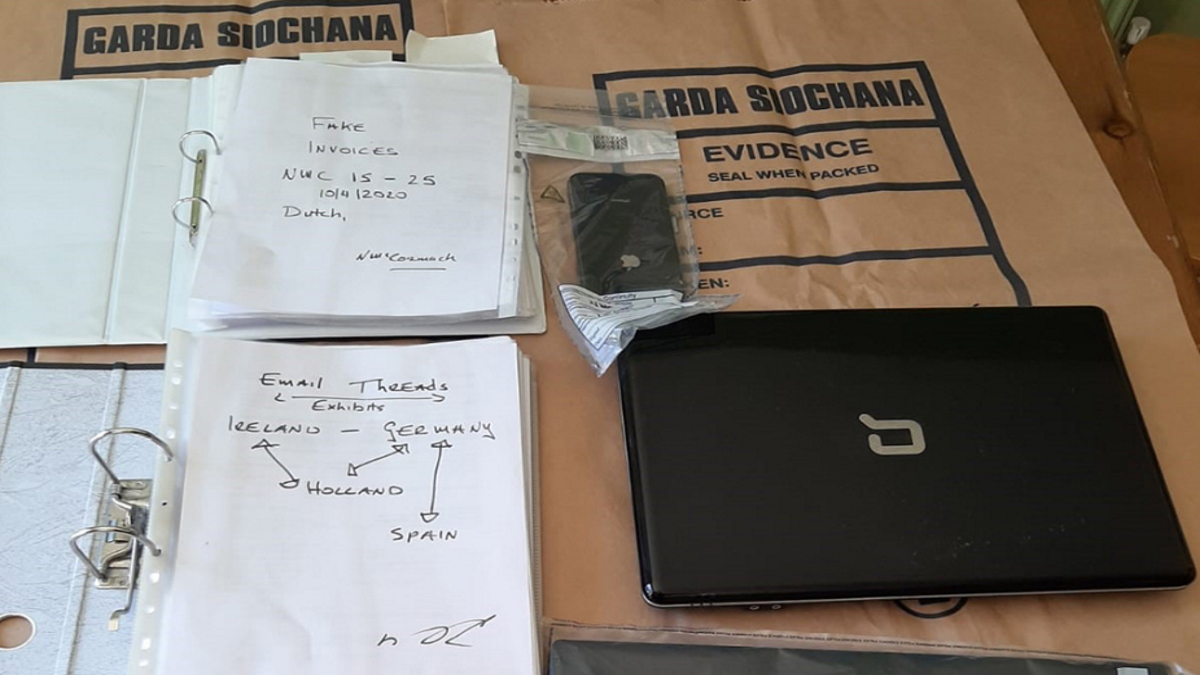
The operation has already led to the arrest of two suspects in the Netherlands. More arrests are likely as specialized units continue to liaise closely with INTERPOL, as well as the public prosecutor and police forces in Traunstein (Germany) on leads generated by seized devices.

INTERPOL would like to remind members of the public to be vigilant as organized crime groups continue to adapt their activities to benefit from the global health crisis.

Interpol.int (April 2020) Unmasked: International COVID-19 fraud exposed