Department of Defense Statement on People’s Liberation Army Navy Lasing of U.S. Navy P-8A in Unsafe, Unprofessional Manner

Secretary Esper raised concern over an incident on February 17 in which a U.S. Navy P-8A Poseidon maritime patrol aircraft was lased by PRC navy destroyer 161 while flying in airspace above international waters approximately 380 miles west of Guam.


On March 3, 2020, Secretary of Defense Mark T. Esper spoke with the People’s Republic of China (PRC) Minister of National Defense General Wei Fenghe.

During the call, Secretary Esper raised concern over an incident on February 17 in which a U.S. Navy P-8A Poseidon maritime patrol aircraft was lased by PRC navy destroyer 161 while flying in airspace above international waters approximately 380 miles west of Guam.

Secretary Esper called on the People’s Liberation Army to conduct itself safely and professionally in accordance with bilateral agreements and international standards of safety at sea.

The incident underscores the need for the two militaries to enhance bilateral crisis communication mechanisms to ensure incidents like this do not escalate or lead to miscalculation.

The P-8A was operating in international airspace in accordance with international rules and regulations. The PRC navy destroyer’s actions were unsafe and unprofessional.

Additionally, these acts violate the Code for Unplanned Encounters at Sea (CUES), a multilateral agreement reached at the 2014 Western Pacific Naval Symposium to reduce the chance of an incident at sea. CUES specifically addresses the use of lasers that could cause harm to personnel or damage to equipment. The destroyer’s actions were also inconsistent with a Memorandum of Understanding (MOU) between U.S. Department of Defense and the Ministry of National Defense of the PRC regarding rules of behavior for safety of air and maritime encounters.

The laser, which was not visible to the naked eye, was captured by a sensor onboard the P-8A. Weapons-grade lasers could potentially cause serious harm to aircrew and mariners, as well as ship and aircraft systems.

The P-8A is assigned to VP-45, based out of Jacksonville, Florida, and is forward-deployed to Kadena Air Force Base in Okinawa, Japan. The squadron conducts routine operations, maritime patrol and reconnaissance in the U.S. 7th Fleet area of operations.

U.S Navy aircraft routinely fly in the Philippine Sea and have done so for many years. U.S. Navy aircraft and ships will continue to fly, sail and operate anywhere international law allows.

U.S. 7th Fleet is the largest numbered fleet in the world, and with the help of 35 other maritime-nation allies and partners, the U.S. Navy has operated in the Indo-Pacific region for more than a century, providing credible, ready forces to help preserve peace and prevent conflict.

Defense.gov (March, 2020) Department of Defense Statement on People’s Liberation Army Navy Lasing of U.S. Navy P-8A in Unsafe, Unprofessional Manner

Help a veteran in need by donating here.

Border Patrol Seizes Over 70 Pounds of Cocaine

Border Patrol agents arrested a man Wednesday evening who had over 70 pounds of cocaine hidden inside his truck.


Border Patrol agents arrested a man Wednesday evening who had over 70 pounds of cocaine hidden inside his truck.

On March 4th, at approximately 7 p.m., Border Patrol agents initiated a vehicle stop on a suspicious 2016 Nissan Frontier on Interstate 215 near the Murrieta Hot Springs exit.  Pursuant to a K-9 alert, the pickup truck was searched by agents.

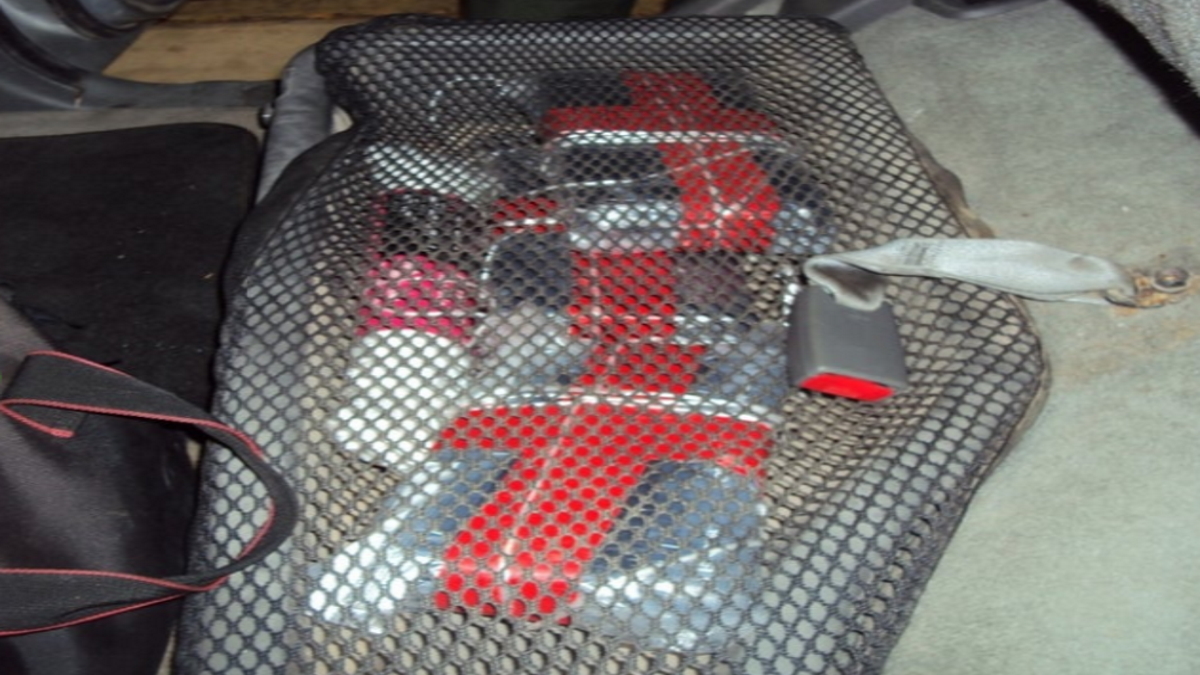
The bundles of cocaine weighed 70.80 pounds and had an estimated street value of $786,450.

“In the last 72 hours San Diego Sector has seized over 117 pounds of lethal narcotics worth more than $1,300,000,” said Chief Patrol Agent Aaron Heitke.  “Thankfully these dangerous drugs will not reach our local communities.”

The driver, a 32-year-old U.S. citizen, was placed under arrest.  The narcotics were turned over to the Drug Enforcement Administration.  The vehicle was seized by the U.S. Border Patrol.

See the following link for yesterday’s press release regarding another significant seizure. 

To prevent the illicit smuggling of humans, drugs, and other contraband, the U.S. Border Patrol maintains a high level of vigilance on corridors of egress away from our Nation’s borders.  To report suspicious activity to the U.S. Border Patrol, contact San Diego Sector at (619) 498-9900.

During the search, agents discovered 27 bundles of cocaine stashed inside the pickup’s front and rear seats, and underneath the seats. 

CBP.gov (March, 2020) Border Patrol Seizes Over 70 Pounds of Cocaine

Help a veteran in need by donating here.

Tennessee man ordered removed to Germany based on service as a concentration camp guard during WWII

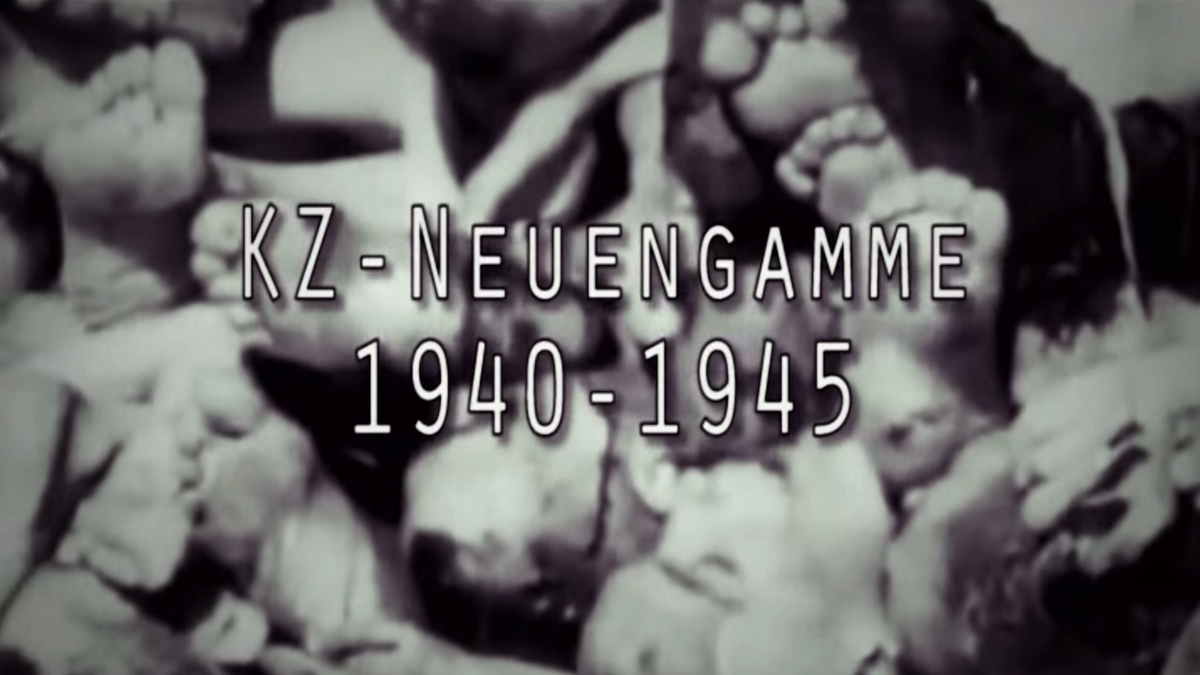
A U.S. Immigration Judge in Memphis, Tennessee has issued a removal order against a German citizen and Tennessee resident, based on his service in Nazi Germany in 1945 as an armed guard of concentration camp prisoners in the Neuengamme Concentration Camp system (Neuengamme).


A U.S. Immigration Judge in Memphis, Tennessee has issued a removal order against a German citizen and Tennessee resident, based on his service in Nazi Germany in 1945 as an armed guard of concentration camp prisoners in the Neuengamme Concentration Camp system (Neuengamme).

After a two-day trial, U.S. Immigration Judge Rebecca L. Holt issued her opinion finding Friedrich Karl Berger removable under the Immigration and Nationality Act because his “willing service as an armed guard of prisoners at a concentration camp where persecution took place” constituted assistance in Nazi-sponsored persecution. The court found that Berger served at a Neuengamme sub-camp near Meppen, Germany, and that the prisoners there included “Jews, Poles, Russians, Danes, Dutch, Latvians, French, Italians, and political opponents” of the Nazis.

Judge Holt found that Meppen prisoners were held during the winter of 1945 in “atrocious” conditions and were exploited for outdoor forced labor, working “to the point of exhaustion and death.” The court further found, and Berger admitted, that he guarded prisoners to prevent them from escaping during their dawn-to-dusk workday, and on their way to and from the worksites.

At the end of March 1945, with the advance of British and Canadian forces, the Nazis abandoned Meppen. The court found that Berger helped guard the prisoners during their forcible evacuation to the Neuengamme main camp – a nearly two-week trip under inhumane conditions which claimed the lives of some 70 prisoners.

Mr. Berger, of Oak Ridge, Tenn., could not immediately be reached for comment. He told The Washington Post on Thursday that he was ordered to work in the camp, was there for a short time and did not carry a weapon. In the United States, he said, he had made a living building wire-stripping machines.

“After 75 years, this is ridiculous. I cannot believe it,” he told The Post, adding, “You’re forcing me out of my home.”

“This case is but one example of U.S. Immigration and Customs Enforcement’s (ICE) commitment to ensuring that the United States will not serve as a safe haven for human rights violators and war criminals,” said David C. Shaw, Assistant Director, National Security Investigations Division, Homeland Security Investigations (HSI), who oversees the Human Rights Violators and War Crimes Center. “We will continue to pursue these types of cases so that justice may be served.”

“Berger was part of the SS machinery of oppression that kept concentration camp prisoners in atrocious conditions of confinement,” said Assistant Attorney General Brian A. Benczkowski of the Department of Justice’s Criminal Division. “This ruling shows the Department’s continued commitment to obtaining a measure of justice, however late, for the victims of wartime Nazi persecution.”

The investigation was initiated by DOJ’s Human Rights and Special Prosecution Section (HRSP) and was conducted in partnership with ICE’s Homeland Security Investigations Human Rights Violators and War Crimes Center and HSI’s Nashville Special Agent in Charge office.

“The investigation of human rights violations and those who engage in these heinous acts, continues to be a focus for Homeland Security Investigations and this successful outcome is an example of those efforts” stated Jerry C. Templet Jr, Special Agent in Charge, HSI Nashville.

The removal case was jointly tried by attorneys in ICE New Orleans Office of the Principal Legal Advisor (Memphis), and attorneys from DOJ’s HRSP, with the assistance of the Human Rights Violators and War Crimes Center.

Established in 2009, ICE’s Human Rights Violators and War Crimes Center furthers ICE’s efforts to identify, locate and prosecute human rights abusers in the United States, including those who are known or suspected to have participated in persecution, war crimes, genocide, torture, extrajudicial killings, female genital mutilation and the use or recruitment of child soldiers. The HRVWCC leverages the expertise of a select group of agents, lawyers, intelligence and research specialists, historians and analysts who direct the agency’s broader enforcement efforts against these offenders.

Since 2003, ICE has arrested more than 450 individuals for human rights-related violations of the law under various criminal and/or immigration statutes. During that same period, ICE obtained deportation orders against and physically removed 1034 known or suspected human rights violators from the United States. Additionally, ICE has facilitated the departure of an additional 160 such individuals from the United States.

Currently, HSI has more than 180 active investigations into suspected human rights violators and is pursuing more than 1,640 leads and removal cases involving suspected human rights violators from 95 different countries. Since 2003, The HRVWCC has issued more than 76,000 lookouts for individuals from more than 110 countries and stopped over 315 human rights violators and war crimes suspects from entering the U.S.

Currently, HSI has more than 180 active investigations into suspected human rights violators and is pursuing more than 1,640 leads and removal cases involving suspected human rights violators from 95 different countries. Since 2003, The HRVWCC has issued more than 76,000 lookouts for individuals from more than 110 countries and stopped over 315 human rights violators and war crimes suspects from entering the U.S.

Members of the public who have information about foreign nationals suspected of engaging in human rights abuses or war crimes are urged to call the ICE tip line at: 1-866-DHS-2423 (1-866-347-2423).

Callers may remain anonymous.

ICE.gov (March, 2020) Tennessee man ordered removed to Germany based on service as a concentration camp guard during WWII

Help a veteran in need by donating here.

DHS to Improve Integrity of Visa Program for Foreign Workers

On Thursday, the Department of Homeland Security announced that it will take necessary anti-fraud and abuse measures to protect the integrity of the H-2B visa program and also make available 35,000 supplemental H-2B temporary non-agricultural worker visas for the second half of fiscal year (FY) 2020.


On Thursday, the Department of Homeland Security announced that it will take necessary anti-fraud and abuse measures to protect the integrity of the H-2B visa program and also make available 35,000 supplemental H-2B temporary non-agricultural worker visas for the second half of fiscal year (FY) 2020.

The allocation also comes with new conditions to protect American workers, provide relief to seasonal employers who truly need it, and reduce fraud and abuse in the program.

New to the program this year is an allocation that will also complement DHS border security initiatives. The program will offer an opportunity for nationals of key Central American partner nations to work lawfully in the United States.

Soffe Men’s 3 Pack-USA Poly Cotton Military Tee

Of the released H-2B visas, 10,000 are specifically designated for nationals of Guatemala, El Salvador, and Honduras, in support of these countries efforts to work with the U.S. to stem the flow of illegal migration in the region and encourage lawful migration to the United States.

While the Department is taking this action, long term reforms need to be made by Congress to this program going forward. In the interim, the Department is taking significant steps to promote integrity in the program, combat fraud and abuse, and ensure the supplemental allocation aligns with the national interest.

Reform measures include:

  • Requiring matching start dates on an H-2B petition and the employer’s start date of need;
  • collaborating with the Department of Labor on increased employer site visits; and,
  • generally limiting the supplemental visas to returning workers, who are known to follow immigration law in good faith.

This year’s supplemental allocation was determined after extensive consultation with stakeholders—including members of Congress and the Department of Labor—and is intended to strike a careful balance that benefit American businesses and American workers.

The supplemental visas will be made available in two batches to prevent a small handful of employers from using all the visas: 20,000 for start dates beginning April 1, and 15,000 for start dates beginning May 15. Adding a second batch will address specific congressional concerns about late-season filers.

DHS is committed to ensuring that our immigration system is implemented lawfully and that American workers are protected.

If members of the public have information that a participating employer may be abusing this program, DHS invites them to submit information to https://www.uscis.gov/report-fraud/uscis-tip-form and include information identifying the H-2B petitioning employer and relevant information that leads them to believe that the H-2B petitioning employer is abusing the H-2B program.

Individuals are also encouraged to report allegations of employer fraud and abuse to the Department of Labor’s (DOL) Wage and Hour Division by contacting 1-866-487-9243 or visit www.dol.gov/whd  to locate the nearest office for assistance.

Further details regarding this year’s H-2B allocation will be contained in a Temporary Final Rule that DHS aims to complete and publish as soon as possible.

DHS.gov (March, 2020) DHS to Improve Integrity of Visa Program for Foreign Workers

Help a veteran in need by donating here.

DOJ OIG Releases Report on the FBI’s Efforts to Identify Homegrown Violent Extremists Through Counter-terrorism Assessments

Department of Justice (DOJ) Inspector General Michael E. Horowitz announced today the release of a report examining the Federal Bureau of Investigation’s (FBI) efforts to identify homegrown violent extremists (HVE) through counter-terrorism assessments from October 2012 to September 2018.


Department of Justice (DOJ) Inspector General Michael E. Horowitz announced today the release of a report examining the Federal Bureau of Investigation’s (FBI) efforts to identify homegrown violent extremists (HVE) through counter-terrorism assessments from October 2012 to September 2018. The FBI defines HVEs as global jihad-inspired individuals who are in the United States, have been radicalized primarily in the United States, and are not receiving individualized direction from a foreign terrorist organization.

Since September 11, 2001, HVEs have carried out over 20 attacks in the United States, some of which occurred after the FBI closed a counter-terrorism assessment or investigation on the individual.

The DOJ Office of the Inspector General (OIG) found that the FBI had not taken a comprehensive approach to resolving deficiencies in its counter-terrorism assessment process. The specific findings in today’s review include:

Weaknesses existed in the FBI’s counter-terrorism assessment process. Following attacks by individuals previously assessed or investigated by the FBI, the FBI conducted reviews to identify weaknesses and areas for improvement in the FBI’s process for assessing potential HVEs. However, the FBI did not ensure that all field offices and headquarters implemented recommended improvements and subsequent policy requirements. As a result, FBI field offices continued to conduct some counter-terrorism assessments that did not meet FBI requirements or standards.

The FBI did not adequately execute an enterprise-wide review of closed counter-terrorism assessments. In 2017, the FBI conducted an internal review of closed counter-terrorism assessments to ensure that the investigative effort and oversight of these assessments were thoroughly conducted in order to identify potential threats to national security and mitigate risks to public safety.

Through this effort, the FBI identified that 6 percent of the closed assessments it reviewed did not adequately assess the potential threat, and warranted additional investigative action. However, nearly 40 percent of these counter-terrorism assessments went unaddressed for 18 months after deficiencies were known to the FBI. As of February 2019, the FBI reported to the OIG that necessary investigative measures have now been taken on these assessments.

The FBI should identify and address inconsistencies in its reevaluation of closed assessments. We found inconsistencies in the scope of database checks that were being conducted by some field offices when reviewing closed assessments that may implicate legal, policy, and civil liberties issues associated with these reevaluations. As a result, the FBI must determine if some field offices missed opportunities to identify current and accurate information about potential HVEs, or if actions taken by other offices could have implicated the civil liberties of subjects of previously closed assessments.

The FBI must address emerging challenges to assess potential HVEs. Another challenge facing the FBI arises from the increased the number of tips and leads being sent to FBI offices. We found that the FBI has decided to integrate criminal threat matters into its system for assessing counter-terrorism threats and it is in the process of updating its protocols related to this change. However, we found the FBI has not developed an effective approach in dealing with the prevalence of assessments associated with individuals with an identified mental health issue and determining whether these individuals pose an actual threat to national security or public safety.

Today’s report makes seven recommendations to assist the FBI its efforts to identify HVEs through counter-terrorism assessments.

The FBI agreed with all seven recommendations.

Report: Today’s report can be found on the OIG’s website under “Recent Reports” at the following link: https://oig.justice.gov/reports/2020/a20030.pdf

Video: To accompany today’s report, the OIG has released a 2-minute video featuring the Inspector General discussing the report’s findings. The video and a downloadable transcript are available at the following link: https://oig.justice.gov/multimedia/video-03-04-20.htm.

In addition to this report, in June 2018 the OIG issued to the FBI a Management Advisory Memorandum detailing the OIG’s concern about inadequate actions taken by the FBI to mitigate a particular national security threat.

OIG.Justice.gov (March, 2020) DOJ OIG Releases Report on the FBI’s Efforts to Identify Homegrown Violent Extremists Through Counterterrorism Assessments

Help a veteran in need by donating here.