Justice Department Seeks to Shut Down Georgia Tax Return Preparer

The United States government filed a civil injunction suit seeking to bar Wesley Adam Kroll from owning or operating a tax return preparation business and preparing tax returns for others, the Justice Department announced today. The complaint also seeks an order that Kroll disgorge ill-gotten return preparation fees that he obtained through his alleged misconduct.


The United States government filed a civil injunction suit seeking to bar Wesley Adam Kroll from owning or operating a tax return preparation business and preparing tax returns for others, the Justice Department announced today. The complaint also seeks an order that Kroll disgorge ill-gotten return preparation fees that he obtained through his alleged misconduct.

The complaint, filed in the U.S. District Court for the Middle District of Georgia, alleges that Kroll has operated three tax return preparation stores in Albany and Moultrie, Georgia, under the names United Tax Service, American Tax Service, American Tax, and Tax South. 

The government alleges that Kroll prepared tax returns claiming fabricated businesses and business-related profits or losses, and various false tax deductions and credits, including education, childcare, and earned income tax credits. The complaint estimates the lost tax revenue from federal tax returns prepared by Kroll and his employees exceeds $1.9 million.

According to the complaint, the IRS took multiple steps to correct Kroll’s unlawful behavior, including conducting in-person educational visits with Kroll in 2012, 2014, and 2015; issuing him warning letters in 2013 and 2016; and assessing him with $182,500 in tax return preparer penalties. But, the government alleges, these efforts have failed to curb Kroll’s unlawful behavior.

Shop Amazon Gift Cards. Any Occasion. No Expiration.

“The Justice Department is committed to working with the IRS to bring enforcement actions against unscrupulous return preparers,” said Principal Deputy Assistant Attorney General Richard Zuckerman. “This civil action is further evidence that the IRS and the Tax Division will use all available tools to hold dishonest return preparers accountable and protect the U.S. Treasury from damage.”

Return preparer fraud is one of the IRS’ Dirty Dozen Tax Scams and taxpayers seeking a return preparer should remain vigilant. The IRS has information on its website for choosing a tax preparer and has launched a free directory of federal tax preparers.

In the past decade, the Tax Division has obtained injunctions against hundreds of unscrupulous tax preparers. Information about these cases is available on the Justice Department website. An alphabetical listing of persons enjoined from preparing returns and promoting tax schemes can be found on this page.

If you believe that one of the enjoined persons or businesses may be violating an injunction, please contact the Tax Division with details.

Justice.gov (February, 2020) Justice Department Seeks to Shut Down Georgia Tax Return Preparer

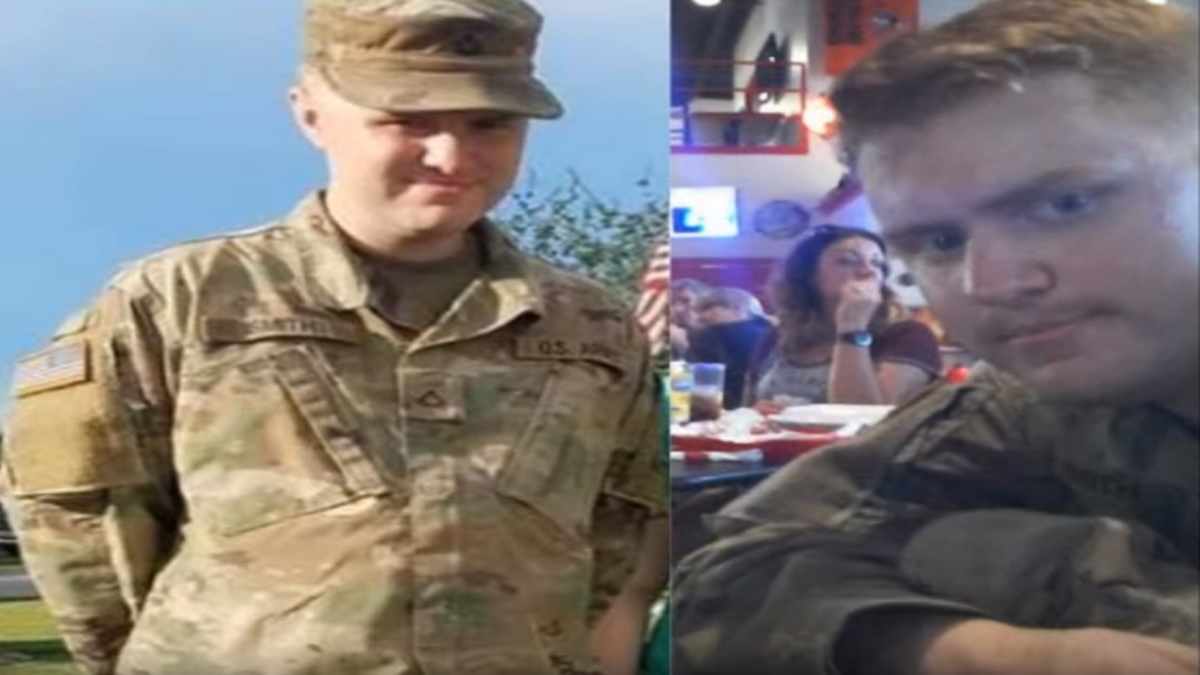
Guilty Plea: Soldier at Fort Riley Described How to Make Explosive Devices

Jarrett William Smith, 24, Ft. Riley, Kan., pleaded guilty today to unlawfully distributing instructions for making explosive devices over social media while he was a member of the U.S. Army, U.S. Attorney Stephen McAllister said.


Jarrett William Smith, 24, Ft. Riley, Kan., pleaded guilty today to unlawfully distributing instructions for making explosive devices over social media while he was a member of the U.S. Army, U.S. Attorney Stephen McAllister said.

Smith, described by prosecutors as a Satanist, pleaded guilty to two counts of distributing information related to explosives, destructive devices and weapons of mass destruction. Smith joined the Army June 12, 2017. He served as an infantry soldier and was trained in combat and tactical operations.

He was transferred to Fort Riley in Kansas July 8, 2019.

Shop Amazon Gift Cards. Any Occasion. No Expiration.

The FBI received information that Smith gave out guidance to others on how to construct improvised explosive devices. He spoke to others on social media about wanting to travel to Ukraine to fight with a violent, far-right military group.

On September 20, 2019, from Fort Riley Smith sent a person working undercover for the FBI specific instructions for making an explosive device. He also provided a recipe for creating improvised napalm.

Smith signed a formal plea agreement with federal prosecutors and then entered his pleas verbally during a half-hour court hearing before U.S. District Judge Daniel Crabtree. He wore an orange prison jumpsuit and black athletic shoes and alternated between “Yes” and “Yes, sir” in answering questions from Crabtree.

“Did you provide this information with the intent that the person would use it?” Crabtree asked him.

Smith replied, “Yes.”

Sentencing is set for May 18. Smith could face up to 20 years in federal prison and a fine up to $250,000 on each count. McAllister commended the FBI and Assistant U.S. Attorney Tony Mattivi for their work on the case.

Justice.gov; Armytimes.com (February, 2020) Guilty Plea: Soldier at Fort Riley Described How to Make Explosive Devices; ‘Satanist’ Fort Riley soldier pleads guilty to bomb plot charges

14 ARRESTS IN SPAIN AFTER COCAINE FOUND IN BOXES OF A4 PAPER

Europol supported the Central Narcotics Unit and the Central Money Laundering Unit of regional Catalan police (Mossos D’esquadra) in arresting 14 members of an international criminal organization trafficking cocaine and laundering money.


Europol supported the Central Narcotics Unit and the Central Money Laundering Unit of regional Catalan police (Mossos D’esquadra) in arresting 14 members of an international criminal organization trafficking cocaine and laundering money.

Ten members of the criminal organization have been sent to prison.

The investigation began in December 2018 when 1 413kg of cocaine was found at a company near Barcelona. The drugs were hidden inside 800 boxes of A4 paper that came from Brazil. The true content of the boxes was only discovered when a company employee took one of the boxes and dropped it by accident. Two people were arrested in Spain and the investigation revealed that ten people had been smuggling drugs from Brazil as part of a criminal organization. 

To launder the money they gained from drug trafficking, the suspects created a whole business structure with different companies, such as real estate investments or fashion stores in Barcelona. Another way to launder money was to use people (‘mulas’) that periodically made small cash deposits at several bank branches.

On 4 February the regional Catalan police carried out 13 simultaneous house and company searches to dismantle the structure of this smuggling organization, and, together with the Spanish National Police (Policía Nacional), carried out one house search on the Balearic Island of Mahon. Money in several currencies, mobile phones, four simulated weapons, three cars, two motorcycles and several properties were all seized and two marijuana plantations were dismantled.

Two Europol experts were deployed for on-the-spot support to extract data from the mobile phones of two of the detainees. A member of Spain’s Europol National Unit also assisted during the action day.

Europol.europa.eu (February, 2020) 14 ARRESTS IN SPAIN AFTER COCAINE FOUND IN BOXES OF A4 PAPER

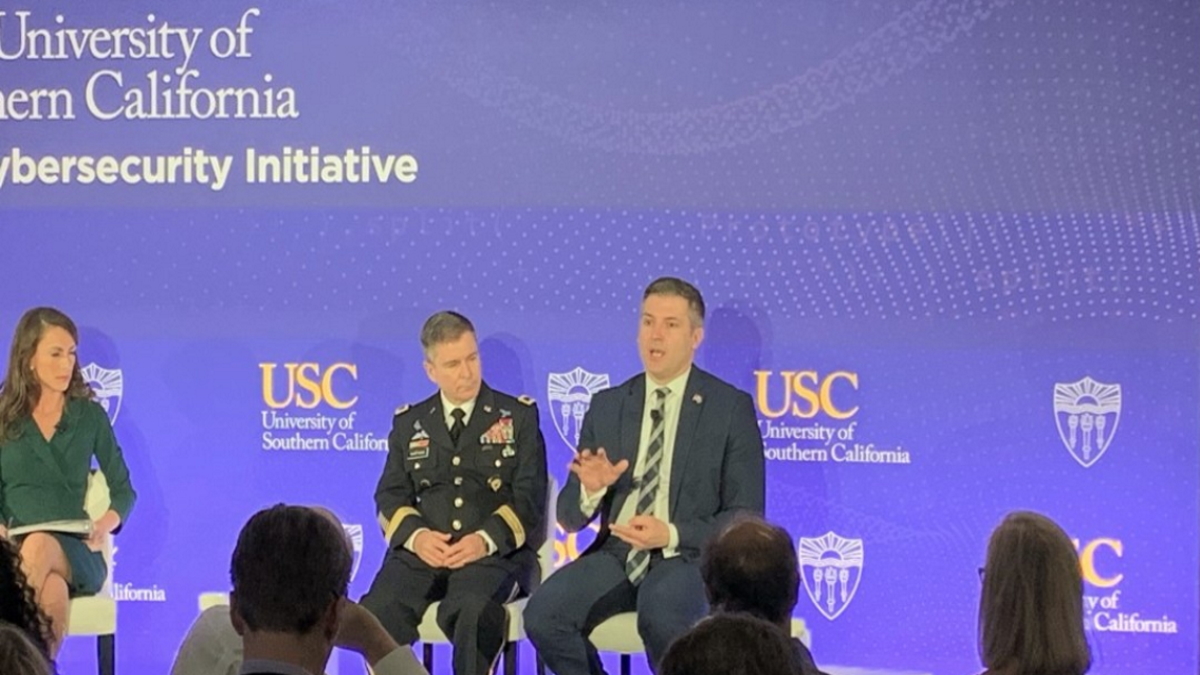
DOD Has Enduring Role in Election Defense

The Defense Department plays an important role in that whole-of-government partnership, spearheaded by the NSA and Cybercom’s Election Security Group, formed in the wake of the successes of the Russia Small Group during the 2018 midterms.


Voting has begun for the 2020 presidential election primary season — but it’s not the beginning of the U.S. government’s defense against foreign interference and influence in our elections.

At the Reagan National Defense Forum in December 2019, Army Gen. Paul M. Nakasone, U.S. Cyber Command commander and director of the National Security Agency, laid out the Defense Department’s role in election security. “We began the ability for us to defend the presidential elections not today, not six months from now. We began it the day after the midterm elections,” he said, “We have not let up in terms of our ability to understand what our adversaries are doing.”

The Defense Department plays an important role in that whole-of-government partnership, spearheaded by the NSA and Cybercom’s Election Security Group, formed in the wake of the successes of the Russia Small Group during the 2018 midterms.

David Imbordino, the NSA election security lead, and Army Brig. Gen. William Hartman, Cybercom’s election security lead and commander of Cyber National Mission Force, co-lead the joint Election Security Group. Its purpose is to align the two organizations’ resources, efforts and actions to disrupt, deter and degrade adversaries’ ability to interfere and influence the U.S. elections.

“The biggest success out of 2018 wasn’t the 2018 midterms,” Hartman said. “The biggest success was we put in place, both organizationally and from a business practice standpoint, a focus on an enduring mission to protect the democratic process.”

The Election Security Group’s primary objectives are to generate insights on foreign adversaries that lead to improved cyber defenses and to impose costs on countries that seek to interfere. It directly supports partners, such as the Department of Homeland Security and the FBI, by collecting, declassifying and sharing vital information to enable agencies’ efforts in election security.

“[The FBI will] engage with social media companies,” Imbordino said. “That information can enable a social media company to then use their platform, where they have very unique insights that we don’t have, to mitigate and potentially unravel [malicious] social media influence campaigns.”

When NSA and Cybercom see a cyberattack happening against a certain victim, they communicate that information to appropriate government offices, which, in turn, work with private-sector partners to provide notification and enable future cyber defense.

“We look at adversary meddling in an election on two different fronts. One is covert influence, and then there’s interference,” Imbordino said. “For interference, what we’re talking about is an adversary trying to go change a vote total, targeting election infrastructure, voter rolls. Influence is more of the social media component of trying to influence public opinion.”

“It’s not enough to just know and understand what our adversaries are doing,” he continued. “The nation expects us to do something about it. Enabling our partners with the right information at the right classification level they need to take action to defend our democracy against these threats is essential and allows all of the tools of the government to be employed in this fight.”

Guiding all of Cybercom’s efforts is their underlying framework for the continuous execution of cyberspace operations, known as persistent engagement — the concept of constant contact with adversaries in cyberspace, engaging beyond DOD networks to “defend forward,” officials said, noting that persistent engagement enables Cybercom to be postured to impose cost against foreign malicious actors before they reach the homeland.

An example of persistent engagement in action is “hunt forward” operations that involve deploying defensive cyber teams around the world at the invitation of allies and partners to look for adversaries’ malicious cyber activity. These teams send insights back from these missions, enabling defense for U.S. and partner networks, and providing real-time situational awareness for Cybercom to better protect the nation from foreign attacks in cyberspace.

“In a hunt forward operation, we are able to work with partner nations and receive an invitation to execute operations in their country,” Hartman said. “These are generally countries that are in the near abroad of adversaries that we’re potentially concerned about.”

Hunt forward operations produce detailed information identifying risks and threats to critical infrastructure, networks and data. These insights will enable the U.S. to detect and defend against potential cyber threats to the upcoming 2020 elections, he explained.

If malware is discovered on hunt forward operations, Cybercom can publicize malicious software through antivirus portals, imposing costs of time, money and access on the adversary.

Another way the combined Cybercom and NSA Election Security Group enables defense is through the National Guard Bureau.

National Guard members supporting their state and local elections have the ability to share information to various organizations within the Election Security Group. The group will then use national-level intelligence to assess whether there is a foreign threat before providing that information to the National Guard, DHS and FBI.

“The primary way that we work with the states is really working by, with and through DHS and FBI, which is absolutely a critical component of how we interact,” Hartman said. “And the National Guard is present in all 50 states, three territories, and District of Columbia, which allows us to potentially look at something that may be occurring in the United States and see if we can track that activity to any foreign actor or to any foreign space.”

As election security continues to be an enduring mission of the DOD, national security officials stress the importance of allowing Americans to exercise their right to vote — a vote cast is a vote counted.

Defense.gov (February, 2020) DOD Has Enduring Role in Election Defense

Child Predators Arrested as a Result of “Operation Broken Arrow” Online Undercover Investigation

As a result of a proactive online undercover investigation coordinated by the Georgia Internet Crimes Against Children (ICAC) Task Force, the Georgia Bureau of Investigation’s Child Exploitation and Computer Crimes Unit (CEACC), the Lowndes County Sheriff’s Office, and the Southern Judicial Circuit District Attorney’s Office, fourteen (14) people were arrested over a four-day period beginning Thursday, February 6, 2020.


“Operation Broken Arrow” was a four-day proactive effort centered in Valdosta, GA. 

As a result of a proactive online undercover investigation coordinated by the Georgia Internet Crimes Against Children (ICAC) Task Force, the Georgia Bureau of Investigation’s Child Exploitation and Computer Crimes Unit (CEACC), the Lowndes County Sheriff’s Office, and the Southern Judicial Circuit District Attorney’s Office, fourteen (14) people were arrested over a four-day period beginning Thursday, February 6, 2020. 

Those arrested were charged with O.C.G.A. 16-12-100.2, Computer or Electronic Pornography and Child Exploitation Prevention Act of 2007 and/or O.C.G.A 16-5-46, Trafficking of Persons for Labor or Sexual Servitude.

Additional charges and arrests may be forthcoming.

“Operation Broken Arrow” was a four-day proactive effort centered in Valdosta, GA. 

The operation took several months of planning.  The arrestees, ranging in age from 24 to 57, traveled from areas around South Georgia with the intent to meet a child for sex.  Every individual arrested during the operation believed they were going to a location to meet with a child and engage in prearranged sex acts.

The Georgia Internet Crimes Against Children Task Force had previously received information from the National Center for Missing and Exploited Children on at least one person who was arrested during Operation Broken Arrow. That same person had been previously arrested on peeping tom charges. 

Two persons were arrested in possession of a firearm and two persons were arrested in possession of illegal narcotics. At least two other arrestees were investigated for sex related crimes in the past. Nineteen (19) mobile devices and several additional electronic devices were seized as evidence during the operation. 

The goal of “Operation Broken Arrow” was to arrest persons who communicate with children on-line and then travel to meet them for the purpose of having sex.  Additionally, the operation targeted those that are willing to exploit children by purchasing sex with a minor. On-line child predators visit chat rooms and websites on the internet, find children, begin conversations with them, introduce sexual content and arrange a meeting with the children for the purpose of having sex.  The children these predators target are both boys and girls. 

Since 2014, the Georgia ICAC Task Force has arrested over 150 people in similar operations. 

Over the course of the operation, investigators had more than 120 exchanges with persons on various social media or internet platforms. During many of these exchanges, the subjects directed conversations towards sex with persons they believed to be minors. Over 40 cases were established that met the threshold for arrest.

Fourteen (14) of those cases were concluded with arrests. In some of these cases, the subject introduced obscene or lude content, often exposing the minor (UC) to pornography or requesting the child take nude or pornographic images for them. About half of the exchanges involved websites used for dating, socializing, or even websites used for classified advertisements. 

Although some websites promote themselves as being for “adults-only” it is not uncommon for law enforcement to work cases in which children access these sites, establish profiles claiming to be older, and then find themselves vulnerable to victimization, harassment, blackmail, or assault.

Several subjects were identified as communicating simultaneously with multiple investigators posing as minors. Such activity confirms what investigators uncover conducting these types of investigations: that many predators specifically seek out minors on such websites to groom them as potential victims for sexual contact.

Along with those agencies who participated in the planning and coordinating of the operation, sixteen (16) additional law enforcement agencies participated in “Operation Broken Arrow” as members of the Georgia ICAC Task Force.

These agencies were:

  1. Alpharetta Police Department
  2. Atlanta Police Department
  3. Floyd County Police Department
  4. Forsyth County Sheriff’s Office
  5. GBI-Georgia Information Sharing and Analysis Center (GISAC)
  6. Glynn County Police Department
  7. Gwinnett County Police Department
  8. Hall County Sheriff’s Office
  9. Homeland Security Investigations
  10. Johns Creek Police Department
  11. Lilburn Police Department
  12. Marietta Police Department
  13. Polk County Police Department
  14. Savannah Police Department
  15. United States Air Force – Office of Special Investigations
  16. Woodstock Police Department

The proactive on-line investigation was a coordinated effort among the participating law enforcement agencies to combat this activity. Lowndes County Sheriff Ashley Paulk stated, “The Lowndes County Sheriff’s Office is proud to partner with the GBI and other federal, state, and local area law enforcement agencies in these continuing efforts to identify and apprehend those who prey on our most vulnerable victims. Thanks to this coordinated four-day effort, multiple predators have been removed from our streets and are no longer free to victimize our children.”

GBI Special Agent in Charge, and Commander of the Georgia Internet Crimes Against Children (ICAC) Task Force, Debbie Garner remarked “The Lowndes County Sheriff’s Office is one of our most active member agencies.  We appreciate their daily efforts to combat child exploitation.  This type of cooperation and collaboration is invaluable in the effort to keep our children safe from predators who seek to harm them.  This successful operation was a true partnership between all the agencies involved. We will continue to aggressively work together to protect our children.” 
 
The following were arrested and charged in Lowndes County as part of “Operation Broken Arrow”:
 

  1. Dave Vincent Almon, W/M, 43, retail manager
  2. Billy Stephen Carter, W/M, 57, truck driver
  3. Eric Bernard Copeland, B/M, press operator
  4. Walter Lee Curry, B/M, 33, laborer
  5. Jamian Hogan, B/M, 34, retail associate
  6. John Henry Hursey, W/M, 45, carpenter
  7. Eugene Andega Mainah, B/M, 35, unemployed
  8. Keith Morrison, B/M, 43, truck driver
  9. Wyman Rene Phillips, W/M, 36, electrician
  10. Wilford Sermons, B/M, 28, customer service representative
  11. Josue Trejo, H/M, 31, forklift driver
  12. Bronson Jamari D. Tripp, B/M, 24, retail associate
  13. Keith Walters, W/M, 44, university Dean
  14. Justin Na’eem Warren, B/M, 24, student
     
    The Georgia ICAC Task Force is comprised of 240+ local, state, and federal law enforcement agencies, other related criminal justice agencies and prosecutor’s offices.  The mission of the ICAC Task Force, created by the U. S. Department of Justice and managed and operated by the GBI in Georgia, is to assist state and local law enforcement agencies in developing an effective response to cyber enticement and child pornography cases. This support encompasses forensic and investigative components, training and technical assistance, victim services, prevention and community education. The ICAC Program was developed in response to the increasing number of children and teenagers using the internet, the proliferation of child pornography, and the heightened online activity by predators searching for unsupervised contact with underage victims. By helping state and local law enforcement agencies develop effective and sustainable responses to online child victimization and child pornography, the ICAC program delivers national resources at the local level.  Arrests made by the Georgia ICAC Task Force have been steadily increasing over the last 3 years.  In 2017, The Georgia ICAC Task Force made 350 arrests.  In 2018, The Georgia ICAC Task Force made 307 arrests.  In 2019, the Georgia ICAC Task Force made 474 arrests. The Georgia ICAC Task Force has made over 2,000 arrests since its inception in 2002. 

GBI.Georgia.gov (February, 2020) “Operation Broken Arrow” Targets On-line Child Predators