BBB Warns About Cell Phone Porting Scams

The Better Business Bureau first warned consumers of cell phone porting scams two years ago, but it appears the problem is getting worse.


Did you know that with a few easy steps someone could steal your phone number and phone service? 

The Better Business Bureau first warned consumers of cell phone porting scams two years ago, but it appears the problem is getting worse.

According to a CBC article, a farm family in Sasketchewan lost hundreds of thousands of dollars when a cell phone was stolen and their business bank account was emptied. This scam is another way for scammers to steal your hard earned money, and even your identity.

The scariest part is that this type of scam, called porting or port-out scamming, is that it can help scammers get past added security measures on personal and financial accounts and logins.

To put it another way, think of how many times you have set up an email address, social networking, or logged onto your bank account online or had to change your password. How many times did you have to verify your identity by being sent a code via text message? Now what if you weren’t the only one who was reading that message? This new type of scam absolutely could bypass that layer of security and has a huge potential for your identity to be stolen faster than you think.

Luckily you can protect yourself and your Better Business Bureau® is here to help you identify and protect yourself.

What is a cell phone porting or port-out scam?

A scammer finds out your name and phone number and then attempts to gather as much personal identifiable information (PII) as possible about you. PII includes name, address, Social Security number (Social Insurance number in Canada), date of birth, and other information that can be used for identity theft.  They then will contact your mobile provider, impersonating you, and inform them that your phone was stolen and request the number be “ported” with another provider and device.  In some cases, if they were really brave and in a retail location and/or online, they might even try to buy a new phone which could make a sales representative incentivized to quickly fulfill their request and forgo some formal verification procedures.  

The scariest part?  Once they have your number ported to a new device they can then start accessing and gaining entry to accounts that require additional authorization in terms of a code texted directly to your phone for security verification.  Those added security measures are usually in place on accounts provided by email providers, social networks, tax preparation software, and even financial institutions

BBB offers these tips to help protect you from this specific type of scam:

  • Inquire with your wireless provider about port-out authorization.  Every major wireless has some sort of additional security for accounts or for port-out authorization that customers can set up, like a unique pin, or add verification question, which will make it more difficult for someone to port-out your phone.  Contact your mobile provider and speak to them specifically about porting and/or port out security on your account.
  • Watch out for unexpected “Emergency Calls Only” status.  Call your mobile phone company if your phone suddenly switches to “emergency call service only” or something similar. That’s what happens when your phone number has been transferred to another phone.  
  • Be vigilant in about communications you receive.  Watch out for phishing attempts, alert messages from financial institutions, texts in response to two-factor authorization requests.

For more tips on how to protect your personal information and guard yourself against identity theft click here.

If you’ve fallen victim to this type of scam, alert your mobile provider, financial institutions and take the standard steps to combat identity theft.

Also, BBB encourages you to file a report on BBB ScamTracker and be a hero to your community by warning others.

BBB.org (February, 2020) BBB Warns About Cell Phone Porting Scams

 Help me maintain this news reporting blog by donating here.

Justice Department Secures Denaturalization of Convicted Terrorist Who Sought to Help al Qaeda Destroy the Brooklyn Bridge

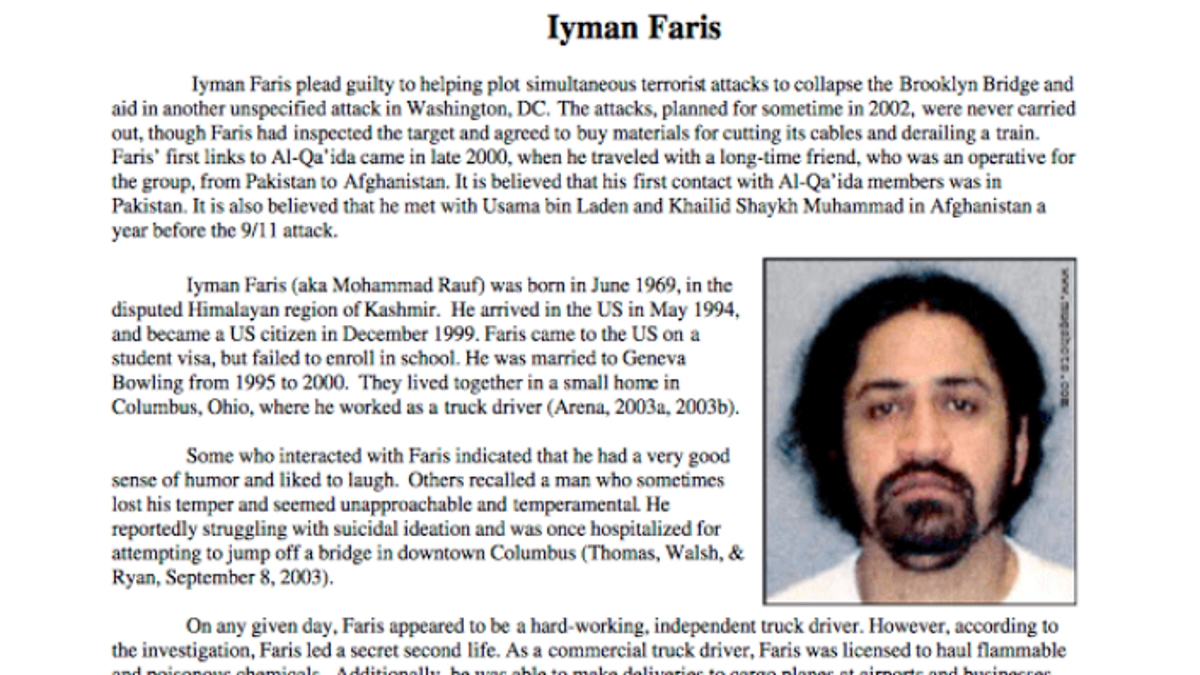
U.S. District Court for the Southern District of Illinois entered an order revoking the naturalized U.S. citizenship of convicted terrorist, Iyman Faris. Faris, a native of Pakistan, was convicted in 2003 of providing material support


Court Denaturalizes Iyman Faris Based on His Provision of Material Support to al Qaeda in Early 2000s, Which Included a Personal Meeting with Usama bin Laden at Terrorist Training Camp Months After Taking Oath of Allegiance to the United States

On Feb. 3, Judge Staci M. Yandle of the U.S. District Court for the Southern District of Illinois entered an order revoking the naturalized U.S. citizenship of convicted terrorist, Iyman Faris. Faris, a native of Pakistan, was convicted in 2003 of providing material support to al Qaeda and sentenced to 20 years in prison.

Among other actions in support of al Qaeda, in 2002, Faris evaluated the practicality of a plot to collapse the Brooklyn Bridge in New York using gas cutters, communicating his assessment to al Qaeda via coded messages. In its order revoking his U.S. citizenship, the court found that Faris was ineligible for naturalization and unlawfully procured his citizenship through willful misrepresentation of material facts.

“A top priority at the Department of Justice is protecting our national security, and one of the things we do in support of that goal is tirelessly pursue denaturalization of known and suspected terrorists,” said Assistant Attorney General Jody Hunt for the Department of Justice’s Civil Division. “What Faris did is unconscionable – he pretended to support the United States and the Constitution to naturalize while he actively supported Usama bin Laden and senior al Qaeda leadership in their plans to attack the United States. The denaturalization of Faris and of others who similarly defraud the United States helps defend the integrity of the immigration system, promote the rule of law, and make America safer.”

“Iyman Faris is a traitor to the oath he took renouncing foreign allegiances and pledging to defend the Constitution and our American way of life. He was a wolf in sheep’s clothing who took advantage of American generosity with plans to terrorize and murder. He does not deserve the honor of being an American citizen,” said U.S. Attorney Steven D. Weinhoeft for the Southern District of Illinois. “Becoming a naturalized citizen is a privilege. The process must be guarded for the safety of our nation and to protect and recognize the sacrifices, determination, and honor of those who earn that privilege honestly.”

Faris, 50, was convicted in 2003 in the Eastern District of Virginia of providing, and conspiring to provide, material support to al Qaeda, a designated foreign terrorist organization.

Among other actions underlying that conviction, in 2000, Faris traveled to Afghanistan where he met Usama bin Laden and other high-ranking members of al Qaeda at an al Qaeda training camp, researched information about ultralight airplanes for a senior al Qaeda leader, and arranged for airline tickets to be issued to al Qaeda operatives.

In its Feb. 3 order, the U.S. District Court for the Southern District of Illinois granted the government’s motion for summary judgment revoking Faris’s U.S. citizenship on multiple bases.

The court found that Faris’s admitted affiliation with al Qaeda within five years after naturalizing established that he was not attached to the principles of the Constitution and well-disposed to the good order and happiness of the United States at the time he naturalized in 1999.

The court also found that Faris was ineligible for naturalization based on his lies to immigration officers while under oath and his fraudulent entry into the United States in 1994 by using another person’s passport and visa.

Faris is currently serving his criminal sentence at the U.S. Penitentiary at Marion, Illinois, with a projected release date in August 2020. Because of the Court’s order, Faris is no longer a U.S. citizen and may be subjected to removal proceedings.

This case was investigated by the Civil Division’s Office of Immigration Litigation, District Court Section (OIL-DCS) National Security and Affirmative Litigation Unit (NS/A Unit), U.S. Immigration and Customs Enforcement, and the Federal Bureau of Investigation, with consultation and support from U.S. Citizenship and Immigration Services.

The case was jointly prosecuted by Chief Tim Belsan and Counsel for National Security John Inkeles and Ed White (ret.) of OIL-DCS’s NS/A Unit and Assistant U.S. Attorney Nicholas J. Biersbach of the U.S. Attorney’s Office for the Southern District of Illinois.

Justice.gov (February, 2020) Justice Department Secures Denaturalization of Convicted Terrorist Who Sought to Help al Qaeda Destroy the Brooklyn Bridge

Help me maintain this news reporting blog by donating here.

CBP Assists US Law Enforcement Partners and British Royal Navy in $46.2 million in cocaine seizure in the Caribbean Sea

The US Customs and Border Protection (CBP) has reported that the British Royal Navy and U.S. law enforcement partners seized 1,400 kilograms (3,086) pounds of cocaine and detained nine suspected smugglers


The US Customs and Border Protection (CBP) has reported that the British Royal Navy and U.S. law enforcement partners seized 1,400 kilograms (3,086) pounds of cocaine and detained nine suspected smugglers following the interdiction of two separate drug smuggling events in the Caribbean Sea Jan. 24 and Jan. 30, 2020.

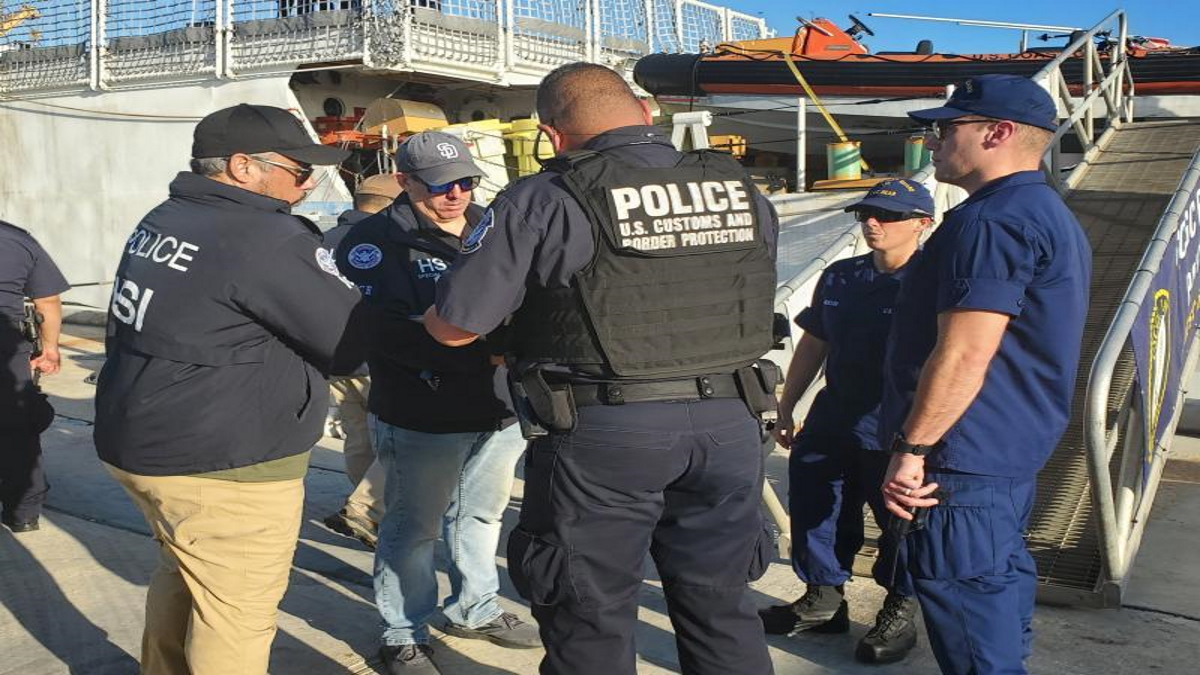
The US Coast Guard cutter Bear delivered the seized contraband and detainees from both cases to US Customs and Border Protection (CBP) officers, Immigration and Customs Enforcement (ICE)-Homeland Security Investigations, and Drug Enforcement Administration special agents in San Juan, Puerto Rico, Tuesday.

The interdiction was a result of an international, multi-agency law enforcement effort in support of Operation Unified Resolve, Operation Caribbean Guard, Campaign Martillo (a joint, inter-agency, 20-nation collaborative counter narcotic effort), and the Caribbean Corridor Strike Force (CCSF) and will be prosecuted by the U.S. Federal District Court for the District of Puerto Rico.

In the first interdiction, the United Kingdom’s Royal Navy RFA Mounts Bay, while on patrol with a U.S. Coast Guard Law Enforcement Detachment (LEDET) and a Coast Guard Helicopter Interdiction Tactical Squadron (HITRON) armed helicopter onboard, detected two suspicious go-fast vessels, approximately 74 nautical miles south of St. Croix, U.S. Virgin Islands.

The RFA Mounts Bay launched the Coast Guard HITRON helicopter and the ship’s pursuit vessel with the Coast Guard LEDET to interdict both suspect vessels. 

The Coast Guard LEDET boarding team, with the assistance of RFA Mounts Bay crew members, boarded the suspected vessels, apprehending the seven men and seizing 42 bales of suspected contraband. 

In the second interdiction, a marine patrol aircraft detected a northbound target of interest, southeast of Isla Beata, Dominican Republic. The cutter Bear along with a helicopter responded to interdict the go-fast.  Cutter Bear’s Over the Horizon cutter boat and embarked helicopter arrived on scene and stopped the go-fast.  Cutter Bear’s boarding team detained the two men aboard the go-fast, after discovering 13 bales of suspected contraband.

CBP is part of the Caribbean Border Strike Force (CCSF); an initiative of the U.S. Attorney’s Office created to disrupt and dismantle major drug trafficking organizations operating in the Caribbean. CCSF is part of the Organized Crime Drug Enforcement Task Force (OCDETF), which investigates South American-based drug trafficking organizations responsible for the movement of multi-kilogram quantities of narcotics using the Caribbean as a transshipment point for further distribution to the United States.

CBP.gov (February, 2020) CBP Assists US Law Enforcement Partners and British Royal Navy in $46.2 million in cocaine seizure in the Caribbean Sea

Help me maintain this news reporting blog by donating here.

DOJ Files Actions to Stop Telecom Carriers Who Facilitated Hundreds of Millions of Fraudulent Robocalls to American Consumers

The Department of Justice (DOJ) filed civil actions for temporary restraining orders today in two landmark cases against five companies and three individuals allegedly responsible for carrying hundreds of millions of fraudulent robocalls to American consumers, the Department of Justice announced.


First of its Kind Enforcement Action by the Justice Department

The Department of Justice (DOJ) filed civil actions for temporary restraining orders today in two landmark cases against five companies and three individuals allegedly responsible for carrying hundreds of millions of fraudulent robocalls to American consumers, the Department of Justice announced. 

The Department of Justice alleges that the companies were warned numerous times that they were carrying fraudulent robocalls — including government- and business-imposter calls — and yet continued to carry those calls and facilitate foreign-based fraud schemes targeting Americans.  The calls, most of which originated in India, led to massive financial losses to elderly and vulnerable victims across the nation. 

Assistant Attorney General Jody H. Hunt of the Justice Department’s Civil Division, U.S. Attorney Richard P. Donoghue of the Eastern District of New York, Inspector General Gail S. Ennis of the Social Security Administration (SSA) and Chief Postal Inspector Gary Barksdale, made the announcement.

The two cases announced today contain similar allegations.  The defendants in one case are Ecommerce National LLC d/b/a TollFreeDeals.com; SIP Retail d/b/a sipretail.com; and their owner/operators, Nicholas Palumbo, 38, and Natasha Palumbo, 33, of Scottsdale, Arizona. 

The defendants in the other case include Global Voicecom Inc., Global Telecommunication Services Inc., KAT Telecom Inc., aka IP Dish, and their owner/operator, Jon Kahen, 45, of Great Neck, New York.  In each case, the Department of Justice sought an order immediately halting the defendants’ transmission of unlawful robocall traffic.  A federal court has entered a temporary restraining order against the Global Voicecom defendants.

“Robocalls are an annoyance to many Americans, and those that are fraudulent and predatory are a serious problem, often causing devastating financial harm to the elderly and vulnerable members of our society,” said Assistant Attorney General Jody Hunt for the Department of Justice’s Civil Division.  “The Department of Justice will pursue to the fullest extent of the law individuals in the United States who knowingly facilitate imposter fraud calls, using both criminal and civil tools where appropriate.  And we look forward to working closely with law enforcement colleagues in India and elsewhere around the world to identify those behind these calls so that we can bring them to justice.” 

Americans have experienced a deluge of robocalls over the past several years.  Many of the robocalls originate abroad. 

Recently, foreign fraudsters have used robocalls to impersonate government investigators and to provide Americans with alarming messages, such as: the recipient’s social security number or other personal information has been compromised or otherwise connected to criminal activity; the recipient faces imminent arrest; their assets are being frozen; their bank and credit accounts have suspect activity; their benefits are being stopped; they face imminent deportation; or combinations of these threats. 

Each of these claims is a lie, designed to scare the call recipient into paying large sums of money.  Social Security imposters, IRS imposters, and tech-support schemes (in which callers impersonate legitimate technology companies) have proliferated in part because of the ease with which robocalls can reach millions of potential victims every hour.

In the cases announced today, the United States alleges that the defendants operated voice over internet protocol (VoIP) carriers, which use an internet connection rather than traditional copper phone lines to carry telephone calls.  Numerous foreign-based criminal organizations are alleged to have used the defendants’ VoIP carrier services to pass fraudulent government- and business-imposter fraud robocalls to American victims.  The complaints filed in the cases specifically allege that defendants served as “gateway carriers,” making them the entry point for foreign-initiated calls into the U.S. telecommunications system. 

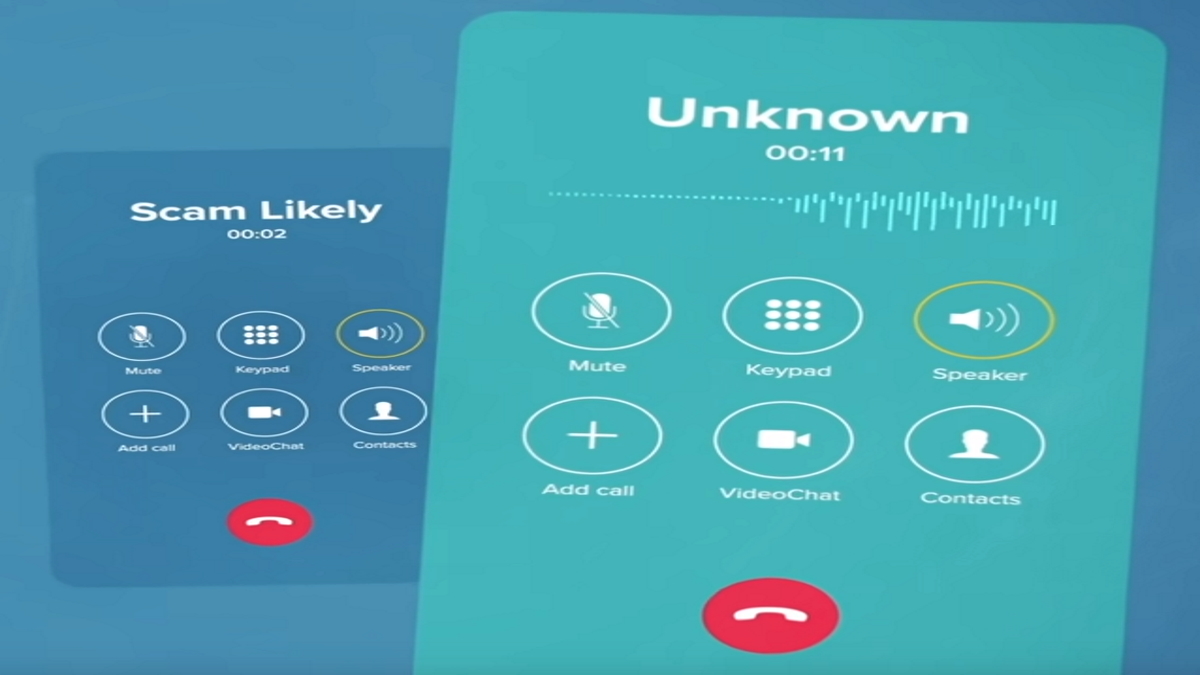
The defendants carried astronomical numbers of robocalls.  For example, the complaint against the owners/operators of Ecommerce National d/b/a TollFreeDeals.com alleges that the defendants carried 720 million calls during a sample 23-day period, and that more than 425 million of those calls lasted less than one second, indicating that they were robocalls.  The complaint further alleges that many of the 720 million calls were fraudulent and used spoofed (i.e., fake) caller ID numbers. 

The calls facilitated by the defendants falsely threatened victims with a variety of catastrophic government actions, including termination of social security benefits, imminent arrest for alleged tax fraud and deportation for supposed failure to fill out immigration forms correctly.

According to allegations in both complaints, the defendants ignored repeated red flags and warnings about the fraudulent and unlawful nature of the calls they were carrying.

“We are using all available tools and resources to stop foreign call center scammers — and for the first time their U.S.-based enablers — from conning elderly and vulnerable victims in New York and throughout the United States,” said U.S. Attorney Richard Donoghue.  “Protecting individuals from schemes that result in catastrophic losses to the victims is a priority of this Office and the Department of Justice.”

“Today’s events are the culmination of months of hard work, and a critical step in holding these and other companies accountable for being the link between overseas scammers and their victims,” said SSA Inspector General Gail S. Ennis.  “We will continue to pursue those who exploit the U.S. telephone system and allow scammers to deceive consumers using the good name of Social Security.  I want to thank the Department of Justice’s Transnational Elder Fraud Strike Force and our law enforcement partners for their support throughout this investigation.”

“Anyone who engages in deceptive practices like imposter fraud should know, regardless of where they are, they will not go undetected and will be held accountable,” said Chief Inspector Gary Barksdale.  “We will continue to work alongside the Department of Justice and our other partners to prevent and deter ongoing harm.”

Trial Attorneys Ann Entwistle and Bart Dunn of the Civil Division’s Consumer Protection Branch and Assistant U.S. Attorneys Bonni Perlin, Evan Lestelle, and Dara Olds of the U.S. Attorney’s Office for the Eastern District of New York represent the United States.  The SSA’s Office of Inspector General, the U.S. Postal Inspection Service, the Office of Inspector General for Tax Administration, U.S. Immigration and Customs Enforcement’s Homeland Security Investigations New York El Dorado Task Force, U.S. Secret Service, New York Police Department and U.S. Customs and Border Protection collectively provided investigative support.The Federal Trade Commission and the Federal Communications Commission provided pertinent data.  

The claims made in the complaint are mere allegations that, if the case were to proceed to trial, the government must prove to receive a determination of liability.

Since President Trump signed the bipartisan Elder Abuse Prevention and Prosecution Act (EAPPA) into law, the Department of Justice has participated in hundreds of enforcement actions in criminal and civil cases that targeted or disproportionately affected seniors. 

In particular, in March 2019, the department announced the largest elder fraud enforcement action in American history, charging more than 260 defendants in a nationwide elder fraud sweep.  The department has likewise conducted hundreds of trainings and outreach sessions across the country since the passage of the Act.  

Justice.gov (Jan., 2020) The Department of Justice Files Actions to Stop Telecom Carriers Who Facilitated Hundreds of Millions of Fraudulent Robocalls to American Consumers

Help me maintain this news reporting blog by donating here.

Illegal alien sentenced to 25 years in prison for conspiracy to distribute methamphetamine and heroin

Ubaldo Soto-Diaz, an illegal alien from Mexico, but residing in Portersville, California, was sentenced to 25 years in prison for conspiracy to distribute methamphetamine and heroin


Ubaldo Soto-Diaz, an illegal alien from Mexico, but residing in Portersville, California, was sentenced to 25 years in prison for conspiracy to distribute methamphetamine and heroin, Special Agent in Charge (SAC) of U.S. Immigration and Customs Enforcement’s Homeland Security Investigations (HSI) Seattle Debra Parker and U.S. Attorney Bart M. Davis announced.

Chief U.S. District Judge David C. Nye also ordered Soto-Diaz to pay a $2,000 fine and serve five years of supervised release following his prison sentence. Soto-Diaz pleaded guilty to the charge on July 18, 2019.

According to court records, Soto-Diaz admitted that between August 28, 2018, and January 28, 2019, he conspired with six other defendants to distribute methamphetamine and heroin.

Soto-Diaz was found to be the leader and organizer of an extensive criminal organization that was responsible for distributing high potency methamphetamine, manufactured in Mexico and then transported from California to Idaho. During their investigation of Soto-Diaz and his organization, DEA agents seized over thirty pounds of 100% pure methamphetamine and almost two pounds of black tar heroin.

According to court records, Soto-Diaz had previously been convicted of transporting a controlled substance in 2000 and possession of controlled substances for sale in 2009. He was deported to Mexico on May 17, 2010. He was found to be illegally present in the United States on May 26, 2010, and was convicted of illegal entry.

He again illegally returned to the United States and was convicted of possession of controlled substances for sale and unlawful possession of a firearm in 2012. At the time Soto-Diaz conspired to distribute methamphetamine and heroin to Idaho, he was illegally living in Portersville, California.

This case was a result of a joint investigation with Drug Enforcement Administration, Nampa Police Department, Canyon County Narcotics Unit, and Ada County Sheriff’s Office.

This indictment is the result of a joint investigation by the Organized Crime and Drug Enforcement Task Force (OCDETF). The OCDETF program is a federal multi-agency, multijurisdictional task force that supplies supplemental federal funding to federal and state agencies.

The principal mission of the OCDETF program is to identify, disrupt and dismantle the most serious drug trafficking, weapons trafficking and money laundering organizations, and those primarily responsible for the nation’s illegal drug supply. Program participants include HSI; Federal Bureau of Investigation; Drug Enforcement Administration; Bureau of Alcohol, Tobacco, Firearms and Explosives; Internal Revenue Service-Criminal Investigation; and U.S. Marshals Service.

As the largest investigative agency within the U.S. Department of Homeland Security (DHS), HSI investigates and enforces more than 400 federal criminal statutes – more than any other U.S. law enforcement agency. HSI special agents use this authority to investigate cross-border criminal activity – including drug trafficking – and work in close coordination with local state and federal law enforcement agencies to target transnational criminal organizations (TCOs) that are bringing dangerous substances, such as illicit fentanyl, into the community.

ICE.gov (Feb., 2020)  Illegal alien sentenced to 25 years in prison for conspiracy to distribute methamphetamine and heroin

Help me maintain this news reporting blog by donating here.